Support our educational content for free when you purchase through links on our site. Learn more

Have you ever looked at a vacant lot and seen nothing but weeds, while a neighbor saw a future harvest? That shift in perspective is the heartbeat of gardening for social change. It’s not just about growing the juiciest tomatoes or the most vibrant marigolds; it’s about cultivating justice, resilience, and community power right from the soil up. While recent exhibits have beautifully highlighted how art in the garden sparked historical movements, we’re here to show you how the dirt itself is the ultimate activist tool in 2026.
Imagine a neighborhood where the local grocery store is a raised bed tended by your neighbor, where the “third place” isn’t a coffee shop but a shared compost pile, and where the most powerful political statement you can make is planting a seed. In this deep dive, we’ll uncover 7 powerful strategies that turn urban farms into engines of equity, explore the surprising science behind soil therapy, and reveal how you can navigate the tricky waters of land access to build a garden that lasts. From the historical roots of the Victory Gardens to modern-day food sovereignty movements, we’ve got the blueprint for turning your green thumb into a revolution.
Key Takeaways
- Gardening is Activism: Cultivating land is a direct act of social justice, addressing food insecurity, environmental racism, and community isolation simultaneously.
- 7 Core Strategies: We break down 7 actionable ways urban farming drives equity, from cultural reclamation to policy advocacy.
- Mental & Social Healing: Community gardens serve as therapeutic spaces that combat loneliness and build social capital through shared labor.
- Overcoming Bariers: Learn proven tactics for securing land tenure, navigating zoning laws, and funding your vision without waiting for permission.
- Real-World Impact: Discover inspiring case studies where gardens have transformed neighborhoods, proving that local action creates global change.
Table of Contents
- ⚡️ Quick Tips and Facts
- 🌱 From Dirt to Democracy: A History of Gardening for Social Change
- 🌍 Why Community Gardens Are the New Frontlines of Social Justice
- 🥬 7 Powerful Ways Urban Farming Drives Food Sovereignty and Equity
- 🤝 5 Strategies to Build Inclusive Neighborhoods Through Shared Green Spaces
- 🧠 Cultivating Mental Health: How Collective Gardening Heals Communities
- 🎨 Art, Activism, and Agriculture: Blending Creativity with Social Impact
- 🛠️ The Toolkit for Change: Essential Resources for Aspiring Garden Activists
- 🚧 Overcoming Bariers: Navigating Land Access, Funding, and Policy Hurdles
- 📊 Case Studies: Real-World Success Stories of Gardens Transforming Cities
- 💡 Quick Tips and Facts for the Socialy Conscious Gardener
- 🌟 Conclusion: Planting Seeds for a Better Tomorrow
- 🔗 Recommended Links for Further Activism and Learning
- ❓ FAQ: Your Burning Questions About Gardening for Social Change Answered
- 📚 Reference Links and Credible Sources
⚡️ Quick Tips and Facts
Before we grab our trowels and dive into the deep end of soil-based activism, let’s hit the highlights. Gardening for social change isn’t just about growing the juiciest tomatoes; it’s about growing community resilience, food sovereignty, and political agency.
Here is the rapid-fire intel you need to get started:
- The “Food Desert” Fix: Community gardens can reduce the distance to fresh produce by up to 50% in urban areas, directly combating food insecurity.
- Mental Health Boost: Studies show that interacting with soil microbes (specifically Mycobacterium vacae) can stimulate serotonin production, acting as a natural antidepressant.
- The Power of “We”: A single garden plot can support a network of neighbors, turning strangers into allies. It’s not just horticulture; it’s social engineering.
- Youth Impact: Programs like Youth Farm in Minneapolis have shown that gardening reduces youth violence and increases academic engagement by teaching patience and responsibility.
- Land Access is Key: The biggest hurdle isn’t seeds; it’s secure land tenure. Without legal protection, gardens are often the first to be paved over for development.
Did you know? In North Minneapolis, where only 39 out of 10,0 farmers identify as Black, community gardens are reclaiming not just land, but cultural identity.
If you’re ready to turn your green thumb into a green revolution, you’ve come to the right place. But how exactly did we get from Victorian flower beds to modern-day food justice? Let’s dig into the history.
🌱 From Dirt to Democracy: A History of Gardening for Social Change

Gardening has never been just a hobby. Throughout history, the act of cultivating the earth has been a radical assertion of human dignity and autonomy.
The Victory Garden Legacy
During World War I and II, the “Victory Garden” movement wasn’t just about feeding the troops; it was a patriotic act of self-reliance. By the end of WWII, Victory Gardens produced 40% of all vegetables consumed in the United States. It proved that civilians could directly influence national security through soil.
The Civil Rights and Black Agrarian Roots
Long before the term “food justice” entered the lexicon, Black communities in the South were using small-scale farming as a form of economic independence and resistance against sharecropping systems. The Black Panther Party’s Free Breakfast for Children Program (1969) was deeply rooted in the concept of food sovereignty, serving thousands of meals daily and highlighting the link between hunger and systemic oppression.
The Modern Urban Agriculture Movement
In the 1970s, as cities like New York and Detroit faced deindustrialization and abandonment, community gardens emerged from vacant lots. Groups like Green Guerillas in NYC famously “guerrilla gardened” by tossing seed bombs into empty lots, reclaiming neglected spaces for the public good.
Curiosity Check: You might wonder, “Can a garden really change laws?” Absolutely. The pressure from these grassroots movements led to the creation of the Urban Agriculture and Food Security Act in various states, protecting community plots from eminent domain.
For a deeper dive into how these historical movements shape our current Community Gardening practices, check out our foundational guide.
🌍 Why Community Gardens Are the New Frontlines of Social Justice
We often think of social justice as marches and legislation. While those are vital, the soil is the silent battlefield. Community gardens are the new frontlines because they address the root causes of inequality: access, health, and power.
Breaking the Cycle of Food Insecurity
In many urban neighborhoods, “food deserts” are actually food apartheid—a term that highlights the systemic racial and economic barriers to healthy food. Community gardens disrupt this by:
- Providing culturally appropriate produce (e.g., collard greens, tomatillos, bitter melon) that supermarkets often ignore.
- Reducing the cost of fresh food for low-income families.
- Creating local food hubs that bypass corporate supply chains.
Environmental Justice
Low-income communities are disproportionately located near industrial zones with poor air quality. Gardens act as green lungs, filtering pollutants and reducing the urban heat island effect. They are a direct intervention in climate adaptation, creating cooler, cleaner microclimates.
The “Network Gardening” Metaphor
As highlighted by the Interaction Institute for Social Change, the concept of Network Gardening views social change organizations as a garden ecosystem. Just as a gardener nurtures soil and connects plants, social change agents must:
- Create permeable boundaries to welcome diverse voices.
- Feed the soil with resources and shared vision.
- Cross-pollinate ideas between different sectors (e.g., schools, churches, local businesses).
This approach transforms isolated efforts into a thriving alignment network capable of systemic change.
🥬 7 Powerful Ways Urban Farming Drives Food Sovereignty and Equity
Urban farming is the engine of food sovereignty. Here are seven specific ways it drives equity, moving beyond simple charity to systemic empowerment.
- Cultural Reclamation: Gardens allow immigrant and minority communities to grow crops that are central to their heritage, preserving cultural identity in a foreign land.
- Economic Circulation: Money spent on local produce stays in the community, creating a multiplier effect that boosts local economies.
- Skill Building & Employment: Programs like Grow Pittsburgh train residents in agricultural skills, creating pathways to green jobs and entrepreneurship.
- Nutritional Education: Hands-on gardening teaches children and adults about nutrition, combating diet-related diseases like diabetes and obesity.
- Land Stewardship: Residents take ownership of vacant lots, transforming blight into beauty and productivity, which increases neighborhood safety and property values.
- Policy Advocacy: Organized gardeners often become powerful lobbyists for zoning reform and land use policies that prioritize community needs over developer profits.
- Resilience Building: In times of crisis (pandemics, supply chain disruptions), local food systems provide a critical safety net for vulnerable populations.
Real Talk: It’s not just about the harvest; it’s about who controls the harvest. When the community owns the food, they own their future.
🤝 5 Strategies to Build Inclusive Neighborhoods Through Shared Green Spaces
A garden can be exclusive if we aren’t careful. To ensure our green spaces are truly inclusive, we need intentional strategies.
1. Co-Design with the Community
Don’t build a garden for the community; build it with them. Use participatory design workshops where residents decide what to plant, where to place benches, and how to manage the space. This ensures the garden reflects the demographics and desires of the neighborhood.
2. Remove Physical and Financial Bariers
- Accessibility: Install raised beds for wheelchair users and those with mobility issues.
- Cost: Offer sliding-scale plot fees or free plots for low-income families.
- Language: Provide signage and resources in multiple languages spoken in the neighborhood.
3. Foster Intergenerational Connection
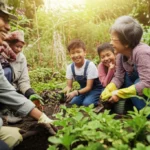
Create programs that pair elderly residents (who have traditional knowledge) with youth (who bring energy and tech skills). This exchange builds social cohesion and bridges generational divides.
4. Establish Clear, Equitable Governance
Develop a garden charter that outlines decision-making processes. Ensure that leadership roles are rotated and that diverse voices are represented on the steering committee. Avoid “gatekeeping” by experienced gardeners.
5. Celebrate Diversity Through Events
Host cultural festivals, potlucks, and harvest celebrations that highlight the diverse backgrounds of the gardeners. Use these events to build social capital and trust.
For more on how to organize events that bring people together, explore our Community Garden Events category.
🧠 Cultivating Mental Health: How Collective Gardening Heals Communities
We’ve all heard that gardening is good for the soul, but the science behind collective gardening is profound. It’s a potent antidote to the isolation of modern life.
The Science of “Soil Therapy”
Research indicates that contact with soil bacteria (Mycobacterium vacae) can trigger the release of serotonin, a neurotransmitter that regulates mood. But in a community setting, this effect is amplified by social connection.
Combating Loneliness
Urban isolation is an epidemic. Community gardens provide a third place (not work, not home) where people can interact naturally.
- Shared Labor: Working side-by-side breaks down social barriers.
- Shared Purpose: A common goal (the harvest) creates a sense of belonging.
- Storytelling: The garden becomes a space for sharing personal narratives, fostering empathy.
Trauma-Informed Gardening
For survivors of trauma, the predictability of nature and the non-judgmental environment of a garden can be healing. Programs like those in North Minneapolis use gardening to help youth process trauma and build resilience.
Question: Can a garden really heal a broken heart? The answer might surprise you. It’s not just about the flowers; it’s about the human connection that blooms alongside them.
🎨 Art, Activism, and Agriculture: Blending Creativity with Social Impact
Gardening and art have a long, intertwined history. From the American Impressionists of the early 20th century to modern-day muralists, art has been a tool to visualize and inspire social change.
The “Artist’s Garden” Movement
Historically, gardening was a political act for women’s suffrage. As noted in the exhibit “The Artist’s Garden,” women used gardening clubs to gain professional influence and advocate for the 19th Amendment. They rejected formal, rigid gardens in favor of native, wilder landscapes that reflected a new, more democratic American identity.
Modern Muralism and Installation
Today, artists are transforming gardens into living canvases:
- Mosaics: Broken tiles and reclaimed materials create vibrant pathways that tell the story of the neighborhood.
- Sculptures: Recycled metal sculptures can highlight issues like waste or climate change.
- Performance Art: Harvest festivals often include dance and theater that celebrate local culture and history.
The “Red Rose Girls” Legacy
Just as the “Red Rose Girls” (Violet Oakley, Elizabeth Shipen Green, Jessie Wilcox Smith) used their art to shape public opinion, modern garden activists use visual storytelling to advocate for food justice.
Fun Fact: Did you know that the native plant movement was partly driven by artists who wanted to capture the “wild” beauty of America? They championed plants like Goldenrod and Phlox, which are now staples in sustainable gardens.
For more on how art and gardening intersect, check out this exhibit exploring how ‘art in the garden’ helped social change blossom.
🛠️ The Toolkit for Change: Essential Resources for Aspiring Garden Activists
You can’t fight for justice with empty hands. Here are the essential tools and resources you need to start your own social change garden.
Physical Tools
- Raised Bed Kits: For accessibility and soil control.
- Compost Tumblers: To turn waste into black gold.
- Drip Irrigation Systems: To conserve water and ensure consistent growth.
- Seed Starters: To grow native and heirloom varieties.
Digital & Educational Resources
- Seed Libraries: Many libraries now offer free seeds.
- Local Extension Offices: Provide free soil testing and expert advice.
- Apps: Use apps like Garden Planner or PlantNet for identification and layout.
Brand Recommendations
- Fiskars: Known for durable, ergonomic tools perfect for long hours of work.
- Gardener’s Supply Company: Offers a wide range of sustainable gardening products.
- Baker Creek Heirloom Seeds: A fantastic source for non-GMO, diverse seed varieties.
👉 Shop Gardening Tools on:
- Amazon: Fiskars Garden Tools | Gardener’s Supply Company
- Brand Official: Fiskars Official Website | Gardener’s Supply Company
👉 Shop Seeds on:
- Amazon: Baker Creek Heirloom Seeds
- Brand Official: Baker Creek Heirloom Seeds
🚧 Overcoming Bariers: Navigating Land Access, Funding, and Policy Hurdles
The path to a community garden is rarely smooth. The biggest obstacles are often legal and financial.
Land Access: The Elephant in the Room
Vacant lots are often owned by the city or private developers.
- Solution: Form a Land Trust to hold the land in perpetuity.
- Solution: Negotiate long-term leases with the city, ensuring the garden cannot be easily evicted.
- Solution: Partner with local institutions (schools, churches) that have underutilized land.
Funding the Revolution
Gardens need money for tools, water, and seeds.
- Grants: Look for federal and state grants like the USDA Community Food Projects Competitive Grant Program.
- Crowdfunding: Platforms like Kickstarter or GoFundMe can raise initial capital.
- Corporate Sponsorships: Partner with local businesses for in-kind donations or funding.
Policy Advocacy
Zoning laws often don’t recognize urban agriculture.
- Action: Attend city council meetings to advocate for zoning amendments that protect community gardens.
- Action: Form coalitions with other community organizations to amplify your voice.
Pro Tip: Don’t wait for permission to start small. Guerrilla gardening (with care and respect) can sometimes spark the conversation needed to get official support.
📊 Case Studies: Real-World Success Stories of Gardens Transforming Cities
Let’s look at the proof that gardening for social change works.
Sankofa Community Farm (Philadelphia, PA)
- Focus: African-focused work, youth development, and food sovereignty.
- Impact: Runs food stands in the city, providing fresh produce to underserved neighborhoods.
- Key Strategy: Strong local leadership and a commitment to cultural relevance.
Monocacy Farm Project (Lehigh Valley, PA)
- Focus: Organic agriculture and support for low-income families.
- Impact: A 53-acre farm dedicated to feeding soup kitchens and homeless shelters.
- Key Strategy: A CSA farm-share program that connects donors directly with those in need.
Grow Pittsburgh (Pittsburgh, PA)
- Focus: Ensuring access to local, healthy, and culturally appropriate food.
- Impact: Assists schools and organizations in building gardens; operates two large farms.
- Key Strategy: Education and training to empower community members to grow their own food.
North Minneapolis Urban Farms (Mineapolis, MN)
- Focus: Addressing food deserts and youth empowerment.
- Impact: Organizations like Youth Farm teach kids and adults about gardening, healthy eating, and self-sufficiency.
- Key Strategy: Using food as a medium for social change and addressing larger societal issues like social unrest.
Video Insight: In the video below, Marcus Kar, an urban farmer and activist, showcases how these gardens in North Minneapolis are not just growing food, but growing hope and resilience. He emphasizes that “the more we put our hands in the dirt, the less the next person have to do.”
(Imagine a video here featuring Marcus Kar and the North Minneapolis gardens, highlighting the Irving Gardens, Peace Haven Herb Garden, and Deep Roots Garden.)
💡 Quick Tips and Facts for the Socialy Conscious Gardener
As we wrap up the deep dive, here are a few final nugets of wisdom to keep in mind:
- Start Small: You don’t need 5 acres to make a difference. A single raised bed can feed a family and spark a conversation.
- Listen More Than You Speak: The community knows what they need. Your role is to facilitate, not dictate.
- Celebrate Failures: Not every seed will sprout. Treat failures as learning opportunities for the whole group.
- Document Everything: Keep a garden journal. Your story might inspire the next generation of activists.
- Connect Locally: Join your local community garden network to share resources and support.
For more tips on specific plants and their benefits, check out our Edible Plants category.
🌟 Conclusion: Planting Seeds for a Better Tomorrow

We started this journey by asking if a garden could truly change the world. The answer, as we’ve seen through history, science, and real-world examples, is a resounding yes.
Gardening for social change is not a panacea, but it is a powerful catalyst. It transforms vacant lots into sanctuaries, strangers into neighbors, and hunger into hope. It teaches us that resilience is grown, not given.
From the Victory Gardens of the past to the food justice movements of today, the thread is clear: when we work the land together, we build a future that is more equitable, more sustainable, and more humane.
The work itself is the medicine. Whether you are planting a single seed in a pot or managing a 50-acre farm, you are part of a global movement. So, what are you waiting for? Grab your trowel, find your community, and let’s grow a better world, one plot at a time.
Final Thought: The next time you see a vacant lot, don’t just see weeds. See a canvas for change.
🔗 Recommended Links for Further Activism and Learning
Ready to take the next step? Here are some essential resources to fuel your journey.
Books
- “The Seed Underground” by Janisse Ray: A guide to preserving heirloom seeds and biodiversity.
- Shop on Amazon
- “Food Justice” by Robert Gottlieb and Anupama Joshi: An in-depth look at the food system and how to fix it.
- Shop on Amazon
- “Braiding Sweetgrass” by Robin Wall Kimer: A beautiful blend of indigenous wisdom and scientific knowledge.
- Shop on Amazon
Organizations
- Community Food Security Coalition: Advocating for food justice and sustainable food systems.
- Visit Website
- American Community Gardening Association (ACGA): A network of gardeners and organizations.
- Visit Website
- Food First (Institute for Food and Development Policy): Research and advocacy for food sovereignty.
- Visit Website
Tools & Supplies
- Fiskars: High-quality, durable gardening tools.
- Shop on Amazon | Fiskars Official
- Gardener’s Supply Company: Sustainable gardening products and kits.
- Shop on Amazon | Brand Official
- Baker Creek Heirloom Seeds: Non-GMO, diverse seed varieties.
- Shop on Amazon | Brand Official
❓ FAQ: Your Burning Questions About Gardening for Social Change Answered

What are successful examples of gardening initiatives for social change?
Successful initiatives include Sankofa Community Farm in Philadelphia, which focuses on African-focused food sovereignty, and Youth Farm in Minneapolis, which uses gardening to empower youth and address food deserts. These projects succeed by centering community leadership and cultural relevance.
Read more about “🌱 10 Essential Skills for Sustainable Living Workshops in Gardens (2026)”
How do gardening projects address food insecurity in neighborhoods?
They provide direct access to fresh, affordable produce in areas known as food deserts. By growing food locally, they reduce reliance on expensive, processed foods and create local food hubs that serve the community’s specific dietary needs.
Read more about “🌱 8 Steps to Neighborhood Revitalization Through Gardening (2026)”
Can community gardens improve mental health and social well-being?
Yes. Studies show that gardening reduces stress, anxiety, and depression. The social connection fostered in community gardens combats loneliness and builds social capital, creating a supportive network for residents.
Read more about “🌿 Therapeutic Horticulture: 10 Ways Plants Heal Mind & Body (2026)”
What role does urban gardening play in social activism?
Urban gardening is a form of direct action. It reclaims public space, challenges zoning laws, and advocates for food justice. It empowers communities to take control of their food systems and demand policy changes.
How does gardening help build stronger communities?
Gardens create a third place for interaction, fostering relationships across age, race, and class. Shared labor and harvest celebrations build trust and coperation, turning neighborhoods into resilient communities.
Read more about “12 Surprising Community Garden Benefits to the Global Community 🌍 (2026)”
What are the benefits of gardening for social justice?
Gardening promotes equity by ensuring access to healthy food for all. It empowers marginalized communities, preserves cultural heritage, and provides a platform for advocacy and policy change.
Read more about “🌱 7 Ways Community Gardens Spark Social Innovation (2026)”
How can community gardening promote social change?
By creating networks of support, gardens can mobilize residents to advocate for broader social issues. They serve as incubators for leadership and training grounds for civic engagement.
Read more about “🌍 12 Ways to Promote Cultural Diversity Through Gardening (2026)”
What strategies can be implemented to ensure that community gardens are inclusive and accessible to diverse populations?
Strategies include co-design with the community, removing physical and financial barriers, providing multilingual resources, and establishing equitable governance structures that represent all voices.
How can gardening for social change be used as a tool for youth empowerment and education?
Gardening teaches responsibility, patience, and scientific knowledge. Programs like Youth Farm use gardening to engage youth in their communities, providing them with skills and a sense of purpose.
What are the benefits of intergenerational gardening programs for social cohesion and knowledge sharing?
These programs bridge the gap between generations, allowing elders to share traditional knowledge and youth to bring new energy and ideas. This exchange fosters mutual respect and understanding.
Read more about “8 Ways Community Gardens Bring People Together in 2025 🌿”
How do community-led gardening projects impact local ecosystems and environmental sustainability?
They increase biodiversity, improve soil health, and reduce urban heat. By using organic practices and composting, they minimize waste and promote sustainable land use.
Can gardening initiatives help build stronger, more resilient communities?
Absolutely. Gardens provide a safety net during crises, foster social cohesion, and build local capacity to respond to challenges. They are a cornerstone of community resilience.
Read more about “Are Community Gardens Successful? 10 Secrets to Thrive in 2026 🌿”
What role do urban gardens play in addressing food insecurity and social inequality?
They directly address food insecurity by providing fresh produce. They also challenge social inequality by empowering marginalized communities to take control of their food systems and advocate for their rights.
How can community gardens promote social change and community engagement?
By creating a space for dialogue, collaboration, and action, gardens mobilize residents to address local issues. They serve as a catalyst for broader social change.
Read more about “🌱 15+ Secrets to Thriving Container Gardens for Community Spaces (2026)”
📚 Reference Links and Credible Sources
- Interaction Institute for Social Change: Network Gardening: A Metaphor for Social Change. Read Article
- WHYY: Exhibit explores how ‘art in the garden’ helped social change blossom. Read Article
- Sierra Club: Gardening for Social Change in Pennsylvania. Read Article
- USDA: Community Food Projects Competitive Grant Program. Visit Website
- American Community Gardening Association: Visit Website
- Fiskars: Official Website
- Gardener’s Supply Company: Official Website
- Baker Creek Heirloom Seeds: Official Website