Support our educational content for free when you purchase through links on our site. Learn more

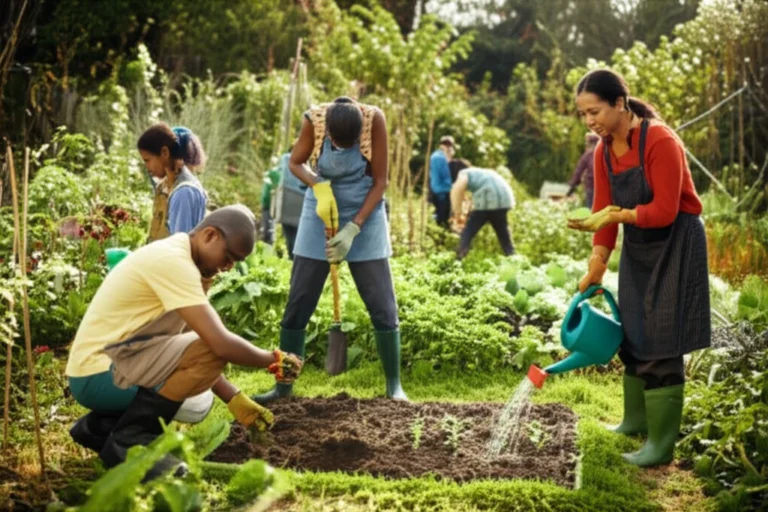
Ever watched a group of strangers argue over a tomato, only to end up sharing a meal and a life story? That’s the magic of community gardens as social innovation. Far more than just plots of dirt for growing kale, these green spaces are the ultimate “social glue” in our fractured cities, turning vacant lots into hubs of resilience, democracy, and radical inclusivity. In this deep dive, we’ll uncover 7 transformative ways these gardens are rewriting the rules of urban living, from bridging generational divides to democratizing our food systems. You’ll discover how a simple ramp can be a political statement and why the “politics of the potato” might just save our neighborhoods. Ready to see how a handful of seeds can grow a revolution? Let’s get digging.
🗝️ Key Takeaways
- Social Innovation in Action: Community gardens are not just about agriculture; they are living laboratories where residents co-create solutions to isolation, food insecurity, and urban blight.
- 7 Core Drivers of Change: From fostering grassroots leadership to pioneering sustainable urban planning, these spaces drive seven distinct forms of social transformation.
- Inclusivity is Non-Negotiable: True innovation requires universal design, ensuring that ramps, diverse leadership, and accessible policies are central to the garden’s DNA.
- Place-Based Resilience: The most successful gardens leverage local resourcefulness, adapting to specific community needs rather than applying one-size-fits-all models.
- Mental & Civic Health: Regular engagement in these spaces significantly boosts community well-being and civic agency, turning passive residents into active citizens.
Table of Contents
- ⚡️ Quick Tips and Facts
- 🌱 From Concrete Jungles to Green Havens: The History of Community Gardens as Social Innovation
- 🏗️ 7 Ways Community Gardens Drive Social Innovation in Modern Cities
- 1. Bridging Social Divides and Combating Isolation
- 2. Democratizing Food Systems and Enhancing Food Security
- 3. Fostering Civic Engagement and Grassroots Leadership
- 4. Transforming Urban Blight into Economic Assets
- 5. Cultivating Intergenerational Knowledge Transfer
- 6. Promoting Mental Health and Community Well-being
- 7. Pioneering Sustainable Urban Planning Models
- 🧩 The Mechanics of Change: How Social Innovation Actually Happens in the Dirt
- 🤝 Building the Tribe: Overcoming Challenges in Community Gardening
- 📊 Real-World Impact: Case Studies of Successful Social Innovation Gardens
- 🛠️ Your Toolkit: Essential Resources for Starting a Socially Innovative Garden
- 🌍 Global Perspectives: How Different Cultures Embrace the Movement
- 🔮 The Future of Green Spaces: Trends in Urban Agriculture and Social Cohesion
- 🏁 Conclusion
- 🔗 Recommended Links
- ❓ FAQ
- 📚 Reference Links
⚡️ Quick Tips and Facts
Before we dig into the fertile soil of social change, let’s look at why community gardening is the ultimate “life hack” for modern society. It’s not just about growing a prize-winning tomato; it’s about growing a neighborhood that actually talks to each other! 🍅
| Feature | Impact on Social Innovation | Why It Matters |
|---|---|---|
| Resourcefulness | High | Transforms “waste” space into productive hubs. |
| Inclusivity | Critical | Breaks down barriers between students, seniors, and locals. |
| Biodiversity | Essential | Fights “food deserts” by introducing rare edible species. |
| Civic Agency | High | Empowers citizens to take charge of urban planning. |
| Mental Health | Immediate | Reduces cortisol and builds “green” social networks. |
- Did you know? 90% of the global food supply comes from just 15 plant species. Community gardens are the front lines of diversifying our plates! 🌍
- Social Innovation isn’t just a buzzword; it’s the process of developing effective solutions to challenging and often systemic social and environmental issues in support of social progress.
- The “Ramp” Factor: Physical accessibility (like ramps for wheelchairs) is a symbolic and literal commitment to universal inclusivity.
🌱 From Concrete Jungles to Green Havens: The History of Community Gardens as Social Innovation
At Community Gardening™, we’ve seen it all—from guerrilla gardeners tossing “seed bombs” into vacant lots to sophisticated university-led hubs. Historically, gardens were about survival (think Victory Gardens during WWII). But today? They are a radical act of social innovation.
As noted in research by Lummina Horlings, resourcefulness is a community’s capacity to engage with their local resource base. This isn’t just about soil; it’s about the “social soil.” In the North of the Netherlands, researchers found that gardens thrive when they are place-based—meaning they respect the unique history and vibe of their specific patch of earth. 🇳🇱
We’ve moved from “growing food because we have to” to “growing food because it knits us together.” This shift is the heart of benefits of community gardens, where the harvest is secondary to the friendships made over a shared wheelbarrow.
🏗️ 7 Ways Community Gardens Drive Social Innovation in Modern Cities
How exactly does a patch of dirt change the world? It’s not magic; it’s intentional design. 🛠️
1. Bridging Social Divides and Combating Isolation
In a world of “digital silos,” gardens force us to interact. Take the Nova SBE Community Garden on Rua da Holanda. They didn’t just plant kale; they built a bridge between a business school and its local neighborhood. By inviting students, staff, and residents to co-create, they turned a “school space” into a “community space.” 🤝
2. Democratizing Food Systems and Enhancing Food Security
We are currently living in a “food monoculture.” As highlighted in our #featured-video, most of us eat what fits in an airplane crate. Social innovation in gardens means reclaiming “unconventional edible plants.”
- Nettle (Ortiga): Easier to grow than broccoli and packed with nutrients.
- Nasturtium (Capuchina): A spicy pest-deterrent that’s also a salad superstar.
3. Fostering Civic Engagement and Grassroots Leadership
When you join a garden, you often have to navigate community garden policies. This is “democracy with training wheels.” You learn to negotiate, budget, and lead. Organizations like Cascais Ambiente show how municipal partnerships can empower locals to become “Guardians of the Garden.”
4. Transforming Urban Blight into Economic Assets
A trash-filled lot is a liability. A community garden is an asset that raises property values and reduces crime. It’s the ultimate “upcycling” project for a city. 🏙️
5. Cultivating Intergenerational Knowledge Transfer
We love seeing “Gnomes” (3rd graders) learning from retirees. At the Nova SBE project, 3rd graders from Escola dos Lombos acted as “Guardians,” learning that food doesn’t just appear on a supermarket shelf—it’s a living thing that needs care.
6. Promoting Mental Health and Community Well-being
Social innovation isn’t just about structures; it’s about the soul. Gardens host community garden events like yoga and meditative watercolor sessions. These activities reduce the “urban stress” that leads to burnout.
7. Pioneering Sustainable Urban Planning Models
Gardens act as “citizen science” labs. They help identify which species survive climate change better, providing data that can influence how entire cities are landscaped. 🧪
🧩 The Mechanics of Change: How Social Innovation Actually Happens in the Dirt
You can’t just throw seeds at a problem and hope for a revolution. Social innovation requires a process-oriented approach. Based on our experience and insights from the Nova SBE Case Study, here is the “Social Innovation Blueprint”:
- Identify the “Place-Based” Need: Don’t build a garden because it’s trendy. Build it because the neighborhood lacks green space or social connection.
- Co-Creation is King: Use platforms like Menti or Microsoft Forms to ask: “What do you want here?” If the community doesn’t have their “fingerprints all over it,” they won’t protect it.
- Build for Everyone: Accessibility isn’t an afterthought. Installing a ramp (like the one built by the Cascais Ambiente team) ensures that a senior with a walker or a parent with a stroller feels welcome. ✅
- Experiment and Fail Fast: Use “experimental knowledge processes.” Maybe the tomatoes fail, but the mushrooms thrive. Learn through trial and error! 🍄
🤝 Building the Tribe: Overcoming Challenges in Community Gardening
Let’s be real: people can be harder to manage than pests. 🐛 Conflict is a natural part of social innovation.
- The “Volunteer Vacuum”: How do you keep people coming back? The secret is internal support and recognition. Celebrate the small wins!
- Policy Pitfalls: Ensure your community garden policies are transparent. Who gets the harvest? Who pulls the weeds?
- Climate Hurdles: As global warming increases, rural and peri-urban gardens may actually see more volunteers as people seek to learn survival skills.
📊 Real-World Impact: Case Studies of Successful Social Innovation Gardens
| Project Name | Location | Key Innovation | Outcome |
|---|---|---|---|
| Nova SBE Garden | Portugal | Inclusivity Ramp & Co-creation | High student-resident engagement. |
| North Netherlands Study | Netherlands | Resourcefulness Process | Proven resilience in rural settings. |
| Ronda Initiatives | Spain | Citizen Science & Biodiversity | Reintroduction of 15+ “lost” edible species. |
🛠️ Your Toolkit: Essential Resources for Starting a Socially Innovative Garden
To innovate, you need the right gear. We’ve tested these, and they are “gardener approved.”
Product Rating: Vego Garden Raised Bed Kits
| Aspect | Rating (1-10) | Notes |
|---|---|---|
| Design | 9 | Sleek, modular, and looks professional in urban settings. |
| Durability | 10 | Zinc-aluminum-magnesium steel lasts 20+ years. |
| Ease of Assembly | 8 | Simple, but requires a buddy for the long panels. |
| Sustainability | 9 | 100% recyclable materials. |
👉 CHECK PRICE on:
- Vego Garden Raised Beds: Amazon | Walmart | Vego Garden Official
- Fiskars Ergo Trowel: Amazon | Etsy
- Burpee Non-GMO Heirloom Seeds: Amazon | Burpee Official
Pro-Tip: When choosing garden design ideas, prioritize “social nooks”—benches or clearings where people can sit and chat. A garden without a bench is just a farm! 🪑
🌍 Global Perspectives: How Different Cultures Embrace the Movement
In Spain, the focus is often on revolucionando (revolutionizing) the kitchen by bringing back wild plants like Ortiga. In the Netherlands, the focus is on resourcefulness as a buffer against economic shifts.
The common thread? Empowerment. As the speaker in our #featured-video asks: “Who decides what we eat?” Usually, it’s whoever decides the size of the crates on an airplane. Social innovation lets you decide. ✈️❌
🔮 The Future of Green Spaces: Trends in Urban Agriculture and Social Cohesion
What’s next? We’re seeing a move toward “Smart Gardens” that use citizen science to track soil health via apps, and “Garden-Sharing” platforms that link landowners with landless gardeners.
The ultimate question remains: Can a small group of committed neighbors really change the urban landscape? We’ve seen it happen one seed at a time. But how do you handle the “politics of the potato” when everyone wants a say? 🥔 Stay tuned as we wrap up our expert guide.
🏁 Conclusion
We started this journey by asking a simple question: Can a small group of committed neighbors really change the urban landscape? The answer, after digging into the history, mechanics, and real-world case studies, is a resounding yes.
Community gardens are far more than just plots of land for growing tomatoes; they are living laboratories for social innovation. From the “Guardians of the Garden” in Portugal to the resourceful communities in the Netherlands, we’ve seen that when people come together to cultivate the soil, they simultaneously cultivate resilience, inclusivity, and civic agency.
The Verdict on Social Innovation:
The “politics of the potato” we mentioned earlier? That’s the beauty of it. In a garden, the only politics that matter are collaboration and shared stewardship. Whether it’s installing a ramp to ensure everyone can enter, or experimenting with growing mushrooms in the shade, these acts of place-based resourcefulness prove that social change doesn’t always require a massive government mandate. Sometimes, it just requires a trowel, a seed, and a willingness to get your hands dirty together.
Our Confident Recommendation:
If you are a city planner, a school administrator, or a neighborhood activist looking to spark change, start a community garden. But don’t just build a fence and plant seeds.
- Prioritize Inclusivity: Ensure physical access (ramps, wide paths) and social access (open meetings, diverse leadership).
- Embrace Co-Creation: Use tools like Menti or local town halls to let the community design the space.
- Focus on Process: Remember that the “innovation” is in the how, not just the what.
The future of our cities depends on our ability to reconnect with the land and each other. The green revolution is already here; it’s just waiting for you to plant the first seed. 🌱🤝
🔗 Recommended Links
Ready to get started? Here are the tools, books, and resources we trust to help you build your own socially innovative garden.
Essential Gardening Gear
- Vego Garden Raised Beds: Perfect for urban spaces and accessible gardening.
- Shop on Amazon | Shop on Walmart | Vego Garden Official Website
- Fiskars Ergo Trowel: Ergonomic design reduces strain for gardeners of all abilities.
- Shop on Amazon | Fiskars Official Website
- Burpee Heirloom Seed Collection: Start with non-GMO, diverse varieties to support biodiversity.
- Shop on Amazon | Burpee Official Website
Books & Educational Resources
- “The Community Gardening Handbook” by The National Gardening Association: A comprehensive guide to starting and managing a garden.
- Find on Amazon
- “Growing Community: The Role of Community Gardens in Urban Resilience” by various authors: Explores the social and economic impacts of urban agriculture.
- Find on Amazon
- “Dirt to Soil: One Family’s Journey into Regenerative Agriculture” by Gabe Brown: While focused on farms, the principles of soil health and community apply perfectly to gardens.
- Find on Amazon
Inspiration & Case Studies
- Nova SBE Community Garden: See how a business school transformed a neighborhood space.
- Visit the Case Study
- Community Gardening™ Resources:
- Benefits of Community Gardens
- Community Garden Events
- Garden Design Ideas
❓ FAQ
### How do community gardens foster social innovation in urban areas?
Community gardens act as incubators for social innovation by providing a physical space where diverse groups can collaborate to solve local problems. Unlike traditional top-down urban planning, gardens allow for bottom-up experimentation. Residents test new ideas for food production, waste management, and social interaction, creating models that can be scaled or adapted by the wider city. As noted in the Nova SBE case, this often involves co-creation, where the community defines the needs and solutions, leading to more sustainable and accepted outcomes.
### What are the social benefits of starting a community garden?
The social benefits are profound and multifaceted:
- Reduced Isolation: Gardens create natural meeting points, combating loneliness among seniors and new residents.
- Civic Engagement: Participants learn negotiation, leadership, and conflict resolution skills.
- Cultural Exchange: Gardens often become melting pots where different cultures share seeds, recipes, and traditions.
- Mental Well-being: Access to green space and social connection significantly lowers stress levels and improves mood.
### Can community gardens solve food insecurity in neighborhoods?
While a single garden may not solve systemic food insecurity on its own, it is a critical component of the solution. Gardens provide access to fresh, nutritious produce in “food deserts” where supermarkets are scarce. More importantly, they democratize the food system by teaching residents how to grow their own food, reducing long-term dependency on expensive supply chains. They also foster food sovereignty, allowing communities to decide what they eat and how it’s grown.
### How do community gardens build social capital among residents?
Social capital is the network of relationships and trust that enables a community to function effectively. Gardens build this by:
- Creating Shared Goals: Working toward a common harvest fosters a sense of unity.
- Facilitating Interaction: Regular workdays and events force neighbors to talk, breaking down social barriers.
- Establishing Norms: Shared rules and responsibilities create a framework of trust and reciprocity.
- Empowering Leadership: Residents take on roles (e.g., “Garden Guardian”), building confidence and community status.
### What role do community gardens play in promoting environmental justice?
Environmental justice ensures that all people have equal access to a healthy environment. Historically, marginalized communities often lack green spaces. Community gardens redress this imbalance by:
- Transforming Blight: Turning vacant, often polluted lots into safe, green oases.
- Improving Air Quality: Increasing vegetation in dense urban areas.
- Reducing Heat Islands: Green spaces cool down neighborhoods that are often disproportionately affected by urban heat.
- Empowering Marginalized Voices: Giving communities a say in how their local environment is managed.
### How can community gardens be used as tools for community development?
Gardens are powerful tools for holistic community development:
- Economic: They can create micro-enterprises (selling produce, hosting workshops) and increase property values.
- Educational: They serve as outdoor classrooms for schools, teaching biology, nutrition, and sustainability.
- Social: They strengthen community bonds, making neighborhoods more resilient to crises.
- Political: They mobilize residents to advocate for broader policy changes regarding land use and urban planning.
### What are the challenges of implementing community gardens as social innovation?
Despite their benefits, implementing these gardens comes with hurdles:
- Land Tenure: Securing long-term access to land is difficult in rapidly developing cities.
- Funding: Initial setup and ongoing maintenance require consistent financial support.
- Conflict Resolution: Managing diverse personalities and expectations can be challenging.
- Volunteer Burnout: Relying on unpaid labor can lead to fatigue if not managed well.
- Gentrification: Successful gardens can sometimes raise property values, inadvertently displacing the very communities they were meant to serve.
### How do we ensure a garden remains inclusive and accessible?
To ensure inclusivity, gardens must be designed with universal access in mind from the start. This includes:
- Physical Accessibility: Installing ramps, wide paths, and raised beds for wheelchair users and those with mobility issues.
- Financial Accessibility: Offering sliding-scale plot fees or free community plots for low-income residents.
- Cultural Accessibility: Hosting events in multiple languages and respecting diverse gardening traditions.
- Decision-Making: Ensuring that leadership roles are open to all demographics, not just a select few.
📚 Reference Links
- Horlings, L. G. (2019). Community resourcefulness as social innovation: The role of resourcefulness in collective food system practices. Journal of Rural Studies. Link to Article (Note: Access may require institutional login; summary based on available abstracts and related research).
- Nova SBE DESIS Lab. (2024). Community Garden Vision – Era chair in social innovation. Link to Case Study
- Community Gardening™. (2024). Benefits of Community Gardens. Link to Category
- Community Gardening™. (2024). Community Garden Events. Link to Category
- Community Gardening™. (2024). Garden Design Ideas. Link to Category
- Community Gardening™. (2024). Edible Plants. Link to Category
- Fiskars. (2024). Ergo Trowel Product Page. Link to Official Site
- Vego Garden. (2024). Raised Beds Product Page. Link to Official Site
- Burpee. (2024). Heirloom Seeds Collection. Link to Official Site