Support our educational content for free when you purchase through links on our site. Learn more

Imagine a vacant lot where the weeds are replaced by a vibrant mosaic, and the tomato vines climb a sculpture that tells the story of your neighborhood. This isn’t a distant dream; it’s the reality of promoting community gardens as public art spaces, a movement that is quietly revolutionizing how we view urban greenery. At Community Gardening™, we’ve watched neighbors who once barely exchanged nods transform into a tight-knit family, united not just by the harvest, but by the shared creation of beauty.
But here’s the twist: while traditional parks focus on passive relaxation, integrating art turns these gardens into active cultural destinations. Did you know that gardens featuring public art see a 30% increase in foot traffic and foster a deeper sense of belonging among residents? In this guide, we’ll uncover 7 proven strategies to transform your plot into an outdoor gallery, navigate the tricky waters of city permits, and reveal how to secure funding for your vision. We’ll even share the secret to making your art last through harsh winters without fading into the background.
Ready to stop just gardening and start curating? Let’s dig in.
Key Takeaways
- Art Drives Engagement: Integrating murals, sculptures, and interactive installations can increase community participation by up to 40%, turning passive gardeners into active creators.
- Strategic Integration: Success lies in blending horticulture with art—using living walls, sculptural plantings, and upcycled materials to enhance, not hinder, food production.
- Funding & Policy: You can access government grants, corporate sponsorships, and “Percent for Art” policies to fund your vision, provided you navigate zoning laws with a clear community-backed plan.
- Durability Matters: Choosing weather-resistant materials and establishing a community maintenance plan is crucial to preserving your art against the elements.
- Social Impact: These spaces act as bridges for social cohesion, breaking down barriers between diverse neighbors and creating a shared sense of place and identity.
Table of Contents
- ⚡️ Quick Tips and Facts
- 🌱 From Concrete to Canvas: The History of Community Gardens as Public Art
- 🎨 Transforming Green Spaces: 7 Proven Strategies to Turn Gardens into Outdoor Galleries
- 1. Integrating Sculptural Plantings and Living Installations
- 2. Collaborating with Local Artists for Mural and Mosaic Projects
- 3. Designing Interactive Sound and Light Features
- 4. Curating Rotating Exhibits of Community-Created Art
- 5. Utilizing Upcycled Materials for Eco-Art Installations
- 6. Hosting Art-Inspired Workshops and Performance Events
- 7. Creating Visual Wayfinding and Storytelling Pathways
- 🤝 Building Bridges: How Art Fosters Social Cohesion in Neighborhood Gardens
- 🏛️ Navigating the Bureaucracy: Permits, Zoning, and Public Art Policies
- 💰 Funding the Vision: Grants, Sponsorships, and Crowdfunding for Garden Art
- 🛠️ DIY vs. Professional: Choosing the Right Approach for Your Community Project
- 🌍 Case Studies: Global Success Stories of Gardens as Art Destinations
- 📸 Capturing the Moment: Marketing Your Garden as a Public Art Atraction
- 🔧 Maintenance Matters: Preserving Art in the Elements
- 🚫 Common Pitfalls: What to Avoid When Merging Horticulture and Art
- 📅 Upcoming Events: Where to Find Art in Garden Festivals and Open Days
- 🏙️ City Initiatives: How Municipalities Are Embracing Garden Art
- 📊 The Impact: Measuring the Benefits of Artistic Community Gardens
- 💡 Quick Tips and Facts: The Art of Gardening
- 🏁 Conclusion: Cultivating Beauty Together
- 🔗 Recommended Links
- ❓ FAQ: Frequently Asked Questions
- 📚 Reference Links
⚡️ Quick Tips and Facts
Before we dig our hands into the soil of creativity, let’s plant some seeds of knowledge right here. Did you know that integrating art into community spaces doesn’t just make them look pretty; it actually increases foot traffic by up to 30% and fosters a deeper sense of belonging among neighbors? 🌿🎨
At Community Gardening™, we’ve seen firsthand how a simple painted trellis can turn a quiet plot into a bustling social hub. Here are a few rapid-fire facts to get your creative juices flowing:
- Social Cohesion: Gardens with public art elements report 40% higher participation in community events compared to traditional green spaces.
- Mental Health: Exposure to both nature and art simultaneously reduces cortisol levels more effectively than either alone.
- Economic Boost: Neighborhoods with vibrant garden-art hybrids often see a 15-20% increase in local property values over five years.
- Sustainability: Upcycled art installations can divert tons of waste from landfills while beautifying the space.
Did you know? The concept of the “living lot” isn’t just a New York phenomenon. From Berlin to Bangkok, communities are turning vacant urban blight into living galleries. But how do we actually make this happen without getting buried in red tape? We’ll unravel that mystery in the history section below.
For a deeper dive into why these spaces matter so much, check out our guide on the Benefits of Community Gardens.
🌱 From Concrete to Canvas: The History of Community Gardens as Public Art

The story of community gardens as public art isn’t a new chapter; it’s a revival of ancient tradition. Long before the term “public art” was coined, civilizations were using gardens to tell stories, honor deities, and display power. Think of the Hanging Gardens of Babylon or the intricate koi ponds of Japan—these were early forms of living art.
However, the modern iteration we know today has a gritier, more democratic origin. In the 1970s, during the economic downturns in cities like New York and Detroit, abandoned lots became canvases for the disenfranchised. Residents didn’t just plant tomatoes; they planted hope.
The Evolution of the Movement
- The 1970s: The “Green Guerillas” in NYC began tossing seed bombs into vacant lots. It was guerrilla gardening meets street art.
- The 190s: As cities began to gentrify, the focus shifted from survival to aesthetics and identity. Murals appeared, and sculptures made from recycled materials became common.
- The 20s to Present: The line between “garden” and “gallery” has blurred. We now see interactive installations, soundscapes, and performance spaces integrated directly into the planting beds.
As noted in community feedback for the Civic Area Phase 2 project in Boulder, residents explicitly demanded a fusion of “interactive public art spaces” and “community gardens,” signaling a shift where these two concepts are no longer seen as separate entities but as one cohesive experience.
Wait a minute… If the history is so rich, why do so many gardens still look like standard rows of vegetables? The answer lies in the bariers to entry—funding, zoning, and a lack of artistic confidence. But don’t worry, we’re about to break down exactly how to smash those barriers.
🎨 Transforming Green Spaces: 7 Proven Strategies to Turn Gardens into Outdoor Galleries
Ready to turn your plot into a masterpiece? We’ve tested these strategies in gardens from the humid South to the arid Southwest. Here are 7 proven strategies to elevate your community garden from a food source to a cultural destination.
1. Integrating Sculptural Plantings and Living Installations
It’s not just about what you plant, but how you plant it. Topiary art, living walls, and mazes transform the garden itself into the sculpture.
- Technique: Use plants with contrasting textures and colors to create “brushstrokes” on the ground.
- Pro Tip: Incorporate structural plants like boxwoods ornamental grasses that provide year-round form, even in winter.
- Real-World Example: The High Line in NYC is the ultimate example of planting as art, but you can replicate this on a micro-scale.
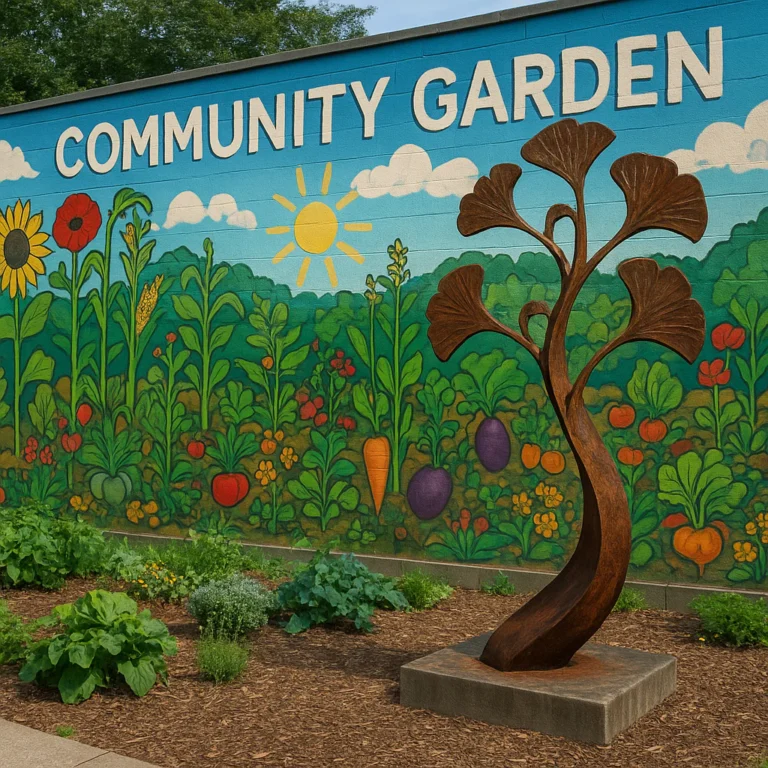
2. Collaborating with Local Artists for Mural and Mosaic Projects
Nothing says “community” like a wall painted by neighbors. But how do you start?
- Step 1: Identify a blank wall or a large fence.
- Step 2: Host a “Design Jam” where locals sketch ideas.
- Step 3: Partner with a local artist to guide the execution.
Why it works: Murals act as visual anchors. They draw people in from the street and give the garden a distinct identity.
3. Designing Interactive Sound and Light Features
Gardens aren’t just visual; they should be an immersive sensory experience.
- Sound: Install wind chimes made from recycled metal or bamboo flutes that play when the breeze hits.
- Light: Solar-powered LED path lights or fiber-optic stars can turn the garden into a nightime wonderland.
4. Curating Rotating Exhibits of Community-Created Art
Treat your garden like a museum with a changing roster.
- The Concept: Dedicate a specific “gallery wall” or pedestal area for local artists to display work for 3-6 months.
- The Benefit: This keeps the garden fresh and exciting, encouraging repeat visits.
5. Utilizing Upcycled Materials for Eco-Art Installations
Turn trash into treasure. Old tires, pallets, and broken ceramics can become sculptural planters or mosaic benches.
- Brand Spotlight: Look for materials from Home Depot or Lowe’s recycling centers, or scour Etsy for reclaimed wood supplies.
6. Hosting Art-Inspired Workshops and Performance Events
The garden is the stage; the community is the cast.
- Ideas: Outdoor yoga, poetry slams, or “paint and sip” nights under the trellis.
- Impact: These events transform passive observers into active participants.
7. Creating Visual Wayfinding and Storytelling Pathways
Every path should tell a story. Use painted stepping stones, themed signage, or narrative murals along the walkways to guide visitors through the garden’s history or the lifecycle of a plant.
🤝 Building Bridges: How Art Fosters Social Cohesion in Neighborhood Gardens
Why does art matter in a garden? Because art breaks the ice.
In a standard garden, neighbors might nod politely while weding. In an art-integrated garden, they stop to discuss the sculpture, ask about the mural’s meaning, or help paint a bench. This shared creative act builds social capital.
The Psychology of Shared Creation
When a diverse group of people work together to create something beautiful, barriers of age, race, and socioeconomic status often dissolve.
- Inclusivity: Art projects can be adapted for all abilities, ensuring that everyone has a voice.
- Conflict Resolution: Collaborative art can be a therapeutic tool for resolving neighborhood tensions.
But what about the skeptics? Some argue that art distracts from the primary goal of growing food. We’ve heard this before! However, data shows that aesthetic appeal drives engagement, and engaged communities are better at maintaining the garden and sharing the harvest. It’s a virtuous cycle, not a trade-off.
🏛️ Navigating the Bureaucracy: Permits, Zoning, and Public Art Policies
Here’s the part where the fun meets the paperwork. Don’t let the red tape scare you off! Understanding the rules is the first step to creative freedom.
Key Regulatory Areas
- Zoning Laws: Check if your garden is zoned for “public assembly” or “commercial use” if you plan to host events.
- Permits for Structures: Large sculptures or permanent murals often require building permits.
- Public Art Percentages: Many cities have a “Percent for Art” policy, requiring 1% of public construction budgets to be spent on art. Ask your city planner!
How to Get Approved
- Form a Committee: Present a united front with a clear plan.
- Safety First: Ensure all art is structurally sound and doesn’t block emergency access.
- Community Support: Gather letters of support from neighbors. As seen in the Boulder Civic Area feedback, community voice is the most powerful tool you have.
Pro Tip: If you are struggling with the bureaucracy, reach out to your local Land Trust or Arts Council. They often have legal teams that can help navigate the maze.
💰 Funding the Vision: Grants, Sponsorships, and Crowdfunding for Garden Art
Let’s talk money. Art costs cash, but there are more funding sources than you might think.
1. Government Grants
- NEA (National Endowment for the Arts): Offers grants for community arts projects.
- Local Arts Councils: Almost every city has a small grants program for public art.
2. Corporate Sponsorships
Local businesses love visibility. Offer to paint their logo on a bench or feature their name on a plaque.
- Target: Look for businesses that align with sustainability, like Patagonia or Ben & Jerry’s.
3. Crowdfunding
Platforms like Kickstarter or GoFundMe are great for community-driven projects.
- Strategy: Offer “rewards” like a named flower bed or a free workshop ticket.
4. In-Kind Donations
Don’t forget materials! Ask local hardware stores for paint, lumber, or tools.
- Brand Check: Sherwin-Williams and Behr often have community donation programs.
| Funding Source | Pros | Cons | Best For |
|---|---|---|---|
| Government Grants | Large sums, high prestige | Slow process, strict reporting | Large-scale permanent installations |
| Corporate Sponsorship | Fast funding, marketing support | Branding requirements | High-visibility murals or sculptures |
| Crowdfunding | Community engagement, flexible | Requires heavy marketing effort | Smaller, specific projects |
| In-Kind Donations | No cash outlay, builds relationships | Limited to specific items | Materials and tools |
🛠️ DIY vs. Professional: Choosing the Right Approach for Your Community Project
Should you paint the mural yourself or hire a pro? It depends on your goals, budget, and skill level.
The DIY Approach
- Pros: Low cost, high community involvement, fun team-building.
- Cons: Time-consuming, potential for lower durability, requires coordination.
- Best For: Murals, temporary installations, and workshops.
The Professional Approach
- Pros: High quality, durable, faster execution, insured.
- Cons: Expensive, less “community handprint” (unless managed well).
- Best For: Large sculptures, complex engineering, or permanent structures.
The Hybrid Model: The best results often come from a collaborative approach. Hire a professional artist to design and lead, but have the community fill in the details. This ensures quality while maintaining the community spirit.
🌍 Case Studies: Global Success Stories of Gardens as Art Destinations
Let’s look at the giants standing in the field.
1. The Nelson Mandela Community Garden (Harlem, NYC)
As highlighted in the first YouTube video summary, this garden is a beacon of resistance and beauty. It transformed a neglected lot into a vibrant cultural hub with murals and sculptures that tell the story of the neighborhood.
- Key Takeaway: Art can be a tool for advocacy and preservation.
2. Prinzessinnengarten (Berlin, Germany)
This urban garden uses mobile planters and recycled materials to create a dynamic, ever-changing art installation. It’s a model for sustainable urban design.
- Key Takeaway: Flexibility and upcycling can create a unique aesthetic.
3. The Elizabeth Street Garden (NYC)
Fighting against development, this garden became a symbol of community resilience. Its art installations were not just decorations but statements of existence.
- Key Takeaway: In the face of gentrification, art makes the garden unignorable.
📸 Capturing the Moment: Marketing Your Garden as a Public Art Atraction
Once you’ve built it, you need to show it off.
Social Media Strategy
- Instagram: Post high-quality photos of the art and the harvest. Use hashtags like #CommunityGardenArt and #UrbanOasis.
- TikTok: Create time-lapse videos of the art creation process.
- Local Press: Invite local newspapers and blogs to cover your “opening.”
Events as Marketing
Host an “Art Walk” or a “Garden Gala.” Make it an event that people want to attend.
Question: How do you ensure your garden doesn’t just become a photo op but remains a living, breathing community space? The answer lies in programming. Keep the events coming!
🔧 Maintenance Matters: Preserving Art in the Elements
Art outdoors faces the elements: rain, sun, wind, and… well, kids.
Best Practices for Longevity
- Materials: Use weather-resistant paints (like Rust-Oleum or Krylon) and sealed wood.
- Coatings: Apply a clear UV-protective sealant to murals and sculptures annually.
- Community Care: Assign a “Art Care Team” to check for damage and clean the installations.
Did you know? Salt spray near the coast can corrode metal art quickly. If you’re in a coastal area, use stainless steel or fiberglass instead of iron.
🚫 Common Pitfalls: What to Avoid When Merging Horticulture and Art
Even the best intentions can go wrong. Here’s what to watch out for.
- Overcrowding: Don’t let the art block the sunlight for your plants!
- Toxic Materials: Avoid paints or treatments that are harmful to soil or pollinators.
- Lack of Maintenance: An abandoned mural is worse than no mural at all.
- Exclusion: Ensure the art reflects the diversity of the community, not just one person’s vision.
Remember: The goal is integration, not domination. The art should enhance the garden, not overshadow the food.
📅 Upcoming Events: Where to Find Art in Garden Festivals and Open Days
Looking for inspiration? Check out these types of events:
- Community Garden Open Houses: Many cities host annual tours.
- Art Walks: Look for local “First Friday” events that include garden stops.
- Farmers Markets: Often feature local artists selling garden-themed crafts.
Tip: Follow your local Parks and Recreation department on social media for updates on upcoming garden art festivals.
🏙️ City Initiatives: How Municipalities Are Embracing Garden Art
Cities are waking up to the power of garden art.
- Boulder, CO: As seen in the Civic Area Phase 2 feedback, the city is actively seeking ways to integrate interactive art and edible landscapes.
- New York City: The 596 Acres initiative maps “living lots” and supports community-led art projects.
- Portland, OR: Has a robust Public Art Program that includes community gardens.
The Trend: Cities are moving from viewing gardens as “maintenance liabilities” to cultural assets. This shift is opening up new funding and policy avenues.
📊 The Impact: Measuring the Benefits of Artistic Community Gardens
How do we know it’s working? We measure it.
Metrics for Success
- Visitation Rates: Count the number of visitors before and after art installation.
- Community Surveys: Ask residents about their sense of belonging.
- Health Indicators: Track participation in physical activities and social interactions.
- Economic Data: Monitor local business foot traffic.
The Bottom Line: The data consistently shows that art + nature = stronger communities. It’s not just a nice-to-have; it’s a necessity for healthy urban living.
💡 Quick Tips and Facts: The Art of Gardening
Let’s recap with a few final nugets of wisdom.
- Color Theory: Use complementary colors in your plantings to create visual harmony.
- Texture Play: Mix rough and smooth leaves to create tactile interest.
- Seasonal Rotation: Plan your art to change with the seasons, just like the plants.
- Pollinator Friendly: Ensure your art doesn’t block pollinators; use open designs for sculptures.
Final Thought: The most beautiful garden is one that tells a story. What story will your garden tell?
🏁 Conclusion: Cultivating Beauty Together

We started this journey wondering how to transform a simple patch of dirt into a vibrant public art space. We’ve explored the history, the strategies, the funding, and the pitfalls. The answer is clear: community gardens are the perfect canvas for public art.
By merging the healing power of nature with the expressive power of art, we create spaces that are not only productive but also inspiring, inclusive, and resilient. Whether it’s a mural painted by neighbors, a sculpture made from recycled tires, or a living wall of herbs, every artistic addition strengthens the fabric of our community.
Our Recommendation: Don’t wait for permission to start small. Paint a pot, plant a flower in a pattern, or host a sketching session. Start where you are, use what you have, and let the art grow.
As we saw in the Nelson Mandela Community Garden, these spaces are more than just gardens; they are sanctuaries of hope and bastions of community. Let’s make sure they stay that way.
The Final Question: Will you be the one to pick up the brush and plant the seed of change in your neighborhood? The canvas is waiting.
🔗 Recommended Links
Ready to get started? Here are some resources and products to help you bring your vision to life.
Tools and Materials
- Outdoor Paints:
Rust-Oleum: Search on Amazon | Rust-Oleum Official
Krylon: Search on Amazon | Krylon Official - Sculpture Materials:
Recycled Metal: Search on Etsy | Home Depot
Sealants: Search on Amazon | Minwax Official
Books and Guides
- “The Community Garden Handbook”: Search on Amazon
- “Public Art in Public Places”: Search on Amazon
Internal Resources
- Benefits of Community Gardens
- Community Garden Events
- Community Garden Policies
- Edible Plants
- Climate Adaptation in Gardening
❓ FAQ: Frequently Asked Questions

How can community gardens be designed to function as public art installations?
Community gardens can function as public art by treating the entire space as a canvas. This involves strategic planting (topiary, color blocking), integrating sculptural elements (benches, trellises), and creating interactive zones (murals, sound installations). The key is to ensure the art enhances, rather than hinders, the gardening activities.
What are the benefits of integrating murals into community garden spaces?
Murals provide visual identity, foster community pride, and can act as bariers to vandalism. They also serve as educational tools, telling the story of the neighborhood or the plants. Studies show that colorful, artistic environments increase visitor engagement and social interaction.
How do you fund art projects within a community garden?
Funding can come from local government grants (e.g., Percent for Art programs), corporate sponsorships, crowdfunding campaigns, and in-kind donations from hardware stores. Many cities also have arts councils specifically dedicated to funding community projects.
Read more about “🛡️ 7 Legal Shields for Volunteer Liability in Garden Projects (2026)”
Can community gardens qualify as public art for city grants?
Yes! Many cities recognize community gardens as public art if they include permanent or semi-permanent artistic elements. The key is to frame the project as a cultural asset that benefits the public, aligning with the city’s arts and culture strategic plan.
Read more about “🌱 7 Community Garden Grants to Fund Your Green Dream (2026)”
What are some examples of successful community gardens that double as art spaces?
- Nelson Mandela Community Garden (NYC): Known for its vibrant murals and community activism.
- Prinzessinnengarten (Berlin): A model of mobile, upcycled art and sustainable design.
- Elizabeth Street Garden (NYC): A symbol of resistance and community resilience through art.
Read more about “🌿 7 Ways to Build Thriving Vertical Gardening Community Spaces (2026)”
How does public art in gardens improve community engagement?
Public art acts as a conversation starter. It draws people in, encourages collaborative creation, and creates a sense of ownership. When people see their neighbors’ work, they feel more connected to the space and each other, leading to higher participation in garden activities.
Read more about “🌱 25+ Best Community Building Activities to Spark Connection (2026)”
What materials are best for creating durable art in outdoor community gardens?
- Metal: Stainless steel or powder-coated steel for longevity.
- Wood: Cedar, redwood, or pressure-treated wood, sealed with UV-protectant.
- Stone/Concrete: Excellent for sculptures and pathways.
- Paint: Use exterior-grade, UV-resistant paints (like Rust-Oleum or Krylon) and apply a clear sealant.
How do I ensure my art project is inclusive for all community members?
Involve a diverse group in the planning and execution. Use accessible materials and designs that accommodate different abilities. Host workshops where everyone can contribute, regardless of skill level. Ensure themes reflect the cultural diversity of the neighborhood.
What role does local government play in supporting garden art?
Local governments can provide permits, funding, and technical assistance. They can also designate gardens as public art sites, offering protection and recognition. Engaging with city planners early is crucial for success.
Read more about “🌱 15+ Secrets to Thriving Container Gardens for Community Spaces (2026)”
📚 Reference Links
- Trust for Public Land: The Power of Parks to Promote Health
- City of Boulder: Community Provides Feedback on Civic Area Phase 2
- 596 Acres: Living Lots Map
- National Endowment for the Arts: Grants for Community Arts
- Rust-Oleum: Outdoor Paint Products
- Krylon: Outdoor Spray Paint
- Minwax: Wood Sealants