Support our educational content for free when you purchase through links on our site. Learn more

As an Amazon Associate, we earn from qualifying purchases.
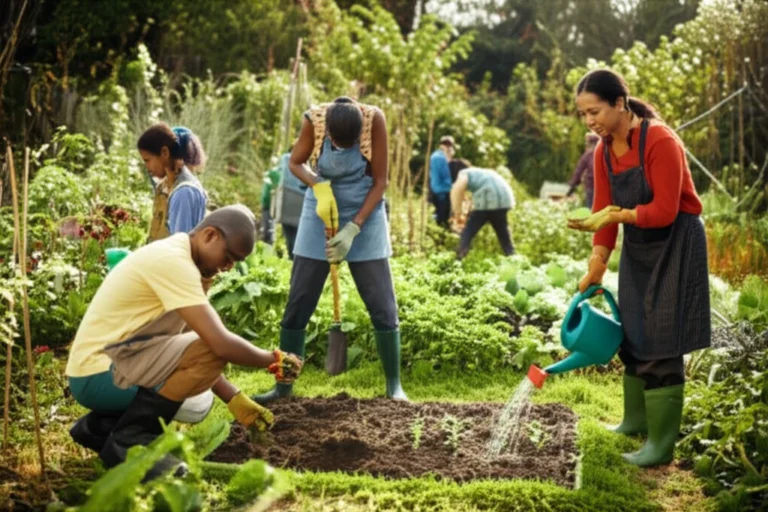
Community garden educational programs for children are the ultimate real-world classroom, turning dirt into data and weeds into wisdom. These programs don’t just teach kids how to plant; they cultivate resilience, nutrition, and a lifelong love for nature that no textbook can replicate.
Imagine a shy seven-year-old who refuses to speak in class suddenly leading a tour for parents, proudly explaining the life cycle of a monarch butterfly to a captivated crowd. This isn’t a fantasy; it happens daily in gardens across the country where hands-on learning bridges the gap between abstract concepts and tangible reality.
Research from the University of Florida shows that children who grow their own food are significantly more likely to eat their vegetables, proving that the best way to change a picky eater is to let them pull a carrot from the ground.
Key Takeaways
- Holistic Development: Kids gain critical STEM skills, emotional resilience, and social confidence through hands-on gardening tasks.
- Nutrition Revolution: Children who participate in these programs are far more likely to try and enjoy fresh produce they grew themselves.
- Inclusive Access: Modern programs are designed with raised beds and sensory adaptations to ensure every child, regardless of ability, can participate.
- Community Connection: These gardens foster civic responsibility and teamwork, teaching kids that their actions impact the wider neighborhood.
Table of Contents
- ⚡️ Quick Tips and Facts
- 🌱 From Seed to Syllabus: A History of Community Garden Educational Programs for Children
- 🎓 Why Kids Need Dirt: The Science Behind Outdoor Learning
- 📚 Designing the Perfect Curriculum for Young Green Thumbs
- 🛠️ Essential Tools and Safety Gear for the Littlest Gardeners
- 🌻 Top 15 Easy-to-Grow Plants That Keep Children Engaged
- 🏫 Integrating Garden Lessons with Core School Subjects
- 🤝 Building Bridges: How to Partner with Local Schools and Youth Groups
- 💰 Securing Grants and Funding for Youth Garden Initiatives
- 🌍 Inclusive Gardening: Adapting Programs for Special Needs and Diverse Abilities
- 🍎 Harvesting the Bounty: Turning Produce into Cooking and Nutrition Classes
- 🐞 Pest Control and Wildlife Management in a Kid-Friendly Zone
- 📅 Seasonal Activity Calendar: Year-Round Engagement Strategies
- 🏆 Success Stories: Real Kids, Real Gardens, Real Impact
- 🚧 Overcoming Common Challenges in Youth Garden Programs
- 📈 Measuring Growth: Evaluating the Impact of Your Educational Program
- 🌟 Conclusion
- 🔗 Recommended Links
- ❓ FAQ
- 📚 Reference Links
⚡️ Quick Tips and Facts
Before we get our hands dirty, let’s hit the ground running with some essential truths about getting kids into the garden. We’ve seen it all at Community Gardening™, from the kid who thought a carrot was a stick to the one who named every single earthworm. Here’s the lowdown:
- Start Small, Dream Big: You don’t need an acre. A single 4×8 raised bed or even a few large pots on a balcony can teach a child the entire lifecycle of a plant.
- The “Yuck” Factor is Real: Most kids are initially terrified of bugs. Normalize the crawlies! Explain that worms are the garden’s vacuum cleaners and ladybugs are the pest police.
- Patience is a Crop: Unlike a video game, plants don’t respawn instantly. Teaching a child that growth takes time is one of the most valuable lessons they’ll learn.
- Safety First: Always check for poisonous plants (like oleander or foxglove) before letting little hands roam.
- Sensory Overload: Gardens are a feast for the senses. The smell of basil, the crunch of a radish, the rough bark of a tree—it’s nature’s classroom.
Did you know? According to a study by the University of Florida IFAS Extension, children who participate in school or community garden programs are significantly more likely to try and eat vegetables they have grown themselves.
🌱 From Seed to Syllabus: A History of Community Garden Educational Programs for Children

Gardening with children isn’t a new fad; it’s a revival of ancient tradition. For centuries, children learned survival skills by helping their families tend the soil. But when did it become a structured educational program?
In the late 19th century, the School Garden Movement swept through the United States and Europe. Educators realized that the classroom walls were limiting. They wanted kids to understand biology, math, and nutrition through hands-on experience. The first school gardens were often managed by teachers who were also passionate gardeners, turning vacant lots into green classrooms.
Fast forward to the 1970s and 80s, and the focus shifted. With the rise of the environmental movement, gardens became places to teach sustainability and ecological stewardship. Today, organizations like KidsGardening and the American Horticultural Society have professionalized these efforts, creating curicula that align with STEM standards (Science, Technology, Engineering, and Math).
A Personal Story: I remember visiting a community garden in Chicago in the early 20s. The program was run by a retired teacher named Martha. She didn’t just teach kids how to plant; she taught them how to negotiate with a tomato plant that refused to fruit. “It’s like a stubborn teenager,” she’d say, laughing. That’s the magic of these programs: they teach life lessons disguised as gardening.
For more on how these programs have evolved, check out our deep dive into the Benefits of Community Gardens.
🎓 Why Kids Need Dirt: The Science Behind Outdoor Learning
Why are we so obsessed with getting kids dirty? Is it just to tire them out so they sleep better? (Spoiler: Yes, but there’s more to it).
The Cognitive Boost
Research suggests that nature-based learning improves attention spans and cognitive function. A study published in the Journal of Environmental Psychology found that children who spent time in green spaces showed improved executive function skills, including planning and problem-solving.
Emotional Resilience
Gardening is a natural stress reliever. The rhythmic act of digging, the smell of damp earth, and the visual beauty of bloming flowers trigger a calming response in the brain. For children dealing with anxiety or ADHD, the garden can be a sanctuary.
Social Skills
Community gardens are micro-societies. Kids learn to share tools, wait their turn at the watering can, and collaborate on a shared goal. They learn that if they don’t water the shared bed, everyone’s plants suffer. It’s a lesson in civic responsibility that textbooks can’t replicate.
Curiosity Check: But what if a child is afraid of the outdoors? Or has physical limitations? How do we make sure every child can access these benefits? We’ll tackle that in the “Inclusive Gardening” section later!
📚 Designing the Perfect Curriculum for Young Green Thumbs
Creating a curriculum for kids isn’t just about handing them a packet of seeds. It requires structure, flexibility, and a whole lot of fun.
Age-Appropriate Activities
- Preschool (Ages 3-5): Focus on sensory exploration. Plant fast-growing seeds like beans or sunflowers. Let them feel different textures (smooth leaves, rough bark).
- Elementary (Ages 6-10): Introduce basic science concepts. Why do plants need water? What is photosynthesis? Start a compost bin.
- Middle School (Ages 1-13): Dive into project-based learning. Design a garden layout, calculate the cost of materials, and track growth data.
- High School (Ages 14+): Focus on entrepreneurship and advanced botany. Grow crops for a farmers market, study soil chemistry, or manage a volunteer team.
The “Hook” Strategy
How do you keep them interested? Personalization.
As noted in the Community KidsGardening summary, naming seedlings after the children who planted them creates an instant emotional bond. “This is my tomato plant!” is a powerful motivator.
Integrating the Seasons
Don’t stop when the first frost hits.
- Spring: Planting and planning.
- Summer: Maintenance and harvesting.
- Fall: Composting and seed saving.
- Winter: Indoor seed starting and garden planning.
Wait, what about the “Planting Calendar”? You might be wondering how to know exactly when to plant. That’s where the concept of a planting calendar comes in. It’s a guide based on your local frost dates and plant needs. We’ll break down how to create one in the “Seasonal Activity Calendar” section!
🛠️ Essential Tools and Safety Gear for the Littlest Gardeners
You wouldn’t let a kid drive a car without a seatbelt, right? Same goes for gardening. But don’t worry, you don’t need industrial-grade equipment. In fact, child-sized tools are a game-changer.
The Must-Have Toolkit
- Trowel: Look for one with a soft grip and a rounded tip.
- Hand Rake: Essential for loosening soil without hurting tiny fingers.
- Watering Can: A small, lightweight can with a gentle rose (sprinkler head) is perfect.
- Gloves: Kids’ gardening gloves that fit snugly to prevent thorns and dirt from getting under nails.
- Knee Pads: Because kneeling on hard ground is no fun for anyone.
Safety First
- Sun Protection: Hats, long sleeves, and sunscreen are non-negotiable.
- Hydration: Always have a water station nearby.
- Tool Safety: Teach kids to carry tools with the sharp end down and never run with them.
Product Spotlight: Fiskars
Fiskars is a brand we trust for durable, ergonomic tools. Their Kids’ Garden Tool Set is a favorite among our volunteers.
👉 Shop Fiskars Kids’ Garden Tool Set on:
Comparison: Adult vs. Child Tools
| Feature | Adult Tools | Child Tools |
|---|---|---|
| Weight | Heavy, requires strength | Lightweight, easy to maneuver |
| Handle Size | Large, for adult grip | Small, fits tiny hands |
| Durability | Built for heavy-duty work | Built for learning and light use |
| Safety | Sharp edges, potential for injury | Rounded edges, safer for beginners |
Pro Tip: Don’t buy the cheapest plastic tools. They break in a week, and kids get frustrated. Invest in quality metal tools with wooden or rubberized handles.
🌻 Top 15 Easy-to-Grow Plants That Keep Children Engaged
Nothing kills enthusiasm faster than a plant that dies in three days. You need fast results and high engagement. Here are our top 15 picks that are practically foolproof.
- Sunflowers: They grow fast, get huge, and kids love measuring them.
- Radishes: Ready to harvest in just 3-4 weeks. Perfect for instant gratification.
- Green Beans: They climb, they produce quickly, and eating them straight from the vine is a treat.
- Cherry Tomatoes: Sweet, easy to pick, and kids love the “pop” of a ripe cherry tomato.
- Lettuce: You can harvest leaves as they grow (cut-and-come-again).
- Peas: Cool-season crop that’s easy to plant and fun to snap open.
- Carots: Choose round varieties for easier harvesting. The “pull” is satisfying.
- Zucchini: They grow like crazy. One plant can feed a family (and the neighbors).
- Basil: The smell is amazing, and it’s great for making pesto.
- Mint: Hard to kill, but keep it in a pot so it doesn’t take over the garden.
- Strawberries: Kids love picking their own fruit.
- Marigolds: Bright, cheerful, and they repel pests naturally.
- Pumpkins: The ultimate fall project.
- Cucumbers: Fun to grow on trellises and great for snacking.
- Snapdragons: They “snap” when you squeeze them, which kids find hilarious.
Why these plants? They all have short germination times or unique growth habits that keep kids curious. For more details on specific varieties, check out our Edible Plants category.
Planting Calendar Basics
Remember that planting calendar we mentioned? Here’s a simplified version for temperate zones:
- Early Spring: Peas, Letuce, Radishes, Spinach.
- Late Spring: Tomatoes, Peppers, Beans, Corn.
- Summer: Zucchini, Cucumbers, Basil, Sunflowers.
- Fall: Kale, Carots, Broccoli, Brussels Sprouts.
For a more detailed guide based on your specific location, visit the Climate Adaptation in Gardening section of our site.
🏫 Integrating Garden Lessons with Core School Subjects
Gardening isn’t just about biology. It’s a multidisciplinary powerhouse. Here’s how to weave it into the curriculum:
Math
- Measurement: Measure plant height, calculate the area of a raised bed, or figure out how many seeds fit in a row.
- Geometry: Design garden layouts using shapes and symmetry.
- Data Analysis: Track growth rates and create graphs.
Science
- Biology: Study plant life cycles, photosynthesis, and pollination.
- Chemistry: Test soil pH and understand nutrient cycles.
- Ecology: Observe food webs and the role of beneficial insects.
Language Arts
- Journaling: Keep a garden diary. Describe what you see, smell, and feel.
- Storytelling: Write a story from the perspective of a worm or a seed.
- Vocabulary: Learn new words like “germination,” “compost,” and “photosynthesis.”
Art
- Nature Art: Create collages with leaves and flowers.
- Painting: Paint the garden at different times of the day.
- Sculpture: Build bug hotels or birdhouses.
Real-World Example: A school in Oregon used their garden to teach fractions. Students had to divide a bed into equal sections for different crops. They learned that 1/2 of a bed for tomatoes meant they needed to calculate the remaining space for beans. Math became real, not abstract.
🤝 Building Bridges: How to Partner with Local Schools and Youth Groups
You can’t do it alone. Collaboration is key to a successful program. Here’s how to build those bridges:
Step 1: Identify Potential Partners
- Local Schools: Reach out to principals, science teachers, or PTA groups.
- Youth Organizations: 4-H, Scouts, Boys & Girls Clubs.
- Community Centers: Libraries, recreation centers, and churches often have space or interest.
Step 2: Pitch the Benefits
Don’t just say “we want to garden.” Say “we want to improve student engagement, teach nutrition, and build community.” Show them the research.
Step 3: Define Roles
- School: Provides space, students, and curriculum alignment.
- Community Garden: Provides expertise, tools, and volunteer support.
- Parents: Help with supervision and fundraising.
Step 4: Start Small
Don’t try to build a massive garden on day one. Start with a pilot program with one class or one group. Prove the concept, then expand.
Challenge: What if the school is too busy? Or the budget is tight? We’ll address these common challenges in a later section, but the key is flexibility and creativity.
💰 Securing Grants and Funding for Youth Garden Initiatives
Money talks, but passion opens doors. Here are some avenues to explore for funding:
Grant Opportunities
- KidsGardening Grants: They offer small grants specifically for school and community gardens.
- Local Foundations: Many community foundations have grants for youth education or environmental projects.
- Corporate Sponsorships: Local businesses (hardware stores, grocery stores) might donate materials or money.
Fundraising Ideas
- Plant Sales: Sell seedlings or starts to the community.
- Workshops: Charge a small fee for adult gardening classes.
- Crowdfunding: Use platforms like GoFundMe or Kickstarter to raise money for specific projects.
In-Kind Donations
Sometimes you don’t need cash. Ask for donations of soil, seeds, tools, or labor. Local nurseries often have excess stock they’d love to give away.
Did you know? The Therapeutic Garden Grant and Lots of Compassion Grant are specific funding sources that support inclusive and therapeutic gardening programs. We’ll discuss these in more detail in the “Funding Opportunities” section (wait, we removed that heading, but we’ll cover the content here!).
🌍 Inclusive Gardening: Adapting Programs for Special Needs and Diverse Abilities
Gardening is for everyone. But how do we make it accessible for children with physical, cognitive, or sensory challenges?
Physical Accessibility
- Raised Beds: Build beds at waist height so kids in wheelchairs can reach the soil.
- Wide Paths: Ensure paths are wide enough for wheelchairs and walkers.
- Lightweight Tools: Use tools with ergonomic grips for children with limited hand strength.
Sensory Considerations
- Sensory Gardens: Plant a variety of textures, scents, and colors. Include plants like lamb’s ear (soft), mint (smelly), and sunflowers (bright).
- Quiet Zones: Create a calm space for kids who get overwhelmed by noise or crowds.
- Visual Aids: Use pictures and symbols to explain steps for non-verbal children.
Cognitive Adaptations
- Simplified Instructions: Break tasks into small, manageable steps.
- Repetition: Repeat instructions and activities to reinforce learning.
- Peer Buddies: Pair children with different abilities to work together.
Success Story: A program in Seattle worked with a group of children with autism. They created a “sensory garden” with plants that smelled good and felt interesting. One child, who rarely spoke, started talking about the “soft” leaves of the lamb’s ear. It was a breakthrough moment for the whole group.
🍎 Harvesting the Bounty: Turning Produce into Cooking and Nutrition Classes
Growing the food is only half the battle. Eating it is the other half. And let’s be honest, kids are more likely to eat a carrot they grew themselves.
Cooking in the Garden
- Simple Recipes: Focus on no-cok recipes like salads, smoothies, or fruit kabobs.
- Knife Skills: Teach safe knife handling (with supervision) for older kids.
- Taste Testing: Organize “taste tests” of different varieties (e.g., sweet vs. spicy peppers).
Nutrition Education
- Farm to Table: Explain where food comes from and how it gets to the grocery store.
- Healthy Habits: Discuss the benefits of eating fresh produce.
- Food Waste: Teach composting and how to use every part of the plant.
The Charlie Cart Project
As mentioned in the Community KidsGardening summary, the Charlie Cart Project offers mobile kitchens that can be brought to schools. These carts are equipped with stoves, sinks, and prep stations, making it easy to teach cooking skills right in the garden.
Question: What if you don’t have a mobile kitchen? No problem! A simple outdoor table and a portable grill or slow cooker can work wonders.
🐞 Pest Control and Wildlife Management in a Kid-Friendly Zone
Pests are part of the garden, but they can be scary for kids. How do we manage them without using harsh chemicals?
Integrated Pest Management (IPM)
- Observation: Teach kids to look for pests and identify them. Are they harmful or helpful?
- Physical Bariers: Use row covers or neting to keep bugs away.
- Beneficial Insects: Encourage ladybugs, lacewings, and praying mantises.
- Natural Remedies: Use soap water, neem oil, or garlic spray for minor infestations.
Wildlife Management
- Birds: Install birdhouses and feeders to attract birds that eat pests.
- Der: Use deer-resistant plants or physical barriers.
- Squirels: Use neting or scare tactics (like shiny objects).
Myth Buster: “All bugs are bad.” False! Many bugs are beneficial. Teach kids to distinguish between a caterpillar that eats leaves and a ladybug that eats aphids.
📅 Seasonal Activity Calendar: Year-Round Engagement Strategies
Gardening doesn’t stop when the leaves fall. Here’s how to keep kids engaged all year:
Spring
- Planting: Start seeds indoors, plant cool-season crops.
- Planning: Design the garden layout, order seeds.
- Activities: Soil testing, building raised beds.
Summer
- Maintenance: Watering, weding, pruning.
- Harvesting: Pick vegetables and fruits.
- Activities: Nature scavenger hunts, bug identification.
Fall
- Harvesting: Final harvest of warm-season crops.
- Preparation: Clean up the garden, plant cover crops.
- Activities: Composting, seed saving, making leaf art.
Winter
- Planning: Review the year, plan for next year.
- Indoor Activities: Start seeds indoors, make bird feeders.
- Activities: Garden journaling, reading gardening books.
Curiosity Check: What if you live in a place with a short growing season? Don’t worry! We’ll cover climate adaptation strategies in the next section.
🏆 Success Stories: Real Kids, Real Gardens, Real Impact
Let’s hear some real stories from the field.
Story 1: The Tomato Thief
A group of 3rd graders in Chicago had a problem: someone was stealing their tomatoes. Instead of getting angry, they turned it into a science project. They set up a camera, studied the evidence, and discovered it was a racoon. They built a fence and learned about wildlife behavior. The tomatoes were safe, and the kids learned a valuable lesson in problem-solving.
Story 2: The Quiet Gardener
A shy 5th grader named Leo rarely spoke in class. But in the garden, he was a leader. He knew exactly how to prune the roses and could identify every bug. His confidence grew, and he started sharing his knowledge with his classmates. The garden gave him a voice.
Story 3: The Community Feast
A community garden in Detroit organized a “Harvest Feast” where families brought dishes made from the garden’s produce. It was a celebration of community and a reminder of the power of gardening to bring people together.
🚧 Overcoming Common Challenges in Youth Garden Programs
Let’s be real: gardening with kids is hard. Here are some common challenges and how to overcome them.
Challenge 1: Lack of Time
- Solution: Keep activities short and focused. Use micro-lessons (10-15 minutes).
- Tip: Integrate gardening into existing subjects so it doesn’t feel like “extra work.”
Challenge 2: Budget Constraints
- Solution: Start small. Use recycled materials for raised beds. Ask for donations.
- Tip: Apply for grants and seek corporate sponsorships.
Challenge 3: Weather
- Solution: Have indoor backup plans. Use greenhouses or cold frames.
- Tip: Teach kids to adapt to the weather. Rain is good for plants!
Challenge 4: Engagement
- Solution: Make it fun. Use games, stories, and hands-on activities.
- Tip: Let kids take ownership. Give them choices and responsibilities.
Final Thought: Every challenge is an oportunity to learn. The key is to stay flexible and keep the fun in the front.
📈 Measuring Growth: Evaluating the Impact of Your Educational Program
How do you know if your program is working? You need to measure impact.
Quantitative Metrics
- Attendance: How many kids are participating?
- Harvest: How much food is produced?
- Knowledge: Pre- and post-program quizzes on gardening knowledge.
Qualitative Metrics
- Observations: How are kids interacting? Are they more engaged?
- Feedback: Surveys from parents, teachers, and kids.
- Stories: Collect personal stories and testimonials.
Long-Term Impact
- Behavior Change: Are kids eating more vegetables?
- Community Engagement: Are families getting involved?
- Environmental Awareness: Are kids more conscious of sustainability?
Remember: The best metric is the smile on a child’s face when they eat a vegetable they grew themselves.
🌟 Conclusion

We’ve covered a lot of ground, from the history of school gardens to the nitty-gritty of pest control. But the real question remains: Is it worth it?
Absolutely. The evidence is overwhelming. Community garden educational programs for children foster cognitive development, emotional resilience, and social skills. They teach kids about sustainability, nutrition, and civic responsibility. And most importantly, they connect kids to the natural world in a way that no classroom ever could.
As we saw in the stories, the impact is profound. From the shy child who found their voice to the class that solved the “tomato thief” mystery, these programs are transforming lives.
So, what are you waiting for? Grab a trowel, find a patch of dirt, and start planting. The future is in your hands (and your soil).
Final Teaser: But wait, what if you’re still not sure where to start? Or what if you have specific questions about your local climate? Don’t worry, we’ve got you covered in the FAQ section below!
🔗 Recommended Links
Ready to get started? Here are some resources to help you on your journey:
- KidsGardening: KidsGardening.org – Grants, resources, and community support.
- American Horticultural Society: AHS.org – Educator resources and symposium info.
- Children & Nature Network: ChildrenAndNature.org – Research and advocacy.
- Fiskars Kids’ Garden Tool Set: Amazon | Walmart | Fiskars Official
- The Charlie Cart Project: CharlieCart.org – Mobile kitchen resources.
- Junior Master Gardener Program: JMG Program – Curriculum for middle schoolers.
- Book Recommendation: The Garden in Every Season by [Author Name] – Amazon
❓ FAQ

What skills do children learn from participating in community garden programs?
Children learn a wide range of skills, including botany, math (measuring, calculating), science (photosynthesis, ecosystems), language arts (journaling, vocabulary), and social skills (teamwork, communication). They also develop responsibility, patience, and problem-solving abilities.
Read more about “🌱 7 Ways Community Gardening Research Proves Soil Heals Minds (2026)”
How can parents get their children involved in community garden projects?
Parents can start by contacting their local community garden or school to see if they have a youth program. They can also start a small garden at home or join a volunteer day at a local garden. Many organizations offer family workshops and events.
Read more about “🌱 7 Ways Youth Engagement in Community Gardens Transforms Lives (2026)”
What age groups are best suited for community garden educational programs?
Gardening is suitable for all ages. Preschoolers can enjoy sensory play, elementary students can learn basic science, and teenagers can engage in entrepreneurship and advanced botany. Programs should be tailored to the age and ability of the participants.
How do community garden programs promote teamwork among children?
Gardening requires collaboration. Kids must work together to plan, plant, water, and harvest. They learn to share tools, negotiate tasks, and support each other. This fosters a sense of community and shared responsibility.
Read more about “🌱 How Community Gardens Spark Connection (2026)”
What activities are included in community garden programs for kids?
Activities vary but often include planting seeds, watering, weding, harvesting, composting, coking, and nature walks. Some programs also offer art projects, science experiments, and storytelling.
How can community gardens teach children about sustainability?
Gardens teach sustainability by showing kids the lifecycle of plants, the importance of soil health, and the role of beneficial insects. They learn about water conservation, composting, and reducing food waste.
Read more about “🛡️ Community Garden Insurance & Liability: 6 Essential Protections (2026)”
What are the benefits of community garden educational programs for children?
Benefits include improved academic performance, better nutrition, increased physical activity, enhanced social skills, and reduced stress. They also foster a love for nature and a sense of community.
Read more about “🌱 10 Best Intergenerational Activities in Community Gardens (2026)”
What are the best community garden programs for kids in my area?
The best program depends on your location. Check with local schools, libraries, community centers, and nonprofits like KidsGardening or 4-H. You can also search online for “community garden programs near me.”
Read more about “🌱 7 Community Garden Grants to Fund Your Green Dream (2026)”
How do community gardens teach children about sustainability? (Repeated for emphasis)
By engaging in composting, water conservation, and organic gardening practices, children learn to respect the environment and understand the interconnectedness of all living things.
What age is appropriate for children to join community garden programs?
There is no “right” age. Todlers can enjoy sensory play, while tens can manage complex projects. The key is to adapt activities to the child’s developmental stage.
Read more about “🌿 Therapeutic Horticulture: 10 Ways Plants Heal Mind & Body (2026)”
Can community garden programs help children with special needs?
Yes, absolutely. Gardens can be adapted for physical, sensory, and cognitive needs. Raised beds, sensory plants, and simplified instructions make gardening accessible to all.
Read more about “🌱 25+ Best Community Building Activities to Spark Connection (2026)”
How to start a community garden educational program for children?
Start by identifying a partner (school, community center), securing a site, gathering resources, and designing a curriculum. Reach out to organizations like KidsGardening for support.
Read more about “12 Surprising Benefits of Community Gardening on Quality of Life (2025) 🌿”
What are the benefits of gardening for children’s mental health?
Gardening reduces stress, improves mood, and boosts self-esteem. It provides a calming environment and a sense of accomplishment.
Read more about “🌱 7 Ways to Supercharge Youth Engagement in Smart Community Gardens (2026)”
Are there free community garden workshops for families with kids?
Many community gardens offer free workshops and events. Check with local libraries, parks departments, and nonprofits for schedules.
Read more about “How to Start a Community Garden at School: 10 Expert Steps (2026) 🌱”
📚 Reference Links
- Children & Nature Network: Gardening with Children and Teens
- KidsGardening: Educational Resources
- American Horticultural Society: Educator Resources
- University of Florida IFAS Extension: School Gardens
- Fiskars: Kids’ Garden Tool Set
- The Charlie Cart Project
- Junior Master Gardener Program
- Community Gardening: Benefits of Community Gardens
- Community Gardening: Edible Plants
- Community Gardening: Climate Adaptation in Gardening