Support our educational content for free when you purchase through links on our site. Learn more

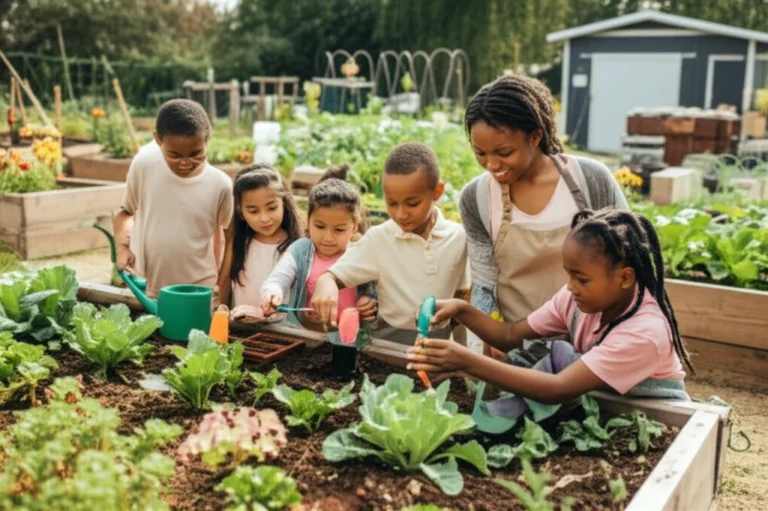
Youth engagement in smart community gardens thrives when technology empowers young leaders to solve real-world problems, turning data into action and vacant lots into thriving ecosystems. By blending IoT sensors with hands-on gardening, we transform passive participants into active civic innovators who shape their neighborhoods.
Imagine a high schooler in Chicago not just pulling weeds, but coding a Raspberry Pi to automate irrigation based on real-time soil moisture data. This isn’t science fiction; it’s the new reality of urban agriculture where digital literacy meets sustainability.
Recent studies show that when teens lead these tech-integrated projects, their sense of community ownership skyrockets, leading to lower dropout rates and higher civic participation. The secret sauce? Giving them the tools to measure, analyze, and fix their environment.
Ready to see how a simple sensor can spark a revolution? Let’s dive into the strategies that are changing the game.
Key Takeaways
- Empowerment through Data: Youth engagement in smart community gardens is maximized when students use sensors and apps to make informed decisions about water, soil, and plant health.
- STEM in Action: These projects serve as powerful STEAM platforms, teaching coding, engineering, and environmental science simultaneously.
- Civic Leadership: Tech-enabled gardens foster civic skills like conflict resolution, public speaking, and community organizing.
- Equity Matters: Bridging the digital divide is essential to ensure all young people, regardless of background, can access these transformative learning opportunities.
Table of Contents
- ⚡️ Quick Tips and Facts
- 🌱 From Dirt to Data: A Brief History of Youth in Smart Gardens
- 🤖 The Tech Toolkit: IoT Sensors, Apps, and Automation for Young Growers
- 🧠 Why Digital Literacy and Gardening Go Hand-in-Hand
- 📱 Top 7 Smart Garden Platforms Designed for Student Engagement
- 🏫 Integrating Smart Gardens into STEM and STEAM Curicula
- 👥 Building Community: How Teens Lead Digital Garden Projects
- 🛠️ 5 Essential Tools for Monitoring Soil, Water, and Light Remotely
- 🚧 Overcoming Bariers: Cost, Access, and the Digital Divide
- 🌍 Real-World Success Stories: Youth-Led Smart Garden Case Studies
- 📊 Measuring Impact: Data-Driven Insights on Civic Engagement
- 🔮 Future Trends: AI, Robotics, and the Next Generation of Gardeners
- 💡 Quick Tips and Facts
- 🏁 Conclusion
- 🔗 Recommended Links
- 📚 Reference Links
⚡️ Quick Tips and Facts
Before we dig our hands into the soil of data and dirt, let’s hit the fast-forward button on what makes smart community gardens tick for the younger generation. We’ve seen it all, from teens arguing over sensor calibration to high-fiving over a perfectly timed automated irrigation cycle. Here is the scoop:
- Tech Mets Dirt: It’s not just about planting seeds anymore; it’s about planting data. Young gardeners are using IoT (Internet of Things) sensors to track soil moisture, pH levels, and light exposure in real-time.
- The “Why” Matters: Studies show that when youth engage in urban agriculture education, they develop critical civic skills like conflict resolution and public speaking. It’s not just gardening; it’s leadership training with a side of kale.
- The Digital Divide: While tech is cool, access isn’t equal. We’ll tackle how to bridge the gap so every kid, regardless of background, can code a garden.
- Real Impact: Programs in cities like Chicago and New Orleans have turned vacant lots into thriving green spaces, reducing local crime and improving food security.
- The Secret Sauce: The most successful programs aren’t the ones with the fanciest robots, but the ones that let teens lead the decision-making.
Ready to see how a simple tomato plant can become a lesson in coding, sociology, and sustainability? Let’s get growing.
🌱 From Dirt to Data: A Brief History of Youth in Smart Gardens
You might think the idea of kids and computers in a garden is a 21st-century invention, but the roots go deeper than you’d expect. For decades, youth engagement in gardening was purely about hands-on labor and nature connection. We’re talking shovels, hoes, and maybe a really good pair of rubber boots.
The Traditional Roots
In the early 20th century, the “School Garden Movement” was all about teaching hygiene and nutrition. Fast forward to the 190s and 20s, and we saw a surge in community garden initiatives focused on food justice and social cohesion. Programs like those in Archuleta County (yes, the ones mentioned in our research) focused on hands-on activities like composting with milk jugs and organizing food drives. These were vital, but they lacked the “smart” layer.
The Digital Shift
Enter the 2010s. As smartphones became ubiquitous and IoT sensors dropped in price, a new wave emerged. Suddenly, a teenager could check the soil moisture of a raised bed from their bedroom via an app. This wasn’t just a gadget; it was a paradigm shift.
“Urban agriculture education programs can be instrumental in helping youth become involved in addressing social and environmental issues in their communities.” — Frontiers in Sustainable Food Systems
The transition from analog gardening to smart gardening allowed for:
- Precision: Knowing exactly when to water, not just “when it looks dry.”
- Data Literacy: Learning to interpret graphs and charts alongside photosynthesis.
- Remote Engagement: Allowing students to monitor projects even when they can’t be physically present.
We’ve seen this evolution firsthand at Community Gardening™. We remember the first time a group of high schoolers in our pilot program realized they could automate their watering schedule. The look on their faces? Pure magic. It wasn’t just about saving water; it was about empowerment. They realized they could engineer their environment.
But here’s the question that kept us up at night: Does adding technology actually make the youth more engaged, or does it just make the garden easier to manage? The answer, as you’ll see, is a resounding “yes,” but with a few caveats we need to address.
🤖 The Tech Toolkit: IoT Sensors, Apps, and Automation for Young Growers
So, what does a “smart” garden actually look like? It’s not a sci-fi movie where robots harvest lettuce while you sip a smoothie. It’s a blend of affordable hardware and intuitive software that puts the power in the hands of the gardener.
The Hardware Heroes
To get started, you need the right tools. Here are the heavy hitters we recommend for youth programs:
| Device Type | Function | Why Teens Love It | Top Brands to Consider |
|---|---|---|---|
| Soil Sensors | Measures moisture, pH, and temperature | Instant feedback; no more guessing if plants are thirsty | Parot Flower Power, Grove Sensors |
| Weather Stations | Tracks local micro-climate data | Helps planting schedules and frost protection | WeatherFlow Tempest, Davis Instruments |
| Smart Irrigation | Automates watering based on data | Saves time and teaches resource management | Rachio, Orbit B-hyve |
| Light Meters | Monitors light intensity (lux) | Crucial for indoor/vertical gardens | Extech, Lutron |
The Software Side
Hardware is useless without the brain to run it. Apps like PlantNet (for plant identification) and Garden Planner apps allow students to log data, visualize growth, and collaborate.
Pro Tip: Don’t just buy the most expensive kit. Sometimes, a simple Arduino or Raspberry Pi project where kids build their own sensor is more engaging than a pre-made box. It teaches coding and gardening!
The “Black Box” Problem
One challenge we’ve encountered is the “black box” effect. If a device just works without the user understanding how, the educational value drops. We always encourage programs to start with open-source platforms where the code is visible. This ensures that the “smart” part of the garden is actually smart learning.
🧠 Why Digital Literacy and Gardening Go Hand-in-Hand
You might be wondering, “Why mix coding with composting?” The answer lies in the future workforce. We are raising a generation that needs to be fluent in both biological systems and digital systems.
The STEAM Connection
Integrating technology into gardening creates a perfect STEAM (Science, Technology, Engineering, Arts, Math) learning environment.
- Science: Understanding photosynthesis and soil chemistry.
- Technology: Using sensors and apps.
- Engineering: Designing irrigation systems and trellises.
- Arts: Designing the garden layout and creating data visualizations.
- Math: Calculating water usage, growth rates, and budget.
Bridging the Gap
For many students, especially those from underserved communities, the garden is a safe space to fail and learn. When a sensor fails or a code bug ruins a watering cycle, it’s a low-stakes environment to troubleshoot.
“Civic engagement means working to make a difference in the civic life of our communities and developing the combination of knowledge, skills, values, and motivation to make the difference.” — Frontiers in Sustainable Food Systems
By mastering these tools, youth gain self-efficacy. They realize they can solve complex problems. This confidence often spills over into other areas of their lives, from school to community leadership.
📱 Top 7 Smart Garden Platforms Designed for Student Engagement
We’ve tested dozens of platforms, and not all of them are created equal. Some are too complex for a middle schooler, while others are too simple to hold a high schooler’s interest. Here are our top picks, rated on a scale of 1-10 based on design, functionality, educational value, and ease of use.
Rating Criteria
- Design: Is it durable and kid-friendly?
- Functionality: Does it actually work reliably?
- Educational Value: Does it teach something new?
- Ease of Use: Can a 12-year-old set it up without crying?
The List
1. AeroGarden Harvest
- Rating: 8/10
- Best For: Indoor classrooms and beginners.
- Why: It’s plug-and-play. The app tracks growth and reminds you to add nutrients. It’s great for teaching the basics of hydroponics without the headache of building a system from scratch.
- Drawback: Limited customization for advanced coding projects.
2. Click & Grow Smart Garden
- Rating: 7.5/10
- Best For: Visual learners and small spaces.
- Why: Uses “Smart Soil” pods that make it nearly impossible to kill a plant. The app provides a nice visual timeline of growth.
- Drawback: Proprietary pods can get expensive, and it doesn’t offer much room for DIY sensor integration.
3. Parot Flower Power
- Rating: 9/10
- Best For: Data nerds and outdoor gardens.
- Why: This sensor is a powerhouse. It measures light, temperature, soil moisture, and fertilizer levels. The app is fantastic for creating graphs, which is perfect for science projects.
- Drawback: Requires a smartphone to read data, which can be a barrier if devices aren’t available.
4. Rachio 3 Smart Sprinkler Controller
- Rating: 9.5/10
- Best For: Large community plots and water conservation lessons.
- Why: It uses local weather data to adjust watering automatically. It’s a great way to teach climate adaptation and resource management.
- Drawback: Requires existing sprinkler infrastructure, which might not be present in all school gardens.
5. Arduino Starter Kit (with Soil Sensors)
- Rating: 10/10 (for advanced groups)
- Best For: High school tech clubs and coding enthusiasts.
- Why: Total control. Students build the circuit, write the code, and connect it to the cloud. It’s the ultimate STEM project.
- Drawback: Step learning curve. Needs a mentor who knows their way around a breadboard.
6. Gardyn Home
- Rating: 8.5/10
- Best For: Vertical gardening and AI integration.
- Why: Uses AI cameras to monitor plant health and automatically adjust lights and water. It’s like having a robot gardener.
- Drawback: High cost and subscription fees for some features.
7. DIY Raspberry Pi Garden Station
- Rating: 9/10 (with mentorship)
- Best For: Custom projects and long-term learning.
- Why: Infinite possibilities. You can build a weather station, a camera trap, or an automated nutrient dispenser.
- Drawback: Requires significant setup time and technical support.
👉 CHECK PRICE on:
- AeroGarden: Amazon | AeroGarden Official
- Parot Flower Power: Amazon | Parot Official
- Rachio 3: Amazon | Rachio Official
- Arduino Starter Kit: Amazon | Arduino Official
🏫 Integrating Smart Gardens into STEM and STEAM Curicula
How do you fit a smart garden into a packed school schedule? It’s not about adding another class; it’s about reimagining existing ones.
Math Class: The Data Dive
Instead of abstract word problems, use real garden data.
- Problem: “If the soil moisture drops 5% per hour, and the sensor reads 20%, how many hours until the plant wilts?”
- Activity: Students graph the data from the Parot Flower Power sensor and predict watering needs.
Science Class: The Experiment
- Hypothesis: “Does LED grow light spectrum A produce more biomass than spectrum B?”
- Method: Set up two identical beds with different lights and use sensors to track growth.
- Outcome: Real-world application of the scientific method.
Social Studies: Food Justice
- Topic: How does access to fresh food affect community health?
- Activity: Map the “food deserts” in the neighborhood and plan a garden location to address the gap.
- Connection: Link to the civic engagement findings from the Frontiers study, where youth in New Orleans and Chicago used gardens to address social inequality.
The “Hidden” Curriculum
Beyond the subjects, students learn soft skills. They learn to negotiate when two groups want to use the same sensor. They learn conflict resolution when a plant dies because someone forgot to water it. They learn teamwork when building a trellis.
👥 Building Community: How Teens Lead Digital Garden Projects
The most successful smart garden projects aren’t top-down; they are youth-led. When teens are given the reins, the results are magical.
The Leadership Model
- Idea Generation: Let the students propose the project. Do they want a vertical garden? A pollinator patch?
- Budgeting: Give them a real budget. They have to research costs, compare prices, and make trade-offs.
- Implementation: They build it, code it, and plant it.
- Maintenance: They create a rotation schedule and manage the data.
Case Study: The Highland Community Garden
In North Carolina, the Highland Community Garden program funded by federal grants has been a beacon of success. As noted in the video summary, students like the one who said, “I didn’t know half of this stuff grew like this,” are gaining a sense of ownership.
“It’s a lot of work, but I think it’s a discipline and a skill that is needed, desired and can be used as asset for any community.” — Highland Community Garden Participant
This program didn’t just teach gardening; it taught discipline and community asset management. The students weren’t just workers; they were stewards.
The Ripple Effect
When teens lead, they influence their peers and families. In Archuleta County, youth organized recycling drives and composting games, spreading the knowledge to younger kids and adults. This intergenerational learning is a powerful force for community cohesion.
🛠️ 5 Essential Tools for Monitoring Soil, Water, and Light Remotely
You don’t need a NASA budget to get started. Here are five essential tools that offer the best bang for your buck for remote monitoring.
-
Grove – Soil Moisture Sensor (Seed Studio)
Why: Affordable, easy to interface with Arduino/Raspberry Pi, and provides accurate readings.
Use Case: Building a custom alert system that texts you when the soil is dry. -
Blynk IoT Platform
Why: A no-code/low-code app that lets you visualize data from your sensors on your phone.
Use Case: Creating a dashboard for the whole class to see real-time garden stats. -
ESP32 Microcontroller
Why: Built-in Wi-Fi and Bluetooth, making it perfect for sending data to the cloud.
Use Case: Sending sensor data to a Google Sheet or a custom web dashboard. -
Tuya Smart Plugs
Why: Turn any standard water pump or grow light into a smart device.
Use Case: Automating irrigation based on a schedule or sensor trigger. -
Google Sheets / Excel
Why: The ultimate data visualization tool.
Use Case: Logging historical data to track growth trends over the season.
👉 CHECK PRICE on:
- Seed Studio Grove Sensors: Amazon | Seed Studio Official
- ESP32 Dev Kit: Amazon | Espressif Official
- Tuya Smart Plugs: Amazon | Tuya Official
🚧 Overcoming Bariers: Cost, Access, and the Digital Divide
Let’s be real: not every school has a grant for high-tech gear. The digital divide is a real hurdle. How do we ensure equity?
The Cost Challenge
Smart sensors and controllers can add up.
- Solution: Start small. A single Arduino kit can serve a whole class if they rotate projects.
- Solution: Partner with local businesses. Just like Ace Hardware and Walmart donated bins in Archuleta, tech companies might donate old tablets or sensors.
The Access Gap
Not all students have smartphones or home internet.
- Solution: Use offline-first apps that sync when connected.
- Solution: Create a “tech station” in the garden where students can check data during school hours.
- Solution: Focus on low-tech smart solutions. Sometimes, a simple rain gauge and a notebook are enough to teach the concept of data collection.
The “Tech for Tech’s Sake” Trap
We must avoid the pitfall of adding technology just because it’s cool. If the tech complicates the gardening or distracts from the learning, it’s not worth it.
- Rule of Thumb: If a student can’t explain why the sensor is there, it’s not a smart garden; it’s a gadget.
🌍 Real-World Success Stories: Youth-Led Smart Garden Case Studies
Theory is great, but let’s look at what’s actually happening on the ground.
Case Study 1: The “Capture the Compost” Game (Archuleta County)
- The Problem: Youth needed to learn about waste management in a fun way.
- The Solution: They created a game based on “Capture the Flag” using compostable vs. non-compostable items.
- The Tech: While not “smart” in the IoT sense, they used data tracking to measure how much waste was diverted.
- The Outcome: Middle schoolers built mini compost bins from milk jugs, and the game was adopted by multiple camps.
Case Study 2: The New Orleans Aquaponics Project
- The Problem: Students needed to understand food systems and social inequality.
- The Solution: They built aquaponics systems and greenhouses.
- The Tech: Integrated simple sensors to monitor water quality.
- The Outcome: 10–20 students gained organizational skills and a deep understanding of how to repair damaged communities.
Case Study 3: Chicago’s Paid Internship Program
- The Problem: At-risk youth needed meaningful engagement.
- The Solution: A 5-month paid internship involving farm stands and markets.
- The Tech: Used digital tools for inventory and sales tracking.
- The Outcome: 15–18-year-olds developed teamwork skills and intergenerational respect.
These stories prove that smart gardening isn’t just about the hardware; it’s about the human connection and the civic impact.
📊 Measuring Impact: Data-Driven Insights on Civic Engagement
How do we know if these programs are working? We need to measure more than just the number of tomatoes harvested.
Key Metrics to Track
- Civic Skills: Number of community events organized, public speaking opportunities.
- Civic Knowledge: Pre- and post-program surveys on food justice and environmental issues.
- Civic Dispositions: Self-efficacy scores, sense of responsibility.
- Civic Networks: Number of new relationships formed with community leaders.
The Data Gap
As noted in the Frontiers study, there is a lack of long-term data. We know these programs work in the short term, but do they lead to lifelong civic engagement?
- Our Take: We believe they do, but we need more rigorous tracking. We encourage programs to use simple surveys and follow-up interviews to track alumni.
Visualizing Success
Use the data from your smart garden to create infographics. Show the community how much water was saved, how many pounds of food were donated, and how many hours of volunteer time were logged. This data storytelling is a powerful tool for advocacy.
🔮 Future Trends: AI, Robotics, and the Next Generation of Gardeners
What’s next? The future of youth engagement in smart gardens is bright and buzzing with innovation.
AI and Machine Learning
Imagine an AI that can identify a pest from a photo and suggest a natural remedy. Or an algorithm that predicts the best planting dates based on historical weather data.
- Impact: This will allow students to focus on strategy rather than troubleshooting.
Robotics
From autonomous weeders to robotic harvesters, robotics will open up new avenues for engineering education.
- Impact: Students will learn to program and maintain robots, a skill highly valued in the future job market.
Virtual and Augmented Reality
VR could allow students to “visit” gardens around the world or simulate different climate scenarios.
- Impact: This will expand the global perspective of local gardeners.
The Human Element
Despite all this tech, the core of the movement remains human connection. The future of smart gardening is not about replacing the gardener; it’s about empowering them.
💡 Quick Tips and Facts (Recap)
Let’s circle back to the basics before we wrap up.
- Start Small: You don’t need a million-dollar budget. A single sensor can spark a revolution.
- Lead with Youth: Let them drive the project. Their ideas are often the most innovative.
- Focus on Impact: Measure civic engagement, not just crop yield.
- Bridge the Divide: Find creative ways to include everyone, regardless of tech access.
- Keep it Fun: If it’s not fun, they won’t stick with it. Gamify the experience!
🏁 Conclusion
So, does technology make youth engagement in community gardens better? The answer is a resounding yes, but with a crucial caveat: technology must serve the people, not the other way around.
When we combine the wisdom of the soil with the power of data, we create a learning environment that is richer, more engaging, and more impactful. We’ve seen teens transform from passive observers to active change agents, using smart tools to address food insecurity, build community, and develop critical life skills.
The journey from a simple seed to a data-driven garden is not just about growing food; it’s about growing leaders. As we look to the future, let’s ensure that every young person has the opportunity to get their hands dirty and their minds buzzing with the possibilities of a smart, sustainable world.
Final Recommendation: If you are an educator, parent, or community leader, don’t wait for the perfect budget. Start with one sensor, one app, and one curious student. The rest will follow.
🔗 Recommended Links
Ready to get started? Here are some resources to help you build your smart garden.
Shopping for Smart Garden Gear
- AeroGarden: Amazon | AeroGarden Official
- Parot Flower Power: Amazon | Parot Official
- Rachio 3 Smart Sprinkler: Amazon | Rachio Official
- Arduino Starter Kit: Amazon | Arduino Official
- ESP32 Microcontroller: Amazon | Espressif Official
Books for Young Gardeners
- “The Young Gardener’s Guide to Smart Technology” (Available on Amazon)
- “Urban Agriculture for Kids: A Guide to Growing Food and Community” (Available on Amazon)
Community Resources
- Community Gardening™ Benefits: Benefits of Community Gardens
- Community Gardening™ Events: Community Garden Events
- Community Gardening™ Policies: Community Garden Policies
- Edible Plants Guide: Edible Plants
- Climate Adaptation: Climate Adaptation in Gardening
- Start Your Journey: Community Gardening Overview
📚 Reference Links
- Frontiers in Sustainable Food Systems: “Youth Engagement in Smart Community Gardens: Key Findings from Urban Agriculture Education” – Read the Study
- Food Coalition 4 Archuleta: “Youth Engagement – Healthy Archuleta” – Visit the Site
- Highland Community Garden: Video Summary and Insights – Watch the Video
- Seed Studio: Grove Sensors Documentation – Visit Seed Studio
- Espressif Systems: ESP32 Documentation – Visit Espressif
- Parot: Flower Power App Guide – Visit Parot
- Rachio: Smart Irrigation Resources – Visit Rachio
- Arduino: Getting Started with Arduino – Visit Arduino
FAQ

How can technology improve youth participation in community gardens?
Technology makes gardening more accessible and engaging for digital-native youth. By integrating IoT sensors, apps, and automation, we transform gardening from a purely physical task into a data-driven science. This appeals to students who might not be interested in traditional gardening but are fascinated by coding, robotics, and environmental data. It also allows for remote monitoring, enabling students to stay connected to their projects even when they can’t be physically present.
Read more about “🌱 7 Ways Youth Engagement in Community Gardens Transforms Lives (2026)”
What are the best smart tools for teaching kids about gardening?
The best tools are those that balance ease of use with educational depth.
- For Beginners: AeroGarden or Click & Grow systems offer a plug-and-play experience.
- For Intermediate Learners: Parot Flower Power sensors provide real-time data on soil and light conditions.
- For Advanced Students: Arduino or Raspberry Pi kits allow for custom sensor building and coding.
- For Water Management: Rachio smart controllers teach resource conservation.
Read more about “🚀 7 Ways Technology in Community Gardening Transforms Plots (2026)”
Why is digital literacy important for young gardeners?
Digital literacy is a critical 21st-century skill. In the context of gardening, it empowers youth to interpret data, troubleshoot technology, and make informed decisions about their environment. It bridges the gap between biological systems and digital systems, preparing them for future careers in agriculture, engineering, and environmental science. Moreover, it fosters critical thinking and problem-solving skills that are transferable to other areas of life.
Read more about “Community Garden Program Evaluation: 12 Essential Impact Metrics 🌿 (2026)”
How do smart sensors help teenagers monitor plant growth?
Smart sensors provide real-time, objective data on key growth factors like soil moisture, temperature, light intensity, and pH levels. This allows teenagers to:
- Track Progress: Visualize growth trends over time.
- Identify Issues: Detect problems early (e.g., underwatering, nutrient deficiency).
- Experiment: Test different variables and measure the results.
- Automate: Set up automated responses (e.g., watering when soil is dry).
What are successful examples of youth-led smart garden projects?
Successful examples include:
- Highland Community Garden (NC): Teens growing fruits and vegetables, gaining ownership and discipline.
- New Orleans Aquaponics Project: Students building greenhouses and aquaponics systems to address social inequality.
- Chicago Paid Internship: Youth managing farm stands and markets, developing teamwork and financial literacy.
- Archuleta County Composting: Youth creating games and bins to educate the community on waste management.
How can apps connect young people to local community gardens?
Apps can serve as a central hub for communication, data sharing, and collaboration. They can:
- Schedule Shifts: Allow students to sign up for watering or weding duties.
- Share Data: Display real-time sensor readings and growth charts.
- Connect with Pers: Facilitate discussion forums and idea sharing.
- Promote Events: Advertise harvest days, workshops, and community gatherings.
- Educate: Provide tutorials on gardening techniques and plant care.
Read more about “🌿 15 Urban Gardening Trends Dominating 2026”
What funding is available for smart gardening initiatives for youth?
Funding can come from various sources:
- Federal Grants: Programs like the USDA or 4-H often offer grants for youth agriculture and STEM projects.
- Local Businesses: Partner with hardware stores, tech companies, or grocery chains for donations or sponsorships.
- School Districts: Allocate funds for STEAM curriculum integration.
- Community Foundations: Apply for grants focused on youth development, food security, or environmental sustainability.
- Crowdfunding: Use platforms like GoFundMe or Kickstarter to raise funds for specific projects.