Support our educational content for free when you purchase through links on our site. Learn more


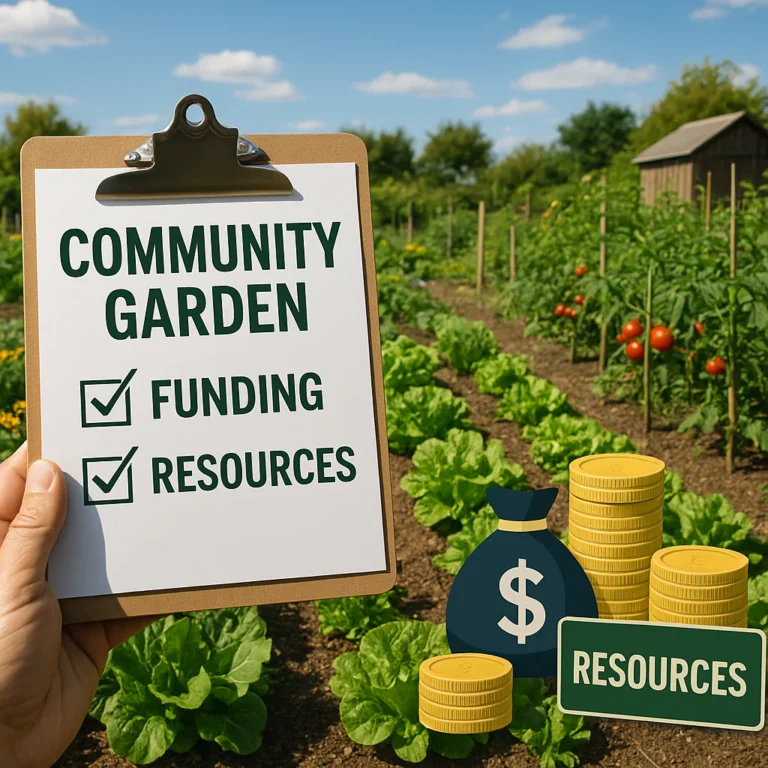
Ever stared at a vacant, weed-choked lot and imagined a thriving food forest, only to be stopped cold by the question: “But where’s the money?” You are not alone. At Community Gardening™, we’ve watched countless passionate groups turn empty spaces into vibrant hubs of health and connection, but the journey from “dream” to “dirt” often hits a financial wall. While the NC State University guide offers a solid list of opportunities, we’ve gone deeper, uncovering seven distinct funding pathways—from federal giants to local micro-grants—that can actually turn your vision into reality. Did you know that some of the most successful gardens started with nothing but a $50 local grant and a pile of donated lumber?
In this comprehensive guide, we’re pulling back the curtain on the secret sauce of garden funding. We’ll walk you through the specific eligibility requirements for federal programs, decode the often-misunderstood “matching fund” rule, and share real stories of gardens that secured six-figure awards. Whether you need cash for raised beds, grants for educational workshops, or help navigating the complex world of 501(c)(3) status, we’ve got the roadmap. We’ll even reveal the one common mistake that causes 90% of first-time applicants to get rejected before they even start.
Key Takeaways
- Diversify Your Funding: Don’t rely on a single source; combine federal grants, corporate sponsorships, and in-kind donations to build a resilient budget.
- Non-Profit Status is Crucial: Most major funding requires 501(c)(3) status or a fiscal sponsor; start this process early if you haven’t already.
- Match Requirements Matter: Many grants require a 1:1 match, which can be fulfilled through volunteer hours, donated materials, or cash.
- Storytelling Wins Grants: Funders invest in community impact and social cohesion, not just soil and seeds; craft a compelling narrative.
- Start Local: Local foundations and city block grants often have less competition and faster approval times than federal programs.
Table of Contents
- ⚡️ Quick Tips and Facts
- 🌱 From Dirt to Dollars: A Brief History of Community Garden Funding
- 🏆 The Ultimate Guide to Community Garden Grants and Funding Sources
- 1. Federal Grants for Urban Agriculture and Food Security
- 2. State and Local Government Funding Programs for Green Spaces
- 3. Private Foundation Grants for Nonprofit Garden Projects
- 4. Corporate Sponsorships and Business Partnership Opportunities
- 5. Crowdfunding Platforms and Community-Led Fundraising Strategies
- 6. In-Kind Donations and Resource Sharing Networks
- 📝 How to Write a Winning Grant Proposal for Your Garden
- 🔍 Navigating the Application Process: Common Pitfalls and Success Stories
- 🛠️ Essential Tools and Resources for Managing Garden Grants
- 🌻 Public Garden Grants and Awards: Recognition and Beyond
- 💡 Quick Tips and Facts for First-Time Applicants
- 🏁 Conclusion
- 🔗 Recommended Links
- ❓ FAQ: Frequently Asked Questions About Community Garden Grants
- 📚 Reference Links
⚡️ Quick Tips and Facts
Before you dive into the deep end of grant applications, let’s get the lowdown on what actually works in the real world of community gardening. We’ve seen gardens bloom from nothing but a dream and a pile of compost, but we’ve also seen them wither because the paperwork was a nightmare. Here is the truth about funding your green space:
- Non-Profit Status is King: While some small grants exist for informal groups, the big money (think $5,0+) almost always requires a 501(c)(3) status or a fiscal sponsor. If you don’t have one, find a local organization willing to host your project!
- The “Match” Trap: Many federal and large foundation grants require a matching fund (often 1:1). This doesn’t always mean cash; in-kind donations (volunteer hours, donated lumber, free soil) often count. Keep meticulous records of everything!
- Local is Gold: Don’t just look at national grants. Your local Community Foundation, city council, or even a neighborhood hardware store often has “micro-grants” with less competition.
- Deadlines are Real: Unlike planting tomatoes, you can’t “start late” on a grant. Missing a deadline by one minute usually means a hard no.
- Storytelling Sells: Funders don’t just buy dirt; they buy community impact. Your proposal needs to scream “health,” “education,” and “social cohesion,” not just “we need shovels.”
For those looking to diversify beyond grants, check out our deep dive on Fundraising strategies for community gardens to see how bake sales and plant swaps can fill the gaps.
🌱 From Dirt to Dollars: A Brief History of Community Garden Funding

You might think community gardens are a modern trend born from the hipster movement of the 2010s, but the history of funding these green oases is as rich as our best compost.
In the Victorian era, gardens were often funded by the wealthy as a form of “charity” for the poor, a paternalistic approach that didn’t last. Fast forward to the Great Depression, where the “Victory Gardens” of the 1930s and 40s were government-mandated and funded to boost morale and food security during wartime. The government provided the land; the people provided the sweat.
However, the modern era of Community Garden Grants really kicked off in the 1970s. As urban decay threatened cities like New York and Detroit, grassroots groups started reclaiming vacant lots. Initially, they had zero funding. They were squating on land, literally building with trash and hope.
It wasn’t until the 190s and 20s that the narrative shifted. Researchers began publishing data linking community gardens to lower crime rates, improved mental health, and increased property values. Suddenly, city councils and foundations realized that funding a garden wasn’t just charity; it was an investment in public health and urban revitalization.
Today, we see a sophisticated ecosystem of funding. From the USDA’s Community Food Projects to private corporate sponsorships, the landscape has evolved from “beging for scraps” to “strategic partnership.” But the core remains the same: community ownership.
Did you know? The Green Thumb program in New York City, one of the oldest in the nation, started in 1978 and has supported over 50 gardens. It’s a perfect example of how municipal funding can sustain a movement for decades.
🏆 The Ultimate Guide to Community Garden Grants and Funding Sources
So, you’re ready to turn that empty lot into a food forest. Where does the money come from? We’ve broken down the funding universe into six distinct categories. Think of this as your map to the treasure chest.
1. Federal Grants for Urban Agriculture and Food Security
The federal government is the big fish in the pond. These grants are competitive, rigorous, and often require a matching fund, but the payouts can be life-changing for a garden.
- USDA Community Food Projects Competitive Grant Program (CFPCGP): This is the holy grail for food-focused gardens. It funds projects that increase food security, provide nutrition education, and support low-income communities.
The Catch: You usually need a 501(c)(3) and a strong track record.
The Reward: Grants can range from $10,0 to $30,0. - Farm Bill Programs: Various sections of the Farm Bill allocate funds for conservation and urban agriculture. Keep an eye on the Natural Resources Conservation Service (NRCS) for conservation easements or technical assistance.
Pro Tip: Federal grants are rarely for “starting” a garden. They are for scaling up, building infrastructure, or running specific educational programs.
2. State and Local Government Funding Programs for Green Spaces
If the federal ocean is too deep, swim in the local pond. State and city governments often have budgets specifically for parks, stormwater management, and community development.
- City Block Grants: Many mayors have discretionary funds for neighborhood improvements. As noted by NC State University, “Involve community gardeners in the process… they can attend council meetings and write letters to successfully lobby.”
- State Departments of Agriculture: Look for your state’s “Urban Agriculture” initiatives. Some states offer tax breaks or direct grants for soil testing and water infrastructure.
- Stormwater Management Funds: If your garden helps reduce runoff (which most do!), you might qualify for funds from your local water authority.
3. Private Foundation Grants for Nonprofit Garden Projects
Private foundations are the workhorses of community garden funding. They are often more flexible than the government and care deeply about social justice and education.
- The Food Well Alliance: They have deployed over $80,0 since 2015, offering “Garden Improvement Grants” ($1,50) and “Garden Forward Grants” ($10,0). They specifically target gardens that serve the community.
- The Stanley Smith Horticulture Trust: Focuses on ornamental horticulture and education, offering grants up to $25,0 for research or educational projects.
- Captain Planet Foundation: Perfect for gardens with a strong youth education component, offering $250–$2,50 for hands-on environmental projects.
4. Corporate Sponsorships and Business Partnership Opportunities
Corporations love a good “Community Impact” story for their annual reports. They often provide cash, materials, or volunteer labor.
- Lowe’s Hometowns Grant Program: As highlighted in recent industry updates, Lowe’s offers grants ranging from $5,0 to $25,0 for community improvement projects. They also send volunteers to help build!
Requirement: You usually need a non-profit partner or a municipal sponsor. - Home Depot Foundation: Their Community Impact Grants provide up to $5,0 in the form of gift cards for tools and materials.
- Whole Foods Market: Through the Whole Kids Foundation, they support school and community gardens with grants and educational resources.
5. Crowdfunding Platforms and Community-Led Fundraising Strategies
Sometimes the best funder is your neighbor. Crowdfunding has exploded as a way to raise money for specific projects (like a new greenhouse or a composting system) without the red tape of a grant.
- GoFundMe & Kickstarter: Great for specific, tangible goals. “Help us build 10 raised beds” works better than “Help us fund our garden.”
- DonorsChoose: Originally for schools, this platform is now open to many non-profits and allows you to post specific classroom or garden projects.
- Local “Buy Nothing” Groups: Don’t underestimate the power of asking your neighbors for in-kind donations. You’d be surprised how many people have old lumber, tools, or soil sitting in their garages.
6. In-Kind Donations and Resource Sharing Networks
Not all funding comes in a check. In-kind donations are crucial for stretching your budget.
- Local Nurseries: Ask for discounted or donated plants, mulch, or soil.
- Hardware Stores: Many will donate lumber, nails, or paint for a sign of recognition.
- Volunteer Labor: Counting volunteer hours as a “match” for grants is a game-changer. If a grant requires a $5,0 match, and you have 10 volunteers working 10 hours a week at $20/hour, you’ve met your match!
📝 How to Write a Winning Grant Proposal for Your Garden
You’ve found the grant. Now, how do you convince them to give you the money? Writing a grant proposal is like writing a love letter to your community, but with a lot more data.
Step 1: The Needs Assessment
Don’t just say “we need a garden.” Say “Our neighborhood has a food desert with no grocery stores within 2 miles, and 40% of residents are food insecure.” Use local data!
- Action: Contact your local health department or university extension office for statistics.
Step 2: The Solution (Your Garden)
Explain how your garden solves the problem.
- Example: “Our garden will provide 50 lbs of fresh produce annually to the local food bank and host 20 nutrition workshops.”
Step 3: The Budget
Be transparent and realistic.
- Do: Break down costs (soil, seeds, tools, water, insurance).
- Don’t: Round up numbers or hide costs.
- Tip: Include a line item for sustainability (e.g., “Year 2 maintenance costs”).
Step 4: The Impact
This is where you win. Funders want to know the ROI (Return on Investment).
- Metrics: Number of families served, pounds of food grown, hours of volunteer time, educational workshops held.
- Stories: Include a testimonial from a potential gardener. “I want to grow my own tomatoes so my kids can see where food comes from.”
Step 5: The Sustainability Plan
What happens when the grant money runs out?
- Strategy: Mention membership fees, volunteer labor, or future fundraising events. Show them you aren’t a “one-and-done” project.
🔍 Navigating the Application Process: Common Pitfalls and Success Stories
We’ve seen gardens get funded and gardens get rejected. The difference often comes down to details and timing.
Common Pitfalls
- ❌ Missing the Deadline: It sounds obvious, but we’ve seen applications rejected because they were submitted 10 minutes late.
- ❌ Ignoring Eligibility: Applying for a grant that requires a 501(c)(3) when you are just a group of friends. Fix: Find a fiscal sponsor.
- ❌ Vague Goals: “We want to make the community better.” Fix: “We will plant 50 sq. ft. of vegetables and host 12 workshops.”
- ❌ Forgetting the Match: Applying for a grant that requires a 1:1 match without having the funds or in-kind donations ready.
Success Stories
- The “Lowe’s” Win: A garden in Ohio partnered with a local church (501c3) to apply for a Lowe’s grant. They outlined a plan to build a wheelchair-accessible raised bed system. The grant covered the materials, and Lowe’s volunteers came to build it. Result: A fully accessible garden in one weekend.
- The “Food Well” Turnaround: A struggling garden in Detroit applied for a “Garden Forward Grant.” They used the funds to install a rainwater harvesting system and a composting toilet. This not only saved money but became a model for sustainable urban farming in the city.
🛠️ Essential Tools and Resources for Managing Garden Grants
Managing a grant is like managing a small business. You need the right tools to stay organized.
Software and Platforms
- Grant Management Software: Tools like Flux or Submittable are great for tracking applications, but for smaller gardens, a simple Google Sheet or Airtable base works wonders.
- Volunteer Tracking: Use SignUpGenius or VolunteerLocal to track hours for your match requirements.
Physical Tools
You need the right gear to execute your project. Here are some brands we trust:
- Raised Bed Kits:
Gorilla Glue (for repairs) | Gardener’s Supply Company (official site)
Vigoro (on Amazon) | Home Depot (official site) - Soil Testing:
Luster Leaf Rapitest (on Amazon) | Thorne Soil Testing (official site) - Irrigation:
Orbit (on Amazon) | Rain Bird (official site) - Tools:
Fiskars (on Amazon) | Corona (official site)
👉 CHECK PRICE on:
- Raised Bed Kits: Amazon | Home Depot | Gardener’s Supply Company
- Irrigation Systems: Amazon | Walmart | Rain Bird
🌻 Public Garden Grants and Awards: Recognition and Beyond
Sometimes, the best reward isn’t money; it’s recognition. Awards can boost your garden’s profile, attract volunteers, and open doors to future funding.
- The Great American Gardeners Award: Sponsored by the National Gardening Association, this award recognizes “horticultural heroes” who have made a significant impact.
- Therapeutic Garden Grants: Offered by the National Garden Bureau and partners like Sakata Seed America, these grants support gardens designed for healing and therapy.
- Cultivating Connected Communities Prize Challenge: Focuses on accessibility and inclusion, offering up to $8,0 for projects that help people with disabilities and older adults.
Why apply for awards?
- Credibility: It validates your work to future funders.
- Marketing: Use the award logo on your website and social media.
- Networking: Award ceremonies are great places to meet other gardeners and potential partners.
💡 Quick Tips and Facts for First-Time Applicants
Ready to take the leap? Here are our final nugets of wisdom from the trenches:
- Start Small: Don’t apply for a $10,0 grant as your first try. Start with a $50 local grant to build your track record.
- Build Relationships: Call the grant officer before you apply. Ask questions. “Is this a good fit for our project?”
- Read the Fine Print: Every word in the guidelines matters. If they say “no cash for salaries,” don’t try to sneak it in.
- Follow Up: If you don’t hear back, send a polite email. “Just checking on the status of our application.”
- Celebrate Wins: Whether you get the grant or not, celebrate the effort. You’re building something amazing.
Remember: The journey from a patch of dirt to a thriving community hub is paved with persistence. And sometimes, a really good grant proposal.
🏁 Conclusion

So, we’ve taken you from the dusty history of the Victory Gardens to the modern-day digital application portals of the USDA and Lowe’s. The question we started with—how do you fund a community garden?—has a complex answer, but a clear path.
It’s not about finding a single magic bullet. It’s about layering your funding sources. You might get a $5,0 grant from a local foundation for tools, a $2,0 in-kind donation from a hardware store for lumber, and $50 from a crowdfunding campaign for seeds. When you stack these together, you build a resilient financial foundation that can weather the storms of budget cuts and economic shifts.
Our Confident Recommendation:
If you are just starting, do not wait for a federal grant. Start by forming a non-profit or finding a fiscal sponsor. Then, apply for local micro-grants and corporate sponsorships like the Lowe’s Hometowns Grant. Use the success of these smaller projects to build the track record you need for the big federal awards.
The road to a funded garden is paved with persistence, partnerships, and a little bit of grit. But the reward? A community that grows together, literally and figuratively. Now, go get that grant!
🔗 Recommended Links
Ready to get your hands dirty? Here are the tools and resources we recommend for your funded project:
- Raised Garden Beds:
Vigoro Raised Beds: Amazon | Home Depot
Gardener’s Supply Company: Official Site - Soil Testing Kits:
Luster Leaf Rapitest: Amazon | Walmart - Irrigation Systems:
Orbit Drip Irrigation: Amazon | Home Depot - Books on Grant Writing:
The Grant Writing Guide by Lisa A. R. Amazon
Community Gardening: A Guide for Beginners by various authors Amazon
❓ FAQ: Frequently Asked Questions About Community Garden Grants

What grants are available for starting a community garden?
There are several grants tailored for new gardens, though they often require a non-profit status. The Food Well Alliance offers “Garden Improvement Grants” of up to $1,50 specifically for infrastructure like soil, seeds, and tools. Captain Planet Foundation provides $250–$2,50 for youth-focused environmental projects. Additionally, Lowe’s Hometowns Grant Program offers $5,0–$25,0 for community improvement, which can be used for initial construction if you have a non-profit partner.
Read more about “🍎 10 Essential Food Security Programs for 2026: Your Guide to Getting Fed”
How do I apply for community garden funding in my area?
The first step is to research local resources. Contact your city’s Parks and Recreation Department, local Community Foundations, and Chambers of Commerce. Many cities have “Adopt-a-Garden” programs or block grants. You can also search databases like GrantWatch or Foundation Center (Candid) for local opportunities. Always check if you need a fiscal sponsor before applying.
Read more about “How Will You Promote Gardening in Your Community? 10 Proven Ways 🌿 (2026)”
Are there federal grants for community gardening projects?
Yes, the USDA Community Food Projects Competitive Grant Program (CFPCGP) is the primary federal source. It focuses on food security and nutrition education. Other federal opportunities include the Natural Resources Conservation Service (NRCS) for conservation practices and the National Park Service’s Save America’s Treasures for historic garden preservation. Note that federal grants often require a 1:1 match and a strong organizational track record.
Read more about “🌱 10 Ways Community Gardens & Urban Greening Transform Cities (2026)”
What are the eligibility requirements for community garden grants?
Requirements vary, but the most common are:
- Non-Profit Status: Most large grants require 501(c)(3) status or a fiscal sponsor.
- Geographic Restrictions: Some grants are state-specific (e.g., California DPR grants) or region-specific (e.g., NC State University grants).
- Project Scope: Grants may be restricted to specific activities like education, food production, or accessibility upgrades.
- Match Requirements: Many grants require you to match the funding amount with cash or in-kind donations.
Can I apply for a grant if I don’t have a 501(c)(3)?
Yes! You can partner with a local fiscal sponsor. This is an existing non-profit that agrees to receive and manage the grant funds on your behalf, usually for a small administrative fee (5-10%). This allows you to access funding without the legal burden of incorporating.
How long does the grant application process take?
It varies. Small local grants might take 4-6 weeks, while federal grants can take 6-12 months from application to award. Always plan your project timeline accordingly.
Read more about “🌱 15 Fundraising Strategies for Community Gardens (2026)”
📚 Reference Links
- NC State University: Community Gardens Funding Opportunities
- Food Well Alliance: Garden Grants Overview
- Public Gardens: Public Garden Grants and Awards
- USDA: Community Food Projects Competitive Grant Program
- Lowe’s: Hometowns Grant Program
- Home Depot Foundation: Community Impact Grants
- Captain Planet Foundation: Grants
- Candid (Foundation Center): Grant Databases