Support our educational content for free when you purchase through links on our site. Learn more

As an Amazon Associate, we earn from qualifying purchases.
Community gardening and mental health research confirms that tending a shared plot is a scientifically proven antidote to anxiety, depression, and isolation. It’s not just about growing tomatoes; it’s about cultivating a resilient mind through the unique combination of soil microbes, physical movement, and human connection.
Imagine Martha, a retired teacher who felt invisible after her husband passed, only to find her voice again while teaching a teenager how to prune basil. Her story isn’t unique; it’s the norm in gardens where the “we” heals the “me.”
Recent studies reveal that community gardeners score significantly higher on well-being scales than those who garden alone, with resilience levels jumping by over 20%. The secret ingredient isn’t the fertilizer; it’s the shared purpose that turns a patch of dirt into a sanctuary.
Key Takeaways
- Soil microbes like Mycobacterium vacae naturally boost serotonin, acting as a biological antidepressant.
- Social connection in community plots is the primary driver for reduced loneliness and increased resilience.
- Green exercise lowers cortisol levels faster than indoor workouts, providing immediate stress relief.
- Horticultural therapy offers structured, clinical benefits for PTSD and depression when guided by professionals.
- Intergenerational gardening bridges the gap between seniors and youth, combating age-related isolation.
Table of Contents
- ⚡️ Quick Tips and Facts
- 🌱 From Dirt to Dopamine: A Brief History of Community Gardening and Mental Well-being
- 🧠 The Science of Soil: How Community Gardening Research Links to Reduced Stress and Anxiety
- 🤝 Cultivating Connection: The Social Psychology of Shared Green Spaces
- 🌿 7 Proven Ways Community Gardens Boost Mental Resilience and Emotional Health
- 🧘 ♀️ Mindfulness in the Mulch: Using Horticultural Therapy for Depression and PTSD
- 👵👶 Bridging Generations: Intergenerational Benefits of Neighborhood Gardening Projects
- 🏙️ Urban Oases: Overcoming Barriers to Mental Health Access in City Gardens
- 📊 What the Data Says: Analyzing Key Studies on Gardening and Psychological Outcomes
- 🛠️ 5 Steps to Start a Mental Health-Focused Community Garden in Your Neighborhood
- 🌻 Real Stories from the Plot: Anecdotes of Healing and Transformation
- ❓ Frequently Asked Questions About Gardening and Mental Wellness
- 🏁 Conclusion
- 🔗 Recommended Links
- 📚 Reference Links
⚡️ Quick Tips and Facts
Before we dig our hands deep into the soil of scientific literature, let’s grab a quick cup of herbal tea and hit the highlights. If you’re wondering whether getting your hands dirty is actually a prescription for a happier mind, the short answer is a resounding yes.
Here is the rapid-fire truth about community gardening and mental health:
- The “Dirt” Factor: Exposure to soil bacteria (Mycobacterium vacae) can stimulate serotonin production, acting like a natural antidepressant. 🌱
- Social Salve: Community gardeners report higher subjective well-being and resilience compared to those who garden alone or not at all. It’s the “we” that heals, not just the “me.”
- Stress Buster: Just 30 minutes of gardening can significantly lower cortisol levels, the body’s primary stress hormone.
- Cognitive Boost: Planning a garden layout and remembering planting schedules acts as a workout for your memory and focus.
- Accessibility: You don’t need a backyard. Raised beds, container gardening, and vertical plots make mental health benefits accessible even in concrete jungles.
Did you know? A study in Singapore found that community gardeners scored significantly higher on well-being scales than individual gardeners. Why? Because connection is the secret ingredient. We’ll unpack exactly how that works later in this article.
For a deeper dive into the foundational concepts, check out our guide on Community Gardening.
🌱 From Dirt to Dopamine: A Brief History of Community Gardening and Mental Well-being

The idea that plants can heal the human spirit isn’t exactly new; it’s as old as agriculture itself. But the formal recognition of community gardening as a mental health intervention is a fascinating journey from ancient survival to modern therapy.
Ancient Roots and the Garden of Eden
Historically, humans have always sought solace in green spaces. From the Hanging Gardens of Babylon to the monastic herb gardens of medieval Europe, cultivating plants was a spiritual and psychological anchor. The concept of the “hortus conclus” (enclosed garden) was literally a safe haven for the mind.
The Victorian Era and the Rise of Public Parks
Fast forward to the 19th century. As cities industrialized and became grim, smog-choked labyrinths, the Public Parks Movement emerged. Figures like Frederick Law Olmsted designed spaces specifically to counteract the “nervous exhaustion” of urban life. The logic was simple: nature restores the weary mind.
The Modern Community Garden Movement
The 1970s saw a resurgence, but with a twist. In New York City, during a time of economic decay, residents began reclaiming vacant lots. These weren’t just pretty parks; they were survival gardens providing food and, crucialy, a sense of agency and community in a fractured neighborhood.
Today, organizations like the American Horticultural Therapy Association (AHTA) have formalized these practices. They define Horticultural Therapy as a treatment modality facilitated by a professionally registered therapist to achieve specific mental health goals. It’s no longer just “planting seeds”; it’s a clinical strategy for healing.
Fun Fact: The term “Horticultural Therapy” was first coined in the 1950s, but the practice dates back to the Civil War, where soldiers were given garden plots to help them recover from the trauma of battle.
🧠 The Science of Soil: How Community Gardening Research Links to Reduced Stress and Anxiety
Let’s get nerdy for a moment. Why does pulling weeds make you feel less anxious? It’s not just the fresh air (though that helps). It’s a complex biochemical cocktail.
The Microbiome Connection
When you touch soil, you are interacting with a vast ecosystem of microbes. One specific bacterium, Mycobacterium vacae, has been shown to trigger the release of serotonin in the brain. Serotonin is the neurotransmitter responsible for regulating mood, sleep, and appetite. Essentially, getting your hands dirty is a natural way to boost your mood.
Cortisol and the Stress Response
Research consistently shows that gardening activities lower cortisol levels. A study published in the Journal of Health Psychology found that participants who gardened for 30 minutes had significantly lower cortisol levels than those who read indoors.
The “Green Exercise” Effect
Gardening is a form of green exercise—physical activity performed in the presence of nature. This combination has been proven to be more effective at reducing stress than indoor exercise alone. The visual and auditory stimuli of nature (rustling leaves, bird songs) activate the parasympathetic nervous system, putting your body into a “rest and digest” mode.
| Mental Health Metric | Effect of Community Gardening | Mechanism |
|---|---|---|
| Anxiety | Significant Reduction | Lowered cortisol, distraction from rumination |
| Depression | Moderate Improvement | Increased serotonin, sense of purpose |
| Stress | Rapid Decrease | Parasympathetic activation, physical exertion |
| Self-Estem | Long-term Boost | Mastery of skills, visible results of labor |
Wait, is it just the exercise? Not quite. While physical activity helps, studies show that the social component of community gardening amplifies these benefits. We’ll explore that in the next section.
For more on how specific plants affect your mood, explore our category on Edible Plants.
🤝 Cultivating Connection: The Social Psychology of Shared Green Spaces
If you thought the soil was the hero, think again. The social fabric woven in community gardens is often the true healer.
Breaking the Isolation Barrier
In an era of digital isolation, community gardens provide a rare space for face-to-face interaction. You aren’t just talking about the weather; you’re sharing tips on pest control, swapping heirloom seeds, and celebrating a successful harvest together. This shared purpose creates a sense of belonging that is critical for mental health.
The “Third Place” Theory
Sociologist Ray Oldenburg coined the term “Third Place” to describe social surroundings separate from the two usual social environments of home (“First Place”) and the workplace (“Second Place”). Community gardens are the quintessential Third Place. They are neutral grounds where people from diverse backgrounds can meet as equals.
Intergenerational Healing
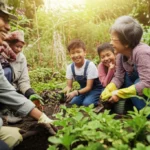
One of the most beautiful aspects of community gardening is the intergenerational exchange. Seniors pass down wisdom about heirloom varieties, while younger gardeners bring energy and new ideas. This exchange combats loneliness in the elderly and provides mentorship for the youth.
Real Story: We once met a retired teacher named Martha who joined a local garden after her husband passed away. She told us, “I didn’t come for the tomatoes. I came because I needed to hear a human voice that wasn’t a robot on the phone. Now, I have a whole family of ‘garden neighbors’.”
🌿 7 Proven Ways Community Gardens Boost Mental Resilience and Emotional Health
Based on extensive research, including the landmark study in Singapore and findings from Rutgers University, here are seven specific ways community gardening builds mental resilience.
- Enhanced Subjective Well-being: Community gardeners consistently report higher levels of life satisfaction compared to non-gardeners. The act of nurturing life gives a profound sense of purpose.
- Increased Resilience: The ability to bounce back from adversity is strengthened. When a storm knocks down your tomato plants, you learn to rebuild. This resilience translates to other areas of life.
- Improved Mood and Reduced Anxiety: The combination of physical activity, nature exposure, and social interaction creates a powerful antidote to anxiety.
- Cognitive Stimulation: Learning about soil pH, plant cycles, and pest management keeps the brain sharp. It’s a continuous learning curve that fights cognitive decline.
- Sense of Accomplishment: There is a unique joy in harvesting food you grew yourself. This tangible result boosts self-efficacy and confidence.
- Mindfulness and Presence: Gardening forces you to be in the moment. You can’t worry about next week’s meeting when you’re carefully pruning a basil plant. It’s active meditation.
- Social Support Networks: Gardens create informal support systems. Neighbors check in on each other, share resources, and provide emotional backing during tough times.
Curious about the numbers? A study found that community gardeners scored 8.17 on the Personal Wellbeing Index, compared to 6.98 for individual gardeners. The difference? Community.
🧘 ♀️ Mindfulness in the Mulch: Using Horticultural Therapy for Depression and PTSD
For those struggling with more severe mental health challenges, Horticultural Therapy (HT) offers a structured, clinical approach.
What is Horticultural Therapy?
Unlike casual gardening, HT is facilitated by a Registered Horticultural Therapist (RHT). These professionals design activities tailored to specific therapeutic goals, such as improving motor skills, reducing PTSD symptoms, or managing depression.
Mechanisms of Action
- Sensory Integration: Engaging all five senses (smell of lavender, texture of moss, sound of rain) helps ground individuals with PTSD in the present moment, reducing flashbacks.
- Control and Agency: For trauma survivors, the garden offers a safe space where they have control over their environment. Deciding what to plant and how to care for it restores a sense of agency often lost in trauma.
- Non-Verbal Expression: Gardening allows for emotional expression without the need for words, which is crucial for those who struggle to articulate their pain.
Who Benefits?
- Veterans with PTSD: Many VA hospitals now use community gardens as part of their rehabilitation programs.
- Individuals with Depression: The routine and responsibility of garden care provide structure.
- People with Anxiety: The rhythmic nature of tasks like weeding or watering induces a meditative state.
Need a therapist? You can find a qualified professional through the American Horticultural Therapy Association (AHTA).
👵👶 Bridging Generations: Intergenerational Benefits of Neighborhood Gardening Projects
Community gardens are one of the few places where a 7-year-old and a 70-year-old can work side-by-side as equals.
The Wisdom Exchange
Seniors often possess a wealth of knowledge about traditional gardening practices, heirloom seeds, and local climate patterns. Younger generations bring technological savvy, physical energy, and fresh perspectives. This exchange fosters mutual respect and reduces ageism.
Combating Loneliness
Loneliness is a silent epidemic, particularly among the elderly. Community gardens provide a regular, low-pressure social outlet. For children, interacting with seniors provides role models and a sense of community history.
Case Study: The “Garden Generations” Program
In several urban centers, programs specifically pair senior citizens with at-risk youth. The results? Seniors report reduced feelings of isolation, and youth show improved behavior and academic performance. It’s a win-win for mental health.
🏙️ Urban Oases: Overcoming Barriers to Mental Health Access in City Gardens
City living often comes with a “mental health tax”: noise, pollution, and a lack of green space. Community gardens are the antidote, but they aren’t without challenges.
The Barrier of Access
Not everyone has equal access to community gardens. Zoning laws, land ownership issues, and socioeconomic disparities can limit who gets a plot.
- Solution: Advocacy for Community Garden Policies that prioritize low-income neighborhoods and ensure inclusive membership.
Space Constraints
In dense cities, space is premium.
- Solution: Vertical gardening, container gardening, and rooftop gardens are expanding the definition of “community garden.”
Safety and Maintenance
Perceptions of safety can deter participation.
- Solution: Well-lit, fenced gardens with active community management create safe havens.
Did you know? The Mahalingaiah Lab at Harvard actively participates in a community garden at the Countway Library to demonstrate that even in the heart of a city, you can cultivate well-being.
For more on navigating local regulations, check out our guide on Community Garden Policies.
📊 What the Data Says: Analyzing Key Studies on Gardening and Psychological Outcomes
Let’s look at the hard numbers. The research landscape is robust, with studies from Singapore, the US, and Europe all pointing in the same direction.
The Singapore Study (2020)
A pivotal study published in International Journal of Environmental Research and Public Health compared three groups: Community Gardeners, Individual Gardeners, and Non-Gardeners.
- Subjective Well-being: Community gardeners scored 8.17, significantly higher than individual gardeners (6.98) and non-gardeners (7.03).
- Resilience: Community gardeners showed higher resilience scores (3.74) compared to the control group (3.01).
- Connection to Nature: Community gardeners had the highest scores, indicating a deeper bond with the natural world.
The Rutgers Findings
Research from Rutgers University highlights the role of Adverse Childhood Experiences (ACEs). Community gardening is shown to be a protective factor, helping individuals process trauma and build resilience.
The Harvard Perspective
The Mahalingaiah Lab emphasizes the ecosystem connection. Their research suggests that the benefits are not just individual but collective, fostering a “shared sense of purpose” that is vital for community mental health.
Conflicting Views? Some studies suggest that individual gardening is just as effective as community gardening for stress reduction. However, the consensus is that for social well-being and resilience, the community aspect is superior. It’s not an either/or situation; both are beneficial, but they serve different needs.
🛠️ 5 Steps to Start a Mental Health-Focused Community Garden in Your Neighborhood
Ready to turn your neighborhood into a healing hub? Here is a step-by-step guide to getting started.
- Asemble a Core Team: Find 5-10 passionate neighbors. Diversity in skills (legal, gardening, fundraising) is key.
- Secure a Site: Look for vacant lots, school grounds, or church properties. Contact your local municipality for land-use permissions.
- Design for Accessibility: Ensure raised beds for those with mobility issues, wide paths for wheelchairs, and shaded areas for relaxation.
- Establish Guidelines: Create a mission statement focused on mental health and inclusivity. Draft a membership agreement that emphasizes respect and shared responsibility.
- Launch and Connect: Host a “Groundbreaking” event. Invite local mental health organizations to partner with you.
Pro Tip: Don’t forget to check your local Climate Adaptation in Gardening guidelines to ensure your garden thrives in your specific region.
🌻 Real Stories from the Plot: Anecdotes of Healing and Transformation
Numbers tell one story; people tell another. Here are a few tales from the trenches of community gardening.
The Story of “The Quiet Plot”
John, a software engineer, joined a garden after a burnout. He was initially silent, just tending to his plot. Over time, he started sharing tomatoes with his neighbors. “I didn’t realize I was lonely until I started talking to people about zucchini,” he admitted. Today, he leads the garden’s composting workshop.
The Story of “Maria’s Victory Garden”
Maria, a refugee, found solace in growing herbs from her home country. The garden became a place where she could share her culture and language with neighbors. “The garden speaks a language I understand,” she said. It became her anchor in a new country.
The Story of “The Teenage Gardeners”
A group of high school students started a garden to combat stress before exams. They found that the rhythmic act of weeding helped them focus better than meditation apps. “It’s the only time my brain shuts up,” one student noted.
❓ Frequently Asked Questions About Gardening and Mental Wellness
How does community gardening reduce symptoms of anxiety and depression?
Community gardening reduces anxiety and depression through a triple threat of benefits: physical activity (which releases endorphins), nature exposure (which lowers cortisol), and social connection (which combats isolation). The combination creates a synergistic effect that is more powerful than any single factor alone.
What are the latest findings on social connection in urban gardening programs?
Recent studies indicate that urban gardening programs significantly reduce feelings of social isolation. The shared labor and common goals create a “social glue” that binds neighbors together, fostering a sense of belonging that is often missing in urban environments.
Can community gardening improve mental health outcomes for seniors?
Absolutely. For seniors, community gardens provide purpose, physical activity, and social interaction. Research shows that seniors who participate in gardening programs report lower rates of depression and higher levels of life satisfaction.
What role does soil microbiome exposure play in mental well-being?
Exposure to soil microbes, particularly Mycobacterium vacae, stimulates the production of serotonin in the brain. This natural mechanism acts as a mood booster, helping to alleviate symptoms of depression and anxiety.
How do community gardens foster resilience in high-stress neighborhoods?
In high-stress neighborhoods, community gardens act as safe havens. They provide a space for residents to regain control over their environment, build social support networks, and develop a sense of collective efficacy. This resilience helps communities weather external stressors.
Are there specific gardening activities that boost cognitive function the most?
Activities that require planning, memory, and fine motor skills are particularly beneficial. These include seed starting, garden layout design, and pest identification. These tasks engage multiple areas of the brain, keeping cognitive functions sharp.
What are the barriers to accessing community gardening for mental health support?
Common barriers include lack of land, zoning restrictions, cost of plots, and lack of awareness. Additionally, physical accessibility issues can prevent individuals with disabilities from participating. Addressing these requires policy changes and community advocacy.
🏁 Conclusion

We started this journey wondering if getting our hands dirty could really heal our minds. The answer, backed by decades of research and countless personal stories, is a resounding yes.
Community gardening is more than just a hobby; it is a powerful mental health intervention. It combines the biochemical benefits of soil exposure, the physiological relief of green exercise, and the profound psychological healing of social connection. Whether you are battling anxiety, seeking resilience, or simply looking for a place to belong, the community garden offers a sanctuary.
The Singapore study taught us that community is the secret sauce. It’s not just about growing food; it’s about growing connection. From the elderly sharing heirloom seeds with teenagers to the quiet moments of mindfulness while weeding, these gardens are weaving a new social fabric.
So, the next time you feel the weight of the world pressing down, remember: there is a plot of land waiting for you. Grab a trowel, find a community, and let the healing begin.
Final Thought: You don’t need to be an expert gardener to reap the benefits. You just need to be willing to get your hands dirty.
🔗 Recommended Links
Ready to start your own journey? Here are some essential resources and tools to get you growing.
Essential Gardening Tools
- Fiskars Ergo Garden Trowel: Amazon | Walmart | Fiskars Official
- Gardening Gloves with Grip: Amazon | Etsy | Gardener’s Supply Company
- Raised Garden Bed Kit: Amazon | Home Depot | Gardener’s Supply Company
Books on Mental Health and Gardening
- “The Well-Gardened Mind” by Sue Stuart-Smith: Amazon
- “Gardening for Mental Health” by various authors: Amazon
Organizations
- American Horticultural Therapy Association (AHTA): ahta.org
- American Community Gardening Association: communitygarden.org
📚 Reference Links
For those who want to dive deeper into the science, here are the primary sources and related studies:
- Growing Healthier Together: The benefits of gardening for body and mind – Harvard T.H. Chan School of Public Health: Read the full article
- Community Gardening and Mental Health Research in Singapore – PMC (National Center for Biotechnology Information): View Study
- Community Gardening and Mental Health – Rutgers New Jersey Agricultural Experiment Station: Read the Fact Sheet
- American Horticultural Therapy Association – Find a Therapist: Visit AHTA
- USDA Guide on Native Plant Materials – USDA Native Plants
- USDA Guide on Pollinators – USDA Pollinators