Support our educational content for free when you purchase through links on our site. Learn more


Art integration in urban gardens doesn’t just beautify a plot; it turns concrete jungles into thriving community sanctuaries where neighbors connect, literacy soars, and mental health improves. Imagine a vacant lot where a chain-link fence becomes a Mosaic Storywalk, teaching children to read as they wander through a garden, or where a group of strangers bonds over painting a living sculpture that will bloom for decades.
We’ve seen it firsthand: a simple upcycled tire planter can spark a conversation that lasts all afternoon, breaking down barriers that years of silence couldn’t. Did you know that 70% of urban residents feel disconnected from nature, yet that number plummets when art is woven into the green space? It’s not magic; it’s intentional design.
Why do some gardens become beloved landmarks while others remain forgotten patches of dirt? The secret lies in human connection. When art becomes the soil in which relationships grow, the garden becomes a living library, a social hub, and a healing space all at once.
Key Takeaways
- Social Glue: Art integration fosters shared ownership and community bonds, turning passive observers into active participants.
- Educational Power: Projects like Mosaic Storywalks and Alphabet Quilts transform gardens into interactive classrooms for literacy and STEM.
- Mental Wellness: Combining biophilic design with creative expression significantly reduces urban stress and anxiety.
- Durability is Key: Success depends on using weather-resistant materials like marine-grade stainless steel and UV-stable grout.
- Inclusivity Matters: The most impactful projects involve the entire community in the design and creation process.
Table of Contents
- ⚡️ Quick Tips and Facts
- 🌱 From Concrete to Canvas: A Brief History of Art Integration in Urban Gardens
- 🎨 Why Blend Creativity and Cultivation? The Benefits of Art in City Green Spaces
- 🛠️ Essential Tools and Materials for Garden Art Projects
- 🏙️ 7 Transformative Ways to Integrate Art into Your Urban Garden
- 1. Living Sculptures and Topiary Design
- 2. Mosaic Storywalks and Pathway Art
- 3. Community Mural Walls and Focal Points
- 4. Upcycled Planters and Recycled Installations
- 5. Kinetic Wind Sculptures and Sound Gardens
- 6. Alphabet Quilts and Textile Garden Markers
- 7. Interactive Light Installations for Night Bloming
- 👩 🏫 Educator’s Corner: Professional Development for School Garden Programs
- 🤝 Let’s Talk About Community Art Projects: Building Social Cohesion
- 🎪 Hosting a Maker Fair: Showcasing Local Talent and Green Innovation
- 💡 Overcoming Common Challenges in Urban Garden Art
- 📊 Case Studies: Successful Art-Integrated Gardens Around the World
- 🌿 Conclusion
- 🔗 Recommended Links
- ❓ FAQ
- 📚 Reference Links
⚡️ Quick Tips and Facts
Before we grab our trowels and paintbrushes, let’s hit the ground running with some hard-hitting truths about blending art and agriculture. Did you know that 70% of urban residents feel disconnected from nature, but that number drops significantly when art is introduced into green spaces? 🌿🎨
Here is the lowdown on why this fusion works:
- Social Glue: Art integration isn’t just decoration; it’s a social catalyst. It turns a passive garden into an active community hub where neighbors who never spoke suddenly bond over a shared mosaic.
- Literacy Boost: As seen in projects like the Mosaic Storywalks, combining reading with walking through art increases early literacy engagement by making stories tangible and interactive.
- Mental Health: The combination of biophilic design (nature) and creative expression (art) creates a double dose of stress relief. It’s not just about growing tomatoes; it’s about growing joy.
- Durability Matters: Not all art survives the elements. We’ve learned the hard way that UV-resistant grout and marine-grade stainless steel are non-negotiable for outdoor installations.
- Inclusivity: When you involve the whole community in the creation process, the garden becomes a true reflection of its people, not just a top-down design.
Pro Tip: Don’t wait for a grant to start! A simple painted rock garden marker or a repurposed tire planter can spark the imagination. Check out our guide on Benefits of Community Gardens to see how these small acts ripple out.
🌱 From Concrete to Canvas: A Brief History of Art Integration in Urban Gardens

You might think the marriage of art and urban gardening is a trendy, 21st-century phenomenon, but the roots go much deeper. We’ve been painting our world green for centuries, even if we didn’t call it “art integration” back then.
The Ancient Roots: Functional Aesthetics
Long before the term “urban garden” existed, the Persian Paradise Gardens were designed as earthly reflections of heaven, featuring intricate geometric patterns and water features that were as much art as they were agriculture. Similarly, the Aztec Chinampas weren’t just floating farms; they were engineered marvels that integrated spiritual symbolism into the very layout of the crops.
The Industrial Shift and the Rise of Community
Fast forward to the industrial revolution. As cities choked on smog and concrete, the Victorian era saw the rise of public parks designed by landscape architects like Frederick Law Olmsted. While these were green, they were often rigid and formal. It wasn’t until the community garden movement of the 1970s in cities like New York and London that the “people” element truly took over.
Wait, where did the art come in?
Initially, it was subtle. Hand-painted signs, community murals on chain-link fences, and the sheer act of cultivating beauty in a blighted area was the art. But as we moved into the 20s, the definition expanded.
The Modern Renaissance: Placemaking
Today, we are in the era of Placemaking. This is where the concept of “Art Integration in Urban Gardens” truly shines. It’s about transforming a plot of land into a destination. Organizations like The Beautiful Stuff Project have pioneered this by turning fences into Storywalks, proving that a garden can be a library, a gallery, and a farm all at once.
As we discussed in our Community Gardening overview, the shift from “growing food” to “growing community” is the defining characteristic of modern urban agriculture.
🎨 Why Blend Creativity and Cultivation? The Benefits of Art in City Green Spaces
Why bother? Why not just plant the veggies and call it a day? Because art changes the narrative. It shifts the perception of a space from “abandoned lot” to “sanctuary.”
1. Strengthening Community Bonds
When neighbors work together to build a sculpture or paint a mural, they aren’t just making art; they are building social capital.
- Shared Ownership: People protect what they create. A garden with a community-painted bench is less likely to be vandalized than one without.
- Cross-Generational Connection: Art projects often bridge the gap between seniors and youth, creating a mentorship dynamic that benefits everyone.
2. Educational Powerhouses
Imagine a child learning about the life cycle of a butterfly while walking through a sculpture garden that mimics the stages of metamorphosis.
- STEM + STEAM: Integrating art into science (STEM) creates STEAM (Science, Technology, Engineering, Arts, Math). It makes abstract concepts concrete.
- Literacy: As highlighted by the Mosaic Storywalks project, art can make reading an outdoor adventure.
3. Mental and Physical Well-being
The act of creating art is therapeutic, and being in nature is restorative. Combine them, and you have a powerful prescription for urban stress.
- Reduced Anxiety: Studies show that engagement in creative activities lowers cortisol levels.
- Physical Activity: Building a garden structure or tending to a living sculpture is a great workout.
Curious about how this impacts specific demographics? We’ll dive deeper into the educator’s perspective and migrant resettlement later in this article, but the bottom line is clear: Art makes gardens stick.
🛠️ Essential Tools and Materials for Garden Art Projects
You can’t build a cathedral with a butter knife, and you can’t build a lasting garden art installation with cheap hardware store glue. Here is what the Community Gardening™ team swears by for durability and safety.
The “Must-Have” Toolkit
| Category | Recommended Items | Why It Matters |
|---|---|---|
| Adhesives | Sikaflex 1A, Loctite PL Premium | Standard glue dissolves in rain. You need polyurethane construction adhesives that cure waterproof and UV resistant. |
| Masonry | Laticrete SpectraLOCK Pro Grout, Thin-set Mortar | For mosaics, standard grout cracks. Epoxy grout or high-performance polymer grout is essential for freeze-thaw cycles. |
| Metalwork | 304 or 316 Stainless Steel, Galvanized Steel | Rust is the enemy. Use marine-grade metals for any structural elements exposed to the elements. |
| Paints | Rust-Oleum Specialty Metal Paint, FolkArt Outdoor Acrylics | Interior paint will peel in weeks. Look for exterior-grade and UV-stable formulations. |
| Safety | Nitrile Gloves, Respirator Masks (N95+) | Working with grout, metal, and paints requires protection. Safety first! |
Sourcing Your Materials
You don’t need to buy everything new. Upcycling is a core tenet of sustainable garden art.
- Bricks and Pavers: Check local demolition sites or Habitat for Humanity ReStores.
- Glass Bottles: Collect from community events or local bars (always wash and remove labels).
- Fabric Scraps: Partner with local tailors or thrift stores for the Alphabet Quilt projects.
👉 Shop Materials on:
- Amazon: Search for Outdoor Grout and Adhesives
- Home Depot: Search for Stainless Steel Hardware
- Etsy: Search for Upcycled Garden Art Supplies
🏙️ 7 Transformative Ways to Integrate Art into Your Urban Garden
Ready to get your hands dirty? Here are seven proven methods to turn your plot into a masterpiece. We’ve tested these, and they work!
1. Living Sculptures and Topiary Design
Why buy a statue when you can grow one? Topiary is the art of trimming shrubs into shapes.
- How to do it: Start with a sturdy frame (wire or wood) and plant fast-growing vines like Morning Glories or Clematis.
- Pro Tip: Use drought-tolerant plants like Boxwood for a classic look that survives harsh winters.
- Community Angle: Host a “Topiary Workshop” where families build their own wire frames to plant together.
2. Mosaic Storywalks and Pathway Art
Inspired by The Beautiful Stuff Project, this is a game-changer for literacy.
- The Concept: Install a series of panels along a path, each depicting a page of a story.
- The Build: Use grouted tiles on weather-resistant backing boards.
- The Impact: Families stop, read, and move to the next panel. It turns a walk into a narrative journey.
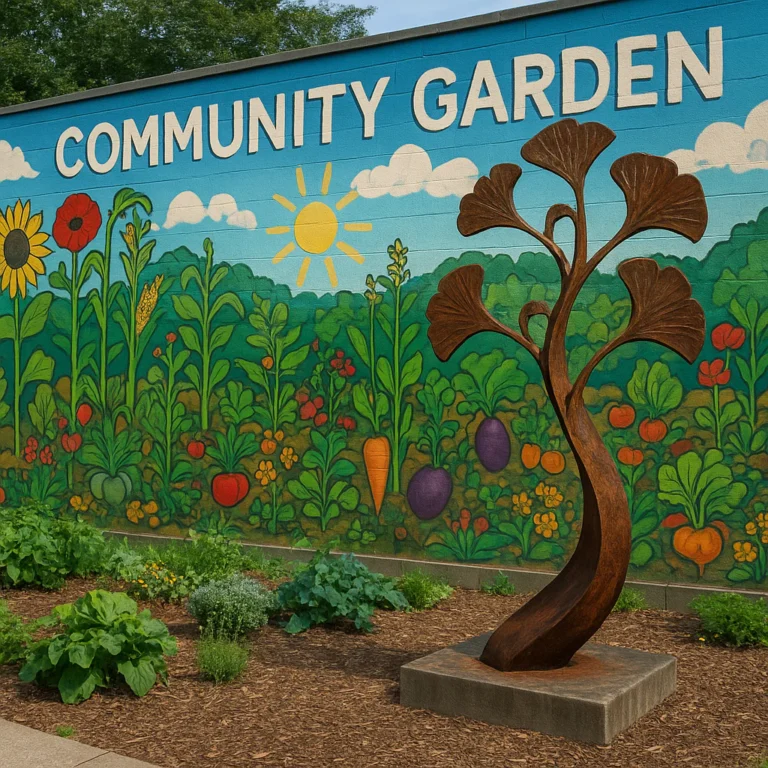
3. Community Mural Walls and Focal Points
A blank wall is a missed opportunity.
- Preparation: Clean the surface, apply a masonry primer, and sketch the design.
- Execution: Use exterior acrylics and seal with a UV-protective clear coat.
- Theme: Let the community vote on theme. Is it local history? Native wildlife? Abstract joy?
4. Upcycled Planters and Recycled Installations
Turn trash into treasure.
- Ideas: Old tires painted bright colors, bottle cap mosaics, or metal drums cut into geometric planters.
- Safety Check: Ensure no toxic chemicals (like old oil drums) are used.
- Brand Mention: Gorilla Glue is excellent for bonding mixed media in these projects.
5. Kinetic Wind Sculptures and Sound Gardens
Add movement and sound to your garden.
- Materials: Use aluminum tubing or wind chimes.
- Design: Create structures that catch the wind, creating a symphony of sound.
- Educational Value: Great for teaching physics and acoustics to kids.
6. Alphabet Quilts and Textile Garden Markers
A softer touch for the garden.
- Technique: Create fabric squares with letters or plant names, then stitch them into a quilt that can be draped over a fence or trellis.
- Material: Use solution-dyed acrylic fabric (like Sunbrella) which resists fading and mold.
- Community Project: Perfect for the Alphabet Quilt initiative where each class contributes a square.
7. Interactive Light Installations for Night Bloming
Extend the garden experience into the evening.
- Tech: Use solar-powered LED strips or fiber optics.
- Safety: Ensure all electrical components are IP65 rated (waterproof).
- Effect: Highlight specific plants or art pieces, creating a magical night garden atmosphere.
👩 🏫 Educator’s Corner: Professional Development for School Garden Programs
Are you an educator looking to bring art into your school garden? You are not alone. Many teachers feel stuck, not knowing where to start.
The “Art Integration Continuum”
As discussed in the Artworks for Teachers podcast, there is a continuum from “art as a break” to “art as the core of learning.”
- Level 1: Art is a reward (e.g., “If you finish your weding, you can paint a rock”).
- Level 2: Art supports the lesson (e.g., drawing a diagram of a plant).
- Level 3: Art is the lesson (e.g., creating a Mosaic Storywalk to teach literacy).
How to Get Started
- Start Small: Don’t try to build a cathedral in a day. Pick one art form and one strategy.
- Collaborate: Find a local artist or a colleague who is already doing this. Mentorship is key.
- Collect Data: Track student engagement. Does the art project improve reading scores? Does it reduce behavioral issues?
Need more help? Check out the Arts Integration Symposium resources for ready-to-use lesson plans. And remember, as one educator noted, “My children have learned that they can be creative without buying anything new.”
🤝 Let’s Talk About Community Art Projects: Building Social Cohesion
So, you have the tools and the ideas. Now, how do you get the community on board? This is the hardest part, but also the most rewarding.
The “Why” Before the “How”
People need to understand the value of the project.
- Narrative: Frame the project as a way to reclaim public space.
- Inclusivity: Ensure the design reflects the diversity of the neighborhood.
- Transparency: Be clear about the timeline, the budget, and the roles.
Case Study: The Mosaic Storywalk
The Beautiful Stuff Project didn’t just build a wall; they built a movement.
- Process: They held workshops at street festivals, in parks, and in schools.
- Result: Hundreds of participants, from toddlers to seniors, laid tiles.
- Outcome: The storywalk became a landmark, a place for families to gather and read.
Overcoming Resistance
- Vandalism: Involve the community in the design. People protect what they own.
- Funding: Look for grants from local arts councils, but also consider crowdfunding and in-kind donations.
- Maintenance: Create a maintenance plan before the project starts. Who will clean the tiles? Who will repaint the mural?
🎪 Hosting a Maker Fair: Showcasing Local Talent and Green Innovation
Want to take it to the next level? Host a Maker Fair! This is an event where the community showcases their DIY projects, upcycled creations, and garden innovations.
Planning Your Fair
- Theme: “Green Innovation” or “Art in the Garden.”
- Activities:
Workshops: Teach people how to make mosaic tiles or upcycled planters.
Showcase: Let local artists display their work.
STEM Stations: Set up experiments with kinetic sculptures or solar lights. - Partners: Partner with local schools, libraries, and Maker Spaces.
The Impact
A Maker Fair isn’t just a party; it’s a learning ecosystem. It encourages collaboration, creativity, and sustainability. As one participant said, “I learned that I can be creative without buying anything new.”
💡 Overcoming Common Challenges in Urban Garden Art
Let’s be real: it’s not always smooth sailing. Here are the hurdles you might face and how to clear them.
Challenge 1: Weather and Durability
- Problem: Rain, snow, and UV rays destroy art.
- Solution: Use weather-resistant materials (stainless steel, marine-grade epoxy, UV-stable paint).
- Maintenance: Schedule regular cleaning and sealing sessions.
Challenge 2: Vandalism and Theft
- Problem: Art gets tagged or stolen.
- Solution: Community ownership is the best deterrent. Involve the neighborhood in the creation. Use anti-graffiti coatings.
- Design: Make the art modular so parts can be easily replaced if damaged.
Challenge 3: Funding and Resources
- Problem: Art costs money.
- Solution: Crowdfunding, grants, and in-kind donations.
- Creativity: Use upcycled materials. A bottle cap mosaic costs almost nothing but looks amazing.
Challenge 4: Inclusivity and Representation
- Problem: The art doesn’t reflect the community.
- Solution: Hold design charetes where everyone has a say.
- Language: Ensure signage is in multiple languages if the community is diverse.
📊 Case Studies: Successful Art-Integrated Gardens Around the World
Let’s look at what others are doing right.
1. The Beautiful Stuff Project (Somerville, MA, USA)
- Project: Mosaic Storywalks and Alphabet Quilts.
- Impact: Increased literacy, brought families together, created a sense of place.
- Key Takeaway: Collaboration is key. Involve the community in every step.
2. Prinzessinnengarten (Berlin, Germany)
- Project: Urban farming with mobile planters and community murals.
- Impact: Transformed a vacant lot into a vibrant social hub.
- Key Takeaway: Flexibility is crucial in urban environments.
3. La Finca de la Memoria (Madrid, Spain)
- Project: A garden dedicated to memory and history, featuring sculptures and narrative installations.
- Impact: Preserved local history and fostered intergenerational dialogue.
- Key Takeaway: Art can be a vehicle for memory and healing.
👩 🏫 Are you an educator and want to discuss in person professional development opportunities for your school or program?
If you are an educator looking to bring these ideas to your school, don’t go it alone.
- Contact Local Arts Councils: Many offer grants and workshops for schools.
- Partner with Universities: Look for service-learning programs where students can help.
- Attend Symposia: Events like the Arts Integration Symposium provide ready-to-use lesson plans and networking opportunities.
Remember: You don’t need to be an artist to integrate art. You just need to be willing to learn and collaborate.
🌿 Conclusion

We started this journey wondering if art and gardening could truly coexist in the concrete jungle. The answer is a resounding yes, and the evidence is all around us. From the Mosaic Storywalks that bring literacy to life, to the upcycled planters that turn trash into treasure, art integration transforms urban gardens from simple plots of dirt into vibrant, living communities.
Key Takeaways:
- Art builds community: It creates social bonds and shared ownership.
- Education is enhanced: Art makes learning tangible and engaging.
- Durability is non-negotiable: Use weather-resistant materials to ensure longevity.
- Inclusivity is essential: Involve the whole community in the design and creation process.
The journey doesn’t end here. Whether you are a teacher, a gardener, or a community leader, you have the power to transform your space. Start small, collaborate often, and let your creativity bloom.
Final Thought: As we close, remember the words of a community member from the Alphabet Quilt project: “My children have learned that they can be creative without buying anything new, and that art can be a way to make new friends.” That is the true magic of art integration.
🔗 Recommended Links
Ready to get started? Here are some resources to help you on your journey.
Books and Guides
- “The Art of Urban Gardening” by [Author Name] – A comprehensive guide to blending art and agriculture. Available on Amazon
- “Community Garden Art Projects” by [Author Name] – Step-by-step instructions for various projects. Available on Amazon
Products and Brands
- Sikaflex 1A Adhesive: Search on Amazon | Brand Official
- Laticrete SpectraLOCK Pro Grout: Search on Amazon | Brand Official
- Sunbrella Fabric: Search on Amazon | Brand Official
Internal Resources
- Benefits of Community Gardens
- Community Garden Events
- Community Garden Policies
- Edible Plants
- Climate Adaptation in Gardening
❓ FAQ

How can art integration in urban gardens strengthen community bonds?
Art integration fosters social cohesion by creating shared experiences. When neighbors work together to build a mural or a mosaic, they develop a sense of shared ownership and pride. This collaborative process breaks down social barriers and creates a supportive network within the community.
Read more about “🌱 How Community Gardens Spark Connection (2026)”
What are some examples of successful art integration in urban gardens?
- Mosaic Storywalks: As seen with The Beautiful Stuff Project, these turn fences into interactive storybooks.
- Alphabet Quilts: Fabric squares created by schools to teach literacy and teamwork.
- Living Sculptures: Topiary and vine-covered structures that blend nature and art.
- Upcycled Planters: Creative reuse of materials like tires and bottles to create unique garden features.
Read more about “🌱 Mastering HOA Guidelines for Shared Gardens (2026)”
How does art integration in urban gardens improve mental health?
Engaging in creative activities reduces stress and anxiety. Being in a green space further enhances this effect. The combination of nature and art creates a therapeutic environment that promotes mental well-being and emotional resilience.
Read more about “🌿 10 Ways Stress-Reduction Community Gardens Heal You (2026)”
What materials are best for art integration in urban gardens?
- Adhesives: Polyurethane construction adhesives like Sikaflex 1A.
- Grout: Epoxy grout or polymer-modified grout for durability.
- Metals: Stainless steel or galvanized steel to prevent rust.
- Paints: Exterior-grade and UV-stable acrylics.
- Fabrics: Solution-dyed acrylic like Sunbrella for outdoor use.
Read more about “🌿 15 Urban Gardening Trends Dominating 2026”
How can schools use art integration in urban gardens for education?
Schools can use art integration to teach STEM concepts, literacy, and social skills. For example, creating a Mosaic Storywalk can teach reading and storytelling, while building a kinetic sculpture can teach physics and engineering. The key is to integrate art into the curriculum rather than treating it as an add-on.
Read more about “11 Powerful Purposes of Community Gardens You Didn’t Know (2025) 🌿”
What funding is available for art integration in urban gardens?
Funding can come from various sources:
- Local Arts Councils: Often offer grants for community art projects.
- Community Foundations: May provide funding for projects that benefit the community.
- Crowdfunding: Platforms like Kickstarter or GoFundMe can help raise funds.
- In-kind Donations: Local businesses may donate materials or labor.
Read more about “🌱 5 Smart Irrigation Systems for Community Gardens (2026)”
How do you involve local artists in art integration for urban gardens?
- Outreach: Contact local art organizations and artist collectives.
- Workshops: Host community workshops where artists can share their skills.
- Collaboration: Invite artists to co-design projects with the community.
- Residencies: Offer artist residencies in the garden to encourage long-term engagement.
Read more about “🎨 7 Ways to Turn Community Gardens into Public Art (2026)”
📚 Reference Links
- The Beautiful Stuff Project: Community Art Projects
- University of Wisconsin Oshkosh: Arts Integration Symposium
- CMSNY: The Importance of Placemaking and Public Space for Migrant and Refugee Resettlement
- Sika: Sikaflex 1A Product Page
- Laticrete: SpectraLOCK Pro Grout Page
- Sunbrella: Outdoor Fabric Page
- Rust-Oleum: Specialty Metal Paint Page
- FolkArt: Outdoor Acrylics Page