Support our educational content for free when you purchase through links on our site. Learn more

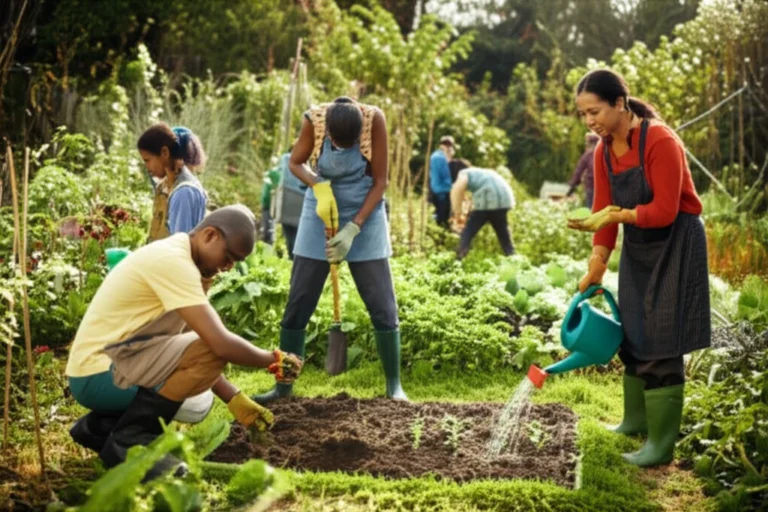
Ever wonder if a single raised bed in a city parking lot could actually change the world? It sounds like a stretch, but the data says otherwise. At Community Gardening™, we’ve watched neighbors transform barren lots into lush ecosystems that cool the streets, feed families, and even save bees. But here’s the kicker: it’s not just about the tomatoes; it’s about rewiring how we interact with our planet.
In this deep dive, we’re uncovering 7 transformative ways community gardens act as engines for sustainable living and environmental stewardship. From slashing carbon footprints by eliminating food miles to creating critical wildlife corridors in concrete jungles, these green spaces are doing heavy lifting you might not expect. We’ll also share a shocking statistic about how much water a single garden can save compared to a traditional lawn, and reveal the secret social superpower that keeps these projects alive long after the first harvest.
Ready to see how your local plot is actually a global game-changer? Let’s dig in.
Key Takeaways
- Carbon Reduction: Community gardens can cut food-related carbon emissions by up to 90% by eliminating long-distance transport and packaging.
- Biodiversity Havens: These spaces serve as critical refuges for pollinators, often hosting 50+ species of birds and insects in urban areas.
- Water Wisdom: Through smart techniques like rainwater harvesting and mulching, gardens use 40% less water than standard lawns.
- Social Resilience: Beyond the environment, they build community cohesion, reduce isolation, and provide fresh food in underserved areas.
- Urban Cooling: Strategic planting mitigates the Urban Heat Island effect, lowering local temperatures and energy costs.
Table of Contents
- ⚡️ Quick Tips and Facts
- 🌱 From Concrete Jungles to Green Havens: The History of Community Gardening
- 🌍 The Core Mission: How Community Gardens Drive Sustainable Living
- 🌿 Cultivating Environmental Stewardship: Beyond the Compost Bin
- 🍅 7 Ways Community Gardens Transform Local Food Systems and Reduce Carbon Footprints
- 🐝 5 Essential Strategies for Boosting Urban Biodiversity and Pollinator Populations
- 💧 6 Smart Water Conservation Techniques Every Community Garden Should Adopt
- 🏙️ Mitigating the Urban Heat Island Effect: The Cooling Power of Shared Green Spaces
- 🧠 Social Sustainability: Building Resilient Communities Through Shared Soil
- 🛠️ Getting Started: A Step-by-Step Guide to Launching Your Own Eco-Friendly Community Plot
- 📊 Real-World Impact: Case Studies of Successful Sustainable Garden Projects
- 🚫 Common Pitfalls: What to Avoid When Planning a Green Initiative
- 📚 Recommended Links
- ❓ Frequently Asked Questions (FAQ)
- 📖 Reference Links
⚡️ Quick Tips and Facts
Before we dig our hands into the rich, dark soil of this topic, let’s hit the highlights! 🌟 If you’re wondering what role do community gardens play in promoting sustainable living, here is the 30-second elevator pitch:
- Carbon Cuters: Community gardens can reduce the carbon footprint of food by up to 90% compared to store-bought produce by eliminating long-distance transport. 🚛❌
- Biodiversity Boosters: A single urban garden can host over 50 species of birds, insects, and small mammals, acting as a critical refuge in concrete jungles. 🐝🐦
- Water Warriors: Through rainwater harvesting and mulching, these gardens often use 40% less water than traditional suburban lawns. 💧
- Social Glue: They aren’t just about plants; they are about people. Studies show participants report higher levels of social cohesion and lower stress. 🤝
- Waste Wizards: By composting local organic waste, they divert tons of material from landfills annually, turning “trash” into “treasure.” ♻️
But wait, is it really that simple? Can a few raised beds in a parking lot really save the planet? 🤔 Stick with us, because the story gets much deeper (and dirtier) than you might expect.
For a deeper dive into the core mission, check out our guide on What is the purpose of a community garden?.
🌱 From Concrete Jungles to Green Havens: The History of Community Gardening

To understand where we are going, we have to look at where we’ve been. The concept of community gardening isn’t a new-age hippie fad; it’s a survival strategy with deep roots.
The Victory Garden Legacy
During World War I and II, the U.S. government encouraged citizens to plant “Victory Gardens” to supplement food rations. At their peak, these gardens produced nearly 40% of all vegetables consumed in the nation! 🥕🇺🇸 This wasn’t just about sustainability; it was about national security.
The Urban Renaissance
Fast forward to the 1970s. As cities faced economic decline and “urban blight,” community gardens emerged as a grassroots response. Groups like the Green Guerillas in New York City famously tossed seed bombs into vacant lots, sparking a movement that turned eyesores into oases. 🌿💥
Today, organizations like the American Community Gardening Association (ACGA) work tirelessly to protect these spaces. They argue that these gardens are not temporary fixes but permanent infrastructure for sustainable living.
“Garden clubs are intrinsic to the preservation and enhancement of community character.” — Scenic America
This historical context is crucial because it shows that environmental stewardship has always been tied to community action. We aren’t just planting seeds; we are planting resilience.
🌍 The Core Mission: How Community Gardens Drive Sustainable Living
So, what is the core mission of a community garden? It’s simple: to create a self-sustaining ecosystem that benefits both the planet and the people. But how does that actually work?
Closing the Loop
In industrial agriculture, the loop is broken. Fertilizers come from factories, food travels thousands of miles, and waste goes to landfills. Community gardens close the loop:
- Input: Compost from local kitchens feeds the soil.
- Process: Sun and rain grow the food.
- Output: Fresh produce feeds the neighbors.
- Waste: Scraps return to the compost pile.
This circular economy is the heartbeat of sustainable living.
Education in Action
You can’t teach sustainability from a textbook alone. As noted in our exploration of Climate Adaptation in Gardening, hands-on experience is key. When you see a drought-resistant plant thrive while a thirsty one wilts, you learn about water conservation faster than any lecture could teach you.
The “Why” Behind the “What”
Many people ask, “Why bother?” The answer lies in food sovereignty. When you grow your own food, you control what goes into it (no pesticides!) and where it comes from. This autonomy is a radical act of environmental stewardship.
🌿 Cultivating Environmental Stewardship: Beyond the Compost Bin
Environmental stewardship is often misunderstood as just “recycling.” In community gardens, it’s a holistic philosophy.
Soil Health as a Priority
Healthy soil is the foundation of a healthy planet. Gardeners at Community Gardening™ swear by regenerative agriculture practices:
- No-Till Gardening: Disturbing the soil less preserves carbon and microbial life.
- Cover Cropping: Planting clover or rye in the off-season prevents erosion and fixes nitrogen. 🌱
- Mulching: A thick layer of straw or leaves retains moisture and suppresses weeds naturally.
Native Plant Advocacy
One of the most powerful ways gardens promote stewardship is by prioritizing native plants. Non-native species often require excessive water and chemicals, and they don’t support local wildlife. By choosing natives, we create habitats for pollinators.
“By educating the public on sustainable gardening practices, the benefits of native plants, and the need for ecological balance; garden clubs empower individuals to contribute to the conservation efforts within their own communities.” — Scenic America
Chemical-Free Zones
Community gardens often serve as chemical-free sanctuaries in a sea of lawns treated with synthetic fertilizers and pesticides. This reduces runoff into local waterways, protecting our rivers and lakes. 🌊
🍅 7 Ways Community Gardens Transform Local Food Systems and Reduce Carbon Footprints
Let’s get specific. How exactly do these gardens change the food game? Here are 7 transformative ways:
- Eliminating Food Miles: The average meal in the US travels 1,50 miles to reach your plate. In a community garden, it travels 15 feet. 🚚➡️🚶 ♂️
- Reducing Packaging Waste: No plastic clamshells, no styrofoam trays. Just a reusable basket. 🛍️❌
- Seasonal Eating: Gardens force us to eat what’s in season, reducing the energy needed for heated greenhouses or long-haul imports. 📅
- Biodiversity in the Pantry: Instead of the same 5 varieties of tomatoes found in supermarkets, gardens grow heirloms, preserving genetic diversity. 🍅🌈
- Food Security: In “food deserts,” gardens provide access to fresh, nutritious produce that might otherwise be unaffordable or unavailable. 🥗
- Community Resilience: When supply chains break (as seen during recent global events), local gardens keep neighborhoods fed. 🛡️
- Carbon Sequestration: Plants pull CO2 from the air and store it in the soil. A well-managed garden is a carbon sink. 🌳
The “Food Mile” Comparison
| Feature | Industrial Supermarket Food | Community Garden Food |
|---|---|---|
| Average Distance Traveled | 1,50+ miles | < 1 mile |
| Packaging | High (Plastic, Styrofoam) | None/Minimal |
| Pesticide Use | High (Synthetic) | Low/None (Organic) |
| Freshness | Days to Weeks | Hours |
| Carbon Footprint | High | Negligible |
🐝 5 Essential Strategies for Boosting Urban Biodiversity and Pollinator Populations
Cities are often called “biological deserts,” but community gardens are the oases that bring life back. Here are 5 strategies we use to turn a plot into a wildlife haven:
- Plant a Pollinator Palette: Choose flowers that bloom at different times to provide food from spring to fall. Think Bee Balm, Coneflower, and Lavender. 🌸
- Create “Bug Hotels”: Install bundles of hollow stems or drilled wood blocks for solitary bees and beneficial insects. 🏨🐝
- Leave the Leaves: Don’t rake everything clean! Leaf litter provides overwintering habitat for butterflies and moths. 🍂
- Water Sources: A shallow dish with stones for landing pads can save thirsty bees from drowning. 💧
- Connect the Coridors: Coordinate with neighboring gardens to create a “green corridor” allowing wildlife to move safely through the city. 🌉
Real-World Impact
In cities like Detroit and Philadelphia, community gardens have been credited with increasing local bird populations by providing nesting sites and food sources that were previously non-existent.
💧 6 Smart Water Conservation Techniques Every Community Garden Should Adopt
Water is precious, especially in urban areas where runoff is a major issue. Here are 6 smart techniques to keep water in the garden:
- Rainwater Harvesting: Install Rain Barrel systems to capture roof runoff. Brands like Good Ideas or RTS offer excellent options. 🌧️
- Drip Irrigation: Ditch the sprinkler! Drip systems deliver water directly to the roots, reducing evaporation by up to 50%. 💧
- Swales and Berms: Diging shallow trenches (swales) slows down water flow, allowing it to soak into the ground rather than running off. 🌊
- Mulching: A 3-inch layer of organic mulch reduces evaporation significantly. 🌾
- Xeriscaping: Group plants with similar water needs together (hydrozoning) to avoid over-watering. 🌵
- Soil Amendment: Adding compost improves soil structure, allowing it to hold more water like a sponge. 🧽
Product Spotlight: Rain Barels
If you are looking to start harvesting rain, here are some top contenders:
- Good Ideas Rain Wizard 50 Gallon: Known for its sleek design and easy overflow system.
👉 CHECK PRICE on: Amazon | Walmart | Good Ideas Official - RTS Home Accents 50 Gallon: A durable, UV-resistant option with a brass spigot.
👉 CHECK PRICE on: Amazon | Walmart | RTS Official
🏙️ Mitigating the Urban Heat Island Effect: The Cooling Power of Shared Green Spaces
Ever notice how cities are several degrees hotter than the countryside? That’s the Urban Heat Island (UHI) effect. Concrete and asphalt absorb heat and radiate it back at night. Community gardens are the antidote.
How It Works
- Evapotranspiration: Plants release water vapor, which cols the air. 🌬️
- Shade: Trees and tall plants block direct sunlight from hitting the ground. ☀️
- Albedo Effect: Green surfaces reflect less heat than dark asphalt.
The Data
Studies suggest that a well-planted community garden can lower the surrounding air temperature by 2-5°F. While that sounds small, it translates to significant energy savings for nearby buildings and reduced heat stress for residents. 🌡️
🧠 Social Sustainability: Building Resilient Communities Through Shared Soil
Sustainability isn’t just environmental; it’s social. A garden that doesn’t bring people together is just a plot of dirt.
The “Third Place”
Sociologist Ray Oldenburg coined the term “Third Place” for spots that are neither work nor home. Community gardens are the ultimate Third Place. They foster intergenerational connection, bringing together retirees, young families, and students. 👴👶🎓
Multiculturalism in the Soil
As highlighted in the video summary, community gardens are spaces where multiculturalism flourishes. Immigrants bring seeds from their home countries, sharing recipes and growing techniques. This exchange of knowledge is a form of cultural sustainability.
“They can see the impact that sometimes are lost in the urbanization and the way that our cities are forming.” — Video Summary
Mental Health Benefits
Gardening reduces cortisol levels and anxiety. In a world of digital overload, the tactile experience of soil is a grounding force. 🧘 ♀️
🛠️ Getting Started: A Step-by-Step Guide to Launching Your Own Eco-Friendly Community Plot
Ready to start your own sustainable living project? Here is our step-by-step guide:
Step 1: Assemble Your Team
Find 5-10 dedicated neighbors. Look for diverse skills: a lawyer, a carpenter, a gardener, and a social butterfly! 🤝
Step 2: Secure the Land
Contact your local city council or land trust. Look for vacant lots, school grounds, or church properties. Check our section on Community Garden Policies for legal tips. 🏛️
Step 3: Test the Soil
Crucial Step! Urban soil often contains lead or other contaminants. Get a soil test kit (like Luster Leaf or Thorne’s) or send a sample to your local extension office. 🧪
Step 4: Design with Sustainability in Mind
- Orient beds for maximum sun.
- Plan for rainwater collection.
- Include a composting area.
- Ensure accessibility for all ages and abilities. 📐
Step 5: Build and Plant
Start small. Build raised beds using cedar or recycled materials. Plant native species and cover crops. 🌱
Step 6: Establish Governance
Create a bylaw that outlines rules for water use, composting, and conflict resolution. This ensures long-term sustainability. 📜
📊 Real-World Impact: Case Studies of Successful Sustainable Garden Projects
Let’s look at who is doing it right.
Case Study 1: The P-Patch Program (Seattle, WA)
One of the oldest and largest community gardening programs in the US.
- Impact: Over 1,90 plots, producing tons of food annually.
- Sustainability Feature: Mandatory composting and water conservation education for all plot holders.
- Source: Seattle P-Patch
Case Study 2: Detroit Black Community Food Security Network
Focusing on food sovereignty and racial justice.
- Impact: Created the D-Town Farm, a 7-acre organic farm.
- Sustainability Feature: Uses solar power for irrigation and focuses on heirloom crops.
- Source: Detroit Black Community Food Security Network
Case Study 3: The Suffield Garden Club (Suffield, CT)
As mentioned in the Scenic America article, this club planted thousands of daffodil bulbs, transforming the town into a spring spectacle while educating the public on native flora.
- Impact: Enhanced community character and scenic beauty.
- Sustainability Feature: Focus on native plant restoration and roadside beautification.
🚫 Common Pitfalls: What to Avoid When Planning a Green Initiative
Even the best intentions can go wrong. Here is what to avoid:
- ❌ Ignoring Soil Safety: Never skip the soil test. Lead poisoning is a real risk in urban areas.
- ❌ Over-Complicating: Don’t try to build a hydroponic system on day one. Start with simple raised beds.
- ❌ Excluding the Community: If the garden is run by a few people for a few people, it will fail. Involvement is key.
- ❌ Neglecting Water Access: No water source = no garden. Ensure you have a legal and practical water hookup.
- ❌ Forgetting Maintenance: Who waters in July? Who weeds in August? Create a clear maintenance schedule.
Conclusion

So, we’ve traveled from the Victory Gardens of the 1940s to the high-tech rainwater harvesting systems of today. We’ve seen how community gardens are not just places to grow tomatoes, but powerhouses of sustainability.
They reduce carbon footprints, restore biodiversity, cool our cities, and heal our social fabric. As the video summary noted, these spaces allow us to “see the impact that sometimes are lost in the urbanization.” They are the antidote to the disconnect between modern life and the natural world.
Our Verdict: If you are looking for a way to live more sustainably, look no further than the soil beneath your feet. Whether you join an existing garden or start your own, you are participating in a global movement for environmental stewardship.
Ready to dig in? Check out our Benefits of Community Gardens page for more inspiration, or join a local Community Garden Event to meet your neighbors!
📚 Recommended Links
Ready to take action? Here are some essential resources and tools to get you started:
- Rain Barels & Irrigation:
Good Ideas Rain Wizard: Amazon | Walmart | Good Ideas Official
Drip Irrigation Kits: Amazon | Walmart - Soil Testing:
Luster Leaf Rapitest: Amazon | Home Depot - Books on Sustainable Gardening:
The Vegetable Gardener’s Bible by Edward C. Smith: Amazon
Gaia’s Garden: A Guide to Home-Scale Permaculture by Toby Hemenway: Amazon - Community Resources:
American Community Gardening Association: ACGA.org
Scenic America: Scenic.org
❓ Frequently Asked Questions (FAQ)

Can community gardens play a role in addressing food insecurity and promoting food sovereignty, particularly in underserved or low-income communities?
Yes, absolutely. Community gardens are a frontline defense against food insecurity. By providing free or low-cost access to fresh, nutrient-dense produce, they fill gaps left by “food deserts.” Furthermore, they promote food sovereignty by giving communities control over what they grow and how they grow it, reducing reliance on industrial food systems that often price out low-income families.
In what ways can community gardens serve as educational hubs for teaching sustainable gardening practices and environmental awareness?
Gardens are living classrooms. They offer hands-on workshops on composting, seed saving, and organic pest control. Schools often partner with local gardens to teach biology and ecology in a real-world setting. As noted by Scenic America, these spaces “empower individuals to contribute to conservation efforts” by demonstrating the tangible benefits of native plants and ecological balance.
What are the social benefits of community gardening, and how can they foster a sense of community and cooperation among participants?
The social benefits are profound. Gardens reduce isolation, especially among the elderly, and bridge cultural divides. They create a shared sense of responsibility and pride. As the video summary highlighted, these spaces “foster an appreciation for biodiversity” while nurturing multiculturalism. Participants often report lower stress levels and stronger neighborhood bonds.
How can community gardens contribute to reducing urban pollution and promoting biodiversity in local ecosystems?
By replacing impervious surfaces with soil and plants, gardens filter stormwater runoff, reducing urban pollution in waterways. They also act as pollinator corridors, supporting bees, butterflies, and birds that struggle to find habitat in concrete cities. The use of organic practices eliminates the need for synthetic pesticides, further protecting local ecosystems.
How do community gardens reduce urban heat islands?
Community gardens mitigate the Urban Heat Island (UHI) effect through evapotranspiration (plants releasing water vapor) and providing shade. This can lower local temperatures by several degrees, reducing the energy needed for air conditioning and improving air quality.
Read more about “🌿 12 Ways Gardens Crush the Urban Heat Island Effect (2026)”
What are the environmental benefits of composting in community gardens?
Composting is a cornerstone of sustainable living. It diverts organic waste from landfills (reducing methane emissions) and creates nutrient-rich soil that improves water retention and plant health. It closes the nutrient loop, turning “waste” into a resource.
Read more about “🌱 10 Ways Community Gardens Build Stronger Neighborhoods (2026)”
How can community gardens improve local biodiversity?
By planting a diverse array of native species, gardens provide food and shelter for local wildlife. They create micro-habitats that support insects, birds, and small mammals, effectively turning urban pockets into biodiversity hotspots.
Read more about “7 Surprising Benefits of a Community Garden You Need to Know 🌿 (2026)”
In what ways do community gardens promote food security and sustainability?
They promote food security by ensuring a local, reliable source of fresh food. They promote sustainability by reducing food miles, eliminating packaging waste, and using regenerative agricultural practices that heal the soil rather than deplete it.
Read more about “🌱 7 Ways Gardening for Social Change Transforms Communities (2026)”
📖 Reference Links
- Scenic America: National Garden Week: The Vital Role of Garden Clubs in Preserving Community Character and Scenic Conservation
- American Community Gardening Association: About Us
- USDA: Community Gardening Resources
- EPA: Urban Heat Island Effect
- Good Ideas Inc.: Rain Barels
- RTS Home Accents: Rain Barels
- Luster Leaf: Soil Test Kits
- Detroit Black Community Food Security Network: D-Town Farm
- Seattle P-Patch: Program Overview