Support our educational content for free when you purchase through links on our site. Learn more

The biggest community garden benefits to the global community come from stacking local wins: fresh food access, stronger social ties, pollinator habitat, practical climate adaptation, and shared knowledge. Our recommendation is clear: treat community gardens as community infrastructure, not merely attractive plots of vegetables.
A garden will not solve global hunger or climate change alone. But it can help neighbors grow food, share harvests, learn water-wise techniques, support biodiversity, and build the trust needed for larger solutions.
We once watched a shared zucchini bed become an impromptu neighborhood food desk. One gardener brought recipes, another supplied bags, and a third showed a child how to save seeds. The harvest was modest; the cooperation was not.
Research reflects this wider value. Participants in an Edmonton community garden described serenity, altruism, connection with nature, and emotional well-being, while researchers linked the space with broader ideas of planetary health (PubMed). The real surprise is that the garden’s most valuable crop may not be lettuce at all. 🌱
Key Takeaways
- Community gardens strengthen food security by supplementing household diets with fresh, culturally meaningful produce.
- Shared growing supports public health through physical activity, nutrition education, nature contact, and social connection.
- Gardens benefit ecosystems by improving soil, conserving water, supporting pollinators, and creating urban wildlife habitat.
- They build resilient communities that can cooperate during climate stress, food disruptions, and neighborhood challenges.
- Benefits depend on good governance: soil safety, secure land, accessible design, fair harvest distribution, and resident leadership matter.
- Gardens are not a substitute for public investment in housing, healthcare, food assistance, climate action, or sustainable agriculture.
- The strongest model combines individual plots with shared beds, donation harvests, education, cultural exchange, and measurable community goals.
Table of Contents
- ⚡️ Quick Tips and Facts
- 🌍 What Are Community Gardens? A Global Overview
- Community Gardens, Allotments, Urban Farms, and Food Forests
- How Community Gardening Differs Around the World
- 📜 From Victory Gardens to Global Food Sovereignty: A Brief History
- 🌱 15 Community Garden Benefits to the Global Community
- 1. Improving Food Security and Access to Fresh Produce
- 2. Supporting Nutrition and Healthy Eating Habits
- 3. Reducing Food Deserts and Urban Food Inequality
- 4. Strengthening Local Food Systems and Food Sovereignty
- 5. Creating Climate-Resilient Communities
- 6. Mitigating Urban Heat and Improving Air Quality
- 7. Supporting Biodiversity, Pollinators, and Wildlife
- 8. Conserving Water, Soil, and Other Natural Resources
- 9. Reducing Food Miles, Waste, and Carbon Emissions
- 10. Improving Physical Health and Preventive Well-Being
- 11. Supporting Mental Health, Stress Relief, and Social Connection
- 12. Building Social Cohesion Across Cultures and Generations
- 13. Providing Environmental Education and Practical Skills
- 14. Creating Economic Opportunities and Community Wealth
- 15. Revitalizing Neighborhoods and Advancing Environmental Justice
- 🏙️ Community Garden Benefits in Cities, Suburbs, and Rural Areas
- Urban Gardening and Sustainable City Development
- Rural Community Gardens and Local Resilience
- Gardens in Schools, Housing Communities, and Healthcare Settings
- 🤝 How Community Gardens Strengthen Global Communities
- Cultural Exchange Through Seeds, Recipes, and Growing Traditions
- Gardening as a Tool for Inclusion and Belonging
- Youth Leadership, Intergenerational Learning, and Civic Participation
- 🥕 Community Gardens and Global Food Security
- How Local Growing Complements Agriculture
- The Role of Seed Saving and Crop Diversity
- Food Donations, Mutual Aid, and Community Kitchens
- 🌦️ Climate Change, Regenerative Gardening, and Disaster Resilience
- Carbon-Conscious Gardening Practices
- Rain Gardens, Stormwater Management, and Flood Reduction
- Drought-Tolerant Crops and Water-Wise Irrigation
- Composting, Mulching, and Healthy Soil
- 🐝 Biodiversity and Urban Ecosystem Benefits
- Pollinator Gardens and Native Plants
- Integrated Pest Management Without Harmful Chemicals
- Wildlife Habitat, Soil Life, and Ecological Balance
- 🩺 Public Health Benefits of Community Gardens
- Fresh Food Access and Chronic Disease Prevention
- Gardening, Exercise, and Active Living
- Nature Exposure, Mental Health, and Social Well-Being
- Safe Gardening for Children, Older Adults, and Disabled Gardeners
- 📚 Education, Research, and Evidence-Based Gardening
- What Research Says About Community Garden Outcomes
- Measuring Food, Health, Environmental, and Social Impact
- Useful Data Sources, Reports, and Academic Resources
- 🛠️ How to Start a Community Garden That Serves Everyone
- Assessing Community Needs and Choosing a Site
- Land Access, Soil Testing, Water, and Legal Considerations
- Designing Accessible, Safe, and Productive Garden Spaces
- Creating a Mission, Membership Model, and Garden Rules
- Building Partnerships With Schools, Nonprofits, and Local Government
- 💰 Funding, Governance, and Long-Term Sustainability
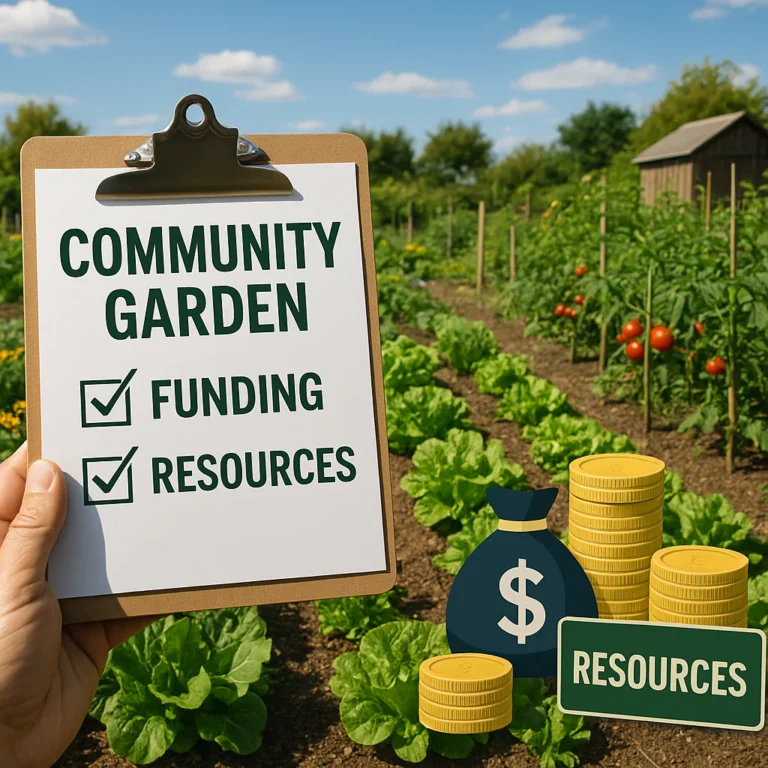
- Community Garden Budgets and Resource Planning
- Grants, Donations, Sponsorships, and In-Kind Support
- Transparent Leadership and Shared Decision-Making
- Volunteer Recruitment, Conflict Resolution, and Retention
- ✅ Best Practices for Equitable and Inclusive Community Gardening
- Removing Financial, Physical, Cultural, and Language Bariers
- Universal Design and Adaptive Gardening Tools
- Fair Access to Plots, Harvests, Training, and Leadership
- ❌ Common Challenges, Risks, and Unintended Consequences
- Soil Contamination, Lead, and Safe Food Growing
- Water Scarcity, Vandalism, Theft, and Garden Security
- Gentrification, Displacement, and Greenwashing Concerns
- Volunteer Burnout and Unequal Labor
- 🌐 Community Gardens as a Model for Global Sustainable Development
- Connections to the United Nations Sustainable Development Goals
- Links to Zero Hunger, Good Health, Climate Action, and Life on Land
- Scaling Local Lessons Without Losing Community Ownership
- 📊 How to Measure the Global Impact of a Community Garden
- Food Production and Household Food Access Indicators
- Health, Participation, and Social Connection Indicators
- Biodiversity, Soil, Water, and Climate Indicators
- Equity, Governance, and Economic Indicators
- 🌿 Quick Wins for Grener, Healthier Community Gardens
- 🔗 Recommended Links
- ❓ FAQ
- What Are the Biggest Community Garden Benefits to the Global Community?
- Can Community Gardens Really Improve Food Security?
- How Do Community Gardens Help the Environment?
- Do Community Gardens Reduce Social Inequality?
- What Are the Main Disadvantages of Community Gardens?
- How Can a Community Garden Avoid Gentrification?
- How Much Land Is Needed to Start a Community Garden?
- Who Pays for Community Gardens?
- How Can Children and Schools Participate?
- What Crops Are Best for a Community Garden?
- 🏁 Conclusion
- 📖 Reference Links
Quick Tips and Facts
Community gardens are more than tidy beds of lettuce. They are shared food systems, outdoor classrooms, wildlife habitat, social meeting places, and small-scale climate projects rolled into one. Our gardeners at Community Gardening™ call this approach “Grow Together through Community Gardening” because the harvest is only half the story.
For a helpful companion on relationships and neighborhood trust, read 🌱 7 Ways Gardening Builds Social Capital (2026).
| Quick fact | Why it matters |
|---|---|
| Community gardens may use individual plots, shared beds, or garden-share models | Different structures can serve renters, families, older adults, schools, and people with limited mobility |
| Gardens can improve access to fresh produce | They supplement, rather than replace, grocery stores, food banks, farmers markets, and public nutrition programs |
| Gardening supports movement and outdoor time | Diging, carrying, weding, walking, and harvesting all add low-impact physical activity |
| Shared growing creates repeated social contact | Familiar faces and practical teamwork can strengthen trust and social capital |
| Compost and mulch improve soil | Healthy soil stores water more effectively and supports beneficial organisms |
| Native flowers and pesticide-free practices help wildlife | Pollinators and other organisms gain food, shelter, and nesting habitat |
| Benefits are not automatic | Land tenure, contamination, water access, governance, safety, and inclusion determine outcomes |
| Evidence varies by garden and study design | Strong claims should be matched with local measurements rather than assumed |
Five actions with an outsized payoff
- Test the soil before planting food. Contact your local extension service or use guidance from the U.S. Environmental Protection Agency.
- Grow food people actually eat. Ask residents about preferred crops, cooking traditions, allergies, and storage needs.
- Create a shared harvest system. A donation bed, produce table, or garden-share program prevents benefits from stopping at the fence.
- Design for access. Include wide paths, raised beds, seating, shade, tool storage, and clear signage.
- Measure what changes. Track harvest weight, volunteer hours, participants, donated produce, pollinator observations, and member feedback.
The tempting question is, “Can a few garden beds really help the global community?” Keep that question in your pocket. The answer becomes clearer once we separate what gardens can reliably do from claims that sound lovely but need stronger evidence.
What Are Community Gardens? A Global Overview
A community garden is a shared outdoor space where people grow vegetables, fruit, herbs, flowers, or native plants through collective or coordinated stewardship. The American Community Gardening Association recognizes many forms, from neighborhood plots to school gardens and communal growing spaces.
The phrase community garden benefits to the global community covers several connected layers:
- Individual: nutrition, movement, confidence, stress relief, and practical skills.
- Neighborhood: social connection, safer shared spaces, local food access, and civic participation.
- Ecological: pollinator habitat, soil improvement, stormwater management, and plant diversity.
- Global: climate awareness, food-system resilience, cultural exchange, and shared learning.
A garden does not need to feed an entire city to matter. A small site can demonstrate how food is grown, reduce isolation, teach children where water goes, and provide a dependable place for neighbors to cooperate. Those are modest actions with surprisingly long roots.
Community Gardens, Allotments, Urban Farms, and Food Forests
These terms overlap, but they are not interchangeable.
| Growing model | Typical management | Main purpose | Common strengths | Common limitations |
|---|---|---|---|---|
| Community garden | Residents, volunteers, nonprofit, school, or municipality | Shared growing and community connection | Flexible, social, educational | Requires coordination and ongoing care |
| Allotment garden | Individual plot holders under a site association | Household food production | Strong grower autonomy | May be less accessible to non-members |
| Urban farm | Professional growers, nonprofit, or social enterprise | Larger-scale production, training, or sales | Can produce substantial harvests and jobs | May prioritize production over open participation |
| School garden | School staff, students, families, or partners | Education and food literacy | Excellent hands-on learning | School calendars and staffing can interrupt care |
| Food forest | Community organization | Perennial food and habitat | Long-term ecological value | Slow establishment and specialized design |
| Garden-share program | Gardeners distribute produce to others | Food access and mutual aid | Reaches people unable to garden | Depends on reliable harvest and distribution |
Our recommendation: use the model that matches the community’s capacity. A shared garden with ten committed gardeners often outperforms an ambitious urban farm with no reliable water plan. Grand plans are wonderful; tomatoes still need watering on Tuesday.
How Community Gardening Differs Around the World
Climate, land tenure, culture, and food traditions shape every garden.
- In North America, gardens may address vacant-lot reuse, food access, immigrant food traditions, and neighborhood organizing.
- In Europe, allotments, urban agriculture, therapeutic gardens, and municipal green-space programs are common.
- In Africa, community growing may support household nutrition, livelihoods, school meals, and drought adaptation.
- In Asia, rooftop gardens, peri-urban agriculture, courtyard growing, and dense-city food production can make clever use of limited land.
- In Latin America and the Caribbean, urban agriculture often connects food sovereignty, mutual aid, education, and local enterprise.
- In Pacific island communities, gardens can support traditional crops, resilience, and adaptation to supply disruptions.
The Food and Agriculture Organization of the United Nations describes urban and peri-urban agriculture as part of broader food-system planning. That does not mean every garden has the same role. A rooftop herb garden and a communal staple-crop plot solve different problems.
From Victory Gardens to Global Food Sovereignty: A Brief History

Community growing has deep roots. People have long shared land, seeds, irrigation, labor, and harvests. Modern community gardens developed through several overlapping traditions:
- Allotment movements that provided working families with land for food production.
- Victory gardens that encouraged household and community food growing during wartime.
- Urban agriculture movements that reclaimed vacant land and challenged unequal food access.
- Environmental justice organizing that connected land, health, pollution, and neighborhood power.
- School and therapeutic gardens that used growing as education, rehabilitation, and care.
- Food sovereignty movements that emphasized community control over food, seeds, land, and cultural knowledge.
The National Agricultural Library documents the historical importance of gardens in American public life. Globally, the details differ, but the pattern repeats: when communities face food shortages, economic stress, social fragmentation, or environmental damage, growing spaces often become practical meeting points.
What history teaches us
History also supplies a warning. Gardens can be celebrated as a substitute for public investment. They should not be expected to solve poverty, contaminated land, unaffordable housing, or inadequate healthcare alone.
✅ Trust gardens as part of a solution.
❌ Do not treat volunteer labor as a replacement for structural support.
That distinction will return when we discuss equity and gentrification.
15 Community Garden Benefits to the Global Community
The strongest case for community gardens is not one spectacular benefit. It is the stacking effect: food access plus movement, habitat plus education, social contact plus civic participation. A garden can become a tiny piece of infrastructure that performs several jobs at once.
1. Improving Food Security and Access to Fresh Produce
Community gardens can provide vegetables, fruit, herbs, and culturally meaningful crops close to where people live. The U.S. Department of Agriculture defines food security as consistent access to enough food for an active, healthy life.
Gardens help by:
- Producing fresh food during the local growing season.
- Reducing the distance some residents travel for herbs or vegetables.
- Offering free or low-cost produce through shared harvests.
- Teaching preservation, seed saving, and seasonal planning.
- Connecting residents with food pantries, community kitchens, and mutual-aid groups.
However, a garden’s harvest is usually supplemental, not a complete household food supply. A small site cannot replace affordable supermarkets, income support, school meals, or emergency food programs.
| Food-access model | Best use | Equity consideration |
|---|---|---|
| Individual plots | Household growing and autonomy | Plot fees, time, tools, and physical access can exclude people |
| Shared beds | Collective production | Requires clear labor and harvest rules |
| Donation beds | Food pantry or community distribution | Needs dependable partners and safe handling |
| Garden-share program | Reaches residents unable to garden | Must avoid making recipients passive or invisible |
| Produce table | Immediate neighborhood access | Requires harvest scheduling and food-safety practices |
Our practical tip: reserve at least one section for shared harvests before allocating every bed to individual plots. The first season we tried an entirely plot-based layout, the garden looked productive but had no reliable way to support a neighbor who could not commit to weekly work. We changed the design the following year, and the donation bed became one of the busiest parts of the site.
2. Supporting Nutrition and Healthy Eating Habits
Fresh produce is useful only when people can eat and enjoy it. Community gardens can improve food literacy by teaching:
- How to grow and harvest vegetables.
- How to prepare unfamiliar crops.
- How to store herbs and leafy greens.
- How to preserve surplus safely.
- How cultural recipes use seasonal ingredients.
The Centers for Disease Control and Prevention links healthy eating patterns with fruits, vegetables, and other nutrient-dense foods. Gardens may make those foods more visible, available, and personally meaningful.
Still, we should avoid promising that gardening automatically changes diet. A systematic review summarized by Tulane University’s School of Public Health notes that many benefits are widely reported, while evidence for some outcomes remains uneven.
✅ Better claim: gardens can create conditions that support healthier eating.
❌ Overclaim: every garden will measurably prevent obesity or malnutrition.
3. Reducing Food Deserts and Urban Food Inequality
In neighborhoods with limited access to affordable, nutritious food, gardens can provide a local source of produce and a place to discuss food-system problems. They may also connect residents to:
- SNAP-Ed and nutrition education.
- Farmers markets and mobile markets.
- Food cooperatives.
- Community-supported agriculture.
- Food banks and community fridges.
- Local policy campaigns.
The USDA Food Access Research Atlas helps communities examine geographic and economic food-access patterns.
A garden is not automatically equitable. If plots are expensive, meetings are held only in one language, or harvests go mainly to people with spare time, the site may reproduce inequality. Access must be designed, not assumed.
4. Strengthening Local Food Systems and Food Sovereignty
Food sovereignty asks who controls land, seeds, labor, knowledge, and decisions about food. Community gardens can strengthen local control by:
- Saving and exchanging locally adapted seeds.
- Growing culturally important crops.
- Teaching residents how food is produced.
- Building relationships with local growers.
- Creating shared rules for land and harvests.
- Keeping some food production within the neighborhood.
The International Planning Committee for Food Sovereignty frames food sovereignty around democratic, sustainable, and culturally appropriate food systems.
Gardens cannot replace regional farms. They can, however, serve as living laboratories where people learn how food systems work and how local decisions connect to global supply chains.
5. Creating Climate-Resilient Communities
Climate resilience means preparing for disruption while reducing vulnerability. Gardens contribute through:
- Diverse crops rather than dependence one food source.
- Local seed knowledge.
- Water-saving systems.
- Shade and cooling.
- Soil organic matter.
- Community relationships that help during emergencies.
- Familiarity with seasonal changes and extreme weather.
Our Climate Adaptation in Gardening category covers practical methods for heat, drought, heavy rain, and shifting growing seasons.
The Intergovernmental Panel on Climate Change emphasizes that climate risks are shaped by exposure, vulnerability, and adaptive capacity. A garden helps most when it is paired with resilient infrastructure, emergency planning, and public support.
6. Mitigating Urban Heat and Improving Air Quality
Vegetation shades soil and pavement, releases water vapor, and can make outdoor spaces more comfortable. Trees and shrubs may also capture some air pollutants, although results depend on species, layout, maintenance, and surrounding traffic.
The U.S. Environmental Protection Agency explains how vegetation and green infrastructure can reduce urban heat-island effects. A community garden’s cooling impact is usually local, but local cooling matters to people waiting for a bus, walking home, or tending beds during a hot afternoon.
For better results:
- Add canopy trees where roots and utilities allow.
- Use trellises for vertical shade.
- Keep soil covered with mulch.
- Provide seating under shade.
- Avoid reflective bare surfaces.
- Choose plants suited to the local climate.
7. Supporting Biodiversity, Pollinators, and Wildlife
A garden can become a stepping stone between larger habitats. Native flowers, diverse crop families, water sources, and pesticide-free practices support insects, birds, and soil organisms.
The U.S. Fish & Wildlife Service explains why native plants matter for wildlife and ecological relationships. Pollinator-friendly gardening is not just about honeybes; it includes native bees, butterflies, moths, beetles, and other organisms.
A biodiversity-friendly planting mix
| Garden feature | Ecological function |
|---|---|
| Native flowering plants | Nectar and pollen across seasons |
| Host plants | Food for butterfly and moth larvae |
| Leaf litter | Shelter for insects and soil organisms |
| Small water source | Drinking and cooling, with escape routes |
| Dense shrubs | Bird cover and nesting habitat |
| Compost-rich soil | Microbial activity and soil structure |
| Untidy corner | Overwintering habitat, because nature dislikes a perfect haircut |
Avoid invasive plants and use the National Invasive Species Information Center for regional guidance.
8. Conserving Water, Soil, and Other Natural Resources
Community gardens can model resource conservation through:
- Rain barrels where legal and safe.
- Drip irrigation.
- Soaker hoses.
- Mulch.
- Compost.
- Soil testing.
- Crop rotation.
- Cover crops.
- Reused materials that are clean and non-toxic.
- Shared tools rather than duplicate purchases.
The Natural Resources Conservation Service provides soil-health guidance, while EPA composting resources explain how composting can reduce organic waste.
Do not use unknown salvaged materials for food beds. Old painted boards, treated lumber, contaminated fill, and industrial debris can introduce hazards.
9. Reducing Food Miles, Waste, and Carbon Emissions
Growing food near consumers can reduce some transport and packaging, particularly for herbs and delicate produce. Composting can divert organic material from disposal and return nutrients to soil.
But “local” does not automatically mean “low carbon.” A heated greenhouse, inefficient irrigation system, or constant car travel to a distant garden may offset some benefits. The United Nations Environment Programme highlights the significance of food waste, while life-cycle impacts vary by crop and production method.
The most credible approach is to:
- Grow crops suited to the local season.
- Avoid unnecessary plastic and synthetic inputs.
- Compost responsibly.
- Share surplus quickly.
- Use hand tools or efficient equipment.
- Encourage walking, cycling, and transit access.
- Track inputs rather than assuming benefits.
10. Improving Physical Health and Preventive Well-Being
Gardening involves bending, lifting, walking, carrying, digging, reaching, and fine-motor work. It can be adapted for different abilities and energy levels.
The National Institute on Aging recommends regular physical activity for older adults, with appropriate safety and adaptation. Gardening is not a substitute for prescribed exercise, but it can make movement feel purposeful rather than like a chore wearing sneakers.
Safer gardening habits
- Warm up before heavy work.
- Lift with help or use carts.
- Alternate tasks and postures.
- Use ergonomic handles.
- Drink water before feeling thirsty.
- Wear gloves and closed-toe shoes.
- Avoid gardening during the hottest hours.
- Provide seating and shade.
- Keep paths firm and unobstructed.
11. Supporting Mental Health, Stress Relief, and Social Connection
Gardening offers sensory contact with soil, scent, texture, weather, and seasonal change. It also creates routine and visible progress. A seed does not care about your inbox, which can be oddly therapeutic.
In the Edmonton Green and Gold Garden study, participants described serenity, altruism, connection with nature, and emotional well-being. The authors wrote that community gardens can help people “expand one’s scope of care to incorporate planetary health” (Zutter et al., PubMed).
The study used focused ethnography with eight volunteers and four customers. That makes the findings valuable for understanding lived experience, but it does not prove that every garden produces the same mental-health outcomes. Small qualitative studies explain how benefits may feel; larger studies are better for estimating how common they are.
The World Health Organization recognizes mental health as connected to social, environmental, and community conditions.
12. Building Social Cohesion Across Cultures and Generations
A garden creates repeated, low-pressure contact. People meet while watering, swapping seedlings, repairing a fence, or arguing cheerfully about whether the zucchini has become a botanical battering ram.
Social benefits include:
- Informal friendships.
- Mentorship between experienced and new gardeners.
- Intergenerational learning.
- Language exchange.
- Shared celebrations.
- Conflict-resolution practice.
- Increased familiarity and trust.
- Opportunities for civic discussion.
The first video featured in this article makes a similar point: city residents can become disconnected from food, soil, and water, while community gardens provide a gathering place to reconnect. See the featured video for that perspective.
Gardens are especially powerful when participation is not limited to people who already know how to grow food. Beginner workshops, multilingual signs, and shared tools turn expertise into a bridge rather than a gate.
13. Providing Environmental Education and Practical Skills
A garden teaches systems thinking with muddy shoes:
- Seeds need suitable conditions.
- Soil organisms affect plant health.
- Water is limited.
- Pollinators connect flowers and food.
- Waste can become a resource.
- Weather affects harvests.
- Decisions have trade-offs.
Schools can align gardens with science, health, geography, mathematics, and cultural studies. Adults can learn composting, pruning, seed saving, irrigation, food preservation, and meeting facilitation.
The National Environmental Education Foundation supports learning that connects people with environmental action. Community gardens make that action visible and local.
14. Creating Economic Opportunities and Community Wealth
Community gardens may support local economies by:
- Hiring coordinators or educators.
- Creating paid apprenticeships.
- Supporting small food enterprises.
- Developing market-gardening skills.
- Reducing some household produce expenses.
- Connecting growers with restaurants or markets.
- Reusing vacant land productively.
Economic benefits require careful design. Unpaid labor can become exploitative, and a garden should not be used to justify removing affordable housing or displacing residents.
A strong model includes:
- Paid leadership where possible.
- Transparent budgets.
- Skill certificates or references.
- Partnerships with workforce programs.
- Procurement from local suppliers.
- Resident control over future land use.
15. Revitalizing Neighborhoods and Advancing Environmental Justice
Transforming a neglected lot can improve appearance, create gathering space, and reduce hazards. The American Public Health Association connects environmental conditions with health and equity.
Yet beautification can have a shadow. New green space may increase property pressure and attract investment that benefits newcomers more than existing residents. The Trust for Public Land discusses the relationship between parks, equity, and access.
Anti-displacement safeguards
- Secure long-term land tenure.
- Give residents decision-making power.
- Keep membership and harvest access affordable.
- Track who benefits and who is excluded.
- Partner with housing and tenant organizations.
- Avoid branding that erases local history.
- Include anti-displacement goals in funding agreements.
- Protect culturally important crops and practices.
A garden is not equitable merely because it is green. It must also be accountable.
Community Garden Benefits in Cities, Suburbs, and Rural Areas
The same garden practice can have different effects depending on place. A rooftop garden in Singapore, an allotment in London, a school garden in Nairobi, and a vacant-lot garden in Detroit may all grow food, but their constraints and opportunities differ.
Urban Gardening and Sustainable City Development
Urban gardens can:
- Reclaim underused land.
- Add green space where parks are scarce.
- Improve food literacy.
- Support pollinators.
- Provide outdoor social infrastructure.
- Demonstrate water and waste solutions.
- Connect residents with planning decisions.
Urban sites also face risks:
- Soil contamination.
- Water restrictions.
- High land values.
- Vandalism or theft.
- Heat and reflected radiation.
- Short leases.
- Construction pressure.
Use the EPA’s green infrastructure resources when designing rain gardens, bioswales, permeable surfaces, or stormwater features.
Rural Community Gardens and Local Resilience
Rural gardens may address different needs:
- Supplemental food production.
- School and youth engagement.
- Support for older residents.
- Seed preservation.
- Community gathering.
- Drought and wildfire preparedness.
- Local processing and preservation.
Rural sites may have more land but less public transit, fewer nearby services, and greater distances between participants. A garden beside a community center, clinic, or school may be more useful than a larger site that requires a car.
Gardens in Schools, Housing Communities, and Healthcare Settings
| Setting | Strongest opportunity | Design priority |
|---|---|---|
| School | Curriculum, taste education, student leadership | Safe access, summer maintenance |
| Affordable housing | Fresh food, social connection, resident power | Resident governance and secure tenure |
| Healthcare campus | Therapeutic outdoor space and nutrition education | Accessibility, privacy, maintenance |
| Senior housing | Movement, social contact, adaptive growing | Raised beds, seating, shade |
| Refuge-support center | Cultural crops, language exchange, belonging | Interpretation and trauma-informed practice |
| Workplace | Staff well-being and food literacy | Voluntary participation and fair labor |
Our Community Garden Events resources can help organize workshops, seed swaps, harvest days, and neighborhood meals.
How Community Gardens Strengthen Global Communities
A global community is not created by putting a globe on a signboard. It grows through shared problems, shared learning, and respect for local knowledge.
Cultural Exchange Through Seeds, Recipes, and Growing Traditions
Gardens can host:
- Seed exchanges.
- Multilingual plant labels.
- Recipe demonstrations.
- Cultural harvest festivals.
- Storytelling sessions.
- Traditional growing workshops.
- Crop trials led by residents.
Cultural exchange works best when it is reciprocal. Avoid turning someone’s food tradition into a decorative “theme.” Ask who owns the knowledge, who receives credit, and whether participants want their practices shared publicly.
Gardening as a Tool for Inclusion and Belonging
Inclusive gardens offer more than an invitation. They remove practical barriers:
- Sliding-scale or free membership.
- Shared tools.
- Flexible work sessions.
- Child-friendly areas.
- Accessible paths and beds.
- Translation and interpretation.
- Clear codes of conduct.
- Multiple ways to contribute.
- Harvest access for non-gardeners.
The Community Garden Policies category can support rules for membership, safety, shared tools, conflict resolution, and harvest distribution.
Youth Leadership, Intergenerational Learning, and Civic Participation
Young people can lead:
- Pollinator surveys.
- Garden maps.
- Compost monitoring.
- Social-media storytelling.
- Harvest weighing.
- Water audits.
- Community interviews.
- Seed-saving projects.
Older gardeners contribute practical knowledge, history, and patience. The best projects avoid assigning young people only the “fun” tasks while adults keep all decision-making power.
Community Gardens and Global Food Security
Food security is shaped by income, conflict, climate, trade, infrastructure, health, and policy. Community gardens are one local tool within that larger system.
How Local Growing Complements Agriculture
Gardens are particularly useful for:
- Herbs and leafy greens.
- Fresh crops that spoil quickly.
- Culturally specific varieties.
- Nutrition education.
- Emergency community support.
- Seed and crop experimentation.
- Short supply chains.
They are less suited to replacing staple-crop agriculture at national or global scale. Wheat, rice, maize, cassava, and other staples require land, storage, processing, and distribution systems beyond most community plots.
The FAO food security resources help place gardens within wider food systems rather than treating them as isolated solutions.
The Role of Seed Saving and Crop Diversity
Seed saving can preserve locally adapted varieties and cultural memory. Good practice includes:
- Identify open-pollinated varieties suitable for the region.
- Learn isolation requirements.
- Select healthy, true-to-type plants.
- Allow seeds to mature fully.
- Dry and label them carefully.
- Store them in cool, dry, pest-resistant conditions.
- Record origin, year, traits, and growing notes.
- Share according to local laws and community agreements.
Do not distribute diseased seed or assume that every saved seed will grow true. The Seed Savers Exchange offers practical educational resources.
Food Donations, Mutual Aid, and Community Kitchens
A garden can strengthen food security when it connects production with distribution:
- Donate directly to a food pantry.
- Coordinate with a community fridge.
- Supply a community kitchen.
- Offer harvest boxes.
- Host preservation workshops.
- Create a “take what you need” table.
- Invite recipients into planning and leadership.
Food safety matters. Follow local guidance on washing, cooling, storage, and distribution. The USDA Food Safety and Inspection Service provides general food-safety information.
Climate Change, Regenerative Gardening, and Disaster Resilience
Climate-smart gardening is not a single product or technique. It is a pattern of decisions that reduces stress on plants, soil, people, and water.
Carbon-Conscious Gardening Practices
Prioritize:
- Perennial plants where appropriate.
- Hand tools for small tasks.
- Efficient irrigation.
- Local or regional materials.
- Compost and mulch.
- Reduced synthetic fertilizer use.
- Native and climate-adapted plants.
- Shared transport and tools.
- Seasonal production.
- Minimal waste.
Avoid claiming that every garden is carbon-neutral. Soil carbon varies by management and measurement, and manufactured materials have their own footprints.
Rain Gardens, Stormwater Management, and Flood Reduction
Rain gardens are shallow planted depressions that temporarily hold and filter runoff. They can reduce pressure on drainage systems when correctly sited.
Basic rain-garden planning
- Observe where water naturally flows.
- Check underground utilities.
- Avoid building against foundations.
- Test infiltration.
- Choose plants suited to wet-dry cycles.
- Include overflow protection.
- Keep soil and mulch from washing away.
- Maintain the basin after storms.
The EPA rain garden guidance explains the basics. A rain garden is not a pond in disguise; poor siting can create drainage problems.
Drought-Tolerant Crops and Water-Wise Irrigation
Water-saving methods include:
- Deep, infrequent watering where suitable.
- Drip lines or soaker hoses.
- Mulching.
- Morning irrigation.
- Grouping plants by water needs.
- Selecting drought-tolerant varieties.
- Harvesting rainwater where permitted.
- Repairing leaks promptly.
- Using moisture checks rather than a fixed timer alone.
The U.S. Department of Agriculture Plant Hardiness Zone Map helps with perennial selection, but hardiness zones do not describe rainfall, heat waves, soil, or microclimates. Use local extension advice too.
Composting, Mulching, and Healthy Soil
Healthy soil supports roots, microbes, water storage, and nutrient cycling. A practical community compost system needs:
- Clear accepted-material rules.
- Carbon-rich browns and nitrogen-rich greens.
- Moisture monitoring.
- Turning or aeration.
- Pest prevention.
- Finished-compost screening.
- A plan for contaminants and odors.
The Composting Council and EPA composting guidance provide useful foundations.
Biodiversity and Urban Ecosystem Benefits
A productive garden can also be an ecosystem. The trick is to stop treating every fallen leaf as a personal insult.
Pollinator Gardens and Native Plants
Choose plants that provide blooms across the season. Include:
- Early spring flowers.
- Summer nectar sources.
- Late-season blooms.
- Host plants for larvae.
- Native grasses and shrubs.
- Shallow water with escape stones.
- Pesticide-free management.
Avoid relying on a single “pollinator mix.” Some commercial mixes contain unsuitable or invasive species, and seed labels may not reflect regional ecology. Consult local native-plant societies or botanical gardens.
Integrated Pest Management Without Harmful Chemicals
Integrated pest management, or IPM, uses prevention and monitoring before intervention. A simple sequence:
- Identify the pest accurately.
- Check whether damage is significant.
- Improve plant health and habitat.
- Remove pests manually where practical.
- Use barriers or traps.
- Encourage beneficial predators.
- Apply the least harmful targeted treatment only when necessary.
- Record what worked.
The University of California Statewide Integrated Pest Management Program offers detailed guidance.
✅ Use: row covers, hand removal, crop rotation, resistant varieties.
❌ Avoid: routine broad-spectrum spraying, unlabeled homemade mixtures, and treating every insect as an enemy.
Wildlife Habitat, Soil Life, and Ecological Balance
Leave some stems standing over winter, keep soil covered, and provide varied plant structure. Earthworms, fungi, bacteria, beetles, birds, and pollinators all contribute to ecological function.
A garden can support biodiversity without sacrificing food production. Plant borders, flowering pathways, compost areas, and perennial corners can surround annual beds like a living support team.
Public Health Benefits of Community Gardens
Community gardens are often described as public-health interventions. That can be accurate, but the strength of evidence depends on the outcome measured.
Fresh Food Access and Chronic Disease Prevention
Gardens may support healthier diets by increasing exposure to vegetables and fruit. They can also make nutrition education practical. However, preventing diabetes, cardiovascular disease, or obesity involves many factors, including income, healthcare, housing, stress, and food marketing.
The Tulane University overview of public health benefits summarizes commonly reported benefits while acknowledging evidence limitations. We trust that balanced framing more than sweeping promises.
Gardening, Exercise, and Active Living
Gardening can contribute to moderate physical activity, especially when tasks are varied. To make movement safer and more inclusive:
- Offer seated and standing tasks.
- Use lightweight tools.
- Install raised beds.
- Provide carts.
- Schedule shorter work sessions.
- Include warm-up and hydration breaks.
- Train volunteers in safe lifting.
A garden should welcome people who cannot dig. Seed sorting, planning, cooking, storytelling, photography, bookkeeping, and welcoming new members are all legitimate contributions.
Nature Exposure, Mental Health, and Social Well-Being
The Edmonton study’s participants described the garden as a place of green care, social connection, and emotional support during the COVID-19 pandemic (PubMed). The garden’s value came from the combination of nature, purpose, food, and people.
That combination matters. A locked garden may provide habitat but little social connection. A busy garden with no quiet corner may provide social contact but overwhelm some participants. Good design offers both.
Safe Gardening for Children, Older Adults, and Disabled Gardeners
Plan for safety from the beginning:
| Need | Helpful design response |
|---|---|
| Limited mobility | Firm, level paths; raised beds; seating |
| Low vision | High-contrast signs; tactile markers; clear edges |
| Hearing differences | Visual alerts; written instructions |
| Heat sensitivity | Shade; water; shorter sessions |
| Children | Safe tools; handwashing; supervised water features |
| Older adults | Rest points; ergonomic tools; accessible storage |
| Neurodivergent participants | Predictable routines; quiet areas; clear signage |
Use local public-health guidance for soil, water, sanitation, and food handling.
Education, Research, and Evidence-Based Gardening
Anecdotes matter because they reveal lived experience. They are not the same as controlled evidence. We need both.
What Research Says About Community Garden Outcomes
Research commonly reports associations with:
- Social connection.
- Physical activity.
- Food access.
- Mental well-being.
- Environmental awareness.
- Neighborhood improvement.
- Gardening skills.
But studies differ in size, design, duration, and participant selection. People who choose to join gardens may already be more socially engaged or health-conscious. That is called selection bias.
The BMC Public Health evidence summarized by Tulane cautions that some widely claimed benefits lack strong verification. Meanwhile, the Edmonton ethnographic study offers rich insight into participants’ experiences but does not establish population-wide effects.
How to interpret conflicting sources
| Source type | Best for | Limitation |
|---|---|---|
| Ethnographic study | Understanding experiences and meanings | Small sample, limited generalization |
| Survey | Measuring reported patterns | Self-report and response bias |
| Systematic review | Comparing many studies | Quality depends on included research |
| Local evaluation | Understanding one garden | May not transfer elsewhere |
| Public-health guidance | Practical recommendations | May summarize rather than test outcomes |
What to trust: consistent findings across different methods, transparent limitations, and outcomes measured over time.
Measuring Food, Health, Environmental, and Social Impact
A simple evaluation plan can track:
- Pounds or kilograms harvested.
- Number of households reached.
- Produce donated.
- Volunteer hours.
- Workshop attendance.
- Membership retention.
- Participant-reported well-being.
- Soil organic matter.
- Water use.
- Pollinator observations.
- Compost volume.
- Accessibility improvements.
- Leadership diversity.
Do not collect sensitive health information casually. Obtain consent, minimize data, protect privacy, and partner with qualified researchers when necessary.
Useful Data Sources, Reports, and Academic Resources
- American Community Gardening Association
- USDA Food Access Research Atlas
- Centers for Disease Control and Prevention
- Food and Agriculture Organization
- World Health Organization
- PubMed
- EPA Green Infrastructure
- National Association of County and City Health Officials
How to Start a Community Garden That Serves Everyone
A successful garden begins before the first seed packet opens. Start with listening, not lumber.
Assessing Community Needs and Choosing a Site
Step 1: Listen to residents
Ask:
- What food is difficult to access?
- Which crops matter culturally?
- Who has time to participate?
- Who is currently excluded?
- What would make the site feel safe?
- Would people prefer plots, shared beds, or both?
- What skills and resources already exist?
Use surveys, listening sessions, door-to-door conversations, school meetings, and partnerships with trusted organizations.
Step 2: Map practical constraints
Assess:
- Sunlight.
- Water.
- Soil.
- Drainage.
- Accessibility.
- Transit.
- Nearby housing.
- Vandalism risk.
- Land ownership.
- Lease length.
- Storage.
- Waste collection.
- Emergency access.
A beautiful site without water is a sculpture, not a garden.
Land Access, Soil Testing, Water, and Legal Considerations
Before planting:
- Confirm land ownership.
- Secure written permission or a long-term agreement.
- Check zoning and permits.
- Test soil for lead and other contaminants.
- Identify a legal water source.
- Confirm liability and insurance requirements.
- Plan fencing and tool storage.
- Establish waste and compost rules.
- Document responsibilities for maintenance.
- Create an exit plan if the land is redeveloped.
The EPA’s lead-safe gardening guidance is essential for urban sites. If contamination is suspected, use raised beds with verified clean soil and follow local remediation advice.
Designing Accessible, Safe, and Productive Garden Spaces
Include:
- A welcoming entrance.
- Firm paths wide enough for mobility devices.
- Raised beds at different heights.
- Seating every reasonable distance.
- Shade and drinking water.
- Tool storage near work areas.
- Clear signs and maps.
- A quiet corner.
- Compost and waste stations.
- Space for deliveries and emergency access.
Design for multiple ways to participate, not just multiple ways to enter.
Creating a Mission, Membership Model, and Garden Rules
A useful mission might include food access, ecological care, learning, cultural exchange, and resident leadership.
Rules should cover:
- Membership and plot allocation.
- Shared work expectations.
- Harvest distribution.
- Organic or IPM standards.
- Tool use.
- Water use.
- Children and pets.
- Accessibility.
- Conflict resolution.
- Photography and privacy.
- Closing procedures.
- Consequences for repeated neglect.
Keep rules short enough to read and clear enough to enforce. Our Community Garden Policies category offers additional policy topics.
Building Partnerships With Schools, Nonprofits, and Local Government
Potential partners include:
- Schools and universities.
- Public libraries.
- Food banks.
- Housing organizations.
- Health clinics.
- Parks departments.
- Extension services.
- Native-plant groups.
- Local businesses.
- Faith communities.
- Disability organizations.
- Refuge and immigrant support groups.
Partnerships work when responsibilities are written down. “We’ll help somehow” is a charming sentence that tends to evaporate by midsummer.
Funding, Governance, and Long-Term Sustainability
The first season often runs on enthusiasm. The fifth season requires systems.
Community Garden Budgets and Resource Planning
Plan for:
- Soil and compost.
- Seeds and plants.
- Water infrastructure.
- Tools.
- Fencing.
- Accessible paths.
- Insurance.
- Permits.
- Storage.
- Coordinator time.
- Repairs.
- Translation.
- Events.
- Evaluation.
- Replacement materials.
Separate start-up costs from recurring costs. A donated shed still needs maintenance. A free water connection may still require plumbing repairs.
Grants, Donations, Sponsorships, and In-Kind Support
Possible support includes:
- Municipal grants.
- Foundation grants.
- Corporate donations.
- Community fundraising.
- Tool libraries.
- Nursery donations.
- Volunteer labor.
- School partnerships.
- Membership contributions.
- Produce sales, where appropriate.
Avoid allowing a single sponsor to control the garden’s mission or branding. Funding should strengthen community ownership, not quietly replace it.
Transparent Leadership and Shared Decision-Making
Use:
- Public meeting notes.
- Open budgets.
- Rotating leadership.
- Clear voting procedures.
- Accessible meeting times.
- Translation.
- Conflict-of-interest rules.
- Resident seats on the governing committee.
A garden may be volunteer-led without being informal about accountability.
Volunteer Recruitment, Conflict Resolution, and Retention
Recruit by offering specific roles:
- Watering coordinator.
- Tool steward.
- Compost lead.
- Accessibility advocate.
- Youth mentor.
- Harvest distributor.
- Event host.
- Communications volunteer.
- Data keeper.
Prevent burnout by rotating duties, setting realistic work expectations, and celebrating invisible labor. When conflict appears, address behavior and impact rather than assigning permanent villain status. Even the person who keeps leaving the hose kinked may have a useful perspective.
Best Practices for Equitable and Inclusive Community Gardening
Removing Financial, Physical, Cultural, and Language Bariers
Offer:
- Free or sliding-scale membership.
- Shared tools and seeds.
- Childcare during meetings where feasible.
- Multilingual materials.
- Flexible work schedules.
- Accessible transportation information.
- Harvest access without plot ownership.
- Paid stipends for leadership.
- Culturally relevant crops.
- Clear anti-harassment policies.
The National Center for State and Local Leadership and local disability organizations can help connect garden design with broader inclusion practices.
Universal Design and Adaptive Gardening Tools
Useful options include:
- Elevated planters.
- Lightweight hand tools.
- Long-handled tools.
- Kneling benches.
- Vertical trellises.
- Drip irrigation.
- High-contrast labels.
- Tool grips.
- Shade structures.
- Rest areas.
Do not assume one “accessible bed” solves accessibility. Routes, gates, storage, bathrooms, seating, and social norms matter too.
Fair Access to Plots, Harvests, Training, and Leadership
Track participation without turning people into statistics. Ask:
- Who attends?
- Who leaves?
- Who speaks?
- Who decides?
- Who receives produce?
- Who performs unpaid labor?
- Who is missing?
Corrective action may include reserved plots, shared harvests, translated meetings, paid roles, or changing meeting times.
Common Challenges, Risks, and Unintended Consequences
Soil Contamination, Lead, and Safe Food Growing
Urban soil may contain lead, arsenic, petroleum residues, or other contaminants. Risk depends on concentration, exposure route, crop, dust, and behavior.
✅ Test soil through a reputable laboratory.
✅ Use clean imported soil in raised beds when needed.
✅ Mulch exposed soil.
✅ Wash produce.
✅ Remove shoes before entering homes.
✅ Keep children from playing in contaminated soil.
❌ Do not rely on appearance or smell.
Contact local extension services or environmental-health departments for site-specific advice.
Water Scarcity, Vandalism, Theft, and Garden Security
Practical responses include:
- Lockable but welcoming gates.
- Motion lighting where appropriate.
- Tool inventories.
- Neighbor watch relationships.
- Clear signage.
- Water timers with manual checks.
- Drought-tolerant planting.
- Harvest schedules.
- Secure storage.
- Community presence.
Over-fortification can make a garden feel hostile. The goal is stewardship, not a fortress with cucumbers.
Gentrification, Displacement, and Greenwashing Concerns
A garden may increase neighborhood appeal while residents face rising rents. Prevent harm through:
- Community land trusts.
- Long-term leases.
- Resident ownership.
- Anti-displacement partnerships.
- Affordable membership.
- Transparent development discussions.
- Benefits agreements.
- Protection for existing cultural practices.
A sponsor’s logo is not community control.
Volunteer Burnout and Unequal Labor
Burnout often begins quietly: the same three people water, organize, repair, answer messages, and apologize for the weeds.
Prevent it by:
- Limiting role size.
- Scheduling backup volunteers.
- Paying coordinators where possible.
- Sharing administrative work.
- Creating seasonal work plans.
- Canceling low-value tasks.
- Recognizing care work.
- Reviewing expectations after each season.
Community Gardens as a Model for Global Sustainable Development
Community gardens connect local action with global goals, but they should not be used as decorative proof that a community is sustainable.
Connections to the United Nations Sustainable Development Goals
Gardens can contribute to:
- SDG 2: Zero Hunger through food access and nutrition education.
- SDG 3: Good Health and Well-Being through movement, social connection, and nature contact.
- SDG 4: Quality Education through hands-on learning.
- SDG 5: Gender Equality when leadership and labor are shared fairly.
- SDG 10: Reduced Inequalities through inclusive access.
- SDG 11: Sustainable Cities and Communities through green space and local resilience.
- SDG 12: Responsible Consumption and Production through composting and waste reduction.
- SDG 13: Climate Action through adaptation and environmental education.
- SDG 15: Life on Land through habitat and soil stewardship.
- SDG 17: Partnerships for the Goals through collaboration.
The United Nations Sustainable Development Goals provide the official framework.
Links to Zero Hunger, Good Health, Climate Action, and Life on Land
The most credible connection is practical:
- A garden teaches food production, supporting food literacy.
- A shared harvest supports local food access.
- A pollinator border supports habitat.
- A compost system demonstrates nutrient cycling.
- A shade structure and water plan support climate adaptation.
- A committee teaches democratic cooperation.
These are meaningful contributions, but they do not replace national policy, public health systems, climate finance, or agricultural infrastructure.
Scaling Local Lessons Without Losing Community Ownership
To scale responsibly:
- Share methods, not rigid templates.
- Let local residents adapt crop lists and rules.
- Fund coordination, not only construction.
- Measure outcomes consistently.
- Protect local knowledge.
- Build peer networks between gardens.
- Publish failures as well as successes.
- Keep land decisions local.
The global lesson is not “copy this exact garden.” It is learn how communities organize resources, care, and responsibility around food and place.
How to Measure the Global Impact of a Community Garden
Food Production and Household Food Access Indicators
Track:
- Total harvest.
- Crop diversity.
- Shared versus individual harvest.
- Number of households receiving produce.
- Frequency of distribution.
- Participant-reported food access.
- Preservation volume.
- Food waste diverted.
Use the same units and time periods each season. A harvest record that changes from buckets to vague “lots” is difficult to compare.
Health, Participation, and Social Connection Indicators
Possible measures include:
- Attendance.
- Repeat participation.
- Self-reported stress or belonging.
- Physical-activity minutes.
- Workshop completion.
- Number of new members welcomed.
- Intergenerational participation.
- Social-network mapping, with consent.
- Referrals to health or food services.
Avoid diagnosing mental-health outcomes without qualified professionals. A garden can support well-being without becoming an unlicensed clinic.
Biodiversity, Soil, Water, and Climate Indicators
Track:
- Native plant count.
- Flowering periods.
- Pollinator observations.
- Bird or beneficial-insect sightings.
- Soil organic matter.
- Soil test results.
- Water use.
- Compost volume.
- Tree canopy.
- Shade coverage.
- Stormwater retained.
The National Pollinator Garden Network provides ideas for documenting pollinator habitat.
Equity, Governance, and Economic Indicators
Measure:
- Membership demographics, where appropriate and consented.
- Leadership representation.
- Meeting accessibility.
- Language access.
- Paid versus unpaid labor.
- Produce distribution.
- Volunteer retention.
- Budget transparency.
- Resident satisfaction.
- Land-tenure security.
- Local procurement.
A garden that grows 500 kilograms of food but excludes nearby residents has a different impact from one that grows 200 kilograms and shares power widely. Yield is important; distribution and control are equally important.
Quick Wins for Grener, Healthier Community Gardens
Try these improvements this season:
- Add one shared donation bed.
- Plant native flowers along a path.
- Install a rain gauge.
- Label crops in multiple languages.
- Create a quiet seating area.
- Start a tool library.
- Test soil before expanding.
- Weigh donated produce.
- Schedule a seed-saving workshop.
- Publish a simple budget.
- Add a heat-safety plan.
- Invite non-gardeners to harvest events.
- Create a clear conflict-resolution process.
- Replace routine pesticide use with IPM.
- Ask members what is missing, then listen carefully.
The big answer is now visible: community gardens benefit the global community by connecting local food, health, ecological care, cultural exchange, and democratic participation. Their influence spreads through people and practices, not merely through the number of vegetables harvested.
Conclusion

Community gardens are small spaces with unusually broad responsibilities. They can improve access to fresh produce, support physical and mental well-being, create habitat, teach environmental skills, strengthen social ties, and help communities prepare for climate disruption. The Edmonton Green and Gold Garden study captures this wider reach by describing gardens as places where people can “expand one’s scope of care to incorporate planetary health” (Zutter et al.).
Our confident recommendation is to build gardens as community infrastructure, not decorative planting projects:
- Secure land for the long term.
- Test soil and plan water carefully.
- Combine individual plots with shared harvest beds.
- Pay or support coordinators.
- Design for disability access and cultural inclusion.
- Measure who benefits, not only what grows.
- Pair gardens with food, housing, health, and climate partnerships.
- Treat local knowledge as expertise.
The unresolved question from the beginning was whether a few beds can matter globally. They can, when they become places where people practice cooperation, stewardship, food sovereignty, and care. One garden will not solve global hunger or climate change. But thousands of well-governed gardens can help people build the relationships and skills needed to tackle those problems together.
Recommended Links
For further reading, practical guidance, and garden supplies, explore:
- Community gardening and social connection: Community Gardening™ Benefits of Community Gardens | Community Garden Events
- Policies and governance: Community Garden Policies
- Crops and food growing: Edible Plants
- Climate resilience: Climate Adaptation in Gardening
- Research overview: Public Health Benefits of Community Gardens from Tulane University
- Global urban agriculture: FAO Urban and Peri-Urban Agriculture
- Community garden network: American Community Gardening Association
Useful garden products and brands
- Soil testing: Soil Test Kits on Amazon | University of Massachusetts Soil and Plant Nutrient Testing Laboratory
- Raised beds: Vego Garden on Amazon | Vego Garden Official Website
- Drip irrigation: Rain Bird Drip Irrigation on Amazon | Rain Bird Official Website
- Compost tumblers: FCMP Outdoor Compost Tumblers on Amazon | FCMP Outdoor Official Website
- Ergonomic tools: Fiskars Garden Tools on Amazon | Fiskars Garden Official Website
- Native seeds: Seed Savers Exchange on Amazon | Seed Savers Exchange Official Website
- Pollinator plants: High Country Gardens | Pollinator-friendly plants on Amazon
- Gardening education: Rodale’s Basic Organic Gardening on Amazon | The Vegetable Gardener’s Bible on Amazon
FAQ

How can community gardening initiatives foster global cooperation and awareness?
Community gardens foster global cooperation by giving people a practical way to discuss shared challenges such as food insecurity, biodiversity loss, climate change, and unequal access to land. Seed exchanges, cultural crop projects, online garden networks, and partnerships between schools or nonprofits can connect local experiences across borders.
The strongest cooperation is not symbolic. It involves exchanging useful knowledge, respecting local expertise, and adapting methods to local climate and culture. A drought-management technique from one region may inspire another, but it should never be copied without considering water rights, soil, labor, and community priorities.
Read more about “🌱 7 Ways Community Gardens Fuel Sustainable Living (2026)”
What role do community gardens play in urban development and green spaces?
Community gardens add productive green space to neighborhoods, especially where large parks are unavailable. They can reclaim vacant lots, support stormwater management, reduce heat exposure, provide pollinator habitat, and create social gathering places.
Their role should be included in broader planning rather than treated as a temporary beautification project. Secure land tenure, resident decision-making, accessible design, and anti-displacement measures determine whether urban gardening supports equitable development.
How do community gardens support mental health and well-being worldwide?
Gardens can support mental well-being through contact with nature, purposeful activity, routine, social connection, and opportunities to contribute to others. Participants in the Edmonton study reported serenity, altruism, and emotional benefits, particularly during the COVID-19 pandemic (PubMed).
Gardens are not replacements for professional mental-health care. They are supportive environments that may reduce isolation and create pathways to connection. Quiet areas, accessible tasks, culturally safe practices, and trained staff make those benefits more likely.
Read more about “What Is the Global Impact of Community Gardens? 🌍 (2026)”
In what ways do community gardens promote cultural exchange and diversity?
Community gardens promote cultural exchange through seeds, recipes, growing techniques, stories, celebrations, and shared work. People can introduce crops from their heritage, teach preparation methods, and learn how other communities understand land and food.
Exchange should be voluntary and respectful. Avoid extracting traditional knowledge for publicity or treating cultural crops as decoration. Give contributors credit, decision-making power, and control over how their stories are shared.
Read more about “🌱 5 Powerful Benefits of a Community Garden (2026)”
Can community gardens help reduce global food insecurity?
Yes, but mainly as one part of a wider food-security system. Gardens can provide fresh produce, nutrition education, seed knowledge, and community distribution. They are especially useful for herbs, leafy greens, seasonal vegetables, and culturally important crops.
They cannot replace farms, food assistance, income support, storage, transport, or public policy. The most effective gardens connect with food banks, community kitchens, school meals, farmers markets, and local agriculture.
Read more about “🌱 7 Ways Community Gardening Fuels Food Justice (2026)”
What social benefits do community gardens provide to local neighborhoods?
Social benefits include:
- More frequent neighbor-to-neighbor contact.
- Shared responsibility and trust.
- Intergenerational learning.
- Cultural exchange.
- Volunteer opportunities.
- Civic participation.
- Mentorship.
- Community pride.
- A place to discuss local concerns.
These outcomes are strongest when the garden has regular activities and inclusive governance. A locked or poorly maintained garden may provide little social value even if the plants are thriving.
Read more about “🌿 7 Secrets to Thriving Community Gardening and Urban Wildlife Habitats (2026)”
Can community gardens serve as a model for global community development and cooperation?
They can serve as a model for process, not a universal blueprint. Gardens demonstrate how communities can pool resources, share decisions, manage common land, teach practical skills, and respond to environmental challenges.
To scale the model responsibly, fund coordination, protect local ownership, measure outcomes, and allow communities to adapt the design. The lesson is cooperation around shared needs, not identical garden layouts.
What role do community gardens play in addressing global health issues, such as malnutrition and obesity?
Gardens can improve exposure to fresh produce, support nutrition education, encourage physical activity, and create social environments that support well-being. They may help address some conditions associated with poor food access and inactivity.
However, malnutrition and obesity are influenced by income, housing, healthcare, stress, marketing, and national food systems. Gardens should complement public-health programs rather than carry responsibility for problems they cannot solve alone.
How do community gardens foster cultural exchange and understanding among global communities?
They create repeated opportunities for people from different backgrounds to work toward a shared outcome. Growing and cooking together can make cultural learning practical rather than abstract.
International seed networks, community-to-community exchanges, and multilingual educational programs extend that learning. The key is mutual respect: every group should be a contributor, not merely an audience.
In what ways do community gardens support biodiversity and ecosystem health worldwide?
Community gardens support biodiversity by providing flowering plants, host plants, soil habitat, water, shelter, and pesticide-free areas. They can connect fragmented urban habitats and increase awareness of native species.
Benefits depend on plant selection and management. A garden dominated by invasive ornamentals, bare soil, routine pesticide use, or a single crop offers far less ecological value than a diverse, locally appropriate site.
Can community gardens help mitigate the effects of climate change on a global scale?
They can contribute locally and collectively by improving soil, reducing some food transport, supporting shade, managing stormwater, conserving water, and teaching climate-adaptive practices.
Their global climate impact is limited unless gardens are part of broader changes in energy, transport, agriculture, land use, and policy. Avoid claiming that a garden is carbon-neutral without measuring its inputs and outputs.
What are the social benefits of community gardening for local and global communities?
Local benefits include belonging, trust, shared skills, civic participation, and reduced isolation. Globally, gardens help people understand how local food, climate, biodiversity, and health are connected.
They also create networks for exchanging methods and cultural knowledge. The social impact grows when gardens include people who cannot garden regularly and give residents real authority over decisions.
How do community gardens promote global food security and sustainability?
They promote food security by producing supplemental fresh food, preserving seed knowledge, reducing waste, and connecting residents with local food resources. They promote sustainability through composting, water conservation, biodiversity, seasonal growing, and reduced reliance on long supply chains for some crops.
The strongest approach combines local production with regional farms, public nutrition programs, fair labor, and resilient infrastructure.
Read more about “How do community gardens promote global food security and sustainability?”
What are the social benefits of gardens?
Gardens can create friendship, routine, purpose, mentorship, cultural exchange, and opportunities to contribute. They also provide neutral spaces where residents can discuss neighborhood issues.
The benefits depend on governance. If only a small group controls the site, the garden may strengthen relationships among insiders while excluding others.
Read more about “What are the social benefits of gardens?”
How does a community benefit from a community garden?
A community may benefit through fresh produce, improved green space, environmental education, physical activity, social connection, pollinator habitat, and neighborhood pride. Gardens can also help residents practice shared decision-making.
To maximize benefits, combine private plots with shared beds, provide accessible participation, and measure distribution rather than simply counting members.
Read more about “🌱 How to Secure Funding & Resources for a Community Garden (2026)”
What are the benefits of eco-friendly gardens?
Eco-friendly gardens can conserve water, improve soil, reduce waste, support pollinators, limit harmful pesticide exposure, and provide climate-adaptive green space. They may also reduce some environmental impacts associated with food transport and packaging.
Eco-friendly does not mean impact-free. Materials, irrigation, transport, fertilizer, and land use still matter. Choose durable, local, low-input solutions where practical.
Read more about “🌱 12 Surprising Benefits of Eco-Friendly Gardens (2026)”
What are the social impacts of gardening?
Gardening can increase social contact, community pride, cooperation, practical learning, and civic participation. It may also strengthen social capital by creating repeated interactions and shared responsibilities.
Negative impacts are possible when gardens create unpaid labor burdens, exclude renters or disabled residents, or contribute to gentrification. Social impact must be evaluated by asking who gains power and access.
Read more about “What are the social impacts of gardening?”
How can a community garden avoid gentrification?
Use long-term land agreements, resident-led governance, affordable access, anti-displacement partnerships, and transparent development discussions. Connect the garden with tenant organizations, community land trusts, and housing advocates.
Do not rely on beautification alone. A green space is not equitable if residents who created it can no longer afford to remain nearby.
What is the best way to measure a community garden’s success?
Use a balanced scorecard covering:
- Food harvested and distributed.
- Participation and retention.
- Accessibility.
- Social connection.
- Soil and biodiversity.
- Water use.
- Volunteer workload.
- Leadership representation.
- Land-tenure security.
- Participant satisfaction.
Combine numbers with interviews and open-ended feedback. A single harvest total cannot capture whether the garden is safe, welcoming, or fairly governed.
Read more about “Are Community Gardens Successful? 10 Secrets to Thrive in 2026 🌿”
Reference Links
- Zutter et al., “Community gardens and urban agriculture: Healthy environment/healthy citizens,” PubMed
- Tulane University, “Benefits of Community Gardens”
- American Community Gardening Association
- Food and Agriculture Organization, Urban Agriculture
- World Health Organization, Mental Health
- Centers for Disease Control and Prevention, Healthy Eating
- U.S. Department of Agriculture, Food Security
- USDA Food Access Research Atlas
- U.S. Environmental Protection Agency, Green Infrastructure
- U.S. Environmental Protection Agency, Lead-Safe Gardening
- U.S. Environmental Protection Agency, Composting
- Natural Resources Conservation Service, Soil Health
- University of California Integrated Pest Management
- Seed Savers Exchange
- U.S. Fish & Wildlife Service, Why Native Plants Matter
- United Nations Sustainable Development Goals
- Intergovernmental Panel on Climate Change
- National Pollinator Garden Network
- Community Gardening™ Benefits of Community Gardens
- Community Gardening™ Community Garden Events
- Community Gardening™ Community Garden Policies
- Community Gardening™ Edible Plants
- Community Gardening™ Climate Adaptation in Gardening
- Community Gardening™ 7 Ways Gardening Builds Social Capital (2026)