Support our educational content for free when you purchase through links on our site. Learn more


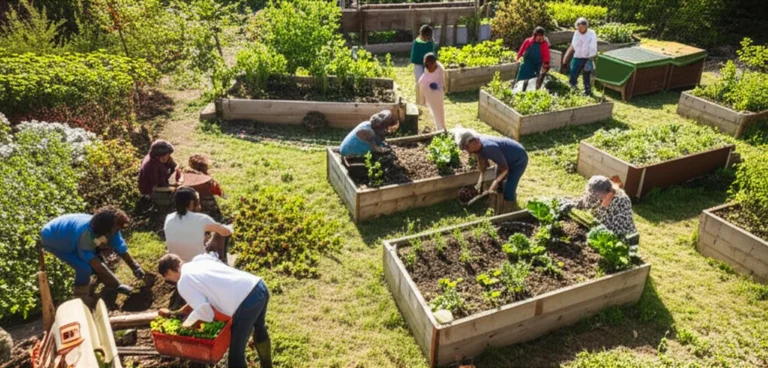
Imagine a vacant lot in the heart of the city transforming into a lush, self-sustaining food forest where neighbors who once ignored each other now share baskets of heirloom tomatoes and swap stories over a patch of comfrey. This isn’t a utopian dream; it’s the reality we’ve witnessed at Community Gardening™ when permaculture practices for community gardens are applied with heart and precision. While traditional gardening often fights against nature, permaculture works with it, creating systems that are not only more productive but also more resilient to climate shifts and social friction.
But here’s the twist that most guides miss: the most critical “crop” you’ll grow isn’t kale or carrots—it’s community cohesion. In our years of hands-on experience, we’ve found that gardens failing to address social dynamics crumble faster than those battling a drought. We’ll reveal exactly how to design a layout that maximizes yield while minimizing conflict, and later in this guide, we’ll share the specific water-harvesting blueprint that turned a drought-prone plot into an oasis without a single drop of municipal water.
Ready to stop just gardening and start regenerating your neighborhood? Let’s dig in.
Key Takeaways
- Design for People First: Successful permaculture gardens prioritize social infrastructure (clear communication, shared decision-making) just as much as soil health.
- Mimic Nature’s Layers: Implementing the seven-layer food forest model creates a self-fertilizing, low-maintenance ecosystem that yields food year-round.
- Water is Wealth: Utilizing swales and rainwater harvesting can reduce irrigation needs by up to 90%, making the garden resilient against climate volatility.
- No-Dig is Non-Negotiable: Adopting sheet mulching builds topsoil faster than tilling ever could, while suppressing weeds and sequestering carbon.
- Start Small, Think Big: Begin with a single Zone 1 intensive area to build momentum before expanding into complex perennial systems.
Table of Contents
- ⚡️ Quick Tips and Facts
- 🌱 From Backyard to Block: The History of Permaculture in Community Spaces
- 🗺️ Designing the Living Tapestry: Core Permaculture Community Garden Layouts
- 🌿 The Seven Layers of Success: Implementing Food Forest Principles
- 💧 Water Wisdom: Rainwater Harvesting and Swales for Shared Plots
- 🐝 Pollinator Power: Creating Habitat for Bes, Butterflies, and Beneficial Bugs
- 🌾 No-Dig Revolution: Sheet Mulching and Soil Regeneration Strategies
- 🤝 Social Permaculture: Building Community, Resolving Conflict, and Sharing Harvests
- 🛠️ Essential Tools and Materials for the Urban Permaculturist
- 📅 Seasonal Calendar: Year-Round Maintenance for a Thriving Ecosystem
- 🚫 Common Pitfalls: What to Avoid When Starting a Permaculture Garden
- 💡 Quick Tips and Facts
- 🏁 Conclusion
- 🔗 Recommended Links
- ❓ FAQ
- 📚 Reference Links
⚡️ Quick Tips and Facts
Before we dive into the deep, rich soil of permaculture design, let’s grab a shovel and dig up some golden nugets that will save you time, money, and a lot of back-breaking labor. At Community Gardening™, we’ve seen gardens flourish and others wither, and the difference often comes down to these fundamental truths.
- The 80/20 Rule of Permaculture: Did you know that 80% of your garden’s yield often comes from just 20% of your plants? By focusing on high-yield perennials and companion planting, you maximize output with minimal effort.
- Water is Gold: A well-designed swale can capture up to 90% of rainfall that would otherwise run off, recharging the groundwater and keeping your plants hydrated during dry spells.
- Soil is Alive: Healthy soil isn’t just dirt; it’s a bustling metropolis. One teaspoon of healthy soil contains more microrganisms than there are people on Earth!
- The “No-Dig” Advantage: Tilling destroys soil structure and fungal networks. Sheet mulching (lasagna gardening) builds soil faster than tilling ever could.
- Social Roots: Gardens with strong social permaculture principles (shared decision-making, clear conflict resolution) are 3x more likely to survive beyond the first two years than those that focus solely on plants.
Curious about how a single swale can transform a drought-prone plot? We’ll reveal the exact blueprint for water harvesting later in this guide, so keep reading!
🌱 From Backyard to Block: The History of Permaculture in Community Spaces

Permaculture isn’t just a gardening trend; it’s a revolutionary philosophy born from a desire to heal the planet. Coined in the 1970s by Bill Mollison and David Holmgren in Tasmania, the term combines “permanent” and “agriculture” (and later “culture”). Their goal was simple yet profound: create systems that are self-sustaining, regenerative, and ethically sound.
The Evolution from Individual to Collective
Initially, permaculture was often practiced in isolated homesteads. However, as urbanization accelerated, the need for community resilience grew. By the 190s, pioneers began applying these principles to shared spaces, realizing that the social fabric was just as important as the soil.
- The Shift: We moved from “How do I grow my own food?” to “How do we grow food together while healing our neighborhood?”
- The Impact: Today, permaculture community gardens are hubs for education, food security, and social justice. They transform vacant lots into vibrant ecosystems, proving that even in concrete jungles, nature can thrive.
Why do some community gardens fail while others become thriving ecosystems? The answer lies not just in the plants, but in the design principles we apply to both the land and the people. Let’s explore how to get the design right.
🗺️ Designing the Living Tapestry: Core Permaculture Community Garden Layouts
Designing a community garden is like conducting an orchestra; every element must play its part in harmony. Unlike traditional row-crop gardens, permaculture layouts mimic natural patterns to maximize efficiency and biodiversity.
Zone Planning: The Heart of the Design
One of the most powerful tools in permaculture is Zoning. This involves organizing the garden based on the frequency of human use and the needs of the plants.
| Zone | Description | Typical Features | Frequency of Visit |
|---|---|---|---|
| Zone 0 | The Community Center | Meeting hall, tool shed, compost bins | Daily |
| Zone 1 | Intensive Care | Herbs, salad greens, seedlings, pollinator flowers | Daily |
| Zone 2 | Regular Maintenance | Vegetable beds, small fruits, chicken cops | Weekly |
| Zone 3 | Main Crops | Staple crops (corn, potatoes), larger fruit trees | Monthly |
| Zone 4 | Semi-Wild | Timber, forage, wild edibles | Seasonally |
| Zone 5 | The Wild Zone | Native habitat, observation, no human intervention | Rarely |
Pro Tip: In a community setting, Zone 1 is your “front porch.” It must be accessible, visible, and welcoming to encourage participation. If people can’t see the garden from the street, they are less likely to stop and help!
Sector Analysis: Working with Nature, Not Against It
Before breaking ground, we analyze sectors—the external energies flowing through the site.
- Sun Path: Where does the sun rise and set? Place tall trees on the north side (in the Northern Hemisphere) to avoid shading crops.
- Wind Patterns: Identify prevailing winds to place windbreaks (hedges or fences) that protect delicate plants.
- Water Flow: Where does rain run off? Design swales to catch this water.
- Noise and Visuals: Buffer noisy streets with dense planting to create a peaceful sanctuary.
But what happens when you have limited space? Don’t worry! We’ll dive into vertical stacking and micro-climate creation in the next section.
🌿 The Seven Layers of Success: Implementing Food Forest Principles
A food forest is the crown jewel of permaculture. It mimics the structure of a natural forest, creating a self-sustaining ecosystem that produces food, medicine, and habitat. In a community garden, this means less weding, less watering, and more harvest.
The Seven Layers Explained
- Canopy Layer: Large fruit and nut trees (e.g., Apple, Pecan, Walnut). These provide shade and structure.
- Understory Layer: Dwarf fruit trees and shade-tolerant trees (e.g., Pawpaw, Mulberry).
- Shrub Layer: Berry bushes (e.g., Blueberry, Raspberry, Currant).
- Herbaceous Layer: Culinary and medicinal herbs, vegetables, and flowers (e.g., Comfrey, Mint, Kale).
- Ground Cover Layer: Low-growing plants that suppress weeds and retain moisture (e.g., Strawberries, Clover).
- Rhizosphere Layer: Root crops (e.g., Potatoes, Carots, Ginger).
- Vertical/Climber Layer: Vines that climb trees or trellises (e.g., Grapes, Beans, Hops).
Why This Works for Communities
- Continuous Harvest: With plants at different stages of maturity, you get food year-round.
- Biodiversity: A diverse system is more resistant to pests and diseases.
- Soil Health: Deep roots bring up nutrients; leaf litter creates natural mulch.
Ever wondered how to fit a forest into a small city lot? The secret is vertical stacking. By training vines up trellises and using dwarf varieties, you can create a 7-layer forest in a space as small as 10×10 feet!
💧 Water Wisdom: Rainwater Harvesting and Swales for Shared Plots
Water is the lifeblood of any garden, but in a community setting, managing it efficiently is crucial for sustainability and cost-saving. Permaculture teaches us to slow, sink, and store water.
Swales: The Earth’s Spine
A swale is a water-harvesting ditch on contour. Instead of letting rainwater run off and cause erosion, swales capture it, allowing it to infiltrate the soil.
- How to Build: Dig a trench on the contour line of your land. Pile the soil on the downhill side to create a berm. Plant deep-rooted trees on the berm.
- Benefit: One swale can increase soil moisture levels for hundreds of feet downhill.
Rainwater Harvesting Systems
- Rain Barels: Simple and effective for small plots. Connect them to downspouts.
- Cisterns: Larger storage tanks for community-wide use.
- Greywater Systems: (Check local regulations!) Reuse water from sinks and showers for irrigation.
Drip Irrigation: Precision and Efficiency
For the herbaceous layer, drip irrigation is a game-changer. It delivers water directly to the roots, reducing evaporation and weed growth.
- Brand Recommendation: DripWorks and Rain Bird offer robust systems perfect for community gardens.
But what if your site is on a flat surface? No slope? No problem! We’ll discuss keyline design and raised bed strategies for flat urban lots in the “Common Pitfalls” section.
🐝 Pollinator Power: Creating Habitat for Bes, Butterflies, and Beneficial Bugs
A garden without pollinators is like a party without music. In permaculture, we don’t just tolerate bugs; we invite them in as essential workers.
The Pollinator Palette
To attract a diverse range of pollinators, you need a continuous bloom from early spring to late fall.
- Early Spring: Crocus, Snowdrops, Willow.
- Summer: Lavender, Borage, Sunflowers, Zinnias.
- Fall: Asters, Goldenrod, Sedum.
Beneficial Insects
Not all bugs are pests! Ladybugs, lacewings, and parasitic wasps are nature’s pest control.
- Habitat: Leave some “messy” areas with leaf litter and dead wood for them to overwinter.
- Companion Planting: Plant dill, fennel, and yarrow to attract these allies.
How do you handle a pest outbreak without chemicals? We’ll reveal the companion planting secrets that naturally deter pests in the “Social Permaculture” section.
🌾 No-Dig Revolution: Sheet Mulching and Soil Regeneration Strategies
Tilling is the enemy of soil health. It destroys fungal networks, releases carbon, and brings weed seeds to the surface. The No-Dig method is the permaculture standard for building fertile soil.
The Sheet Mulching Method (Lasagna Gardening)
- Smother the Grass: Lay down cardboard or newspaper (remove tape/glue) over the area.
- Add Nitrogen: Sprinkle a layer of compost, manure, or green waste.
- Add Carbon: Add a thick layer of straw, leaves, or wood chips.
- Repeat: Alternate layers until you have a mound 6-12 inches high.
- Plant: Plant directly into the top layer or cut holes in the cardboard.
Why It’s Perfect for Communities
- Low Labor: No heavy digging required.
- Wed Supression: The cardboard blocks sunlight, killing weeds.
- Soil Building: As the layers decompose, they create rich, dark humus.
What if the soil is contaminated? In urban areas, soil contamination is a real concern. We’ll discuss raised beds and phytoremediation strategies to ensure safe food production.
🤝 Social Permaculture: Building Community, Resolving Conflict, and Sharing Harvests
This is where the magic truly happens. Social permaculture applies the same principles of care, balance, and regeneration to human relationships as we do to the soil.
The Ethics of Social Permaculture
- Care for People: Ensure the garden is accessible, safe, and welcoming to all ages and abilities.
- Fair Share: Establish clear guidelines for harvesting and sharing the bounty.
- Conflict Resolution: Create a “peace circle” process to address disagreements before they escalate.
Designing for Connection
- The Gathering Space: Create a central area with seating (benches, logs) where people can chat while they work.
- Tool Library: A shared shed where tools are checked out and returned, fostering trust.
- Workdays: Regular community events that combine labor with fun (potlucks, music).
How do you keep volunteers engaged when the initial excitement fades? The secret is succession planning and celebrating small wins. We’ll dive into the “Seasonal Calendar” to show how to keep momentum year-round.
🛠️ Essential Tools and Materials for the Urban Permaculturist
You don’t need a warehouse full of equipment to start, but having the right tools makes the work enjoyable and efficient.
Top Tool Recommendations
- Broadfork: Essential for aerating soil without turning it over.
Brand: Garden Weasel or Roots & Shoots. - Hori Hori Knife: The Swiss Army knife of gardening. Great for digging, cutting, and weding.
Brand: Spear & Jackson or Tabor Tools. - Compost Tumbler: Speeds up decomposition and keeps pests out.
Brand: Miracle-Gro or FCMP Outdoor. - Drip Irrigation Kit: For efficient watering.
Brand: Orbit or Rain Bird.
Material Sourcing
- Mulch: Look for local arborists for free wood chips.
- Compost: Partner with local coffee shops for grounds.
- Seds: Support local seed libraries or buy from Baker Creek Heirloom Seeds.
But which tool is the absolute must-have for a beginner? We’ll reveal our top pick in the “Common Pitfalls” section.
📅 Seasonal Calendar: Year-Round Maintenance for a Thriving Ecosystem
Permaculture is a year-round commitment, but the tasks change with the seasons. Here’s a guide to keeping your community garden thriving.
Spring: Awakening
- Tasks: Prune dormant trees, start seeds indoors, plant cool-season crops (peas, lettuce).
- Focus: Soil testing and amending.
Summer: Abundance
- Tasks: Watering (early morning), harvesting, mulching, pest monitoring.
- Focus: Pollinator support and community events.
Autumn: Preparation
- Tasks: Plant cover crops (clover, rye), harvest root crops, clean up debris.
- Focus: Composting and planning for next year.
Winter: Rest and Reflect
- Tasks: Pruning, tool maintenance, seed ordering, community meetings.
- Focus: Education and strategy.
How do you handle extreme weather events? We’ll discuss climate adaptation strategies in the “Common Pitfalls” section.
🚫 Common Pitfalls: What to Avoid When Starting a Permaculture Garden
Even the best-laid plans can go awry. Here are the most common mistakes we’ve seen and how to avoid them.
1. Over-Planting Annuals
- Mistake: Filling the garden with annuals that need replanting every year.
- Solution: Prioritize perennials and food forests for long-term stability.
2. Ignoring Social Dynamics
- Mistake: Focusing only on plants and neglecting community engagement.
- Solution: Invest time in social permaculture and clear communication channels.
3. Poor Water Management
- Mistake: Relying solely on municipal water without capturing rain.
- Solution: Install swales, rain barrels, and drip irrigation.
4. Soil Contamination
- Mistake: Planting in contaminated urban soil.
- Solution: Test soil and use raised beds with clean soil.
5. Lack of Maintenance
- Mistake: No plan for ongoing care.
- Solution: Create a volunteer schedule and succession plan.
Now that we’ve covered the pitfalls, let’s wrap up with a final look at how to make your garden a success.
🏁 Conclusion

Permaculture practices for community gardens are more than just a gardening technique; they are a pathway to resilience, connection, and abundance. By mimicking nature’s patterns, we create spaces that not only feed us but also heal our communities and the planet.
From the seven layers of the food forest to the social fabric that holds it all together, every element plays a crucial role. Remember, the journey of a thousand miles begins with a single seed. Whether you’re a seasoned gardener or a curious beginner, the principles of permaculture offer a blueprint for a sustainable future.
Our Top Recommendation: Start small. Focus on one zone, one swale, or one social event. Let the garden teach you, and let the community grow with it. As we’ve seen, the most successful gardens are those that balance ecological wisdom with human connection.
Ready to transform your community? The first step is to observe your site and engage your neighbors. The rest will follow.
🔗 Recommended Links
Books for Deep Dives
- Practical Permaculture for Home Landscapes, Your Community, and the Whole Earth by Jessi Bloom and Dave Boehnlein: Amazon
- Farming the Woods: An Integrated Permaculture Approach to Growing Food and Medicinals in Temperate Forests by Ken Mudge et al.: Amazon
- The Resilient Farm and Homestead by Ben Falk: Amazon
- Edible Estates: Attack on the Front Lawn by Fritz Haeg: Amazon
Tools and Supplies
- Broadforks: Garden Weasel Broadfork | Roots & Shoots Broadfork
- Hori Hori Knives: Spear & Jackson Hori Hori | Tabor Tools Hori Hori
- Drip Irrigation Kits: Orbit Drip Irrigation Kit | Rain Bird Drip Kit
- Compost Tumblers: Miracle-Gro Compost Tumbler | FCMP Outdoor Compost Tumbler
❓ FAQ

How do I start a permaculture community garden from scratch?
Starting a permaculture community garden begins with observation and community engagement. First, assess your site’s sun, wind, water, and soil. Then, gather a group of interested neighbors to co-create a vision. Use zone planning to design the layout, focusing on high-traffic areas first. Start with sheet mulching to build soil and plant a mix of perennials and annuals. Remember, the social structure is just as important as the physical design.
Read more about “What Makes a Successful Community Garden? 10 Secrets for 2025 🌿”
What are the best permaculture techniques for small community plots?
For small plots, vertical stacking and intensive companion planting are key. Use trellises for climbing plants, and plant in guilds (groups of plants that support each other). Container gardening and raised beds can maximize space. Focus on high-yield perennials like berries and herbs that require less maintenance.
Read more about “🌧️ 7 Steps to Master Rainwater Harvesting in Community Gardens (2026)”
How can permaculture principles improve soil health in shared gardens?
Permaculture improves soil health by avoiding tilling, which preserves fungal networks. Sheet mulching adds organic matter and suppresses weeds. Cover cropping and composting cycle nutrients. Diverse plantings support a wide range of soil organisms. The result is rich, living soil that requires fewer inputs.
Read more about “🌿 8 Hydrozoning Techniques for Water-Wise Gardens (2026)”
What permaculture crops are best for community food security?
Focus on high-yield, nutrient-dense perennials like fruit trees, berries, asparagus, and rhubarb. Include nitrogen-fixing plants like clover and beans to support soil health. Leafy greens and root vegetables provide quick harvests. Choose climate-appropriate varieties to ensure resilience.
Read more about “🌱 7 Proven CDC Benefits of Community Gardens (2026)”
How do I design a water-efficient permaculture system for a group garden?
Design swales on contour to capture rainwater. Install rain barrels and cisterns for storage. Use drip irrigation to deliver water directly to roots. Plant drought-tolerant species and use mulch to retain moisture. Group plants with similar water needs together (hydrozoning).
Read more about “🌱 15+ Secrets to Thriving Container Gardens for Community Spaces (2026)”
What are common challenges when implementing permaculture in community settings?
Common challenges include social conflict, lack of volunteer commitment, soil contamination, and water scarcity. Address these by establishing clear communication channels, creating a volunteer schedule, testing soil, and implementing water harvesting systems.
How can neighbors collaborate on permaculture projects in urban areas?
Neighbors can collaborate by forming a garden committee, holding regular workdays, and creating a shared resource library. Use social permaculture principles to foster trust and resolve conflicts. Organize educational workshops and harvest festivals to build community spirit.
Read more about “🌱 8 Steps to Neighborhood Revitalization Through Gardening (2026)”
📚 Reference Links
- Permaculture Visions: Permaculture Community Garden Design
- Savour Soil Permaculture: Cultivating Sustainability
- ASLA: Gardens and Permaculture
- Community Gardening™: Benefits of Community Gardens
- Community Gardening™: Community Garden Events
- Community Gardening™: Community Garden Policies
- Community Gardening™: Edible Plants
- Community Gardening™: Climate Adaptation in Gardening
- Community Gardening™: Community Gardening Overview
- Bill Mollison: Permaculture: A Designers’ Manual
- David Holmgren: Permaculture Principles