Support our educational content for free when you purchase through links on our site. Learn more

Imagine standing in the middle of a thriving tomato patch, the smell of basil in the air, only to be handed a “Demolition Notice” by a city official who claims your garden is “illegal.” It sounds like a nightmare, but for too many community gardeners, it’s a reality. At Community Gardening™, we’ve seen beautiful plots vanish overnight because the gardeners knew how to grow the perfect heirloom squash but didn’t know how to navigate the labyrinth of zoning laws and land-use policies.
This isn’t just about saving a few rows of corn; it’s about securing a lifeline for urban communities. Did you know that in some cities, a single community garden can increase neighboring property values by nearly 10%, yet without the right legal framework, that value is often siphoned off by developers while the gardeners are left with nothing? In this comprehensive guide, we’re going beyond the soil to explore the political soil that determines whether your garden flourishes or withers. From mastering the art of the city council testimony to drafting bulletproof conservation easements, we’ll walk you through every step of turning your green thumb into a policy-making force.
By the end of this article, you won’t just be a gardener; you’ll be an advocate equipped with the legal tools, strategic coalitions, and data-driven arguments needed to protect your space forever. We’ll even reveal the specific model ordinances that turned struggling plots in New York and Seattle into permanent city assets. Ready to stop worrying about the bulldozer and start building a legacy? Let’s dig in.
Key Takeaways
- Land Tenure is Non-Negotiable: A lease is temporary; a zoning amendment or conservation easement is the only way to guarantee permanent protection against development.
- Data + Story = Victory: Successful advocacy combines hard public health statistics with compelling personal narratives to sway city councils and planners.
- Coalitions Win Wars: You cannot fight alone; uniting with schools, health clinics, and local businesses creates an unstoppable force for policy change.
- Equity Drives Sustainability: Policies must explicitly protect low-income and marginalized communities to prevent gentrification from erasing the garden’s original purpose.
- Actionable Steps: We provide a step-by-step roadmap for drafting proposals, navigating bureaucracy, and leveraging media to win the fight for your green space.
Table of Contents
- ⚡️ Quick Tips and Facts
- 🌱 From Dirt to Democracy: The History of Community Garden Policy Advocacy
- 🏛️ Why Your Garden Needs a Voice: The Power of Local Zoning and Land Use Laws
- 📜 Mastering the Art of Policy Advocacy: A Step-by-Step Guide for Gardeners
- 🚧 Overcoming Common Bariers: NIMBYism, Budget Cuts, and Bureaucracy
- 🌍 Case Studies in Success: How Other Communities Won the Fight for Green Space
- 🛠️ Essential Tools and Resources for Effective Advocacy
- 🌿 The Future of Urban Agriculture: Trends in Community Garden Legislation
- 🏆 Conclusion: Cultivating Change One Policy at a Time
- 🔗 Recommended Links
- ❓ FAQ: Your Burning Questions About Garden Policy Answered
- 📚 Reference Links
⚡️ Quick Tips and Facts
Before we dive into the deep end of zoning codes and city council meetings, let’s get our hands dirty with some rapid-fire truths that every aspiring garden advocate needs to know. We’ve seen too many beautiful plots turn into parking lots because the gardener didn’t know the rules of the game.
- Land is the #1 Barrier: According to the American Community Garden Association (ACGA), the most common reason community gardens fail isn’t lack of water or seeds; it’s unclear land tenure. If you don’t have a lease or deed, you don’t have a garden.
- The “NIMBY” Phenomenon: “Not In My Backyard” is the enemy of green space. However, studies show that well-maintained gardens can actually increase neighboring property values by up to 9.4% in some urban areas, according to research from the University of Pennsylvania.
- Health is Policy: The American Public Health Association explicitly states that access to nature is a determinant of public health. When you advocate for a garden, you aren’t just asking for dirt; you’re asking for lower blood pressure and reduced stress for your neighbors.
- Equity Matters: As highlighted in the video summary regarding “The Urban Garden Divide,” many gardens founded by communities of color are now facing gentrification. Inclusive policy is not optional; it’s essential to prevent these spaces from becoming exclusive enclaves.
- Data Wins Arguments: City councils love numbers. A single garden can divert tons of organic waste from landfills and reduce the urban heat island effect by several degrees.
Ready to turn these facts into a movement? Let’s look at how we got here.
🌱 From Dirt to Democracy: The History of Community Garden Policy Advocacy

You might think community gardens are a modern trend born of the organic food movement, but the roots go much deeper. In fact, the history of community gardening is a history of survival and resistance.
During the World Wars, “Victory Gardens” were not just a hobby; they were a national policy imperative. The U.S. government actively encouraged citizens to grow their own food to support the war effort. But as the wars ended, the focus shifted, and many of these plots were paved over for development.
It wasn’t until the 1970s, during a time of severe urban disinvestment, that the modern community garden movement truly took root. In cities like New York and Detroit, residents began cleaning up abandoned lots, turning blight into beauty. However, this grassroots effort quickly ran into a wall: zoning laws.
- The 1970s Crisis: Many cities had zoning codes that explicitly prohibited agriculture in residential zones. Gardeners were essentially illegal farmers in their own neighborhoods.
- The Legal Battle: Advocates had to fight not just for land, but for the legal right to exist. This era birthed the first wave of policy advocacy, where gardeners learned to navigate city hall, form coalitions, and demand zoning amendments.
- The Shift to Permanence: By the 190s and 20s, the conversation shifted from “temporary use” to permanent protection. Organizations like the American Planning Association began developing model ordinances to integrate urban agriculture into city master plans.
Today, we stand on the shoulders of those who fought the “No Trespassing” signs. But as we explore in our article on Benefits of Community Gardens, the fight isn’t over. The landscape has changed, and so have the challenges.
🏛️ Why Your Garden Needs a Voice: The Power of Local Zoning and Land Use Laws
Here is the hard truth: A garden without a policy is a garden waiting to be bulldozed.
Many gardeners assume that if they have a lease, they are safe. But leases can be broken, and land can be sold. The only thing that truly protects a community garden is local law.
Understanding the Zoning Maze
Zoning codes dictate what can happen on a piece of land. In many cities, “agriculture” is not a permitted use in residential or commercial zones. This means that without a specific variance or zoning amendment, your tomato patch is technically a violation of city code.
- Permitted Uses vs. Conditional Uses: Some cities allow gardens as a “permitted use” (you just need a permit), while others require a “conditional use permit” (which requires a public hearing and can be denied).
- Setback Requirements: Did you know some codes require gardens to be 10 feet away from property lines? This can make small urban lots unusable.
- Structure Restrictions: Can you build a shed? A greenhouse? A compost bin? Often, these structures are classified as “accessory buildings” and have strict size and height limits.
The “Green Space” Lophole
Many cities have “open space” or “parks” designations that are easier to access than “agricultural” zones. However, these often come with their own restrictions, such as prohibitions on commercial sales or livestock.
Pro Tip: Always check the comprehensive plan of your city. This document outlines the city’s long-term vision. If your garden aligns with the city’s goals for food security or climate adaptation, you have a powerful argument. Check out our guide on Climate Adaptation in Gardening to see how your garden fits into the bigger picture.
📜 Mastering the Art of Policy Advocacy: A Step-by-Step Guide for Gardeners
So, you’ve decided to fight for your garden. How do you go from a group of people with muddy boots to a policy-making force? It’s not magic; it’s strategy. Here is our step-by-step roadmap.
1. 🗣️ Building a Coalition: How to Unite Neighbors, Schools, and Local Businesses
You cannot win alone. The most successful advocacy campaigns are coalitions.
- Identify Allies: Who benefits from your garden?
Local Schools: They need educational spaces.
Senior Centers: They need accessible green space.
Restaurants: They need fresh, local produce.
Health Clinics: They need “green prescriptions” for patients. - The “Why” Matters: When you approach a business, don’t just say “we need a garden.” Say, “Our garden provides fresh produce for your restaurant and marketing opportunities for your brand.”
- Diverse Voices: As noted in the “Urban Garden Divide” video, ensure your coalition includes voices from marginalized communities. A diverse coalition is harder to ignore and more representative of the community you serve.
2. 📝 Crafting the Perfect Policy Proposal: Data, Stories, and Solutions
A policy proposal is your blueprint for change. It needs to be part data, part story.
- The Data: Include stats on local food insecurity, property values, and health outcomes. Use resources from the County Health Rankings and Roadmaps.
- The Story: People forget data, but they remember stories. Tell the story of “Maria,” the single mom who learned to grow food for her kids, or “Grandpa Joe,” who found a community after losing his wife.
- The Solution: Don’t just complain about the problem. Offer a model ordinance. The ChangeLab Solutions toolkit is a great resource for drafting this.
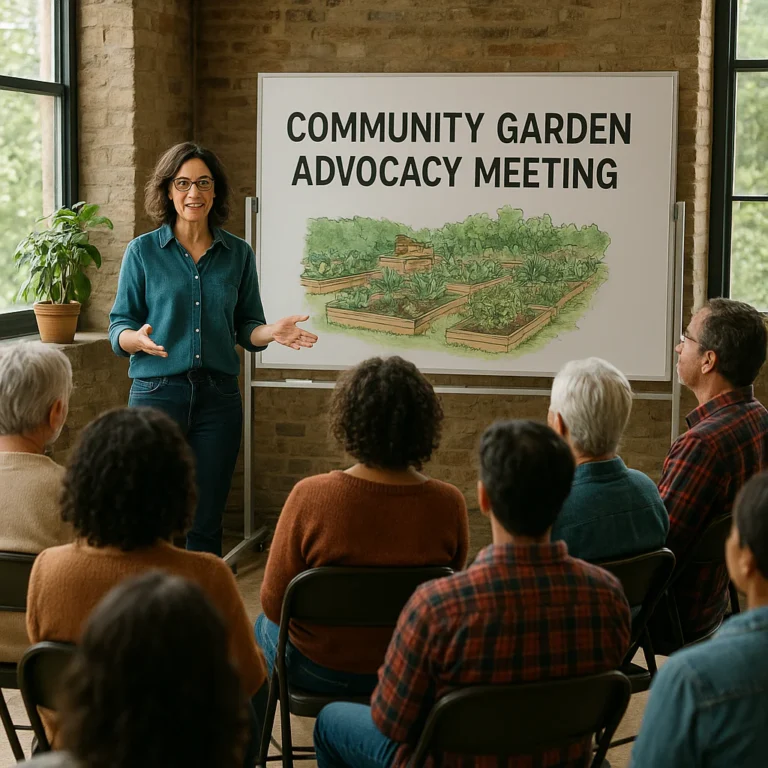
3. 🤝 Navigating City Council Meetings: Tips for Public Speaking and Testimony
This is where the rubber meets the road. City council meetings can be intimidating, but they are also your stage.
- Sign Up Early: Most councils have a time limit for public comment (often 2-3 minutes). Sign up as soon as the meeting opens.
- Be Concise: Get to the point. State who you are, what you want, and why it matters.
- Bring a Crowd: There is power in numbers. A room full of gardeners in muddy boots is a visual statement that speaks louder than words.
- Follow Up: Send a thank-you note to the council members who supported you, and a follow-up letter to those who didn’t, reiterating your points.
4. 📢 Leveraging Media and Social Platforms to Amplify Your Garden’s Message
In the digital age, visibility is currency.
- Local News: Pitch a story to your local newspaper or TV station. Focus on the human interest angle.
- Social Media: Use hashtags like #CommunityGarden, #UrbanAg, and #GreenSpace. Tag local officials.
- Visuals: Before and after photos of your garden are powerful. Show the transformation from a vacant lot to a thriving ecosystem.
5. ⚖️ Understanding Legal Frameworks: Easements, Leases, and Liability Waivers
Let’s talk about the boring stuff that saves your skin: Legal Frameworks.
- Leases: Ensure your lease is long-term (5-10 years) and includes a renewal clause.
- Easements: A conservation easement can protect the land from development in perpetuity. This is the gold standard for garden protection.
- Liability: Most cities require a liability waiver or proof of insurance. Don’t skip this. It protects both the city and the gardeners.
🚧 Overcoming Common Bariers: NIMBYism, Budget Cuts, and Bureaucracy
Even with a great plan, you will face obstacles. Here is how to tackle the big three.
The NIMBY (Not In My Backyard) Problem
Neighbors often fear that gardens will attract pests, crime, or lower property values.
- The Counter-Argument: Cite studies showing that gardens reduce crime and increase property values.
- The Solution: Invite neighbors to a garden tour. Let them see the beauty and the community. Transparency kills fear.
Budget Cuts
Cities are always looking to cut costs.
- The Counter-Argument: Frame the garden as a cost-saving measure. Gardens reduce stormwater runoff (saving the city money on infrastructure) and improve public health (saving money on healthcare).
- The Solution: Seek public-private partnerships. Local businesses or non-profits can fund maintenance in exchange for naming rights or produce.
Bureaucracy
Red tape can be suffocating.
- The Counter-Argument: Be patient but persistent. Keep a paper trail of every interaction.
- The Solution: Find a champion within the city government. This could be a city council member, a parks department director, or a planning commissioner who believes in your cause.
🌍 Case Studies in Success: How Other Communities Won the Fight for Green Space
Let’s look at some real-world examples of policy advocacy in action.
New York City: The GreenThumb Program
New York City’s GreenThumb program is the largest community garden program in the country. It was born out of a legal battle where the city threatened to sell off garden lots.
- The Win: Advocates pushed for a transfer of land to non-profits and the creation of a permanent lease program.
- The Lesson: Organized, persistent advocacy can turn a threat into a permanent asset.
Seattle: The P-Patch Program
Seattle’s P-Patch program is a model of inclusive policy. It includes specific provisions for low-income residents and immigrant communities.
- The Win: The city adopted a policy that prioritizes food justice and cultural diversity in garden design.
- The Lesson: Policy must be equitable to be sustainable.
New Rochelle, NY: Zoning for Urban Agriculture
As mentioned in the Westchester County resources, New Rochelle updated its zoning code to explicitly allow urban agriculture in residential zones.
- The Win: They removed the “agricultural use” ban and created a streamlined permitting process.
- The Lesson: Updating zoning codes is the most effective way to remove barriers.
🛠️ Essential Tools and Resources for Effective Advocacy
You don’t have to reinvent the wheel. Here are the tools we swear by at Community Gardening™.
Model Ordinances and Toolkits
- The “Seding the City” Toolkit: A comprehensive guide from ChangeLab Solutions.
- Dig It! A Practical Toolkit: From the American Planning Association.
- Community Garden Policy Reference Guide: From the Public Health Law Center.
Equipment for the Modern Advocate
While policy is digital, the garden is physical. You need the right gear to show you mean business.
👉 CHECK PRICE on:
- High-Quality Garden Tools: Fiskars | Walmart | Fiskars Official
- Durable Garden Gloves: Gardener’s Supply Company | Etsy | Gardener’s Supply Official
- Portable Signage for Meetings: Vistaprint | Staples | Vistaprint Official
Books for the Policy-Minded Gardener
- “The Community Garden Handbook” by the American Community Garden Association.
- “Urban Agriculture: Growing Healthy, Sustainable Places” by the American Planning Association.
🌿 The Future of Urban Agriculture: Trends in Community Garden Legislation
Where are we heading? The future of community garden policy is looking brighter and more integrated.
- Integration with Climate Resilience: Cities are starting to view gardens as critical infrastructure for climate adaptation. Expect to see more funding for gardens that manage stormwater and reduce heat islands.
- Food Justice Mandates: More cities are adopting policies that require a percentage of new developments to include community garden space.
- Digital Advocacy: The rise of virtual town halls and online petition platforms is making it easier for advocates to mobilize quickly.
As we look to the future, remember the words of the video on “The Urban Garden Divide”: Inclusivity is the key to longevity. Policies must ensure that gardens remain accessible to the communities that need them most, not just the wealthy newcomers.
🏆 Conclusion: Cultivating Change One Policy at a Time

We started this journey by asking a simple question: Can a few gardeners really change the law? The answer, as you’ve seen, is a resounding yes.
From the Victory Gardens of the 1940s to the modern fight for zoning reform, community gardeners have proven that dirt and democracy go hand in hand. We’ve explored the history, the legal frameworks, the step-by-step advocacy process, and the real-world success stories.
But the story doesn’t end here. The next chapter is yours to write. Whether you are fighting to save a single plot or pushing for a city-wide ordinance, remember that every policy change starts with a conversation.
Key Takeaways:
- Policy is Protection: A lease is temporary; a law is permanent.
- Coalitions Win: Unite with neighbors, schools, and businesses.
- Data + Story = Power: Use both to persuade decision-makers.
- Equity is Essential: Ensure your garden serves the whole community.
Don’t let your garden be a victim of bureaucracy. Get involved, speak up, and grow together. The future of our cities depends on it.
🔗 Recommended Links
Here are some essential resources and products to help you on your advocacy journey.
Books & Guides:
- “Seding the City: Land Use Policies to Promote Urban Agriculture” – Amazon
- “The Community Garden Handbook” – Amazon
- “Urban Agriculture: Growing Healthy, Sustainable Places” – Amazon
Tools & Equipment:
- Fiskars Garden Tools – Amazon | Walmart | Fiskars Official
- Gardener’s Supply Company Gloves – Amazon | Etsy | Gardener’s Supply Official
- Portable Signage – Vistaprint | Staples
❓ FAQ: Your Burning Questions About Garden Policy Answered

What are successful examples of community garden policy changes?
Successful examples include New York City’s GreenThumb Program, which secured long-term leases for hundreds of gardens, and Seattle’s P-Patch Program, which integrated equity into its zoning. New Rochelle, NY, is another standout for explicitly amending zoning codes to allow urban agriculture in residential zones.
How can advocacy for community gardens promote environmental sustainability?
Advocacy can push for policies that recognize gardens as green infrastructure. This includes mandating stormwater management features, promoting composting to reduce landfill waste, and creating urban heat island mitigation strategies.
Read more about “🌱 7 Ways Community Gardens Fuel Sustainable Living (2026)”
What role do community members play in advocating for garden policies?
Community members are the heart of the movement. They provide the personal stories, the volunteer power, and the political pressure needed to sway officials. Without community engagement, policy changes are often top-down and fail to meet local needs.
Read more about “🌱 7 Steps to Master Advocacy for Urban Agriculture Initiatives (2026)”
How do community garden policies impact urban food security?
Strong policies ensure that gardens are permanent and accessible. This leads to increased local food production, better nutrition for residents, and reduced food deserts. Policies that prioritize low-income access are particularly effective.
Read more about “🌱 7 Permaculture Practices for Thriving Community Gardens (2026)”
What strategies help build support for community garden policies?
Building support requires coalition building, data-driven arguments, and public engagement. Hosting open houses, inviting local media, and partnering with health organizations can broaden your base of support.
Read more about “12 Must-Know Facts About Community Garden Insurance & Liability (2026) 🌿”
How can community gardens influence local government decisions?
Gardens can influence decisions by demonstrating tangible benefits like crime reduction, property value increases, and health improvements. They can also serve as living laboratories for testing new urban planning ideas.
What are the key elements of effective community garden policy advocacy?
Effective advocacy requires a clear goal, a strong coalition, compelling data, and a well-crafted proposal. It also requires persistence and the ability to adapt to changing political landscapes.
How do I start a community garden policy advocacy group?
Start by identifying allies in your community. Form a core team, define your mission, and begin researching local laws. Attend city council meetings to network and learn the process.
Read more about “11 Hidden Cons of Shared Gardening in Urban Areas 🌆 (2025)”
What are the best strategies for lobbying local government for garden space?
The best strategies include preparing a concise pitch, bringing a diverse group of supporters, and following up with officials. It’s also helpful to align your goals with the city’s existing master plan.
How can community gardens influence urban planning policies?
Gardens can influence planning by serving as models for sustainable development. They can demonstrate the viability of mixed-use spaces and the importance of green corridors in urban design.
What legal protections do community gardeners need in their city?
Gardeners need long-term leases, liability waivers, and zoning protections. Conservation easements are the ultimate protection, ensuring the land cannot be developed in the future.
How to write a policy proposal for community garden funding?
A policy proposal should include an executive summary, a problem statement, a solution, a budget, and an implementation plan. Use data to support your claims and stories to engage readers.
Read more about “How to Secure Funding & Resources for Your Community Garden Startup 🌱 (2025)”
What are common zoning challenges for community gardens and how to overcome them?
Common challenges include prohibitions on agriculture in residential zones, setback requirements, and structure restrictions. These can be overcome by advocating for zoning amendments, seeking variances, and designing gardens to meet code requirements.
Read more about “Community Gardening Uncovered: 7 Secrets to Grow Together 🌱 (2026)”
How can neighbors organize to support community garden policy changes?
Neighbors can organize by forming a community coalition, attending city council meetings, and petitioning local officials. Social media and local events are great ways to spread the word and build momentum.
📚 Reference Links
- American Public Health Association (APHA): Improving Health and Wellness through Access to Nature
- American Community Garden Association (ACGA): Policy and Legal Resources
- American Planning Association: Urban Agriculture Resource Collection
- ChangeLab Solutions: Seding the City Toolkit
- Public Health Law Center: Community Garden Policy Reference Guide
- Healthy Food Policy Project: Zoning for Urban Agriculture Guide
- University of Wisconsin Population Health Institute: County Health Rankings and Roadmaps
- Westchester County, NY: Community Garden Policy and Legal Resources