Support our educational content for free when you purchase through links on our site. Learn more

As an Amazon Associate, we earn from qualifying purchases.
The secret to community garden soil health improvement isn’t buying expensive fertilizers; it’s building a living ecosystem by minimizing tillage and maximizing organic matter. When we stopped fighting the dirt and started feeding the microbes, our plots went from barren dust to bountiful harvests in just one season.
Imagine a teaspoon of healthy soil containing more organisms than there are people on Earth. That’s the bustling city beneath your feet, and it’s the engine of your garden’s success. Yet, many urban plots suffer from compaction and contamination, leaving gardeners frustrated and crops stunted.
We’ve seen it happen time and again: a new gardener arrives, sees the hard, gray clay, and assumes the land is dead. But with the right approach, even the most neglected urban soil can be revived. It starts with understanding that soil is not just dirt; it’s a complex, living web.
Ready to turn your plot into a thriving sanctuary? Let’s dig into the seven essential steps that will transform your soil forever.
Key Takeaways
- Minimize Disturbance: Avoid tilling to protect vital fungal networks and soil structure.
- Feed the Microbes: Prioritize organic matter like compost and cover crops over synthetic chemicals.
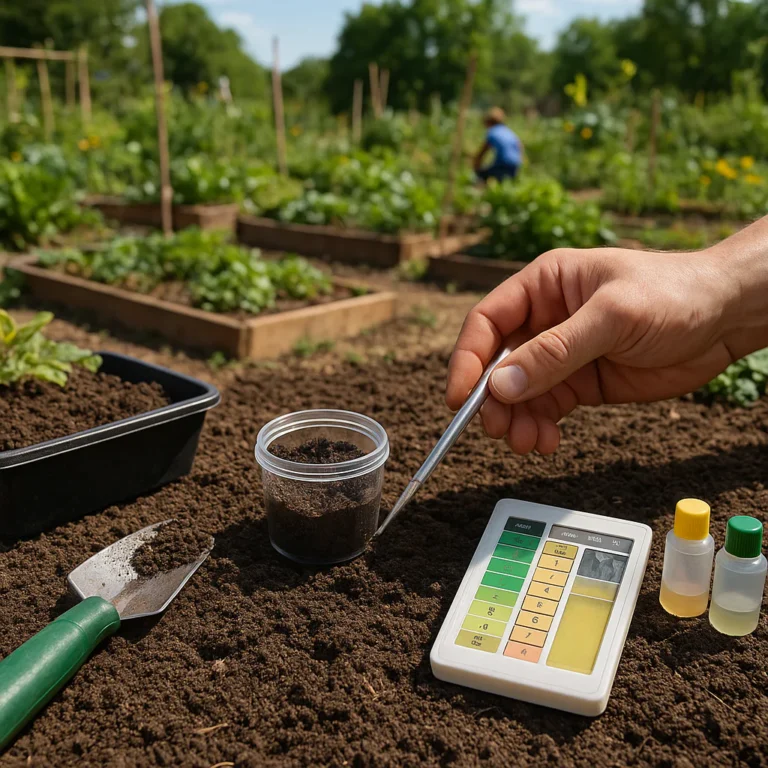
- Test Before You Treat: Always check for heavy metals and pH levels, especially in urban environments.
- Protect the Surface: Use mulch and cover crops to prevent erosion and retain moisture.
- Collaborate for Success: Share resources and knowledge with your community to maintain long-term soil vitality.
Table of Contents
- ⚡️ Quick Tips and Facts
- 🌱 From Dust to Delight: A Brief History of Community Garden Soil Health
- 🔍 The Dirt on Your Dirt: Diagnosing Soil Health Issues
- 🧪 7 Essential Steps to Revitalize Compacted and Depleted Soil
- 🍂 5 Proven Methods for Building Organic Matter and Humus
- 🐛 6 Beneficial Soil Organisms You Need to Atract for a Thriving Ecosystem
- 💧 4 Smart Irrigation Strategies to Prevent Erosion and Leaching
- 🌿 8 Best Cover Crops for Winter Soil Protection and Nitrogen Fixing
- 🚫 5 Common Soil Contaminants in Urban Gardens and How to Test for Them
- 🛠️ 3 Budget-Friendly Tools Every Community Gardener Needs for Soil Aeration
- 📊 Quick Tips and Facts: Soil Health Myths Debunked
- 🏆 Conclusion: Cultivating a Legacy of Healthy Earth
- 🔗 Recommended Links
- ❓ FAQ: Your Burning Questions About Community Garden Soil Answered
- 📚 Reference Links
⚡️ Quick Tips and Facts
Before we grab our trowels and get our hands dirty, let’s hit the ground running with some non-negotiable truths about the black gold beneath our feet. At Community Gardening™, we’ve seen plots turn from barren dust bowls to lush paradises, and it almost always starts with one thing: soil health.
- Soil is Alive: A single teaspoon of healthy garden soil contains more microrganisms than there are people on Earth. 🦠🌍 It’s not just dirt; it’s a bustling city of bacteria, fungi, nematodes, and earthworms working 24/7.
- The “No-Till” Revolution: While tilling feels satisfying, it’s like bombing a city to fix a pothole. It destroys the delicate fungal networks (mycorhizae) that help plants drink water and eat nutrients. Minimize disturbance to keep the ecosystem intact.
- The 4-inch Rule: For most vegetables, you want to incorporate organic matter into the top 4 to 6 inches of soil. Going deeper often brings up dormant weed seeds and disrupts the root zone of established plants.
- pH Matters More Than You Think: Most veggies love a pH between 6.0 and 7.0. If your soil is too acidic or alkaline, nutrients get “locked up,” meaning your plants starve even if you fertilize them.
- Urban Reality Check: In city community gardens, heavy metal contamination (like lead) is a real concern. Never skip a soil test before planting root crops or leafy greens in urban plots.
Did you know? Earthworms are the ultimate gardeners, but in many parts of North America (like the northern US and Canada), they are not native! They were brought over by European settlers. While they aerate soil, they can also disrupt forest floor ecosystems. In community gardens, they are generally welcome guests, but don’t dump them into nearby wild forests! 🪱🚫🌲
For a deeper dive into why we do this, check out our guide on the Benefits of Community Gardens.
🌱 From Dust to Delight: A Brief History of Community Garden Soil Health

You might think the concept of “healthy soil” is a modern buzzword, but the wisdom of the earth is as old as agriculture itself. However, the story of community garden soil is a unique tale of urban resilience and rediscovery.
The Industrial Scars
In the early 20th century, as cities expanded, the land left behind was often compacted, contaminated, and stripped of organic life. The “concrete jungle” wasn’t just a metaphor; it was a literal barrier to growth. Early community gardeners in the 1970s and 80s often faced a grim reality: their plots were filled with construction debris, ash, and soil that had been sitting under pavement for decades.
The Compost Revolution
The turning point came when gardeners realized they couldn’t just “buy” their way out of bad soil. They had to build it. The movement shifted from simply planting seeds to regenerating the ecosystem. We moved from the “chemical fix” mentality of the mid-20th century back to organic matter management.
A Tale from the Plot: I remember visiting a community garden in Chicago in the early 20s. The soil was so hard you could bounce a quarter off it. The gardeners had spent three years just importing truckloads of compost and leaf mold. By year four, the plot was producing enough kale to feed a neighborhood. The secret? They didn’t fight the soil; they fed it.
Today, the philosophy aligns with the living soil concept championed by experts like those at the University of Minnesota Extension, emphasizing that soil is a complex web of life, not an inert growing medium.
🔍 The Dirt on Your Dirt: Diagnosing Soil Health Issues
How do you know if your soil is screaming for help? You don’t need a PhD in soil science to spot the signs, but you do need to know what to look for.
Visual and Tactile Clues
- Crusting: If water pools on the surface instead of soaking in, your soil is likely compacted or has a high clay content with poor structure.
- Color: Healthy soil is usually dark brown or black, indicating high organic matter. Pale, gray, or yellowish soil often lacks nutrients or has poor drainage.
- Smell: Healthy soil should smell earthy and sweet (thanks to actinobacteria). If it smells like rotten eggs or sulfur, you have anaerobic conditions (too much water, not enough air).
- Root Health: If your plants have stunted, yellowing leaves despite watering, check the roots. Are they brown and mushy? Or are they white and spreading?
The Lab Test: The Gold Standard
While your nose and eyes are great tools, they can’t tell you about heavy metals or specific nutrient deficiencies.
- What to Test For: pH, Nitrogen (N), Phosphorus (P), Potassium (K), and Lead (Pb) for urban gardens.
- Where to Send It: Most land-grant universities offer affordable testing. For example, the University of Minnesota Soil Testing Lab provides detailed reports on texture, nutrients, and organic matter.
Pro Tip: Don’t just test once. Soil is dynamic. Test every 2-3 years to track changes, especially if you are heavily amending with compost or fertilizers.
🧪 7 Essential Steps to Revitalize Compacted and Depleted Soil
So, you’ve diagnosed the problem. Now, how do we fix it? Here is our step-by-step battle plan to turn that dead dirt into a thriving ecosystem.
1. Stop the Damage (Stop Tilling!)
Tilling breaks up soil aggregates and kills fungal hyphae. Instead of turning the soil over, use a broadfork to gently aerate without inverting the layers.
2. The Compost Injection
Add 2 to 3 inches of high-quality compost on top of the soil and let the worms and rain work it in. If you need to mix it in, do it only to a depth of 6 inches.
- Why? Compost improves water retention in sandy soils and drainage in clay soils.
3. Mulch, Mulch, Mulch!
Cover bare soil immediately. Bare soil is dead soil. Use straw, wood chips, or shredded leaves.
- Benefit: Prevents erosion, suppresses weeds, and keeps soil temperatures stable.
4. Plant Cover Crops
In the off-season, plant clover, rye, or vetch. These “green manures” protect the soil from wind and rain while adding nitrogen and organic matter when tilled in.
5. Introduce Beneficial Microbes
Sometimes, the soil needs a jumpstart. Inoculants containing mycorhizal fungi can help plants access nutrients they couldn’t reach alone.
6. Rotate Your Crops
Don’t plant tomatoes in the same spot two years in a row. Rotate plant families to prevent nutrient depletion and break disease cycles.
7. Test and Adjust pH
If your pH is off, add lime (to raise pH) or sulfur (to lower pH) based on your soil test results.
🍂 5 Proven Methods for Building Organic Matter and Humus
Organic matter is the lifeblood of your garden. It’s the sponge that holds water and the buffet that feeds microbes. Here is how to build it up.
1. Sheet Mulching (Lasagna Gardening)
This is our favorite method for new plots.
- Step 1: Lay down cardboard or newspaper to smother weeds.
- Step 2: Add a layer of compost.
- Step 3: Add a layer of straw or leaves.
- Step 4: Repeat.
- Result: A rich, deep bed that requires no digging.
2. Vermicomposting
Turn your kitchen scraps into “black gold” using red wiggler worms. Worm castings are a potent, odorless fertilizer that boosts soil biology instantly.
3. Green Manure Crops
Plant crops like hairy vetch or crimson clover specifically to be turned back into the soil. They fix nitrogen from the air and add massive amounts of biomass.
4. Leaf Mold
Don’t bag your leaves! Pile them up in a corner, keep them moist, and in a year or two, you’ll have leaf mold, a fantastic soil conditioner that improves structure without adding much nitrogen.
5. Biochar
For the advanced gardener, biochar (charcoal made from plant matter) can be added to soil. It acts as a permanent sponge for nutrients and water, though it must be “charged” with compost first to be effective.
Myth Buster: “I need to buy expensive soil amendments.”
Truth: The best amendments are often free or cheap: leaves, grass clippings, and kitchen scraps.
🐛 6 Beneficial Soil Organisms You Need to Atract for a Thriving Ecosystem
Your garden is a zoo, and you want the right animals. Here are the VIPs (Very Important Predators) you need to invite in.
| Organism | Role | How to Atract |
|---|---|---|
| Earthworms | Aerate soil, mix nutrients, create channels | Add compost, keep soil moist, avoid tillage |
| Mycorrhizal Fungi | Extend root reach, trade water for sugars | Minimize tillage, avoid high-phosphorus fertilizers |
| Nematodes (Beneficial) | Eat pest larvae and harmful bacteria | Maintain diverse plantings, add organic matter |
| Springtails | Decompose fungi and bacteria, clean up debris | Keep mulch layer, avoid pesticides |
| Ground Beetles | Eat slugs, snails, and caterpillars | Provide rock piles or leaf litter for shelter |
| Actinobacteria | Produce the “earthy” smell, decompose tough organics | Add wody material, keep soil aerated |
Fun Fact: A single acre of healthy soil can contain up to 1,50 pounds of earthworms. That’s a lot of free labor!
💧 4 Smart Irrigation Strategies to Prevent Erosion and Leaching
Water is life, but too much of a good thing can wash away your hard work.
1. Drip Irrigation
Deliver water directly to the roots. This reduces evaporation and prevents soil crusting.
- Brand Recommendation: Look for systems from DripWorks or Rain Bird.
2. Rain Barels
Capture roof runoff to water your garden. This reduces runoff and saves money.
- Tip: Use a mesh screen to keep mosquitoes out.
3. Watering Timing
Water early in the morning. This reduces evaporation and allows foliage to dry, preventing fungal diseases.
4. Swales and Berms
In sloped gardens, dig shallow trenches (swales) to catch water and let it soak in rather than running off.
🌿 8 Best Cover Crops for Winter Soil Protection and Nitrogen Fixing
Winter isn’t a break for your soil; it’s a test. Cover crops are your armor.
- Cereal Rye: The ultimate winter hardy crop. Prevents erosion and adds massive biomass.
- Hairy Vetch: A nitrogen-fixing legume that thrives in cool weather.
- Crimson Clover: Beautiful flowers, great for bees, and fixes nitrogen.
- Winter Peas: Another nitrogen fixer that grows quickly.
- Radishes (Daikon): Their deep taproots break up compaction and scavenge nutrients.
- Oats: Good for spring cleanup; they die with the first hard frost.
- Turnips: Great for suppressing weeds and adding organic matter.
- Buckwheat: A summer cover crop that grows fast and suppresses weeds.
Video Insight: As mentioned in our featured video here, planting broad beans (a type of fava bean) in late fall is a fantastic way to fix nitrogen and protect the soil over winter. They are hardy and can be sown when other crops have finished.
🚫 5 Common Soil Contaminants in Urban Gardens and How to Test for Them
Urban gardening comes with unique challenges. The soil might have a history of industrial use or lead paint.
- Lead (Pb): The most common contaminant. Comes from old paint, gasoline, and industrial emissions.
Fix: Raised beds with clean soil, or add phosphorus and compost to bind the lead. - Arsenic: Often found in old pressure-treated wood (CCA) or pesticides.
Fix: Avoid using CA wood; test soil if near old orchards. - Cadmium: Can accumulate in leafy greens.
Fix: Maintain neutral pH (6.5-7.0) to reduce uptake. - Petroleum Hydrocarbons: From old gas stations or oil spills.
Fix: Bioremediation (adding specific microbes) or removing topsoil. - Asbestos: Rare but possible in older fill dirt.
Fix: Professional testing and removal.
Action Plan: Always test for heavy metals before planting root vegetables (carots, potatoes) or leafy greens (lettuce, spinach) in urban plots.
🛠️ 3 Budget-Friendly Tools Every Community Gardener Needs for Soil Aeration
You don’t need a tractor to fix compacted soil. Here are the tools that do the heavy lifting.
1. The Broadfork
This is the ultimate tool for aeration. You step on it to drive tines into the soil, then rock it back and forth to lift and loosen the soil without turning it over.
- Why we love it: Preserves soil structure and fungal networks.
- Brand Check: Gardener’s Supply Company or Fiskars offer durable models.
2. The Compost Turner
A simple tool to flip compost piles, speeding up decomposition.
- Why we love it: Makes your compost ready in half the time.
- Brand Check: Worx or generic garden supply brands.
3. The Soil Knife (Hori-Hori)
A Japanese gardening knife that cuts roots, digs, and measures depth.
- Why we love it: Versatile and indestructible.
- Brand Check: Spear & Jackson or Nisaku.
👉 CHECK PRICE on:
- Broadfork: Amazon | Gardener’s Supply Company
- Soil Knife: Amazon | Nisaku Official
📊 Quick Tips and Facts: Soil Health Myths Debunked
Let’s clear the air on some persistent garden gossip.
- Myth: “More fertilizer means more growth.”
Fact: Over-fertilizing can burn roots and kill beneficial microbes. Less is often more. - Myth: “Tilling makes soil loser.”
Fact: Tilling creates a “plow pan” (hard layer) below the tilled zone and destroys soil structure. - Myth: “Sand makes clay soil better.”
Fact: Adding sand to clay can create a concrete-like mixture. Use organic matter instead. - Myth: “Organic means chemical-free.”
Fact: Everything is a chemical. Organic just means derived from living sources. Some organic pesticides can still be harmful if misused.
🏆 Conclusion: Cultivating a Legacy of Healthy Earth

We started this journey by asking a simple question: How do we turn dead dirt into a living ecosystem? The answer isn’t a single product or a magic powder. It’s a commitment to regenerative practices.
By minimizing tillage, maximizing organic matter, protecting the soil surface, and respecting the microscopic life beneath our feet, we do more than just grow better tomatoes. We build resilience against climate change, sequester carbon, and create a legacy of health for our community.
Remember the words from our featured video: “Soil is the bedrock to any successful garden.” Whether you are managing a small plot in a city or a large community farm, the principles remain the same. Start small, test your soil, and let nature do the heavy lifting.
The journey from dust to delight is ongoing. Every handful of compost, every cover crop planted, and every worm welcomed is a step toward a healthier future. So, grab your trowel, get your hands dirty, and let’s grow something amazing together.
🔗 Recommended Links
Ready to take action? Here are the tools and resources we trust.
👉 Shop Soil Testing Kits:
- Home Test Kit: Amazon | Luster Leaf
- Professional Lab Service: University of Minnesota Soil Testing
👉 Shop Soil Amendments:
- Compost: Amazon | Espoma
- Cover Crop Seeds: Amazon | Johnny’s Selected Seeds
👉 Shop Tools:
- Broadfork: Amazon | Gardener’s Supply Company
- Drip Irrigation: Amazon | Rain Bird
Books:
❓ FAQ: Your Burning Questions About Community Garden Soil Answered

How can community gardeners collaborate to maintain healthy soil?
Collaboration is key! Form a soil committee to manage composting, coordinate cover crop planting, and share testing results. Regular Community Garden Events can include “soil health workshops” where experienced gardeners mentor newcomers.
Read more about “🌍 12 Ways to Promote Cultural Diversity Through Gardening (2026)”
What are common soil health problems in community gardens and how to fix them?
Common issues include compaction, nutrient depletion, and contamination.
- Compaction: Use broadforks and add organic matter.
- Depletion: Rotate crops and add compost.
- Contamination: Test soil and use raised beds if necessary.
Read more about “🍎 10 Essential Food Security Programs for 2026: Your Guide to Getting Fed”
How often should soil be tested in a community garden?
Test every 2-3 years for nutrients and pH. Test annually for heavy metals if you are in an urban area or suspect contamination.
Read more about “🐝 25+ Pollinator-Friendly Plants for Community Gardens (2026)”
What role do cover crops play in enhancing community garden soil?
Cover crops prevent erosion, suppress weeds, fix nitrogen (legumes), and add organic matter when turned in. They are the “green blanket” that protects your soil during the off-season.
Read more about “🌱 7 Ways Community Gardens Sequester Carbon (2026)”
How does composting benefit soil health in community gardens?
Compost adds humus, improves water retention, feeds beneficial microbes, and slowly releases nutrients. It’s the ultimate soil conditioner.
Read more about “🌱 Edible Landscaping in Community Gardens: The 15-Step Guide to Thriving Together”
What are the best organic amendments for community garden soil?
- Compost: For general health.
- Leaf Mold: For structure.
- Bone Meal: For phosphorus.
- Blood Meal: For nitrogen.
- Wood Ash: For potassium (use sparingly).
Read more about “What Is a Disadvantage of a Community Garden? 7 Surprising Truths 🌿 (2026)”
How can community gardens improve soil health naturally?
By focusing on biological processes: planting diverse crops, using cover crops, minimizing tillage, and adding organic matter. Avoid synthetic chemicals that harm soil life.
Read more about “How Can We Keep Community Gardens Sustainable? 9 Expert Tips (2026) 🌿”
How can community gardens improve soil health without chemical fertilizers?
Use legumes for nitrogen, compost for nutrients, and crop rotation to prevent depletion. Inoculants like mycorhizal fungi can also boost nutrient uptake naturally.
How do you test soil health in a shared community garden?
Collect samples from multiple plots (at least 10-15 spots), mix them, and send to a lab. Ensure the test includes pH, N-P-K, and heavy metals. Share the results with all gardeners.
Read more about “🛡️ Community Garden Insurance & Liability: 6 Essential Protections (2026)”
What cover crops are best for improving community garden soil?
- Winter: Cereal rye, hairy vetch, crimson clover.
- Summer: Buckwheat, cowpeas, sorghum-sudangrass.
Read more about “🌱 10 Ways Community Gardens Build Stronger Neighborhoods (2026)”
How often should community garden soil be tested for nutrients?
Every 2-3 years is sufficient for most nutrients, but if you notice poor growth, test immediately.
What are common soil health problems in community gardens?
See the section above: Compaction, nutrient imbalance, and contamination are the big three.
Read more about “🌱 7 Ways to Supercharge Youth Engagement in Smart Community Gardens (2026)”
How can composting boost soil health in a community garden?
It introduces beneficial microbes, improves soil structure, and provides a slow-release nutrient source. It’s the engine of the soil food web.
Read more about “🌱 15 Micro-Gardening Solutions for Urban Communities (2026)”
📚 Reference Links
- University of Minnesota Extension: Living Soil, Healthy Garden
- County Health Rankings & Roadmaps: Community Gardens
- Wiley Online Library: Soil Science Society of America Journal (Note: Access may require verification)
- USDA Natural Resources Conservation Service: Soil Health
- Rodale Institute: Regenerative Agriculture