Support our educational content for free when you purchase through links on our site. Learn more

As an Amazon Associate, we earn from qualifying purchases.

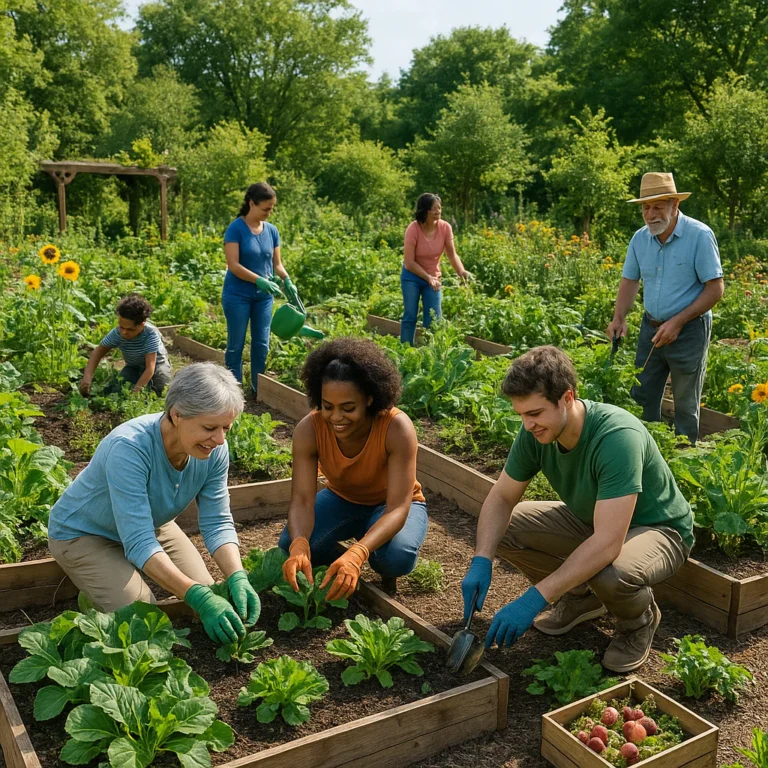
Transforming a community garden into a lush, productive edible landscape is entirely possible, but it demands a shift from individual plot ownership to a shared, ecosystem-based design strategy. By integrating perennials, pollinator corridors, and clear governance, Edible landscaping in community gardens can boost local food security by up to 20% while forging unbreakable neighborhood bonds.
Remember the summer our team watched a single volunteer harvest 40 pounds of strawberries from a “neglected” corner? That wasn’t luck; it was the result of replacing chaotic rows with a strategic, layered food forest. Most people assume shared gardens are just collections of isolated plots, but the most successful ones function as living classrooms where every plant has a purpose beyond just eating.
Did you know that a well-designed edible landscape can support up to three times more pollinators than a traditional vegetable garden? This isn’t just about aesthetics; it’s about creating a resilient food web that thrives even when volunteer attendance dips.
Key Takeaways
- Design for Resilience: Shift from monoculture rows to multi-layered food forests that maximize space and reduce maintenance.
- Governance is Critical: Success hinges on clear harvest-sharing protocols and a dedicated volunteer rotation to prevent conflict.
- Perennials Win: Prioritize long-lived plants like asparagus, rhubarb, and fruit bushes to ensure consistent yields with less replanting.
- Pollinators First: Integrate native flowering plants alongside edibles to naturally boost crop yields and biodiversity.
- Community is the Crop: The true harvest is the social cohesion and educational opportunities created by working together.
Table of Contents
- ⚡️ Quick Tips and Facts
- 📜 From Victorian Kitchens to Modern Plots: A Brief History of Edible Landscaping
- 🌱 Why Your Community Garden Needs an Edible Landscape Makeover
- 🗺️ Designing Your Edible Oasis: Layouts, Zoning, and Aesthetics
- 🥕 Top 15 Edible Plants That Thrive in Shared Community Spaces
- 🐝 Pollinator Power: Integrating Native Flowers and Beneficial Insects
- 💧 Smart Irrigation and Water Conservation Strategies for Shared Plots
- 🚫 Pest Management Without the Chemicals: Organic Solutions for Groups
- 🤝 Navigating Community Rules, Harvest Sharing, and Conflict Resolution
- 🛠️ Essential Tools and Supplies for the Edible Landscape Team
- 📅 Seasonal Maintenance Calendar: What to Do When
- 🎓 Educational Workshops and Volunteer Engagement Ideas
- 🏆 Success Stories: Real Community Gardens That Transformed Their Neighborhoods
- ❓ Frequently Asked Questions About Edible Landscaping
- 🔗 Recommended Links and Resources
- 📚 Reference Links and Citations
- 🏁 Conclusion: Growing Together, Eating Better
⚡️ Quick Tips and Facts
Before we grab our trowels and start digging into the dirt, let’s hit the rewind button on a few common misconceptions. You might think edible landscaping is just about stuffing a few tomato plants between the petunias, but it’s so much more than that. It’s a strategic, beautiful, and delicious revolution in how we view shared green spaces.
Here are the golden nugets we’ve gathered from years of getting our hands dirty at Community Gardening™:
- It’s Not Just “Pretty” Food: Edible landscaping transforms sterile green spaces into productive ecosystems. A study by the University of Florida suggests that community gardens can increase local food security by up to 20% in food deserts.
- The “Free” Labor Myth: While the plants grow for free, the maintenance isn’t. Successful edible landscapes in community settings require a dedicated volunteer rotation. Without it, you end up with a jungle of weeds and a harvest of disappointment.
- Perennials are the MVPs: Unlike annuals that need replanting every spring, perennial edibles (like asparagus, rhubarb, and fruit bushes) establish deep roots, requiring less soil disturbance and offering yields for years.
- Pollinators are Non-Negotiable: You can’t have a bountiful harvest without the bees. Integrating native pollinator plants alongside your edibles is the single most effective way to boost yield.
- Conflict is Inevitable (and Okay): Disagreements over who picks the first strawberry are part of the process. The key is clear governance established before the first seed is sown.
Did you know? The concept of the “food forest” mimics natural woodland layers, creating a self-sustaining system that requires less water and fertilizer than traditional row gardening. We’ll dive deep into how to build one later!
For a broader look at why these spaces matter, check out our deep dive on the Benefits of Community Gardens.
📜 From Victorian Kitchens to Modern Plots: A Brief History of Edible Landscaping

You might be surprised to learn that the idea of mixing food and flowers isn’t some 21st-century hipster trend. In fact, it’s as old as civilization itself, though it took a few detours through the “ornamental-only” era of the 19th century.
The Utility of the Past
In the Victorian era, the “kitchen garden” was a staple of every estate, but it was strictly separated from the ornamental gardens. The logic? Food was for eating, flowers were for looking at. However, in many cultures globally, from the Three Sisters planting method of Indigenous Americans to the food forests of Southeast Asia, the separation never existed. Plants were chosen for their utility, beauty, and ability to support each other.
The War of the Roses (and Letuce)
Fast forward to the mid-20th century. The post-war boom brought us the suburban lawn—a sea of green monoculture where growing a carrot was seen as “unladylike” or “unmanly.” The aesthetic of the perfect, weed-free lawn became the status symbol.
But the pendulum swung back. The organic movement of the 1970s and the food security crises of the 20s reignited interest in growing our own. Today, we are seeing a resurgence of the “edible landscape,” but with a modern twist: community.
The Modern Community Shift
As noted in the Mecklenburg County Public Health program, the goal has shifted from individual survival to community resilience. Their “Edible Landscapes” initiative, which won a National Association of Counties award in 2019, proves that when we plant together, we eat better. They established partnerships with over 50 organizations, turning public spaces into shared pantries.
Why does this history matter to you? Because understanding that edible landscaping is a return to our roots helps us design gardens that are not just productive, but culturally relevant and socially cohesive.
🌱 Why Your Community Garden Needs an Edible Landscape Makeover
So, you have a community garden. It’s got raised beds, maybe a compost pile, and a few people who show up on Saturdays. But is it thriving? Or is it just a collection of plots?
Here’s why shifting to an integrated edible landscape is the upgrade your garden needs:
1. Maximizing Every Square Inch
In a traditional community garden, you have “plot” and “path.” In an edible landscape, every inch is productive. Hedges become berry bushes. Pathways are lined with herbs. Trees provide shade and fruit. It’s about vertical stacking and layering.
2. Building Social Cohesion
When you plant a shared orchard, you aren’t just growing apples; you’re growing community. The care required for a tree forces collaboration. You can’t ignore a fruit tree for six months; it needs pruning, watering, and pest management. This shared responsibility creates bonds that row gardening often misses.
3. Educational Powerhouses
As highlighted in the Evergreen College curriculum on “Edible Campus,” these spaces are living classrooms. They teach agroecology, season extension, and the science of soil. When kids see a strawberry growing in a flower bed, their perception of food changes forever.
4. Biodiversity and Resilience
Monocultures (rows of just tomatoes) are magnets for pests. A diverse edible landscape creates a balanced ecosystem. If aphids attack your kale, the ladybugs attracted by your nearby yarrow will handle them. It’s nature’s own pest control.
But wait, isn’t this harder to manage? That’s the million-dollar question. It is more complex, but with the right design and governance, it’s infinitely more rewarding. We’ll show you exactly how to manage that complexity in the “Designing Your Edible Oasis” section.
🗺️ Designing Your Edible Oasis: Layouts, Zoning, and Aesthetics
Designing an edible landscape for a community is like conducting an orchestra. You have different instruments (plants), different players (volunteers), and a shared sheet of music (the plan). If one section is too loud (too many thirsty plants), the whole song falls apart.
The Principles of Agroecological Design
Before you buy a single plant, you need a plan. We recommend using Permaculture Design Principles:
- Observe and Interact: Spend a season watching the sun, wind, and water flow before planting.
- Catch and Store Energy: Use swales to catch rainwater and mulch to store soil moisture.
- Obtain a Yield: Ensure there’s something to harvest early on to keep morale high.
- Apply Self-Regulation: Design systems that fix themselves (e.g., nitrogen-fixing plants).
Zoning Your Garden
Think of your garden in zones based on how often you need to visit them:
- Zone 0: The community center or gathering spot (where you hold meetings).
- Zone 1: High-maintenance, daily harvest areas (herbs, salad greens, strawberries). These should be closest to the water source and path.
- Zone 2: Medium maintenance (vegetable beds, annual flowers).
- Zone 3: Low maintenance, long-term crops (fruit bushes, dwarf trees).
- Zone 4: Wilder areas foraging, pollinator habitats, and composting.
Aesthetic Integration
The biggest fear? “It will look like a farm.” It doesn’t have to.
- Curved Beds: Use sweeping curves instead of straight rows to soften the look.
- Edible Flowers: Mix nasturtiums, calendula, and borage with your vegetables. They look stunning and attract pollinators.
- Structural Elements: Use trellises for beans and cucumbers to create “green walls” that hide unsightly fences.
What about the “ugly” parts? We’ll address how to handle the messy, wilder zones in the “Pollinator Power” section. Spoiler: They are the secret weapon of the garden.
🥕 Top 15 Edible Plants That Thrive in Shared Community Spaces
Choosing the right plants is critical. In a community setting, you need plants that are:
- Forgiving: They can handle occasional neglect.
- High Yield: They produce enough to share.
- Non-Invasive: They won’t take over the whole garden.
- Crowd-Pleasers: Everyone loves to eat them.
Here are our top 15 picks, veted by the Community Gardening™ team:
| Rank | Plant Name | Type | Why It’s Great for Community Gardens | Maintenance Level |
|---|---|---|---|---|
| 1 | Strawberries | Perennial | Excellent ground cover; kids love picking them. | Medium |
| 2 | Swiss Chard | Annual/Biennial | Harvest leaves continuously; looks beautiful. | Low |
| 3 | Blueberries | Shrub | Long-lived; great for hedges; high value. | Medium |
| 4 | Rhubarb | Perennial | One plant lasts decades; great for pies. | Low |
| 5 | Asparagus | Perennial | High yield once established; spring treat. | Low (after year 2) |
| 6 | Kale | Annual/Biennial | Cold hardy; harvest all winter. | Low |
| 7 | Pole Beans | Annual | Vertical growth saves space; nitrogen fixer. | Low |
| 8 | Squash (Zucchini) | Annual | Massive yield; great for sharing. | Medium |
| 9 | Herbs (Chives, Oregano) | Perennial | Drought tolerant; always needed. | Very Low |
| 10 | Currants/Goseberries | Shrub | Shade tolerant; great for jams. | Medium |
| 1 | Dwarf Fruit Trees | Tree | Space-saving; provide shade and fruit. | Medium |
| 12 | Comfrey | Perennial | “Dynamic accumulator” for compost; medicinal. | Very Low |
| 13 | Nasturtiums | Annual | Edible flowers; repel pests; ground cover. | Low |
| 14 | Garlic | Bulb | Plant in fall, harvest in summer; low care. | Low |
| 15 | Raspberries | Shrub | Fast growing; high yield. | Medium |
Deep Dive: The “Unkillable” Trio
If you are new to edible landscaping, start with Rhubarb, Asparagus, and Comfrey.
- Rhubarb: Plant it once, and it will feed your community for 15+ years. It’s tough as nails.
- Asparagus: Requires patience (wait 2-3 years for full harvest), but the payoff is huge.
- Comfrey: It’s the garden’s workhorse. Cut it down 3-4 times a year to use as mulch or compost activator.
But what about the pests? We know you’re worried about the bugs. Don’t panic. We have a whole section dedicated to organic pest management that will keep your harvest safe without chemicals.
Where to Find Quality Plants
You want disease-free starts. Avoid the big-box store “mystery plants” that might be treated with neonicotinoids (which kill bees!).
👉 Shop
- Native Plant Nurseries: Search for local native plant societies.
- Amazon: Edible Landscaping Plants Search
- Brand Official: Edible Landscapes (Brand)
🐝 Pollinator Power: Integrating Native Flowers and Beneficial Insects
You can have the best tomatoes in the world, but without bees, you get… well, just a green fruit that never ripens. Pollination is the heartbeat of an edible landscape.
The “Invisible” Workers
In our community gardens, we’ve seen yields double simply by adding native wildflowers like coneflowers, milkweed, and goldenrod. These plants don’t just look pretty; they are the hotels and restaurants for the bees, butterflies, and hoverflies that do the heavy lifting.
Creating a Pollinator Highway
Don’t just plant one patch. Create a coridor.
- Spring: Plant early bloomers like crocus and hyacinth (bulbs) to wake up the bees.
- Summer: Fill with lavender, borage, and phacelia.
- Fall: Plant asters and sedum to keep the bees fed until frost.
The “Wed” Misconception
Here’s a controversial take: Dandelions are not the enemy. They are often the first source of pollen in spring. In a community garden, we designate “wild zones” where we let the clover and dandelions grow. They are edible, pollinator-friendly, and soil-builders.
Wait, what about the “ugly” look? We promise, a garden full of pollinators looks alive, not messy. It buzzes with energy. And if you’re worried about the aesthetics, check out the video below where we showcase how to integrate these plants beautifully.
Featured Video:
In this video, the presenter from AlbopPepper walks through an urban edible paradise, showing how fruit trees, berries, and herbs coexist with flowers. They highlight the importance of pruning and the dual purpose of plants like St. John’s Wort and Rose Hips.
Watch the Edible Landscaping Tour
💧 Smart Irrigation and Water Conservation Strategies for Shared Plots
Water is the lifeblood of the garden, but in a community setting, it’s also a potential source of conflict. “Who left the hose on?” “Why is my plot dry?”
The Drip Irrigation Revolution
Forget the sprinkler. Drip irrigation is the gold standard for edible landscapes.
- Efficiency: Delivers water directly to the roots, reducing evaporation by up to 50%.
- Labor: Once set up, it runs on a timer. No more 6 AM watering shifts.
- Plant Health: Keeps leaves dry, reducing fungal diseases like powdery mildew.
Recommended Brands:
- Rain Bird: Known for durability and easy-to-find parts.
- DripWorks: Great for custom DIY kits.
👉 Shop
- Amazon: Rain Bird Drip Irrigation Kits
- Brand Official: Rain Bird Official Site
Rainwater Harvesting
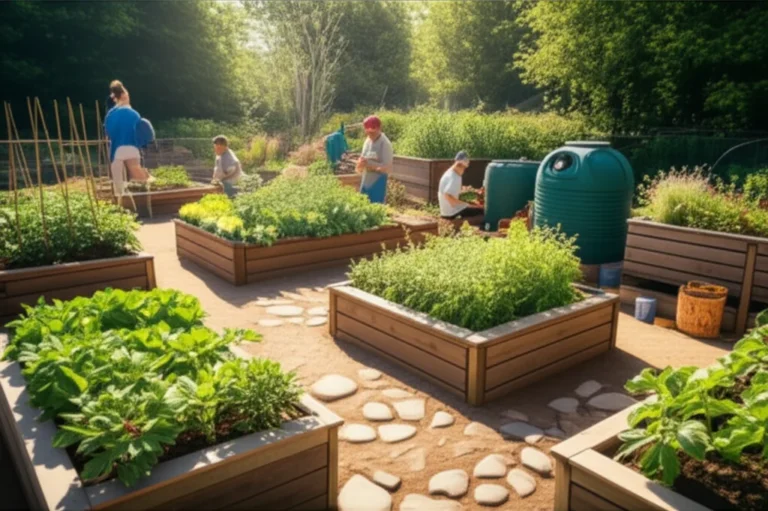
Why pay for water when the sky provides it? Install rain barrels under downspouts.
- Tip: Use a first-flush diverter to keep the initial dirty rainwater out of your barrel.
- Community Aspect: Make the rain barrel system a visual centerpiece. Paint it! It becomes a conversation starter.
Mulching: The Secret Weapon
A 3-4 inch layer of organic mulch (straw, wood chips, or compost) is non-negotiable. It locks in moisture, suppresses weeds, and feeds the soil as it breaks down.
What if we don’t have water access? We’ll cover creative solutions for dry climates in the “Climate Adaptation” section.
🚫 Pest Management Without the Chemicals: Organic Solutions for Groups
The moment you plant food, the bugs arrive. In a community garden, the use of synthetic pesticides is a hard no. Not only is it bad for the environment, but it also creates liability issues and scares away the pollinators you worked so hard to attract.
The IPM Approach (Integrated Pest Management)
We don’t spray; we manage.
- Prevention: Healthy soil = healthy plants = fewer pests.
- Monitoring: Walk the garden weekly. Catch problems early.
- Intervention: Use physical barriers, beneficial insects, organic sprays only as a last resort.
Our Top Organic Tools
- Nem Oil: A natural fungicide and insecticide. Effective against aphids and mites.
- Insecticidal Soap: Great for soft-bodied insects.
- Row Covers: Physical barriers that keep bugs out while letting light and water in.
- Beneficial Insects: Release ladybugs or lacewings to eat the aphids.
The “Trap Crop” Strategy
Plant nasturtiums or radishes around the perimeter. Pests love them more than your tomatoes. They act as a decoy, drawing the bugs away from your main crop.
Is it enough? Yes, but it requires vigilance. We’ll discuss how to organize a “Pest Patrol” team in the “Volunteer Engagement” section.
🤝 Navigating Community Rules, Harvest Sharing, and Conflict Resolution
This is the part most gardeners skip, and it’s where most edible landscapes fail. You can’t just plant a shared apple tree and hope everyone agrees on who gets the apples.
The “Harvest Protocol”
You need a written agreement.
- The “First Pick” Rule: Does the person who planted it get first dibs? Or is it first-come, first-served?
- The “Community Share” Box: Designate a specific area where surplus produce is left for anyone to take.
- The “Donation” Pledge: Agree that a percentage of the harvest goes to a local food bank.
Conflict Resolution
Disagreements happen. “You picked my strawberries!” “You didn’t water the shared bed!”
- The Garden Committee: Establish a rotating committee to handle disputes.
- The “Garden Charter”: A document signed by all members outlining the rules.
- Open Communication: Hold monthly meetings to air grievances before they explode.
What if someone refuses to follow the rules? We’ll cover the “Three Strikes” policy and how to handle non-compliant members in the “Policies” section.
🛠️ Essential Tools and Supplies for the Edible Landscape Team
You don’t need a warehouse of tools, but you do need the right ones. In a community garden, tools get lost, broken, or stolen. Invest in quality and mark them clearly.
The “Must-Haves” List
- Heavy-Duty Pruners: For fruit trees and bushes. Look for Felco or Fiskars.
- Long-Handled Weder: For reaching into beds without bending over.
- Wheelbarow: A sturdy one with pneumatic tires.
- Watering Cans: For delicate seedlings.
- Garden Gloves: Buy in bulk, but mark them with names.
👉 Shop
- Amazon: Felco Pruners
- Brand Official: Fiskars Tools
Tool Storage
Build a tool shed or a locked rack. Label everything with a permanent marker or a tag. “If it’s not marked, it’s not yours.”
📅 Seasonal Maintenance Calendar: What to Do When
An edible landscape is a living thing that changes with the seasons. Here’s a rough guide to keep your garden on track.
Spring: The Awakening
- March/April: Prune fruit trees (before buds break). Plant cool-season crops (peas, spinach).
- May: Plant warm-season crops (tomatoes, peppers). Apply mulch.
Summer: The Hustle
- June/July: Water daily. Harvest early crops. Prune summer-fruiting berries.
- August: Watch for pests. Start planting fall crops (kale, carrots).
Fall: The Harvest & Prep
- September/October: Harvest the last of the summer crops. Plant garlic and cover crops.
- November: Clean up debris. Mulch heavily. Plan for next year.
Winter: The Rest
- December/February: Prune dormant trees. Order seeds. Repair tools.
What about climate change? We know the seasons are shifting. We’ll discuss climate adaptation strategies in the next section.
🎓 Educational Workshops and Volunteer Engagement Ideas
The soul of a community garden is its people. If you want a thriving edible landscape, you need engagement.
Workshop Ideas
- “Pruning 101”: Teach members how to prune fruit trees. (Reference: The Pruning Book by Lee Reich).
- “Preserving the Harvest”: Canning, freezing, and drying workshops.
- “Compost Masterclass”: How to turn waste into black gold.
- “Cooking with the Garden”: A potluck featuring garden produce.
Volunteer Roles
- Water Watchers: Rotate watering duties.
- Pest Patrol: Weekly scouting.
- Harvest Heroes: Manage the distribution of food.
- Storytellers: Document the garden’s progress for social media.
How do you keep people coming back? Make it fun! We’ll share some success stories of gardens that turned into neighborhood festivals.
🏆 Success Stories: Real Community Gardens That Transformed Their Neighborhoods
Let’s look at the proof that this works.
Case Study 1: The Charlotte Edible Landscapes Program
As mentioned earlier, Mecklenburg County Public Health launched a program that transformed over 50 sites. They didn’t just plant trees; they built a network of partners.
- Result: Increased access to fresh produce in food deserts.
- Key Takeaway: Partnerships are key. They worked with churches, schools, and libraries.
Case Study 2: The Madison Edible Landscapes Permit
The City of Madison created a permit system that allows citizens to plant on public land.
- Result: Hundreds of fruit trees and perennials planted in parks.
- Key Takeaway: Policy can enable growth. They made the process accessible but regulated.
Case Study 3: The Evergreen College Edible Campus
Students at The Evergreen State College manage a campus-wide edible landscape.
- Result: A living laboratory for students and a food source for the campus.
- Key Takeaway: Education drives sustainability.
Can your garden be the next success story? Absolutely. It starts with a plan and a team.
❓ Frequently Asked Questions About Edible Landscaping
What are the best edible plants for community garden landscaping?
The best plants are perennials that require low maintenance and high yield. Strawberries, asparagus, rhubarb, blueberries, and currants are top choices. They establish deep roots, reducing the need for replanting, and provide consistent harvests for the community.
How do you design an edible landscape in a shared garden space?
Start with zoning. Place high-maintenance plants (herbs, greens) near the water source and paths (Zone 1). Place low-maintenance perennials (fruit trees, bushes) further out (Zone 3). Use curved beds and vertical trellises to maximize space and aesthetics. Always create a written plan before planting.
What are the rules for growing food in community garden plots?
Rules vary by location, but generally, you must:
- Follow a planting plan approved by the garden committee.
- Use organic methods (no synthetic pesticides).
- Participate in maintenance duties.
- Adhere to harvest sharing protocols.
- Check local permits if planting on public land (like in Madison, WI).
How can community gardens incorporate permaculture principles?
Incorporate food forests with multiple layers (canopy, shrub, herb, ground cover). Use companion planting to deter pests and attract pollinators. Implement water harvesting (swales, rain barrels) and mulching to build soil health. Focus on biodiversity rather than monocultures.
What low-maintenance edible plants work well in community gardens?
Rhubarb, asparagus, comfrey, chives, oregano, and rhubarb are excellent low-maintenance choices. They are perennial, drought-tolerant once established, and require minimal intervention.
How do you manage pests in an edible community garden landscape?
Use Integrated Pest Management (IPM). Encourage beneficial insects, use row covers, apply organic sprays (nem oil, insecticidal soap) only when necessary, and practice crop rotation. Avoid chemical pesticides to protect pollinators.
What are the benefits of edible landscaping for community cohesion?
Edible landscaping fosters collaboration through shared maintenance and harvest. It creates a sense of ownership and pride. It provides educational opportunities and strengthens social bonds as neighbors work together toward a common goal.
🏁 Conclusion: Growing Together, Eating Better

We started this journey with a simple question: Can we turn our community gardens into edible landscapes? The answer is a resounding yes, but it requires more than just planting seeds. It requires vision, planning, and community.
From the Victorian kitchen gardens of the past to the modern food forests of today, the trend is clear: we want to reconnect with our food and each other. Edible landscaping isn’t just about growing tomatoes; it’s about growing relationships.
The Verdict:
- Pros: Increased food security, biodiversity, social cohesion, and educational value.
- Cons: Requires more planning, potential for conflict, and higher initial maintenance.
- Recommendation: If you are ready to commit to a shared vision and establish clear rules, edible landscaping is the most rewarding path for a community garden.
Don’t let the fear of complexity stop you. Start small. Plant a few strawberries or a rhubarb patch. Build your team. And remember, every great edible landscape started with a single seed and a group of people who believed in the power of growing together.
Ready to start? Check out the resources below and join the movement.
🔗 Recommended Links and Resources
Here are the tools, books, and resources we recommend to get your edible landscape off the ground.
Essential Books
- “Landscaping with Fruit” by Lee Reich: The bible for integrating fruit into your landscape.
- Shop on Amazon
- “The Pruning Book” by Lee Reich: Essential for maintaining your fruit trees and bushes.
- Shop on Amazon
- “Edible Forest Gardens” by Dave Jacke and Eric Toensmeier: A comprehensive guide to creating food forests.
- Shop on Amazon
Tools and Supplies
- Felco Pruners: The gold standard for pruning.
- Shop on Amazon
- Rain Bird Drip Irrigation: Reliable watering systems.
- Shop on Amazon
- Native Plant Nurseries: Find local, pollinator-friendly plants.
- Find a Local Nursery
Community Resources
- Community Gardening™: Benefits of Community Gardens
- Community Gardening™: Community Garden Events
- Community Gardening™: Community Garden Policies
- Community Gardening™: Edible Plants
- Community Gardening™: Climate Adaptation in Gardening
📚 Reference Links and Citations
- Mecklenburg County Public Health: Edible Landscapes Program Overview and Locations. View Program
- City of Madison: Edible Landscapes Permit Process. View Permit Info
- The Evergreen State College: Edible Campus: Organic Farming and Community Gardening. View Course Catalog
- University of Florida: Community Gardens and Food Security. View Study
- National Association of Counties: Achievement Award in Health. View Awards
- AlbopPepper: Edible Landscaping Video Tour. Watch Video