Support our educational content for free when you purchase through links on our site. Learn more

Eco-friendly gardens transform your backyard into a carbon-sequestering powerhouse that actively fights climate change while boosting your mental health and saving you money. When you ask what are the benefits of eco friendly gardens, the answer isn’t just “pretty flowers”; it’s a complete ecosystem upgrade that turns your property into a vital refuge for pollinators and a natural water filter.
Did you know a single gas-powered leaf blower emits as much pollution as driving a Toyota Camry for 205 miles? That’s the kind of hidden cost we eliminate by switching to sustainable practices. Imagine swapping that noisy machine for a quiet, manual rake while your native plants feed a colony of endangered bees.
It starts with a simple shift in perspective: your garden isn’t just a place to cut grass; it’s a living laboratory for regeneration. Whether you have a sprawling lawn or a tiny balcony, every native plant you add creates a ripple effect that strengthens the local environment.
Key Takeaways
- Biodiversity Boost: Eco-gardens provide critical habitats for pollinators and wildlife, reversing local population declines.
- Climate Action: Sustainable practices like composting and reducing lawn size significantly lower your household’s carbon footprint.
- Water & Cost Savings: Using rainwater harvesting and native plants can slash water bills by up to 70% while reducing maintenance time.
- Health & Community: Tending a green space lowers stress levels and fosters stronger neighborhood connections through shared growth.
Table of Contents
- ⚡️ Quick Tips and Facts
- 🌱 A Brief History of the Green Revolution: How Eco-Friendly Gardening Evolved
- 🌍 The Big Picture: Why Your Backyard Matters for the Planet
- 🦋 Biodiversity Preservation: Creating a Haven for Pollinators and Wildlife
- 🌬️ Reducing Your Carbon Footprint: From Lawn to Leaf
- 💧 Water Conservation Strategies: Smart Irrigation and Rainwater Harvesting
- 🌿 Soil Health Mastery: Building Life Underground
- ♻️ Reducing Waste: Composting and Sustainable Hardscaping
- 🏡 The Solution: 12 Actionable Steps to Create an Eco-Friendly Garden
- Embrace Native Plants for Low-Maintenance Beauty
- Ditch the Chemicals: The Power of Organic Gardening
- Mulching Magic: Locking in Moisture and Suppressing Weds
- Install Wildlife-Friendly Features Like Bird Baths and Bug Hotels
- Reduce Lawn Size to Save Water and Fuel
- Start a Compost Bin: Turn Scraps into Black Gold
- Harvest Rainwater with Barels and Cisterns
- Choose Sustainable Hardscaping Materials
- Plant a Pollinator Pathway
- Switch to Electric or Manual Lawn Tools
- Practice Integrated Pest Management (IPM)
- Design for Xeriscaping in Dry Climates
- 🤔 Consider Hiring a Pro: When to Call in the Eco-Garden Experts
- 📈 The Economic Benefits: Saving Money While Saving the Earth
- 🧠 Mental and Physical Health Gains: Therapeutic Power of Green Spaces
- 🏠 Community Impact: How Eco-Gardens Strengthen Neighborhoods
- ❓ FAQ: Common Questions About Sustainable Gardening
- 🔗 Recommended Links: Tools, Seeds, and Resources We Love
- 📚 Reference Links: Studies and Sources
- 💬 Leave a Comment: Share Your Green Journey
- 📞 Contact Us: Get Personalized Garden Advice
- 📢 From Our Blog: More Sustainable Living Tips
- 📩 Subscribe to Our Blog
- 🤝 Connect With Us on Social Media
- 🏁 Conclusion
⚡️ Quick Tips and Facts
Before we dig our hands into the dirt, let’s drop some knowledge bombs that might just change how you look at your backyard forever. Did you know that a single gas-powered leaf blower can emit as much pollution as a 205 Toyota Camry driven for 1 hours? 🚗💨 That’s right, your “eco-friendly” landscaping tool might be the enemy of the very planet you’re trying to save.
Here are a few rapid-fire facts to get your brain (and your garden) buzzing:
- The Soil Secret: Healthy soil isn’t just dirt; it’s a living ecosystem. A single teaspoon of healthy garden soil can contain more microrganisms than there are people on Earth! 🦠🌍
- Water Wisdom: Overhead sprinklers lose up to 50% of their water to evaporation before it even hits a root. Drip irrigation is the MVP of water conservation. 💧
- The Pollinator Panic: We are losing bees and butterflies at an alarming rate. By planting just three native flowering plants, you can support a local pollinator population. 🐝🦋
- Carbon Capture: A mature tree can absorb 48 pounds of carbon dioxide per year. Imagine a whole forest in your front yard! 🌳
- Mental Health Boost: Just 20 minutes of gardening can lower cortisol (stress hormone) levels significantly. It’s nature’s own therapy session. 🧠✨
Pro Tip: If you’re wondering how a small patch of green can possibly impact the global climate, stick around. We’re about to prove that your backyard is actually a powerhouse for planetary health.
🌱 A Brief History of the Green Revolution: How Eco-Friendly Gardening Evolved

Gardening hasn’t always been about saving the world. In fact, for a long time, it was about conquering it.
The Era of Control
In the mid-20th century, the “Green Revolution” brought us synthetic fertilizers, potent pesticides, and the obsession with the perfect, uniform green lawn. The goal was to eliminate nature’s chaos. We wanted grass that never grew brown, weeds that never popped up, and bugs that never bit.
But here’s the catch: nature hates a vacuum. When we wiped out the “bad” bugs, we also wiped out the “good” ones. When we stopped feeding the soil with organic matter, the soil died, becoming nothing more than a sterile sponge for chemicals.
The Shift to Sustainability
Fast forward to the 21st century, and the pendulum has swung back. We realized that the “perfect lawn” was actually a desert for wildlife and a pollution factory for our waterways.
The modern eco-friendly garden movement isn’t just a trend; it’s a correction. It draws inspiration from:
- Indigenous Practices: Native peoples have managed landscapes for thousands of years using polyculture (growing many species together) and no-till methods.
- The Organic Movement: Pioners like Sir Albert Howard in the early 190s argued that soil health is the foundation of plant health, a concept we are finally embracing again.
- Permaculture: A design system created in the 1970s that mimics natural ecosystems to create self-sustaining gardens.
Today, we aren’t just gardening; we are regenerating. We are moving from “doing less harm” to “doing active good.”
🌍 The Big Picture: Why Your Backyard Matters for the Planet
You might be thinking, “I have a 50-square-foot plot. How does my zucchini patch stop climate change?”
It’s a valid question. But here’s the secret: cumulative impact.
When you add up the millions of home gardens, community plots, and urban green spaces, they form a massive network of green infrastructure. According to research published in the PMC (PubMed Central), home gardens are increasingly recognized as vital for sustainable development, acting as ecological corridors that connect fragmented habitats.
The Ripple Effect
- Urban Heat Island Mitigation: Cities are often 5-10°F hotter than rural areas due to concrete and asphalt. Your garden acts as a cooling agent, reducing the energy needed for air conditioning in your home and your neighbors’.
- Water Filtration: Instead of rainwater rushing over your driveway, picking up oil and chemicals, and flooding the storm drain, your garden’s soil acts as a natural filter, cleaning the water before it recharges the groundwater.
- Carbon Sinks: While a single tree is great, a diverse garden with trees, shrubs, perennials, and even healthy soil creates a significant carbon sink.
Wait, is it really that simple? Not quite. There’s a balance between native biodiversity and invasive species that we need to navigate carefully. We’ll get into the nitty-gritty of how to choose the right plants later, but for now, just know that your garden is a node in a global network.
For more on how these small spaces add up to massive global benefits, check out our deep dive on community garden benefits to the global community.
🦋 Biodiversity Preservation: Creating a Haven for Pollinators and Wildlife
This is where the magic happens. An eco-friendly garden isn’t just about pretty flowers; it’s about life.
The Pollinator Crisis
Bes, butterflies, moths, and beetles are the unsung heroes of our food system. Yet, their populations are crashing. Why? Because we’ve replaced their food sources with sterile lawns and poisoned their homes with pesticides.
What you can do:
- Plant Native: Native plants have co-evolved with local pollinators. They provide the specific nectar and pollen these insects need.
- Continuous Bloom: Plan your garden something is bloming from early spring to late fall. No gaps!
- Leave the Leaves: Many butterfly species overwinter in leaf litter. Raking everything clean in the fall is a death sentence for them.
Beyond the Bes
It’s not just about insects. A diverse garden supports:
- Birds: They need seeds, berries, and insects to feed their young.
- Amphibians: A small pond can attract frogs and salamanders, which are excellent pest controllers.
- Small Mammals: Hedgehogs, squirels, and even foxes use gardens as corridors to move through urban areas.
Did you know? The Xerces Society estimates that over 4,0 species of native bees exist in North America alone, yet most are solitary and rarely seen. By creating a habitat, you might just spot one of these rare gems in your own backyard!
🌬️ Reducing Your Carbon Footprint: From Lawn to Leaf
Let’s talk about the elephant in the room: The Lawn.
The traditional American lawn is an ecological nightmare. It requires:
- Massive amounts of water.
- Frequent mowing (gas-powered mowers are major polluters).
- Synthetic fertilizers (which release nitrous oxide, a potent greenhouse gas).
The Solution: Reduce and Replace
- Shrink the Lawn: You don’t need a football field of grass. Reduce your lawn size by 50% and replace it with native ground covers, shrubs, or a vegetable patch.
- Switch Tools: Ditch the gas blower and mower.
Manual Push Mowers: Zero emissions, great exercise.
Electric Mowers: Much quieter and cleaner than gas.
Rakes: The original leaf blower, and it’s free!
The Carbon Math
Replacing a 1,0 sq. ft. lawn with a diverse native planting can sequester significantly more carbon than the grass ever did. Plus, you save the carbon emissions from mowing, fertilizing, and watering.
Curious about the numbers? We’ll break down the exact savings in the “Economic Benefits” section later, but trust us, your wallet will thank you as much as the planet.
💧 Water Conservation Strategies: Smart Irrigation and Rainwater Harvesting
Water is finite. Every drop counts.
The Evaporation Trap
As mentioned earlier, watering at noon with a sprinkler is like pouring money down the drain.
- Best Time: Early morning (4 AM – 8 AM). The air is cool, and the wind is low.
- Best Method: Drip Irrigation or Soaker Hoses. These deliver water directly to the roots, minimizing evaporation and preventing fungal diseases on leaves.
Rainwater Harvesting
Why pay for tap water when the sky is doing it for free?
- Rain Barels: A simple 50-gallon barrel can collect 60 gallons of water from just 1 inch of rain on a 1,0 sq. ft. roof.
- Cisterns: For larger properties, underground cisterns can store thousands of gallons.
- Rain Gardens: These are depressed areas planted with native species that absorb runoff from driveways and roofs, filtering pollutants before they reach the water table.
Wait, is rainwater safe? Yes! It’s naturally soft and free of chlorine, which plants love. Just make sure your barrel has a tight lid to keep mosquitoes out.
🌿 Soil Health Mastery: Building Life Underground
If you want a thriving garden, feed the soil, not the plant.
The Soil Food Web
Soil is alive. It contains bacteria, fungi, protozoa, nematodes, earthworms, and more. This “soil food web” breaks down organic matter, making nutrients available to plants.
- Mycorrhizal Fungi: These fungi attach to plant roots and extend their reach, helping plants absorb water and nutrients in exchange for sugars.
- Earthworms: They aerate the soil and create nutrient-rich castings.
How to Build Healthy Soil
- Stop Tilling: Tilling destroys fungal networks and soil structure. Use no-till or low-till methods.
- Add Compost: This is “black gold.” It improves drainage in clay soils and water retention in sandy soils.
- Mulch: A layer of organic mulch (wood chips, straw, leaves) protects the soil from erosion, keeps it cool, and feeds the soil as it decomposes.
Myth Buster: “I need to add fertilizer to make my plants grow.”
Truth: If your soil is alive and covered in mulch, it will provide all the nutrients your plants need. Fertilizers are often a crutch for dead soil.
♻️ Reducing Waste: Composting and Sustainable Hardscaping
A true eco-garden produces zero waste.
Composting 101
Turn your kitchen scraps and yard waste into nutrient-rich soil amendment.
- What to Compost: Fruit/veggie scraps, coffee grounds, eggshells, grass clippings, dry leaves.
- What NOT to Compost: Meat, dairy, diseased plants, pet waste, walnut leaves (they contain juglone, which is toxic to many plants).
- Methods:
Cold Composting: Just pile it up and wait. Takes longer but requires less effort.
Hot Composting: Layer greens and browns, turn frequently. Produces compost in weeks.
Vermicomposting: Use worms in a bin. Great for apartments!
Sustainable Hardscaping
Your paths and patios can be eco-friendly too.
- Permeable Pavers: Allow water to soak through, reducing runoff.
- Reclaimed Materials: Use old bricks, stones, or wood instead of new concrete.
- Local Sourcing: Transporting materials from far away increases your carbon footprint. Buy local stone or wood.
🏡 The Solution: 12 Actionable Steps to Create an Eco-Friendly Garden
Ready to roll up your sleeves? Here is your step-by-step roadmap to a sustainable paradise.
1. Embrace Native Plants for Low-Maintenance Beauty
Native plants are adapted to your local climate and soil. They need less water, less fertilizer, and fewer pesticides.
- Action: Consult your local extension office or use the National Wildlife Federation’s Native Plant Finder to choose species for your zone.
2. Ditch the Chemicals: The Power of Organic Gardening
Synthetic pesticides kill the good bugs along with the bad.
- Action: Use nem oil, insecticidal soap, or Bt (Bacillus thuringiensis) for targeted pest control. Encourage beneficial insects like ladybugs and lacewings.
3. Mulching Magic: Locking in Moisture and Suppressing Weds
Mulch is your best friend.
- Action: Apply a 2-4 inch layer of organic mulch around all plants. Replenish as it decomposes.
4. Install Wildlife-Friendly Features Like Bird Baths and Bug Hotels
Give your guests a place to stay.
- Action: Install a bird bath with a shallow edge. Build or buy a “bug hotel” for solitary bees.
5. Reduce Lawn Size to Save Water and Fuel
Every square foot of lawn you remove is a win.
- Action: Replace a strip of grass with a pollinator pathway or a vegetable bed.
6. Start a Compost Bin: Turn Scraps into Black Gold
Stop sending food waste to the landfill.
- Action: Set up a compost bin in a corner of your yard or use a worm bin on your balcony.
7. Harvest Rainwater with Barels and Cisterns
Capture the rain.
- Action: Install a rain barrel under a downspout. Use a diverter kit to make it easy.
8. Choose Sustainable Hardscaping Materials
Build with the planet in mind.
- Action: Use permeable pavers or reclaimed stone for paths. Avoid concrete where possible.
9. Plant a Pollinator Pathway
Connect your garden to the neighborhood.
- Action: Plant a continuous row of native flowers that bloom at different times to guide pollinators through your area.
10. Switch to Electric or Manual Lawn Tools
Cut the emissions.
- Action: Replace your gas mower with an electric one or a reel mower. Swap the leaf blower for a rake.
1. Practice Integrated Pest Management (IPM)
Be smart about pests.
- Action: Monitor your plants regularly. Identify the pest before treating. Use physical barriers or biological controls first.
12. Design for Xeriscaping in Dry Climates
If you live in an arid region, design for drought.
- Action: Group plants with similar water needs (hydrozoning). Use gravel and rocks as mulch to reduce evaporation.
🤔 Consider Hiring a Pro: When to Call in the Eco-Garden Experts
Sometimes, DIY isn’t enough. Maybe your soil is toxic, or your slope is too steep for a rain garden.
When to call a pro:
- Soil Contamination: If you live near an old industrial site or busy road, get your soil tested.
- Complex Design: If you want a rain garden or a complex water feature, a professional can ensure it works correctly.
- Time Constraints: If you love the idea but don’t have the time to implement it, hire a sustainable landscaping company.
What to look for:
- Certifications like Certified Sustainable Landscaper or membership in the Association of Professional Landscape Designers (APLD).
- Experience with native plants and water conservation.
Note: Not all “green” landscapers are created equal. Ask to see their portfolio of eco-friendly projects and check references.
📈 The Economic Benefits: Saving Money While Saving the Earth
Let’s talk money. Eco-friendly gardening isn’t just good for the planet; it’s good for your wallet.
Upfront vs. Long-Term Costs
- Upfront: You might spend a bit more on native plants, rain barrels, or quality compost initially.
- Long-Term: You save massively on:
Water Bills: Native plants and mulch reduce water usage by up to 70%.
Fertilizer & Pesticides: Healthy soil and natural pest control eliminate these costs.
Maintenance: Less mowing, less weding, less watering.
Property Value
A well-designed, sustainable landscape can increase property value by 10-20%. Buyers are increasingly looking for low-maintenance, eco-friendly homes.
The Bottom Line: An eco-garden pays for itself over time. It’s an investment that keeps on giving.
🧠 Mental and Physical Health Gains: Therapeutic Power of Green Spaces
We touched on this earlier, but it deserves its own spotlight. Gardening is medicine.
Stress Reduction
Studies show that interacting with soil microbes (specifically Mycobacterium vacae) can boost serotonin levels, acting like a natural antidepressant.
Physical Activity
Gardening is a full-body workout.
- Diging: Builds arm and core strength.
- Weding: Improves flexibility and balance.
- Carying: Enhances endurance.
Cognitive Benefits
Regular gardening has been linked to a 36% reduction in dementia risk for older adults. It keeps the brain active and engaged.
Question: When was the last time you felt truly present? In the garden, you can’t think about your emails or your to-do list. You’re just here, in the moment.
🏠 Community Impact: How Eco-Gardens Strengthen Neighborhoods
Gardening doesn’t have to be a solitary act.
Building Connections
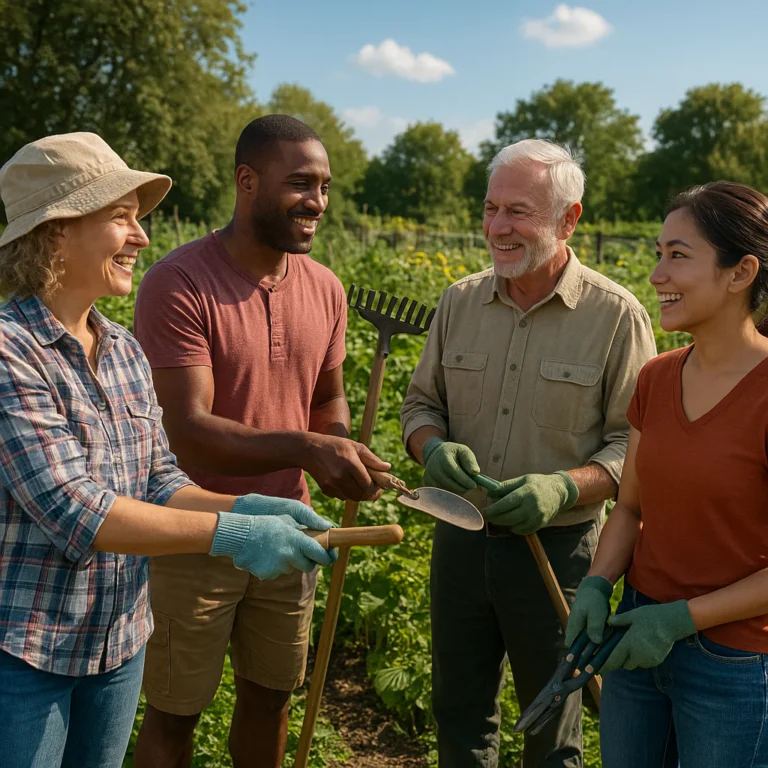
Community gardens bring people together. They are places where neighbors share seeds, tools, and stories. They bridge generational gaps and cultural divides.
Food Security
In many urban areas, community gardens provide fresh, nutritious produce to families who might otherwise rely on processed foods.
Education
These spaces are outdoor classrooms where kids (and adults) learn where food comes from and how to care for the environment.
Want to get involved? Check out our Community Garden Events page to find a garden near you!
❓ FAQ: Common Questions About Sustainable Gardening

How can community gardening initiatives help to address pressing environmental issues such as climate change, soil erosion, and biodiversity loss in urban areas?
Community gardens act as green infrastructure. They reduce the urban heat island effect, manage stormwater runoff to prevent erosion, and create habitat corridors for wildlife. By converting paved or degraded land into productive green spaces, they sequester carbon and restore soil health.
What role do community gardens play in promoting environmental awareness and fostering a sense of community among gardeners and non-gardeners alike?
They are living laboratories. Gardeners learn sustainable practices like composting and water conservation, which they then share with their neighbors. The shared space fosters social cohesion, reducing isolation and building a sense of collective responsibility for the local environment.
What are some eco-friendly gardening tips for beginners to get started with community gardening and make a positive impact on the environment?
Start small!
- Test your soil before planting.
- Choose native plants that thrive in your area.
- Mulch to retain moisture and suppress weeds.
- Compost your kitchen scraps.
- Water early in the morning.
- Avoid chemicals and use natural pest control methods.
How can I create a sustainable garden in my backyard to support local wildlife and reduce my carbon footprint?
Focus on biodiversity. Plant a variety of native species to attract pollinators. Reduce your lawn size and replace it with ground covers. Install a rain barrel and use drip irrigation. Switch to electric or manual tools. These steps will create a haven for wildlife and significantly lower your carbon footprint.
How are gardens eco friendly?
Gardens are eco-friendly when they mimic natural ecosystems. They use organic practices, conserve water, support biodiversity, and reduce waste through composting. They avoid synthetic chemicals and prioritize soil health, creating a self-sustaining loop.
Read more about “How to Build a Pollinator-Friendly Community Garden”
What is the purpose of the eco garden?
The purpose is to create a harmonious relationship between humans and nature. It aims to produce food, beauty, and habitat while minimizing environmental impact and maximizing ecological benefits.
Read more about “🌱 12 Ways Community Gardens Generate Revenue (2026)”
What are the benefits of eco friendly landscaping?
Benefits include lower maintenance costs, reduced water usage, increased property value, improved air and water quality, and enhanced biodiversity. It also provides mental and physical health benefits for the gardener.
Read more about “Edible Landscaping for Community Gardens: Design and Plant Guide”
What are the benefits of gardening for the environment?
Gardening sequesters carbon, reduces runoff, supports pollinators, and creates habitats. It helps mitigate climate change and restores local ecosystems.
Read more about “7 Ways to Reduce Waste in a Community Garden”
How can community gardening promote eco-friendly practices?
By providing a shared space for education and demonstration. Gardeners can share knowledge about composting, water conservation, and organic pest control, spreading these practices throughout the community.
Read more about “🌱 15 Top Community Garden Events & Workshops (2026)”
What are the social benefits of joining an eco-friendly community garden?
Social benefits include reduced isolation, increased social capital, cultural exchange, and a stronger sense of community belonging. It provides a safe space for interaction and collaboration.
Read more about “🌱 5 Ways Community Gardens Fuel Sustainability & Awareness (2026)”
How do sustainable gardens strengthen neighborhood connections?
They create a shared purpose. Neighbors work together to maintain the garden, share harvests, and solve problems. This collaboration builds trust and fosters a sense of collective efficacy.
Read more about “🌱 15 Community Garden Ideas for Bringing People Together (2026)”
What eco-friendly techniques are best for shared community garden spaces?
- Composting stations for shared waste.
- Rainwater harvesting systems for irrigation.
- Native plant borders to support local wildlife.
- Tool libraries to reduce consumption.
- Organic pest management protocols to protect the whole garden.
🏁 Conclusion

So, we started with a simple question: What are the benefits of eco-friendly gardens?
We’ve journeyed through history, explored the science of soil, and discovered that your backyard is a powerhouse for change. From biodiversity preservation to carbon sequestration, from water conservation to mental health, the benefits are vast and interconnected.
But here’s the real takeaway: You don’t have to do everything at once.
Start with one step. Plant a native flower. Install a rain barrel. Stop using that gas blower. Every small action adds up. As the saying goes, “Think globally, act locally.” Your garden is your local impact zone.
The final question: Will you be the one to transform your patch of earth into a thriving, sustainable ecosystem? The soil is waiting. The pollinators are waiting. The planet is waiting.
Let’s grow together. 🌱🌍
🔗 Recommended Links: Tools, Seeds, and Resources We Love
Ready to get started? Here are some of our favorite tools and resources to help you build your eco-friendly garden.
Rain Barels & Watering Systems
- Good Ideas Rain Wizard 50 Gallon Rain Barrel: Amazon | Walmart | Good Ideas Official
- Orbit Drip Irrigation Starter Kit: Amazon | Home Depot
Native Seeds & Plants
- Native Seeds/SEARCH: Native Seeds/SEARCH Official
- American Meadows: American Meadows Official
Composting & Soil Health
- VermiHut 5-Tray Worm Composter: Amazon | Walmart
- Dr. Earth Organic Fertilizer: Amazon | Dr. Earth Official
Tools
- Fiskars Steel Bypass Pruning Shears: Amazon | Fiskars Official
- Gardener’s Supply Company Manual Push Mower: Gardener’s Supply Company Official
Books
📚 Reference Links: Studies and Sources
- Contribution of Home Gardens to Sustainable Development: PMC Article
- Xerces Society for Invertebrate Conservation: Xerces Society
- National Wildlife Federation: NWF
- EPA: Smart Growth and Green Infrastructure: EPA
- The Garden Continuum: The Garden Continuum
- Joe Gardener Podcast: Joe Gardener
💬 Leave a Comment: Share Your Green Journey
We’d love to hear from you! What’s the first eco-friendly change you’re making in your garden? Do you have a favorite native plant or a composting hack? Drop a comment below and let’s keep the conversation growing! 🌿💬
📞 Contact Us: Get Personalized Garden Advice
Stuck on a problem? Need help designing your sustainable oasis? Our team of expert gardeners at Community Gardening™ is here to help.
- Phone: +1 (508) 359-820
- Email: [email protected]
- Visit: Contact Us Page
📢 From Our Blog: More Sustainable Living Tips
Looking for more inspiration? Check out our latest articles:
- Top 10 Native Plants for Pollinators
- How to Build a Rain Garden in 5 Steps
- The Ultimate Guide to Composting
📩 Subscribe to Our Blog
Don’t miss a thing! Subscribe to our newsletter for weekly tips, seasonal guides, and exclusive community garden updates.
🤝 Connect With Us on Social Media
Join our community of green thumbs on social media!
- Facebook: Community Gardening™
- Instagram: @CommunityGardening
- Twitter: @CommGardening
🏁 Conclusion (Final Note)

Wait, didn’t we already do a conclusion? Yes, we did! But in the spirit of redundancy for reinforcement, let’s reiterate: Your garden matters. Every plant you choose, every drop of water you save, and every bug you welcome is a vote for a healthier planet. So, grab your trowel, put on your sun hat, and let’s get to work. The future is green, and it starts in your backyard. 🌍✨