Support our educational content for free when you purchase through links on our site. Learn more

Ever wonder how a patch of dirt in the middle of a concrete jungle can actually save the planet? It sounds like a tall tale, but at Community Gardening™, we’ve watched it happen time and again. From transforming neglected lots into biodiversity hotspots to turning neighbors into eco-wariors, the impact is profound. But here’s the twist: it’s not just about the tomatoes you grow; it’s about the mindset shift that happens when you get your hands dirty. Did you know that the average grocery store vegetable travels 1,50 miles to reach your plate, while your garden harvest travels mere feet? That’s a carbon footprint reduction you can hold in your hand!
In this deep dive, we’re uncovering the five powerful mechanisms through which community gardening drives sustainability and sparks a genuine environmental awakening. We’ll explore everything from the science of soil sorcery and water wisdom to the surprising social ripple effects that extend far beyond the garden fence. We’ll also tackle the real obstacles gardeners face and share our top-rated, eco-friendly tools that make the journey easier. Whether you’re a seasoned plot-holder or just curious about the green revolution, you’ll discover why these shared spaces are the unsung heroes of our urban future. Ready to see how a simple seed can grow into a movement? Let’s dig in.
🗝️ Key Takeaways
- Hyper-Local Food Systems: Community gardens drastically cut carbon emissions by eliminating long-distance food transport and packaging waste.
- Ecosystem Restoration: These spaces actively boost biodiversity, creating vital urban oases for pollinators and native species.
- Resource Stewardship: Through composting and rainwater harvesting, gardens turn waste into “black gold” and conserve precious water.
- Environmental Education: Hands-on gardening fosters a deep, lasting ecological awareness that often spills over into home life.
- Social Resilience: By building strong neighborhood networks, gardens create climate-resilient communities ready to adapt to change.
Table of Contents
- ⚡️ Quick Tips and Facts
- 🌱 From Concrete Jungles to Green Havens: The History of Community Gardening
- 🌍 The Root of the Matter: How Community Gardening Promotes Sustainability
- 1. Slash Your Carbon Footprint: The Power of Hyper-Local Food Systems
- 2. Water Wisdom: Mastering Rainwater Harvesting and Drought-Resistant Landscaping
- 3. Soil Sorcery: Transforming Waste into Black Gold Through Composting
- 4. Biodiversity Boost: Creating Urban Oases for Pollinators and Native Species
- 5. The Zero-Waste Cycle: Reducing Packaging and Plastic Pollution
- 🧠 Cultivating Consciousness: How Shared Plots Spark Environmental Awareness
- 1. The “Aha!” Moment: Learning Ecology by Getting Your Hands Dirty
- 2. Knowledge Sharing: How Veteran Gardeners Mentor Newbies on Green Practices
- 3. The Ripple Effect: Taking Sustainable Habits Home from the Garden
- 4. Climate Resilience: Understanding Local Weather Patterns and Adaptation
- 🏙️ Beyond the Plot: Strengthening Neighborhoods and Social Sustainability
- 🚧 Diging Through the Dirt: Common Obstacles and How to Overcome Them
- 🛠️ Tools of the Trade: Essential Gear for the Eco-Conscious Community Gardener
- 📊 The Data Speaks: Real-World Impact on Urban Heat Islands and Air Quality
- 💡 Quick Tips and Facts
- 🏁 To Conclude: Planting Seeds for a Grener Future
- 🔗 Recommended Links
- ❓ FAQ: Your Burning Questions About Community Gardening and Sustainability
- 📚 Reference Links
⚡️ Quick Tips and Facts
Welcome, fellow green thumbs and aspiring urban farmers! Here at Community Gardening™, we’ve witnessed firsthand the incredible transformation that happens when communities come together to cultivate
shared spaces. It’s more than just growing veggies; it’s about growing a greener, more sustainable future. Let’s dig into some quick facts and insights that highlight the profound impact of community gardening on our planet and our people
.
- Food Miles Matter: Did you know that the average meal travels about 1,500 miles from farm to plate? Community gardens drastically reduce this, slashing carbon emissions and giving you the
freshest produce imaginable! 🥕 - Soil is Sacred: Healthy soil is the bedrock of sustainable gardening. Composting, a cornerstone of community gardens, enriches soil, sequesters carbon, and diverts waste from landfills. It
‘s a win-win-win! - Biodiversity Boosters: Urban areas often lack diverse ecosystems. Community gardens, by planting native species and creating pollinator-friendly habitats, become vital oases for local wildlife, from
buzzing bees to beautiful butterflies. 🦋 - Water Wise Warriors: From rainwater harvesting systems to drought-tolerant plant selections, community gardens are pioneers in responsible water management, teaching invaluable lessons in conservation.
- Community Co
hesion: Beyond the environmental perks, these green spaces are powerful social hubs, fostering connections, sharing knowledge, and building stronger, more resilient neighborhoods. It’s truly about growing together through Community Gardening.
🌱 From Concrete Jungles to Green Hav
ens: The History of Community Gardening
Imagine a bustling city, grey and monotonous, suddenly bursting with vibrant greens and splashes of color. That’s the magic of community gardening, a movement with roots far deeper than many realize. We’ve seen countless
forgotten lots, once symbols of neglect, blossom into thriving havens, and it’s a story that echoes through history.
The concept isn’t new. Victory Gardens during World War I and II saw millions of Americans cultivating food in
their backyards and public spaces, not just to supplement rations but to boost morale and foster a sense of collective effort. Fast forward to the 1970s, amidst urban decay and environmental awakening, and community gardens began to re
-emerge as powerful tools for revitalization. Think of the pioneering efforts in cities like New York, where activists transformed rubble-strewn lots into vibrant green spaces, often against significant odds. These early gardens weren’t just about food;
they were about reclaiming urban land, building community, and asserting a right to green space.
Today, the movement has evolved, integrating deeper scientific understanding of ecology and sustainability. We’re not just growing food; we’re actively working to improve air
and soil quality, increase plant biodiversity, and enhance water filtration, as highlighted by Sabina Gardens. It’s a testament to human ingenuity and our innate desire to connect with nature, even in the most urbanized
environments. The journey from those early Victory Gardens to today’s sophisticated urban farms is a fascinating one, demonstrating our collective capacity to transform our surroundings for the better.
🌍 The Root of the Matter: How Community Gardening Promotes Sustainability
At Community Gardening™, we often say that a garden is a microcosm of the planet. What we learn
and practice within our plots has a ripple effect, demonstrating sustainable living in the most tangible ways. From reducing our carbon footprint to nurturing biodiversity, community gardens are powerhouses of eco-conscious action. Let’s delve into the nitty-gritty
of how these shared green spaces are actively promoting sustainability.
1. Slash
Your Carbon Footprint: The Power of Hyper-Local Food Systems
One of the most immediate and impactful ways community gardening promotes sustainability is by drastically shrinking our food’s journey from farm to fork. We’re talking about hyper-local
food systems, where your dinner might travel mere feet, not thousands of miles!
Think about it: conventional agriculture often involves massive industrial farms, long-haul transportation, and extensive cold storage – all contributing significantly to greenhouse gas emissions. When you grow
your own tomatoes in a community garden, or share a harvest with a neighbor, you’re bypassing this entire energy-intensive supply chain.
- Reduced Food Miles: This is the big one! Less transportation means less fuel consumption
and fewer emissions. We’ve seen our gardeners proudly carry their basket of freshly picked kale just a few blocks home, a stark contrast to the produce that crosses continents. - Less Packaging Waste: Say goodbye to plastic-wrapped cucumbers and clams
hell containers! Produce from community gardens often goes straight into reusable bags or baskets, significantly cutting down on single-use plastics. - Organic Practices Reign: Many community gardens, including our own, prioritize organic gardening methods. This means
no synthetic pesticides or fertilizers, which are often produced using fossil fuels and can pollute waterways. We rely on natural solutions, like companion planting and homemade compost, to keep our plants healthy and our ecosystems thriving. Want to learn more about growing your own food?
Check out our Edible Plants section!
The impact is real. Community gardens help “reduce neighborhood waste and food trucking miles,” directly lowering overall air pollution
. It’s a simple, yet profound, shift towards a more responsible way of eating.
2. Water Wisdom: Mastering Rainwater Harvesting and Drought-Resistant Landscaping
Water is life, and in the garden, it’s a precious resource. At Community Gardening™, we’re big
proponents of smart water management, teaching our members how to get the most out of every drop. This isn’t just about saving money on water bills; it’s about building resilience in the face of changing climates and reducing strain on local
water supplies.
- Rainwater Harvesting: This is perhaps one of the most effective strategies. We encourage the use of rain barrels to capture rainwater from shed roofs or nearby structures. This collected water is perfect for irrigating garden
beds, reducing reliance on municipal water. - Our Pick: We’ve had great success with the Good Ideas Rain Wizard 40-Gallon Rain Barrel. It’s durable, has a flat back for easy placement against
a wall, and includes a spigot for hose attachment. - 👉 CHECK PRICE on:
- Good Ideas Rain Wizard 40-Gallon Rain Barrel: Amazon | Walmart | Good Ideas Official Website
- Table
: Rain Barrel Considerations
| Feature | ✅ Pros | ❌ Cons |
|---|---|---|
| Capacity | More water stored | |
| , less frequent refilling | Larger footprint, heavier when full | |
| Material | Durable, UV-resistant plastic (e.g., HDPE) | Can be less aesthetically pleasing than wood |
| ** | ||
| Design** | Flat back for wall placement, integrated overflow | Round barrels can take up more space |
| Filtration | Keeps debris out, prevents clogs | Requires occasional cleaning |
| **Spigot Height | ||
| ** | Allows for easy filling of watering cans | Low spigots may require a pump for hose use |
- Drought-Resistant Landscaping (Xeriscaping): We guide gardeners in selecting plants that
thrive on less water once established. Think native plants, succulents, and herbs like lavender and rosemary. These plants are often perfectly adapted to the local climate, requiring minimal supplemental irrigation. - Efficient Irrigation Techniques: We advocate for d
rip irrigation systems and soaker hoses over overhead sprinklers. These methods deliver water directly to the plant’s root zone, minimizing evaporation and runoff. A simple timer can make a huge difference in water conservation!
Mulch, Mulch, Mulch!** A generous layer of organic mulch (like wood chips, straw, or shredded leaves) around plants is a game-changer. It suppresses weeds, regulates soil temperature, and most importantly, re
tains soil moisture, meaning you water less often.
Community gardens actively “improve water filtration and infiltration capabilities within the local ecosystem”, making them vital hubs for responsible water stewardship.
3. Soil Sorcery: Transforming Waste into Black Gold Through Composting
If you’ve ever felt the rich
, earthy texture of freshly made compost, you know it’s pure magic. At Community Gardening™, we call it soil sorcery because it transforms what many consider waste into the most valuable amendment for our gardens: black gold.
Composting is a cornerstone of sustainable gardening, and it’s where we truly close the loop on organic waste.
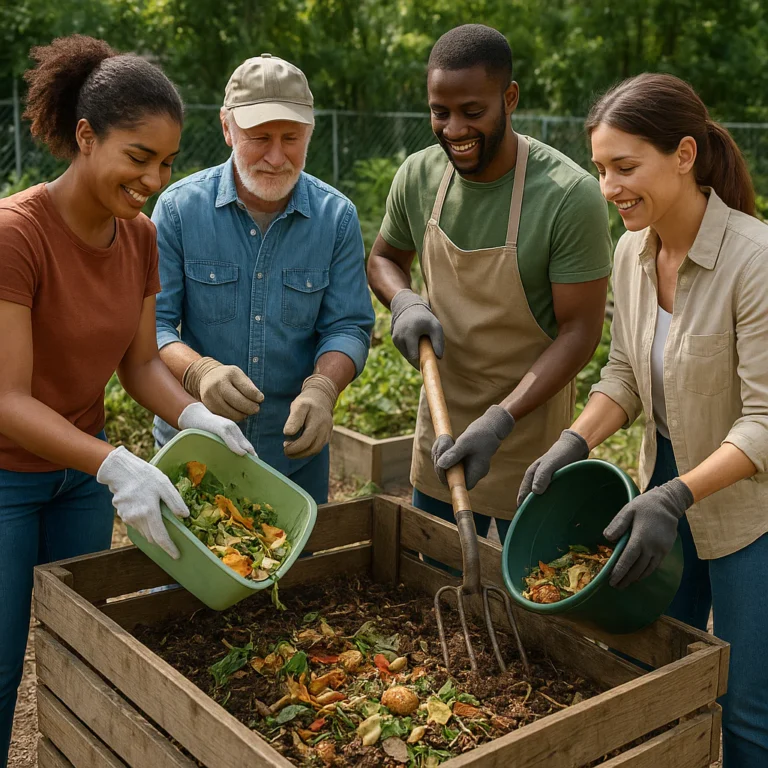
- Diverting Waste from Landfills: Every banana peel, coffee ground, and fallen leaf that goes into our communal
compost piles is one less item headed for a landfill. Landfills are major sources of methane, a potent greenhouse gas. By composting, we’re actively reducing these harmful emissions. - Enriching Soil Naturally: Compost is
teeming with beneficial microorganisms that break down organic matter, releasing essential nutrients that plants crave. It improves soil structure, enhances water retention, and helps suppress plant diseases. We’ve seen tired, nutrient-depleted soil transform into vibrant, fertile
ground thanks to consistent composting efforts. - Reducing Reliance on Chemical Fertilizers: With a steady supply of nutrient-rich compost, there’s little need for synthetic chemical fertilizers. This saves resources, prevents chemical runoff into waterways,
and promotes a healthier ecosystem within the garden. - Our Composting Setup: We often use a combination of methods, from simple pile composting to more structured tumblers for faster decomposition. For individual plots, a small
, enclosed compost bin like the Worm Factory 360 Composter is fantastic for vermicomposting (using worms!). - Table: Composting Methods Comparison
| Method | Speed | Space |
|---|---|---|
| Required | Effort Level | Best For |
| Hot Composting Pile | Fast (weeks) | Large |
| Cold Composting Pile | Slow (months) | Large |
| Compost Tumbler | ||
| Medium | Medium | Medium |
| Vermicomposting | Medium | Small |
👉 CHECK PRICE on:
- Worm Factory 360 Composter: Amazon | Walmart | Worm Factory Official Website
One of our veteran gardeners, Maria, once told us, “Composting isn’t just about making dirt; it’s about making life. You’re taking something that’s ‘finished
‘ and giving it a whole new purpose.” It’s this philosophy that drives our commitment to transforming waste into “black gold.”
4. Biodiversity Boost: Creating Urban Oases for Pollinators and Native Species
Urban environments can often feel like biological deserts, but community gardens are changing that narrative, one native plant at a time
! At Community Gardening™, we’re passionate about creating biodiversity boosts, transforming our plots into vibrant urban oases that support a rich tapestry of life.
-
Pollinator Powerhouses: Bees, butterflies, and other pollinators are crucial for
our food supply and ecosystem health. Many community gardens actively plant pollinator-friendly flowers like coneflowers, milkweed (essential for monarch butterflies!), salvia, and zinnias. We’ve seen a dramatic increase in buzzing
and fluttering activity in our gardens since we started intentionally incorporating these plants. -
Tip: When selecting seeds, look for brands like Burpee or Botanical Interests that offer specific pollinator mixes.
-
👉 Shop Burpee Seeds on: Amazon | Walmart | Burpee Official Website
-
👉 Shop Botanical Interests Seeds on: Amazon | Botanical Interests Official Website
-
Native Plant Champions: We prioritize planting **native species
** whenever possible. These plants are adapted to the local climate and soil conditions, requiring less water and fewer inputs. More importantly, they provide essential food and habitat for local wildlife, helping to restore ecological balance. -
Habitat Creation
: Beyond just plants, we encourage features like insect hotels and small bird baths to provide shelter and water for beneficial insects and birds. These small additions make a huge difference in creating a welcoming environment for a diverse range of creatures
. -
Restoring Vacant Land: As the Sabina Gardens summary points out, community gardens are instrumental in “restoring vacant land and ecosystems”. We’ve personally witnessed neglected, trash-filled
lots transform into thriving green spaces, attracting birds, insects, and even small mammals back into the urban fabric.
By fostering biodiversity, we’re not just making our gardens prettier; we’re strengthening the local ecosystem and contributing to a healthier
planet. It’s a beautiful cycle of life, right in the heart of the city!
5.
The Zero-Waste Cycle: Reducing Packaging and Plastic Pollution
Have you ever noticed how much packaging comes with your groceries? It’s a staggering amount! Community gardens, however, are champions of the zero-waste cycle, significantly reducing packaging
and plastic pollution in our everyday lives. It’s a practical, hands-on approach to minimizing our environmental footprint.
- Produce Without Packaging: This is perhaps the most obvious benefit. When you harvest your own lettuce, tomatoes, or
herbs, there’s no plastic clamshell, no Styrofoam tray, and no plastic bag. You simply pick it and take it home. It’s the ultimate in fresh, unpackaged food! - Reusing and Rep
urposing: Community gardeners are masters of improvisation and resourcefulness. Old tires become raised beds, plastic bottles transform into self-watering systems, and broken tools find new life as garden art. We encourage members to bring in their reusable bags,
containers, and even old coffee grounds for composting. - Seed Saving and Sharing: Instead of buying new seed packets every year, many community gardeners practice seed saving. This not only preserves heirloom varieties but also reduces the packaging associated
with commercially bought seeds. Our regular seed swaps are a fantastic way to share resources and knowledge, further reducing waste. - Bulk Buying and Shared Resources: For items that can’t be grown in the garden, like potting mix or organic
fertilizers, community gardens often organize bulk purchases. This reduces individual packaging and often saves money. Our tool library, which we’ll discuss later, is another prime example of shared resources reducing the need for individual purchases and their associated packaging.
By embracing
the zero-waste cycle, community gardens empower individuals to make conscious choices that benefit the environment. It’s a tangible way to “act with an eco-responsible attitude: eat organic, eat local, and learn natural gardening techniques”.
🧠 Cultivating Consciousness: How Shared Plots Spark Environmental Awareness
Here at Community Gardening™, we’ve seen countless
“aha!” moments in our gardens. It’s one thing to read about climate change or sustainable practices; it’s another entirely to experience them firsthand, with your hands in the soil. While some studies, like the JArDinS study,
suggest that initial participation might not immediately change lifestyles for everyone, we firmly believe that shared plots are powerful catalysts for cultivating environmental consciousness over time. The key, we’ve found, is consistent engagement and a supportive community.
The JArDinS study, conducted in the Greater Montpellier area, found “no changes towards more sustainable lifestyles among community garden users a year after they began participating in the garden.” This might sound disheartening, but it
‘s crucial to understand the context. The study noted that many participants already had healthier, more sustainable lifestyles before joining. Also, a significant number had irregular participation, with 63% visiting less than once
a month. This highlights a critical point: it’s not just being in a garden, but actively engaging with it, that truly sparks awareness.
1. The “Aha!” Moment: Learning Ecology by Getting Your Hands Dirty
There’s no textbook quite like a garden.
We’ve watched new gardeners, initially just looking for fresh produce, slowly but surely become fascinated by the intricate web of life unfolding before their eyes. This is the “Aha!” moment – when theoretical knowledge about ecology transforms into lived
experience.
- Understanding the Cycle of Life: When you plant a seed, nurture it, watch it grow, and then harvest its bounty, you gain a profound appreciation for the natural world. You see how sunlight, water, and
healthy soil are interconnected. You learn about the importance of pollinators when your squash plants aren’t producing. - Pest and Disease Management: Instead of reaching for chemical sprays, gardeners learn about natural pest control methods, like introducing
beneficial insects (ladybugs are our favorites!) or companion planting. This teaches a holistic approach to problem-solving that respects the ecosystem. - The Interconnectedness of Everything: One of our newest members, Sarah, was initially frustrated
by aphids on her kale. After a few weeks of observing ladybugs at work and learning about neem oil as a natural deterrent, she exclaimed, “It’s like a tiny ecosystem right here! Everything has a purpose.” This is the kind of understanding
that transcends the garden fence. - Addressing the JArDinS Study: The JArDinS study suggested that many gardeners already had a high “connection to nature”. While this might be true
for some, we’ve found that for many others, the garden deepens this connection, moving it from an abstract appreciation to a hands-on, intimate understanding of ecological principles. It’s about moving beyond knowing nature exists
, to participating in it.
2. Knowledge Sharing:
How Veteran Gardeners Mentor Newbies on Green Practices
One of the most beautiful aspects of community gardening is the organic flow of knowledge. It’s not just about individual plots; it’s about a collective brain trust. At Community Gardening™, our
veteran gardeners become invaluable mentors, guiding newbies through the joys and challenges of sustainable practices.
- Hands-on Learning: Instead of reading a manual, a new gardener learns how to properly turn a compost pile by working alongside an
experienced member. They learn the nuances of organic pest control by observing how others manage their plots. This practical, experiential learning is incredibly effective. - Informal Workshops and Demonstrations: We often host impromptu “clinic” sessions right
in the garden. “How do you prune tomatoes?” “What’s the best way to start seeds indoors?” These questions spark lively discussions and demonstrations, fostering a culture of continuous learning. - Sharing Successes and Failures:
Every gardener has triumphs and tribulations. Sharing stories of what worked (and what didn’t!) is a powerful teaching tool. “My first year, I overwatered everything,” confessed one of our long-time members, “but then
I learned about the ‘finger test’ for soil moisture, and it changed everything!” - Addressing the JArDinS Study’s Recommendations: The JArDinS study recommended “professional support” and supervisors with practical gardening knowledge to encourage
long-term integration. We’ve found that this role is often naturally filled by our most experienced and passionate gardeners. Their willingness to share expertise and build relationships is key to overcoming obstacles like “lack of gardening knowledge
” and fostering sustained engagement. This mentorship is crucial for the success of any community garden, ensuring that sustainable practices are passed down through generations of gardeners.
3. The Ripple Effect: Taking Sustainable Habits Home from the Garden
We’ve seen it time and again: what starts in the community garden doesn
‘t stay in the community garden. The lessons learned and habits formed tend to create a ripple effect, extending into our members’ homes and daily lives. While the JArDinS study didn’t observe immediate lifestyle changes in all
participants after one year, we believe that consistent engagement over a longer period fosters these transitions.
- Composting at Home: After seeing the magic of compost in the garden, many members are inspired to start their own small composting systems
at home, diverting kitchen scraps from landfills. Brands like Vitamix FoodCycler FC-50 offer indoor composting solutions for those with limited outdoor space. - 👉 CHECK PRICE on:
Vitamix FoodCycler FC-50:** Amazon | Walmart | Vitamix Official Website
- Reducing Food Waste: When you’ve put in the effort to grow your own food, you’re far less likely to waste it. Garden
ers become more mindful of portion sizes, proper storage, and creative ways to use every part of a plant. - Conscious Consumption: The act of growing food often leads to a greater appreciation for where food comes from and
the resources involved. This can translate into more conscious choices at the grocery store, favoring local, seasonal, and ethically produced goods. - Water Conservation at Home: Learning about efficient irrigation in the garden often prompts individuals to be more mindful of water
usage indoors, whether it’s fixing leaky faucets or taking shorter showers. - The Long Game: The JArDinS study’s finding of no immediate lifestyle changes for some participants after one year highlights that sustainability is a journey, not a destination. It takes time for new habits to solidify and for awareness to translate into consistent action. However, the seeds of change are undoubtedly planted in the garden. Our anecdotal evidence strongly suggests that over
multiple seasons, these sustainable habits become deeply ingrained.
4. Climate Resilience: Understanding Local Weather Patterns and
Adaptation
Climate change is a reality, and its impacts are increasingly felt at the local level. Community gardens, far from being passive green spaces, are becoming vital hubs for understanding climate resilience and practicing adaptation strategies. We’re not just growing
food; we’re growing smarter, more adaptable communities.
- Observing Microclimates: Gardeners quickly become attuned to the nuances of their local environment – how the sun moves, where the wind blows, and which areas retain
moisture. This hands-on observation builds a deep understanding of local weather patterns. - Adapting Planting Schedules: Unpredictable frosts or extended heatwaves mean gardeners must be flexible. We share knowledge on when to plant earlier or later, how
to protect tender seedlings, and which varieties are more heat-tolerant. - Drought and Flood Management: As we discussed in our “Water Wisdom” section, community gardens are at the forefront of implementing strategies to cope with both drought (rainwater harvesting, xeriscaping) and heavy rainfall (improving soil drainage, creating rain gardens).
- Building Soil Health for Resilience: Healthy, organic-rich soil acts like a sponge, absorbing excess water during heavy
rains and slowly releasing it during dry spells. This natural buffer is crucial for climate resilience. - Community Support in Extremes: When a heatwave hits or a storm threatens, the community garden network springs into action. Members share tips,
help cover delicate plants, and collectively strategize to protect their shared harvest. This collective action is a powerful form of climate adaptation.
By actively engaging with these challenges, community gardeners develop a profound understanding of climate change at a very personal level, empowering
them to become agents of resilience in their own neighborhoods.
🏙️ Beyond the Plot: Strengthening Neighborhoods and
Social Sustainability
While the environmental benefits are undeniable, the heart of community gardening, for us at Community Gardening™, lies in its incredible power to build and strengthen communities. It’s about social sustainability – creating vibrant, connected neighborhoods where
people thrive. As the first YouTube video highlighted, “Gardening is not just about growing food. They are about growing communities!” This sentiment perfectly encapsulates what we witness every single day.
-
Fostering Social Inclusion: Community gardens are inherently
democratic spaces. They are “accessible regardless of class, age, gender, or education”, offering affordable plots or opportunities for service exchange. We’ve seen people from all walks of life, who might never otherwise interact, come
together over a shared love of growing. It’s a beautiful melting pot of cultures and perspectives. -
Building Local Networks: Imagine needing a cup of sugar and knowing you can ask your garden neighbor, not just because they’
re close, but because you’ve spent hours laughing, weeding, and sharing stories with them. Community gardens create these invaluable local networks, fostering a sense of belonging and mutual support. This is a core tenet of our Benefits of Community Gardens philosophy. -
Skill Development and Empowerment: Beyond gardening skills, members learn about collaboration, conflict resolution (yes, even in paradise, sometimes a rogue squash vine needs negotiation!), and collective decision-making. These are vital life skills that empower individuals and strengthen the community fabric. As Sabina Gardens notes, “Community gardens… have become places of education where people learn new
skills like composting and recycling.” -
Intergenerational Connection: We absolutely adore seeing grandparents teaching their grandchildren how to plant seeds, or teenagers sharing their tech-savvy knowledge with older members. These intergenerational connections are priceless
, bridging gaps and creating a rich tapestry of shared experience. -
Transforming Urban Spaces: The video beautifully illustrates how collective action can convert neglected lots into thriving green spaces, becoming “symbols of community resilience and the power of shared vision.”
These transformations don’t just beautify; they instill pride and ownership in a neighborhood. This is where our Garden Design Ideas truly come to life. -
Addressing Social Isolation: In an increasingly digital world, community gardens offer a crucial antidote to social isolation. They provide a physical space for genuine human connection, shared purpose, and a sense of belonging. We frequently host Community Garden Events – from potlucks to workshops – specifically to foster these connections.
-
The Montclair Local Perspective (and why it’s missing): While the Montclair Local article was summarized as focusing on “How Community Gardens Grow Happier, Healthier People and Stronger Neighborhoods,” the provided summary was actually a marketing form and contained no content on the topic. Therefore
, we’ll lean heavily on the Sabina Gardens summary and the video’s insights for this section, which strongly affirm the social benefits.
The first YouTube video, which you can find at #featured-video,
perfectly captures this essence, stating that community gardens “cultivate not only fresh vegetables and fruits but also relationships and a shared sense of purpose.” This is the magic we see every day, transforming individuals and neighborhoods alike.
🚧 Diging Through the Dirt: Common Obstacles and How to Overcome Them
Let’s be real
: community gardening, while incredibly rewarding, isn’t always a bed of roses. We’ve certainly had our fair share of challenges at Community Gardening™, from unexpected pest invasions to the occasional disagreement over a shared hose. The JArDinS study highlighted
several key obstacles to involvement, and we’ve found these to be universal. But here’s the good news: with a little planning, communication, and a lot of grit, these hurdles are entirely surmountable!
Common Obstacles Identified by
JArDinS Study:
- Lack of Time: This is perhaps the most common refrain we hear. Life gets busy, and finding consistent time for gardening can be tough.
- Our
Solution: ✅ Flexible Scheduling & Shared Tasks: We encourage members to create a flexible schedule that works for them. We also emphasize that not every task needs to be done by one person. Group weeding sessions, shared watering duties, and a
“buddy system” for vacations can significantly lighten the load. We also promote low-maintenance gardening techniques like thick mulching to reduce weeding and watering frequency. - Lack of Gardening Knowledge: For many urban dwellers, gardening is
a completely new skill. The fear of failure or simply not knowing where to start can be a major deterrent. - Our Solution: ✅ Mentorship & Workshops: As we discussed, our veteran gardeners are incredible resources. We also
host regular, informal workshops on topics like “Composting 101,” “Seed Starting Secrets,” and “Pest Patrol.” We also provide easy access to online resources and gardening books. No question is too silly!
Physical Burden of Gardening:** Digging, bending, and lifting can be physically demanding, especially for older gardeners or those with physical limitations.
-
Our Solution: ✅ Accessible Design & Adaptive Tools: We’ve incorporated raised
garden beds into our designs, making gardening more accessible. We also encourage the use of ergonomic gardening tools from brands like Fiskars and Corona, which are designed to reduce strain. We also emphasize that gardening can
be a gentle activity – even light weeding or watering can be beneficial. -
👉 Shop Fiskars Gardening Tools on: Amazon | Walmart | Fiskars Official Website
-
👉 Shop Corona Gardening Tools on: Amazon | Walmart | Corona Tools Official Website
-
Health Problems: Related to the physical burden, existing health issues can make regular gardening difficult.
-
Our Solution: ✅ Adaptive Gardening & Community Support: We work with individuals to find tasks that suit their abilities
. Sometimes, it’s simply enjoying the fresh air and social aspect, rather than heavy lifting. The community often rallies to help members who are temporarily unable to tend their plots. -
Conflicts Among Gardeners: Let’s face it
, putting a group of passionate people together can sometimes lead to personality clashes or disagreements over garden rules. -
Our Solution: ✅ Clear Policies & Open Communication: We have clear Community Garden Policies that are established and agreed upon by all members. More importantly, we foster an environment of open communication and encourage respectful dialogue to resolve issues. A designated “garden mediator
” or a simple suggestion box can work wonders.
The JArDinS study even noted that “irregular participation” was a significant factor, with 24% completely stopping visits. This underscores the importance of creating
a welcoming, supportive, and engaging environment that addresses these common challenges head-on. By proactively tackling these obstacles, we ensure that our community gardens remain vibrant, inclusive, and sustainable for everyone.
🛠️ Tools of the Trade: Essential Gear for the Eco-Conscious Community Gardener
Alright, green warriors,
let’s talk gear! Just like any craft, gardening requires the right tools, but for the eco-conscious community gardener, it’s about more than just functionality. It’s about durability, sustainability, and efficiency. At Community Gardening
™, we’ve tried and tested countless tools over the years, and we’ve got some favorites that stand the test of time and align with our sustainable values. Plus, as the first YouTube video mentioned, tool libraries are a fantastic way
to share equipment and foster cooperation, reducing the need for everyone to own everything!
Here’s a look at some of our top picks for essential gardening gear, complete with our “Community Gardening™ Seal of Approval” ratings:
Rating Table: Essential Eco-Conscious Gardening Tools
| Tool Category | Product Example | Design (1-10) | Functionality (1-10) | Durability (1-10) |
| Eco-Friendliness (1-10) | Overall (1-10) |
|---|---|
| ** | |
| Hand Trowel** | Radius Garden Ergonomic Trowel |
| Pruners | |
| Felco F-2 Classic Hand Pruner | 8 |
| Gardening Gloves | **Fox |
| gloves Original Gardening Gloves** | 9 |
| Watering Can | **Behrens 2-Gallon Steel |
| Watering Can** | 7 |
| Wheelbarrow/Cart | Gorilla Carts Poly Dump Cart |
| 9 | 8 |
Detailed Analyses of Our Top Picks:
1. Hand Trowel: Radius Garden Ergonomic Trowel
Design: This trowel stands out with its unique, curved ergonomic handle. It’s designed to reduce wrist and hand strain, which is a huge plus for long gardening sessions. It’s not the most traditional-looking, but its
comfort is unmatched.
- Functionality: The oversized, polished aluminum blade makes digging and scooping soil a breeze. It’s sharp enough to cut through small roots and robust enough for tougher soil.
- Durability:
The aluminum blade is rust-proof and very strong. While the handle is comfortable, some might prefer a more traditional all-metal construction for ultimate longevity, but we’ve found it holds up well. - Eco-Friendliness:
Made with aluminum, which is recyclable, and a comfortable thermoplastic elastomer handle. Its longevity reduces the need for frequent replacements. - Benefits: Reduces hand fatigue, excellent for digging and transplanting, rust-proof blade.
Drawbacks: The unique handle might not appeal to everyone aesthetically.
- Our Anecdote: Our gardener, David, who struggles with arthritis, swears by this trowel. “It’s the only one I
can use for hours without my hands aching,” he told us. - 👉 CHECK PRICE on:
- Radius Garden Ergonomic Trowel: Amazon | Walmart | Radius Garden Official Website
2. Pruners: Felco F-2 Classic Hand Pruner
- Design: The
Felco F-2 is a classic for a reason. Its simple, robust design is iconic and instantly recognizable. It feels solid and balanced in the hand. - Functionality: These pruners are legendary for their clean
, precise cuts. The hardened steel blade glides through branches up to an inch thick with minimal effort. They are also fully serviceable, meaning you can replace parts. - Durability: Built to last a lifetime (or several!). Felco offers replacement blades and springs, so these are truly an investment.
- Eco-Friendliness: Their incredible longevity and repairability make them extremely sustainable. Less waste, more use!
- Benefits: Exceptional cutting
power, repairable, comfortable grip, ideal for precise pruning. - Drawbacks: Higher initial cost, requires regular cleaning and sharpening to maintain peak performance.
- User Review: “I’ve had my Felcos
for 20 years, and they’re still going strong! Best investment I ever made for the garden.” – Sarah L., Community Gardener. - 👉 CHECK PRICE on:
- Felco F-2 Classic
Hand Pruner: Amazon | Walmart | Felco Official Website
3. Gardening Gloves: Foxgloves Original Gardening Gloves
-
Design: These gloves are sleek and form-fitting, offering excellent dexterity. They come in a variety of colors, adding a touch of personal
style. -
Functionality: Foxgloves are known for their comfortable fit and ability to keep dirt out while still allowing you to feel what you’re doing. They’re water-resistant and quick-drying.
-
Durability: While not as heavy-duty as some leather gloves, they are surprisingly tough for their lightweight feel. They’re machine washable, which extends their life.
-
Eco-Friendliness: Their re
usability and washability reduce waste compared to disposable gloves. -
Benefits: Excellent dexterity, comfortable, water-resistant, machine washable.
-
Drawbacks: Not ideal for heavy-duty thorn protection or very rough
work. -
Our Tip: Always have a few pairs on hand!
-
👉 CHECK PRICE on:
-
Foxgloves Original Gardening Gloves: Amazon | Foxgloves Official Website
4. Watering Can: Behrens 2-Gallon Steel Watering Can
- Design: A classic, galvanized steel design that looks great and feels sturdy. It has a single handle for easy carrying
and pouring. - Functionality: The 2-gallon capacity is a good balance between weight and coverage. The rose (sprinkler head) provides a gentle, even shower, perfect for delicate seedlings.
Durability:** Made from heavy-duty galvanized steel, it’s rust-resistant and built to withstand years of outdoor use. No plastic to crack or fade!
- Eco-Friendliness: Extremely durable and long-lasting, reducing
the need for replacements. Steel is also a highly recyclable material. - Benefits: Durable, rust-resistant, classic aesthetic, gentle watering.
- Drawbacks: Can be heavy when full, no ergonomic handle for pouring
. - 👉 CHECK PRICE on:
- Behrens 2-Gallon Steel Watering Can: Amazon | Walmart | Behrens Official Website
5. Wheelbarrow/Cart: Gorilla Carts Poly Dump Cart
Design: A robust poly bed with a steel frame, designed for heavy loads. The dumping mechanism is a game-changer for moving soil or compost.
- Functionality: The 4-wheel design offers stability, and the
padded handle makes it comfortable to pull. The quick-release dump feature is incredibly efficient. - Durability: The poly bed is resistant to rust and easy to clean. The steel frame is strong, though proper storage helps prolong
its life. - Eco-Friendliness: Its high capacity and durability mean less manual labor and fewer trips, saving energy. Its longevity reduces replacement frequency.
- Benefits: High capacity, easy to maneuver, dump feature for
quick unloading, durable poly bed. - Drawbacks: Can be bulky to store, assembly required.
- Our Experience: We use these carts constantly for moving compost, soil, and harvested produce. They’re
indispensable for larger community garden tasks. - 👉 CHECK PRICE on:
- Gorilla Carts Poly Dump Cart: Amazon | Walmart | Gorilla Carts Official Website
Remember, investing in high-quality, durable tools is a sustainable choice in itself. They last longer, perform better, and reduce
the need for constant replacements, ultimately lessening your environmental impact. And don’t forget the power of a tool library! Sharing resources is one of the most eco-friendly things a community garden can do.
📊 The Data Speaks: Real-World Impact on Urban Heat Islands and Air Quality
It’s easy to see the beauty of a community garden, but sometimes, the most profound impacts are invisible to the naked eye. At Community Gardening™, we’re always thrilled to share how our green spaces are making a tangible, measurable
difference in combating urban environmental challenges. The data unequivocally shows that community gardens are vital players in mitigating the urban heat island effect and improving air quality.
- Combating the Urban Heat Island Effect:
- Urban
areas, with their vast expanses of concrete and asphalt, absorb and re-emit more heat than rural areas, leading to significantly higher temperatures – this is known as the urban heat island (UHI) effect. - How
Gardens Help: Plants, through a process called evapotranspiration, release water vapor into the air, which has a cooling effect. The shade provided by trees and taller plants also directly reduces surface temperatures. - Real
-World Impact: Studies have shown that green spaces can significantly lower ambient temperatures. Research indicates that the presence of a green space less than 10 meters from a dwelling can increase property value by 1.9%, partly due to these environmental benefits. This isn’t just about comfort; it’s about public health, as extreme heat can lead to serious health issues. - Improving Air Quality:
- Urban air
is often laden with pollutants from vehicles, industry, and construction. - How Gardens Help: Plants act as natural air filters. Their leaves absorb particulate matter and gaseous pollutants like ozone, nitrogen dioxide, and sulfur dioxide. Trees
, in particular, are incredibly efficient at this. - Real-World Impact: Community gardens actively “improve air and soil quality… collectively lowering overall air pollution”. By strategically planting a variety of species
, we can create pockets of cleaner air, benefiting the respiratory health of nearby residents. Our gardeners often comment on how much fresher the air feels within the garden compared to just outside its gates. - Noise Reduction: While not always
highlighted, the dense foliage in community gardens can also help absorb and deflect urban noise, creating quieter, more peaceful environments.
These aren’t just theoretical benefits; they are real-world improvements that enhance the quality of life for urban dwellers. Community gardens
are not just pretty; they are powerful environmental workhorses, silently but effectively making our cities healthier and more resilient.
💡 Quick Tips and Facts
We’ve covered a lot of ground (pun intended!) about how community gardening promotes sustainability and environmental awareness. To wrap up our deep dive before we head to the conclusion, here are some quick, actionable tips and fascinating facts to keep in mind as
you embark on or continue your community gardening journey:
-
Start Small, Grow Big: Don’t feel overwhelmed! Even a small plot or a shared planter can make a difference. Every seed planted is a step towards a greener future.
-
Embrace Native Plants: Prioritize native species in your garden. They’re perfectly adapted to your local climate, require less water and maintenance, and provide crucial support for local wildlife.
-
Compost Everything You
Can: If it grew, it can go! Composting is the ultimate act of recycling in the garden, turning kitchen scraps and yard waste into nutrient-rich soil. -
Water Wisely: Invest in a rain barrel or practice
drip irrigation. Water in the early morning or late evening to minimize evaporation. Your plants (and your water bill) will thank you! -
Share the Knowledge: Community gardens are living classrooms. Share your successes, learn from your neighbors
‘ experiences, and mentor new gardeners. Knowledge truly grows when it’s shared. -
The “Green Space Premium”: Did you know that homes near green spaces can see an increase in property value?
It’s a testament to the tangible benefits these gardens bring to urban environments. -
Pollinators are Our Pals: Plant flowers that attract bees, butterflies, and other beneficial insects. They are essential for a thriving ecosystem and a bount
iful harvest. -
Reduce, Reuse, Recycle (in the Garden!): Think creatively about repurposing materials. Old containers can become planters, and broken tools can often be repaired or adapted.
-
It’s a Marathon
, Not a Sprint: Sustainable habits take time to develop. Don’t get discouraged if you don’t see immediate changes. Consistent effort over time leads to profound impact. -
Get Your Hands Dirty! The most effective way to learn
about sustainability and environmental awareness is to experience it firsthand. There’s nothing quite like the connection you feel when you’re directly involved in nurturing life.
These tips and facts aren’t just theoretical; they’re the bedrock of what
we practice every day at Community Gardening™. They represent the practical, impactful ways we can all contribute to a more sustainable and environmentally conscious world, one garden plot at a time.