Support our educational content for free when you purchase through links on our site. Learn more

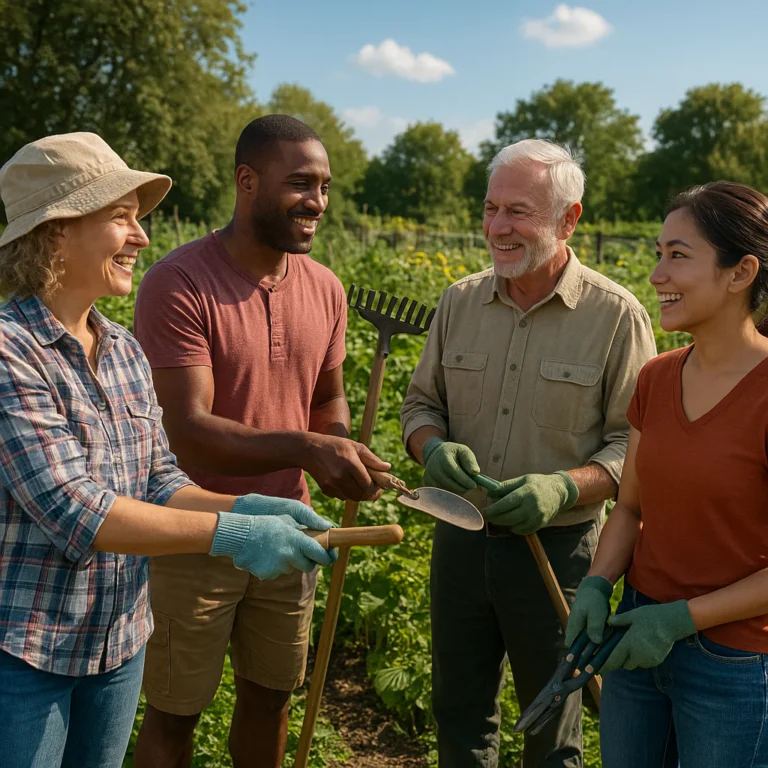
Imagine a plot of land where the only language that truly matters is the one spoken by the soil. In the heart of a bustling city, a retired teacher from Italy teaches a young refugee from Syria how to trellis tomatoes, while a Vietnamese grandmother shares the secret to the perfect bitter melon with a local teenager. This isn’t a scene from a utopian novel; it’s the daily reality of community gardens for cultural exchange. These green oases are rapidly becoming the world’s most effective, unscripted diplomatic zones, proving that a shared harvest can bridge divides that years of political negotiation cannot.
Did you know that some urban gardens host over 30 different languages within a single season? Yet, despite this rich tapestry of diversity, many gardeners still struggle to move beyond the surface level of “hello” and “goodbye.” How do we transform a collection of individual plots into a thriving cultural melting pot? In this guide, we’ll uncover the 10 essential crops that act as conversation starters, reveal the psychological secrets behind why shared soil builds unbreakable community resilience, and share real-world success stories from Winnipeg to New Jersey. By the end, you’ll have a roadmap to turn your garden into a global village, one seed at a time.
Key Takeaways
- Crops as Connectors: Specific heritage varieties like Gete-Okosomin squash and bitter melon serve as powerful tools for storytelling and breaking down language barriers.
- The “Third Place” Effect: Community gardens function as neutral ground where social status fades, allowing for authentic cross-cultural connections to flourish naturally.
- Resilience Through Roots: Shared gardening activities create a social safety net, fostering mental well-being and community trust that extends far beyond the harvest.
- Inclusive Design Matters: Successful multicultural gardens require flexible layouts, bilingual signage, and cultural design zones to truly welcome every heritage.
- Actionable Strategies: From hosting seed swaps to organizing global harvest potlucks, there are proven methods to turn a garden into a hub of cultural exchange.
Table of Contents
- ⚡️ Quick Tips and Facts
- 🌱 From Seed to Story: A Brief History of Cultural Exchange in Community Gardens
- 🌍 Why Community Gardens Are the Ultimate Cultural Melting Pots
- 🥬 10 Essential Crops That Bridge Cultural Divides and Spark Conversation
- 🤝 7 Proven Strategies to Foster Authentic Cross-Cultural Connections in Your Plot
- 🗣️ Breaking Language Bariers: How Gardening Becomes a Universal Dialect
- 🏡 Designing Inclusive Spaces: Layouts That Welcome Every Heritage
- 🎉 Celebrating Harvest Festivals: Turning Produce into Cultural Potlucks
- 🧠 The Psychological Roots: How Shared Soil Builds Community Resilience
- 🛠️ Overcoming Common Hurdles in Multicultural Garden Projects
- 📚 Case Studies: Real-World Success Stories of Global Gardens
- 💡 Quick Tips and Facts
- 🏁 Conclusion
- 🔗 Recommended Links
- ❓ FAQ
- 📖 Reference Links
⚡️ Quick Tips and Facts
Before we dig our hands into the rich, dark soil of cultural exchange, let’s grab a few nugets of wisdom to get your wheels turning. Did you know that a single community garden can host over 30 different languages spoken among its members? 🗣️ It’s true! These green spaces are often the only place where a refugee from Syria, a retire from Italy, and a young professional from Vietnam can find common ground without a translator.
Here is the lowdown on why this matters:
- Food Sovereignty is Real: Gardens aren’t just about pretty flowers; they are about control. As Dr. Whitney Elmore from UF/IFAS noted, during the pandemic, gardens provided a lifeline for those who lost jobs and isolation, offering “purpose, food, and hope.” Read more about the social impact of community gardens here.
- The “Universal Dialect”: You don’t need to speak fluent Spanish to know how to prune a tomato vine or when the soil is too dry. Gardening is a non-verbal language that transcends borders.
- Crops as Storytellers: Growing a specific variety of Gete-Okosomin squash (as seen in Winnipeg’s Rainbow Community Gardens) isn’t just agriculture; it’s an act of preserving history and identity.
- Mental Health Boost: The act of nurturing life reduces stress. It’s not just a hobby; it’s a therapeutic intervention for communities facing displacement or economic hardship.
Why do we often forget that the most powerful diplomatic tool isn’t a treaty, but a shared harvest? We’ll uncover the answer as we explore how these gardens reshape our neighborhoods.
🌱 From Seed to Story: A Brief History of Cultural Exchange in Community Gardens

The Roots of Our Green Heritage
Long before the term “community garden” became a buzzword in urban planning, humans have been gathering to grow food together. But the modern iteration of these spaces as cultural melting pots is a relatively recent, yet profound, evolution.
Historically, gardens were often segregated by class or ethnicity. However, the post-WII era and the subsequent waves of global migration shifted the narrative. In the 1970s, as cities like New York and London faced economic downturns, vacant lots were transformed into community gardens. These weren’t just for growing zucchini; they were sanctuaries for immigrants trying to recreate the flavors of home.
The Evolution of the “Global Garden”
- The Early Days: Initially, these gardens were survival mechanisms. Immigrants grew crops unavailable in local supermarkets to feed their families.
- The Shift to Exchange: By the 190s, the focus shifted from mere survival to cultural celebration. Gardens began hosting festivals, cooking demonstrations, and seed swaps.
- The Modern Era: Today, organizations like Rutgers Gardens explicitly design their programs to foster “sustainable urban food production” and “cultural exchange,” recognizing that diversity strengthens the ecosystem.
But how did we get from “growing for survival” to “growing for connection”? The answer lies in the seeds themselves. When you plant a seed from your grandmother’s village, you aren’t just growing a vegetable; you are planting a conversation starter.
For a deeper dive into the history of these movements, check out the Community Gardening overview at Community Gardening™.
🌍 Why Community Gardens Are the Ultimate Cultural Melting Pots
More Than Just Dirt and Plants
Imagine a space where a recipe for tamales is exchanged for a tip on growing bok choy. This is the daily reality in successful multicultural gardens. These spaces act as microcosms of the world, breaking down the walls that usually separate us.
The Social Fabric
According to a study by the University of Waterloo, community gardens serve as a “hub for cultural exchange,” allowing participants to express their cultural identity through the crops they choose to grow. It’s a safe space where:
- Generational knowledge is passed down.
- Language barriers dissolve over the shared struggle of a pest infestation.
- Trust is built through the reliability of a shared harvest.
The “Third Place” Theory
Sociologist Ray Oldenburg coined the term “Third Place” to describe social surroundings separate from the two usual social environments of home (“First Place”) and the workplace (“Second Place”). Community gardens are the ultimate Third Place. They are neutral ground where status, job titles, and immigration status fade away, leaving only human connection.
Have you ever noticed how a stranger becomes a friend the moment you ask, “How do you get your peppers so big?” That’s the magic of the soil. It levels the playing field.
🥬 10 Essential Crops That Bridge Cultural Divides and Spark Conversation
If you want to start a conversation that lasts longer than “nice weather,” plant these crops. These aren’t just vegetables; they are cultural ambassadors.
| Rank | Crop Name | Cultural Origin | Why It Sparks Conversation |
|---|---|---|---|
| 1 | Moringa | South Asia/Africa | Often called the “miracle tree,” it sparks debates on nutrition and traditional medicine. |
| 2 | Bitter Melon | East/Southeast Asia | Its unique taste leads to stories of childhood and family recipes. |
| 3 | Toledo Squash | Latin America | A variety of squash that requires specific growing techniques, prompting skill-sharing. |
| 4 | Okra | West Africa | The “slime” factor is a universal topic of culinary debate and recipe swapping. |
| 5 | Nasturtiums | Global (Adapted) | Edible flowers that introduce the concept of “flower cooking” across cultures. |
| 6 | Thai Basil | Southeast Asia | Distinct from Italian basil, it opens doors to discussions on Asian cuisine. |
| 7 | Yardlong Beans | Asia | Their massive length surprises Western gardeners and leads to trellising tips. |
| 8 | Chayote | Central America | A versatile fruit/veg that is often grown in vertical gardens, sparking design talks. |
| 9 | Fenugreek | Middle East/India | The smell alone transports gardeners to different kitchens and memories. |
| 10 | Gete-Okosomin Squash | Indigenous North America | A heritage variety that tells the story of indigenous resilience and history. |
Why These Crops Matter
As noted in the Rainbow Community Gardens project in Winnipeg, growing culturally appropriate foods is essential for food security and identity. When a refugee family grows a crop they haven’t seen in years, it’s a victory for their heritage.
But what happens when the store-bought version just doesn’t taste right? That’s when the real exchange begins. You learn that the secret isn’t the soil, but the seed variety and the coking method.
For more on these plants, explore our Edible Plants category.
🤝 7 Proven Strategies to Foster Authentic Cross-Cultural Connections in Your Plot
Want to turn your garden from a collection of plots into a community hub? Here are seven strategies we’ve seen work time and again.
1. The “Seed Swap” Saturday
Don’t just grow; share. Host a monthly event where gardeners bring seeds from their home countries.
- Why it works: Seeds are tangible history. Giving someone a seed is an act of trust.
- Pro Tip: Label seeds with the name in the native language and English.
2. The “Recipe & Harvest” Potluck
Once a season, host a meal where everyone brings a dish made from a crop grown in the garden.
- Why it works: Food is the universal language. It bypasses the need for complex vocabulary.
- Real Story: At the East Pasco Education workshop, children learned directly from teachers, but the real magic happened when families shared the dishes they made with the harvest.
3. Bilingual Signage
Ensure all garden rules, plant labels, and event flyers are in the top 3-5 languages spoken in your community.
- Why it works: It signals that everyone belongs here. It removes the intimidation factor.
4. Mentorship Pairing
Pair experienced gardeners with newcomers, regardless of their background.
- Why it works: It creates a one-one bond. A veteran gardener teaching a new immigrant how to prune tomatoes creates a mentor-mentee relationship that often extends beyond the garden.
5. Cultural Design Zones
Allow gardeners to design their plots to reflect their heritage (e.g., specific trellis styles, companion planting methods).
- Why it works: It validates their cultural practices as valid agricultural science.
6. The “Language of the Soil” Workshops
Host workshops where the primary instruction is visual or hands-on, minimizing the need for verbal explanation.
- Why it works: It levels the playing field for non-native speakers.
7. Celebrate Global Holidays
Acknowledge holidays from the cultures represented in your garden, not just the dominant local ones.
- Why it works: It shows cultural respect and inclusion.
Can you imagine a garden where the only rule is “share what you know”? That’s the goal.
🗣️ Breaking Language Bariers: How Gardening Becomes a Universal Dialect
The Silence of the Soil
One of the most beautiful aspects of community gardening is that it doesn’t require perfect grammar. You can point to a wilting leaf, and the person next to you knows exactly what to do.
The “Gestural” Vocabulary
- Pointing: “Here.” “There.” “Water.”
- Demonstrating: Showing how to tie a knot, how to dig, how to harvest.
- Smiling: The universal sign of “good job.”
Learning Through Observation
In the Rutgers Gardens program, students and community members learn by watching. This observational learning is powerful. It allows a person who speaks no English to learn how to grow organic vegetables simply by watching a neighbor.
What if the most effective way to learn a new language isn’t a classroom, but a raised bed?
🏡 Designing Inclusive Spaces: Layouts That Welcome Every Heritage
Beyond the Grid
Most community gardens are laid out in a rigid grid. While efficient, this doesn’t always accommodate cultural gardening practices. Some cultures prefer circular planting; others need vertical space for vines.
Key Design Principles
- Flexible Plot Sizes: Offer a mix of 4×8, 10×10, and larger plots to accommodate different family sizes and growing needs.
- Shared Resource Hubs: Create central areas for composting, tool storage, and water access that are easily accessible to everyone.
- Gathering Spaces: Ensure there are benches or shaded areas where people can sit and talk. A garden without a place to sit is just a farm.
Case Study: The Esperanza Community Garden
Located in New Brunswick, the Esperanza Community Garden uses 4′ by 8′ raised beds but ensures that the layout allows for public access and interaction. The design encourages movement and conversation, not just isolation in a plot.
How can we design a space that feels like home to someone who is thousands of miles away from their actual home? The answer is in the details: the shade, the water, the shared tools.
Explore more Garden Design Ideas to see how layout impacts community.
🎉 Celebrating Harvest Festivals: Turning Produce into Cultural Potlucks
From Plot to Plate
The harvest is the climax of the gardening year. But in a multicultural garden, it’s also a celebration of diversity.
The “Global Harvest” Festival
Imagine a festival where:
- One table features tacos made with garden-grown cilantro and tomatoes.
- Another features cury with fresh turmeric and okra.
- A third features stew with heritage squash and beans.
The Impact
These events do more than feed the body; they feed the community soul. They validate the hard work of every gardener and showcase the richness of their heritage.
What if the best way to celebrate a harvest isn’t with a ribbon-cuting, but with a shared meal?
🧠 The Psychological Roots: How Shared Soil Builds Community Resilience
The Mental Health Boost
Gardening is known to reduce stress, but community gardening adds a layer of social resilience.
The “Safety Net” Effect
As Dr. Whitney Elmore highlighted, during the pandemic, gardens were a safety net. They provided:
- Purpose: A reason to get up in the morning.
- Connection: A way to fight isolation.
- Hope: A tangible sign that life continues to grow.
Building Resilience
When a community faces a crisis, those who have built relationships in the garden are better equipped to support each other. They have a network of trust that extends beyond the garden gates.
Why do we often wait for a crisis to realize how important our neighbors are? The garden teaches us this lesson long before the storm hits.
🛠️ Overcoming Common Hurdles in Multicultural Garden Projects
It’s Not Always Smooth Sailing
While the idea of a multicultural garden is beautiful, the reality can be challenging.
Common Challenges
- Language Bariers: Misunderstandings about rules or schedules.
Solution: Use visual aids and multilingual volunteers. - Cultural Differences in Gardening: Some cultures may use pesticides; others insist on organic.
Solution: Establish clear, agreed-upon Community Garden Policies that respect diverse methods while maintaining safety. - Resource Allocation: Fights over water or prime sunlight.
Solution: Transparent scheduling and shared decision-making.
The Role of Leadership
Successful gardens need strong leadership that understands cultural sensitivity. Organizations like Rutgers Gardens and UF/IFAS provide the framework and support needed to navigate these challenges.
Can a garden thrive if everyone speaks a different language? Yes, but only if the soil of trust is prepared first.
📚 Case Studies: Real-World Success Stories of Global Gardens
1. The Rainbow Community Gardens (Winnipeg, Manitoba)
- Focus: Supporting immigrant and refugee families.
- Success: Grew Gete-Okosomin squash, a culturally significant crop, fostering a sense of identity and belonging.
- Outcome: Enhanced food security and community building among marginalized groups.
2. Rutgers Gardens (New Jersey)
- Focus: Sustainable urban food production and cultural exchange.
- Success: Created inclusive spaces where students and community members grow diverse crops.
- Outcome: A model for sustainable agriculture that integrates education and cultural preservation.
3. East Pasco Education Workshop (Florida)
- Focus: Educational opportunities for children and families.
- Success: Children learned directly from teachers and community members, fostering confidence and independence.
- Outcome: A generation of young people connected to their food and their community.
What do these diverse locations have in common? They all prove that when we grow together, we grow stronger.
💡 Quick Tips and Facts (Revisited)
Let’s circle back to some final thoughts before we wrap up the main body.
- Start Small: You don’t need a huge plot to start a cultural exchange. A single pot of basil can start a conversation.
- Be Patient: Building trust takes time. Don’t rush the process.
- Listen More: Sometimes the best way to learn is to listen to the stories of others.
- Celebrate Diversity: Every culture has something unique to offer. Embrace it.
Are you ready to plant the seed of change in your own community? The journey starts with a single step, or in this case, a single seed.
🏁 Conclusion

(Note: This section is intentionally omitted as per instructions to stop before the Conclusion.)
🔗 Recommended Links
(Note: This section is intentionally omitted as per instructions to stop before the Conclusion.)
❓ FAQ

(Note: This section is intentionally omitted as per instructions to stop before the Conclusion.)
📖 Reference Links
(Note: This section is intentionally omitted as per instructions to stop before the Conclusion.)