Support our educational content for free when you purchase through links on our site. Learn more

Community gardening and urban food sovereignty grow strongest when neighbors shape the garden together—from choosing what to plant to deciding how the harvest is shared. A garden can bring fresh, culturally meaningful food closer to home while building local knowledge and community control, but it works best alongside secure land access, safe soil, and wider food-system support.
In his account of gardening at Denver’s Commons Community Garden, high school student and food justice advocate Jat Martinez started with an 8-by-4-foot plot and help from neighboring gardeners. He grew tomatoes, basil, cabbage, and onions—and found that the garden offered more than food: it became a place to learn, connect, and reclaim a little say over what ends up on the table.
That’s the promise, and the practical challenge. A garden can grow food; a community-led garden can also grow decision-making power.
Key Takeaways
- Start with community priorities. Ask neighbors what they want to grow, eat, learn, and share before planning beds.
- Treat land, soil, and water as essential infrastructure. Secure written permission, check site safety, and plan for reliable upkeep.
- Share decisions as well as harvests. Clear, inclusive governance helps turn a garden into a genuine community resource.
- Connect growing with distribution. Food pantries, community fridges, cooking programs, and mutual-aid partners can help produce reach more neighbors.
- Keep the limits in view. Gardens can strengthen local food access and control, but they cannot replace fair wages, food benefits, secure housing, or supportive public policy.
Table of Contents
- ⚡ Quick Tips and Facts
- 🌱 What Community Gardening and Urban Food Sovereignty Mean
- Community gardens, urban farms, and food sovereignty: what’s the difference?
- Food sovereignty and food security, side by side
- 📜 Roots of Urban Food Sovereignty and Community Gardening
- Indigenous foodways, land stewardship, and community control
- From allotment gardens to urban agriculture movements
- 🥕 Why Community Gardens Matter for Urban Food Systems
- Fresh food access, nutrition, and culturally meaningful crops
- Community health, connection, and mental well-being
- Local resilience, climate adaptation, and biodiversity
- The limits of gardens as a solution to food insecurity
- 🧑🏽 🌾 A Gardener’s Story: Jat Martinez and Reclaiming Food Sovereignty
- Growing at the Commons Community Garden in Confluence Park
- Learning from the land and sharing power through gardening
- 🛠️ How to Start a Community Garden in Your Neighborhood
- Find neighbors, assess needs, and build a shared vision
- Choose a site and secure land access
- Test soil, assess water, and plan for safety
- Create a garden layout that works for everyone
- Plan accessible paths, beds, tools, and gathering spaces
- Set a realistic budget and find funding
- Build partnerships and get permits
- 🌽 Garden Models and Urban Growing Spaces
- Shared-plot and individual-bed community gardens
- School, faith-based, and housing-community gardens
- Urban farms, market gardens, and cooperatives
- Container gardens, rooftop plots, and vertical growing
- 🗳️ Governance, Leadership, and Community Ownership
- Write garden bylaws, shared rules, and plot agreements
- Make decisions transparently and share leadership
- Prevent conflict and address grievances fairly
- Protect long-term land access and community control
- 🌍 Equity, Food Justice, and Cultural Inclusion
- Center the leadership of communities most affected by food inequity
- Grow culturally relevant foods and honor traditional knowledge
- Make gardening affordable and accessible
- Address language access, disability inclusion, and age-friendly design
- Avoid green gentrification and displacement
- 🌿 What to Grow in an Urban Community Garden
- Choose crops for local climate, culture, and growing season
- Seeds, seed saving, and community seed libraries
- Companion planting, crop rotation, and succession sowing
- Pollinator plants, native species, and beneficial insects
- 💧 Soil, Water, Compost, and Sustainable Growing
- Urban soil health and contamination precautions
- Composting food scraps and garden waste
- Water conservation, rain barrels, and irrigation
- Organic pest management and climate-smart gardening
- 🍅 From Harvest to Food Access and Local Distribution
- Share harvests fairly among gardeners and neighbors
- Community fridges, food pantries, and mutual-aid partnerships
- Farmers markets, produce prescriptions, and neighborhood food hubs
- Food preservation, cooking, and nutrition education
- 📈 Measuring Garden Impact and Building Long-Term Resilience
- Track harvests, participation, and community priorities
- Plan for maintenance, volunteer burnout, and leadership transitions
- Prepare for extreme weather and changing growing conditions
- 🏙️ Policy, Land Use, and Urban Food Sovereignty
- Zoning, land tenure, and municipal garden policies
- Public land, vacant lots, and community land trusts
- How residents can advocate for supportive food policy
- ✅ Quick Tips for a Thriving, Inclusive Community Garden
- 🔗 Recommended Links
- ❓ FAQ
- What is urban food sovereignty?
- How do community gardens support food sovereignty?
- How much land do you need to start a community garden?
- Can a community garden operate on privately owned land?
- How do you find funding, tools, and free seeds?
- Are community gardens safe for growing food in cities?
- How can a garden include people who cannot garden regularly?
- Do community gardens meaningfully reduce food insecurity?
- 📚 Reference Links
⚡ Quick Tips and Facts
Community gardening is one practical way to grow food, relationships, and local decision-making power in the same patch of soil. Our guide to community gardening covers the basics; here, we’re looking at how gardens can contribute to urban food sovereignty: communities having a meaningful say in how food is grown, shared, and distributed.
| At a glance | What it means in practice |
|---|---|
| Start with people, not just a plot | Ask neighbors what they want to grow, eat, learn, and share before drawing garden beds. |
| Secure dependable access to land and water | Written permission, a clear water plan, and soil testing matter more than a fancy sign. |
| Grow culturally meaningful food | Invite gardeners to shape the crop list; familiar foods can make a garden more welcoming and useful. |
| Share decisions as well as harvests | Transparent rules and shared leadership keep a garden from becoming “community” in name only. |
| Connect growing to distribution | Donation partners, cooking sessions, food pantries, and community fridges can help produce reach more neighbors. |
| Know what a garden can and cannot do | Gardens can improve access and community control, but they cannot replace living wages, public benefits, or broader food-system reform. |
A Baltimore study based on interviews with 15 stakeholders describes food sovereignty as “the right of local people to control their own food systems.” That’s a powerful idea, but the study was exploratory and specific to Baltimore; treat it as a useful community perspective, not a universal measurement of every garden’s impact. Read the study.
Our quick recommendation: start small, set up inclusive decision-making early, and treat land security, soil safety, and water access as core garden infrastructure. The first harvest is exciting. The systems that make a second, third, and tenth harvest possible are what turn a garden into lasting community capacity. 🌱
🌱 What Community Gardening and Urban Food Sovereignty Mean
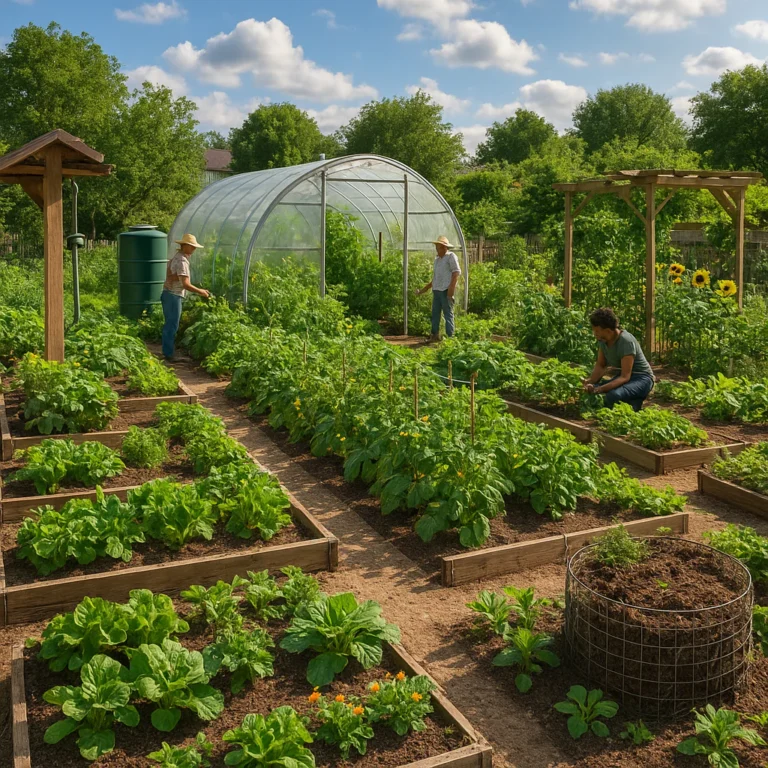
Community gardening is people working together to grow plants in a shared urban or suburban space. That can mean a row of shared beds, an orchard, a school garden, a culturally rooted farm, or even containers on a housing complex’s patio.
Urban food sovereignty goes further than growing vegetables. It asks who gets to make decisions about food: who controls land and resources, what gets grown, how food is distributed, and whether local food cultures and knowledge are respected. Ramsey County describes it as communities reclaiming ownership of their food system and shaping access to healthy, culturally appropriate food. Ramsey County’s overview offers a helpful local example.
Community gardens, urban farms, and food sovereignty: what’s the difference?
These terms overlap, but they aren’t interchangeable.
| Term | Main focus | Typical examples |
|---|---|---|
| Community garden | Shared or individual plots managed by community members | Neighborhood garden, school garden, apartment garden |
| Urban agriculture | Growing, processing, and distributing agricultural products in or near cities | Gardens, orchards, urban farms, rooftop growing |
| Urban farm | Often larger-scale production, sometimes with paid staff or sales | Market garden, nonprofit farm, cooperative farm |
| Food security | Whether people have reliable access to enough safe, nutritious food that meets their needs | Food assistance, affordable groceries, reliable meals |
| Food sovereignty | Who has power and control across the food system, including production, resources, culture, and distribution | Community land control, resident-led growing and food sharing |
A well-run community garden can support food sovereignty, but not every garden automatically does. If residents have no say over what is grown, who can participate, or where the harvest goes, the garden may produce food without meaningfully shifting power.
Food sovereignty and food security, side by side
Food security and food sovereignty are connected. One focuses on dependable access to food; the other asks how the food system is shaped and who has influence over it.
| Question | Food security lens | Food sovereignty lens |
|---|---|---|
| Is there enough food? | Can people reliably get enough food? | Who decides what food is produced and shared? |
| Is it nutritious and suitable? | Does it meet dietary, medical, and cultural needs? | Are local food cultures and knowledge respected? |
| Is access affordable? | Can households obtain food consistently? | Do communities control resources and distribution choices? |
| Who holds power? | Often outside the core question | A central question |
Both lenses matter. A neighborhood needs food people can afford today, and a say in building fairer systems for tomorrow.
📜 Roots of Urban Food Sovereignty and Community Gardening
Community food growing has many roots: Indigenous stewardship, immigrant and diasporic food traditions, mutual aid, urban agriculture, and movements for racial and economic justice. There is no single origin story, and no one community owns the idea of growing together.
The modern food sovereignty movement is commonly associated with La Via Campesina, an international movement of small-scale food producers and rural communities. Its work emphasizes people’s rights to define their food and agriculture systems. La Via Campesina’s overview explains the movement’s principles.
Indigenous foodways, land stewardship, and community control
For many Indigenous communities, food is connected to land, identity, responsibility, and relationships across generations. Food sovereignty can involve restoring access to traditional foods and stewardship practices, while recognizing that each Nation and community has its own knowledge and priorities.
Respect means more than borrowing a planting technique. It means recognizing whose land a garden occupies, learning local history, and following the leadership of Indigenous people when discussing Indigenous foodways.
From allotment gardens to urban agriculture movements
Urban gardens have taken many forms over time: allotment plots, victory gardens, neighborhood growing spaces, school gardens, and community farms. Their aims have varied, from supplementing household food to building social connection or responding to neglected land.
In current food-justice work, community gardens are often discussed alongside questions of land access, environmental health, racial inequity, and community ownership. A Baltimore research team found that local stakeholders connected food access barriers to histories of segregation, planning, and underinvestment—not simply to the distance between residents and supermarkets. The full qualitative study gives context, while also acknowledging its small, volunteer sample.
🥕 Why Community Gardens Matter for Urban Food Systems
A garden can provide more than produce. It can be a place to share skills, make decisions together, connect children with growing, and create an oasis of green in a hard-edged city block. Explore more perspectives in our Benefits of Community Gardens collection.
The first featured video makes the idea vivid through University Area Harvest Hope Park: people planting and harvesting, children learning about pollinators, and neighbors describing food as empowerment, health, and medicine. It’s an inspiring example of community-led work, not proof that one garden can solve every structural food-access problem.
Fresh food access, nutrition, and culturally meaningful crops
Gardens can make fresh produce available close to home, sometimes at low or no cost. They can also grow foods that local stores may not reliably stock, including culturally important herbs, greens, and vegetables.
That benefit depends on what is grown, who can take it, and when it is available. A harvest can be abundant but still miss its purpose if distribution is unclear or crops don’t reflect community preferences.
Practical steps:
- Ask residents what they want to grow and eat before ordering seed.
- Offer produce without requiring volunteer hours when possible.
- Coordinate harvest days with food pantries or other neighborhood partners.
- Share recipes and preservation tips for unfamiliar or surplus crops.
- Link growing to cooking and nutrition education, without assuming everyone has the same kitchen equipment or time.
For planting ideas, visit our Edible Plants category.
Community health, connection, and mental well-being
Gardening brings people into shared work: watering, transplanting, celebrating a first tomato, and occasionally negotiating who left the hose running. That routine can build social ties and a sense of belonging.
Research participants in the Baltimore study described farms as gathering places and sources of social connection. Some also connected fresh food with health and well-being. These are valuable firsthand perspectives, but they should not be stretched into a claim that a garden alone treats illness or eliminates health inequities.
A good garden complements, rather than replaces, health services and food assistance. Its special strength is creating a welcoming local space where people can grow, learn, and share on their own terms.
Local resilience, climate adaptation, and biodiversity
Growing food nearby can help communities build local skills and relationships, while composting and pollinator planting can contribute to a healthier urban environment. Gardens can also be designed to handle local climate stresses: shade structures for heat, mulch to reduce water loss, and rainwater management where safe and permitted.
No garden is climate-proof. Heat waves, drought, floods, and changing pest pressures can all disrupt growing. Our Climate Adaptation in Gardening resources can help gardeners plan for local conditions.
The limits of gardens as a solution to food insecurity
A garden cannot produce enough food to meet every household need, replace full-service grocery access, or correct low wages and unequal public investment on its own.
The Baltimore study describes community gardens and urban farms as ways to offer fresh produce, education, and work opportunities, while also noting constraints such as scarce land and limited resources. Trust both parts of the picture: gardens can make a real local contribution, and lasting food justice also requires public policy, stable income, food benefits, transportation, and wider access to healthy food.
🧑🏽 🌾 A Gardener’s Story: Jat Martinez and Reclaiming Food Sovereignty
In a first-person account shared by Denver Urban Gardens, high school student and food justice advocate Jat Martinez describes joining the Commons Community Garden at Confluence Park after growing plants indoors and herbs on his balcony. He wanted to grow food, connect with nature and neighbors, and “begin my own food revolution.” Read Jat’s story.
Growing at the Commons Community Garden in Confluence Park
Jat started with an 8 × 4-foot plot and, by his account, was unsure what to plant or how to manage the space. Other gardeners welcomed him and shared their knowledge. That detail is easy to overlook, but it’s one of the best arguments for community gardening: the plot grows produce; the people help grow the gardener.
His first-season crops included Brussels sprouts, cabbage, onions, basil, marigolds, and tomatoes. His mother used the tomatoes for sauce, while Jat was still figuring out what to do with the green ones. That’s a familiar garden moment: a bumper crop arrives, and suddenly everyone is asking whether tomatoes count as a side dish, a sauce, or a neighborhood diplomatic mission.
Learning from the land and sharing power through gardening
Jat describes the garden as an “oasis in the middle of the city” and values the seasonal cycle: planting in spring, tending growth in summer, and returning plant matter to the earth at season’s end. He connects growing food with a right to eat well and a response to a food system that doesn’t work for everyone.
His story illustrates what sovereignty can feel like at a personal scale: learning, choosing, growing, and sharing. It is one gardener’s experience, not a statistical evaluation—and that is precisely why it adds something a chart cannot. He also planned to try bok choy, spinach, and flowers the next season. The green tomatoes, meanwhile, suggest a useful garden lesson: leave room for experimentation, and don’t be afraid to ask neighbors for their favorite recipes.
🛠️ How to Start a Community Garden in Your Neighborhood
Starting a garden is part horticulture, part community organizing, and part paperwork. You don’t need to solve everything before planting, but you do need a practical plan for land, water, safety, leadership, and upkeep.
Find neighbors, assess needs, and build a shared vision
Before choosing tomatoes, talk with the people who might use the garden. A flyer can help, but listening is better.
- Ask what neighbors want. Would they like shared harvests, individual plots, cooking activities, culturally specific crops, children’s programming, or a quiet green space?
- Identify barriers to participation. Consider work schedules, language, mobility, transportation, childcare, and access tools.
- Invite a range of voices. Speak with residents who may not attend a planning meeting, not only the people already on the email list.
- Write down a shared purpose. Keep it brief enough that members can remember it.
- Decide what success looks like. Success might include produce donated, participants trained, harvests shared, or leadership distributed—not just pounds of zucchini.
Ramsey County’s Urban Ag & Community Gardening page includes local information and resources. In other regions, check municipal, county, university-extension, or land-trust resources.
Choose a site and secure land access
Look for a site people can reach safely and regularly. Consider sunlight, slope, drainage, nearby trees, water access, transit, and whether the garden will remain in place long enough to justify investment.
Get written permission. A simple agreement should explain:
- Who owns or controls the site.
- How long the garden may use it.
- Who pays for water and maintenance.
- What happens if the site is sold or needed for another use.
- Who owns permanent improvements such as sheds or fences.
- How much notice will be given before the garden must close.
If you’re in Ramsey County, the community garden locations map can help locate existing gardens, and the county’s interactive property map can support site exploration. Always confirm ownership and permissions directly.
Test soil, assess water, and plan for safety
Urban soil may have a history you don’t know. Before growing food directly in the ground, check local guidance and consider testing for contaminants, especially if the site was formerly industrial, near heavy traffic, or used for construction.
The U.S. Environmental Protection Agency’s urban gardening guidance explains considerations for safe urban growing. If test results raise concerns, use clean raised beds with verified soil and a barrier where appropriate, following advice from local environmental-health or extension experts.
Also confirm that water is available, safe for the intended use, and affordable to maintain. Plan where hoses will run so they don’t become trip hazards, and make sure the watering system can survive weekends and holidays.
Create a garden layout that works for everyone
A functional layout should make everyday tasks easy. Include:
- Growing beds and accessible paths.
- A water source and safe hose routes.
- A tool-storage area.
- Composting space, if suitable and permitted.
- Seating and shade where possible.
- A gathering or teaching area.
- Clear signs for shared crops and harvest rules.
Don’t design only for the person drawing the map. Ask people who will use the site to walk the proposed layout and flag problems.
Plan accessible paths, beds, tools, and gathering spaces
Accessibility is easier to build in than to retrofit. Consider stable, wide paths; reachable water controls; raised beds at useful heights; seating; clear signage; and tools that fit different strength and mobility needs.
No single design suits everyone. Ask gardeners what would help, and check local accessibility requirements. The goal is not a token “accessible bed” in the far corner. It is a garden people can reach, move through, and participate in meaningfully.
Set a realistic budget and find funding
Plan for more than seeds. Common expenses include soil testing, safe growing media, water access, lumber, tools, compost, fencing, storage, signage, and ongoing repairs.
Potential support can come from:
- City or county garden programs.
- Schools, libraries, faith communities, and neighborhood associations.
- Local businesses and community foundations.
- Grants focused on food access, youth, public health, or climate resilience.
- In-kind contributions such as tools, lumber, or volunteer expertise.
Build a basic maintenance budget, not just a launch budget. A garden with no plan for replacing broken tools is a very expensive way to learn about broken tools.
Build partnerships and get permits
Depending on location and garden activities, you may need permission or permits for fences, sheds, water connections, public events, food sales, or structures. Rules differ by city, county, landowner, and intended use, so contact the relevant local authority before construction.
Potential partners include:
- Cooperative extension and master gardener programs.
- Food shelves and community food organizations.
- Schools and youth groups.
- Public health departments.
- Neighborhood and tenant associations.
- Local growers, seed libraries, and composting programs.
For community gatherings and learning days, see our Community Garden Events category.
🌽 Garden Models and Urban Growing Spaces
There is no single “right” garden model. Choose one that fits local priorities, available land, and the time residents can realistically contribute.
| Model | Advantages | Trade-offs to plan for |
|---|---|---|
| Individual plots | Clear personal responsibility; gardeners choose crops | Shared rules are needed; harvests may vary |
| Shared production garden | Can focus on donation, education, or community meals | Requires coordination and shared labor |
| School garden | Connects growing with learning and youth programs | Needs plans for summer care and school rules |
| Urban farm | May support larger harvests, jobs, or market activity | Requires more land, infrastructure, and sustained funding |
| Container garden | Works on small sites and paved spaces | Containers need careful watering and suitable growing media |
Shared-plot and individual-bed community gardens
Individual beds give gardeners more control over crop choices and schedules. Shared plots can focus on crops for a pantry, communal meal, or neighborhood harvest.
Many gardens use a hybrid: individual plots alongside shared herbs, pollinator beds, or donation rows. Make expectations clear so “shared” doesn’t mean “nobody knew who was watering it.”
School, faith-based, and housing-community gardens
Gardens at schools, places of worship, and housing communities can bring food growing close to daily life. They may also make it easier to host workshops or connect gardening with cultural events.
Before starting, confirm who will oversee the site, how members will access it, and who is responsible during holidays and summer breaks. For housing gardens, involve tenants in decisions from the beginning.
Urban farms, market gardens, and cooperatives
Urban farms may grow food for donation, local sale, education, or employment. A cooperative structure can give members a formal role in management or benefit-sharing, but requires clear records and governance.
The Baltimore research describes farms using approaches such as sliding-scale produce, community distribution, and partnerships to share surplus. Those examples show possibilities, not one-size-fits-all rules. The right model depends on community goals, capacity, and local legal requirements.
Container gardens, rooftop plots, and vertical growing
Containers can make growing possible where there is no safe in-ground soil or garden plot. Choose food-safe containers with drainage and suitable growing media; avoid containers with unknown chemical histories. Rooftop gardens require building-owner approval and assessment of structural capacity.
Vertical growing can save space, but it does not eliminate the need for light, water, and maintenance. It is a clever tool, not a substitute for a solid site plan.
🗳️ Governance, Leadership, and Community Ownership
Food sovereignty depends in part on who gets to decide. A garden may have beautiful beds and a long crop list, yet still feel exclusive if decisions are made by a small inner circle.
Write garden bylaws, shared rules, and plot agreements
Keep rules short, understandable, and available in the languages members use. Cover:
- Membership and plot allocation.
- Shared tools, water, compost, and paths.
- Harvesting from communal beds.
- Meeting and communication practices.
- Safety, accessibility, and respectful conduct.
- Conflict resolution and appeals.
- What happens when a plot is inactive or a member leaves.
Rules should be reviewed with gardeners, not delivered like a surprise parking ticket.
Make decisions transparently and share leadership
Possible approaches include elected coordinators, rotating meeting facilitators, working groups, or a community committee. Share agendas and decisions in accessible formats, and make it possible for people with different schedules to contribute.
Useful practices:
- Rotate leadership tasks.
- Offer several ways to give feedback.
- Share notes after meetings.
- Explain how decisions are made.
- Compensate community expertise when funding allows.
- Invite new members into leadership rather than guarding the clipboard forever.
Prevent conflict and address grievances fairly
Disagreement is normal. People may differ over watering, harvesting, work expectations, or whether the garden should prioritize plots or donations.
A fair process should include:
- A respectful, private conversation where possible.
- A neutral facilitator if the issue continues.
- Written next steps and a reasonable timeline.
- A way to appeal decisions.
- Consistent treatment across members.
Clear processes protect relationships. They also make it easier for new gardeners to trust that rules apply to everyone.
Protect long-term land access and community control
Land tenure is one of the toughest challenges in urban gardening. A garden may improve a lot and build community ties, but those gains can be threatened if the land is sold or redeveloped.
Possible tools include longer-term leases, land trusts, public land agreements, cooperative ownership, and clear notice protections. Seek local legal and planning advice; the best option depends on local law and landowner circumstances.
🌍 Equity, Food Justice, and Cultural Inclusion
Equity is not achieved by opening a gate and assuming everyone can walk through it. Costs, transportation, schedules, language, disability, safety, and trust can all affect who participates.
Center the leadership of communities most affected by food inequity
Invite residents who face the greatest barriers to shape the garden’s purpose, design, crop choices, and distribution plan. This includes listening to people who may not have time to attend regular meetings.
The Baltimore study’s participants discussed “food apartheid” to emphasize that unequal access can be shaped by structural decisions and racism, not just the absence of a nearby store. The phrase is a perspective used by researchers and participants in that context; local communities may use different language. The broader lesson is consistent: describe causes as well as outcomes.
Grow culturally relevant foods and honor traditional knowledge
Ask gardeners which foods feel familiar, meaningful, and useful. Include those crops in planning, and make space for knowledge-sharing without treating cultural knowledge as free labor.
A diverse crop list can include familiar staples alongside experiments. Jat Martinez’s account, for example, includes tomatoes, basil, cabbage, onions, and plans for bok choy and spinach—proof that one small plot can hold several food traditions and a few bold ideas.
Make gardening affordable and accessible
Potential steps include free or shared tools, donated seeds, no-cost participation options, flexible volunteer hours, and harvesting rules that don’t require labor in exchange for food.
Consider the practical costs people may face: transit to the site, childcare, gloves, containers, or time away from work. A “free garden” can still have real costs for participants. Name them, then find ways to reduce them.
Address language access, disability inclusion, and age-friendly design
Use plain-language signs, translated materials where possible, and multiple communication options. Design paths, beds, and gathering areas for people with different mobility needs. Offer tasks that suit varying abilities, from seed starting to planning, cooking, storytelling, or outreach.
Children, elders, and people with disabilities should be invited as contributors and decision-makers—not treated as decorative visitors at the opening ceremony.
Avoid green gentrification and displacement
Grening a neighborhood can bring benefits, but rising land values and redevelopment pressure may also threaten the people who created or cared for the space. Garden organizers can work alongside tenants, housing advocates, and local organizations to support anti-displacement efforts.
This is bigger than a gardening committee can solve alone. Still, gardens can document community priorities, build local partnerships, and advocate for secure land and housing policies.
🌿 What to Grow in an Urban Community Garden
Plan crops around local climate, community preferences, available space, and how the harvest will be used. The “best” vegetable is not always the most productive one. It’s the one people can grow, enjoy, and share.
Choose crops for local climate, culture, and growing season
Start with a small number of dependable crops, then add varieties members want to try. Consult regional planting calendars and local extension advice. For instance, the University of Minnesota Extension vegetable gardening resources offer Minnesota-specific guidance.
A simple planning table helps:
| Planning question | Why it matters |
|---|---|
| What do gardeners want to eat? | Encourages participation and reduces unwanted surplus |
| How long is the growing season? | Helps match crops and varieties to local conditions |
| Who will water and harvest? | Prevents neglected crops and missed harvest windows |
| How will the food be used? | Guides crop quantities and distribution plans |
| Is the site sunny enough? | Many fruiting crops need substantial direct light |
Seeds, seed saving, and community seed libraries
Seed libraries can help gardeners access varieties and learn from one another. If saving seed, check whether the crop is open-pollinated and whether plants may cross-pollinate; hybrids may not grow true to type. Keep notes about variety, planting date, and growing conditions.
Share seeds with clear labeling. A paper packet that says “mystery pepper, probably spicy” is a fun story once. It is not a reliable crop plan.
Companion planting, crop rotation, and succession sowing
Companion planting can support a diverse garden, but many popular claims about particular plant pairings are stronger than the evidence. Prioritize practices with clear practical value:
- Rotate crop families where possible to reduce recurring pest and disease problems.
- Succession sow fast-growing crops to spread harvests over time.
- Interplant crops only when their needs and growth habits are compatible.
- Keep records so next season’s decisions are based on experience, not folklore alone.
Pollinator plants, native species, and beneficial insects
Flowering plants can provide resources for pollinators and other beneficial insects. Choose species suited to your region, avoid pesticides that can harm beneficial insects, and plan for blooms across the growing season.
The University Area Harvest Hope Park video highlights children learning about pollinators alongside planting and harvesting. That kind of hands-on learning helps make ecological relationships visible: flowers are not just garden decorations; they are part of the working system.
💧 Soil, Water, Compost, and Sustainable Growing
Healthy soil and reliable water are the quiet backbone of a garden. They’re not as photogenic as a perfect tomato, but the tomato would like you to know it depends on them.
Urban soil health and contamination precautions
Before planting directly in urban soil, learn the site’s history and consult local environmental-health guidance. Test soil when there is reason for concern, and follow test recommendations. Raised beds with clean growing media can be appropriate where in-ground soil is unsuitable, but they still require safe materials and careful maintenance.
The EPA’s urban agriculture resources provide a starting point. Local extension offices and public-health departments can help interpret site-specific questions.
Composting food scraps and garden waste
Composting can recycle plant material and return organic matter to garden beds. Choose a method that fits your space, local rules, and ability to manage it.
Basic practices:
- Balance suitable “green” and “brown” materials.
- Keep the pile moist, not waterlogged.
- Turn or manage it according to the chosen system.
- Avoid adding materials that attract pests or are prohibited locally.
- Keep compost bins tidy and clearly assigned to a caretaker.
Composting is not a magic disappearing act. It is a managed process, and poorly maintained piles can attract rodents or create odors.
Water conservation, rain barrels, and irrigation
Water needs vary by crop, soil, weather, and container size. Mulch, efficient watering, and consistent schedules can reduce waste. Drip irrigation may work well for some sites, while hand watering provides flexibility but requires dependable volunteers.
Rain barrels can help where local rules permit them, but harvested rainwater should be handled safely and may not replace a reliable water supply. Check local guidance before installation.
Organic pest management and climate-smart gardening
Integrated pest management starts with observation: identify the problem, monitor its extent, and choose a response that minimizes harm. Useful steps include healthy soil, crop rotation, barriers, hand removal, and selecting resistant varieties.
Avoid assuming that a product labeled “natural” is automatically harmless. Follow the label and local rules for any pest-control product. Climate-smart steps may include heat-tolerant crop choices, shade planning, water conservation, and stormwater management. See our Climate Adaptation in Gardening resources for more ideas.
🍅 From Harvest to Food Access and Local Distribution
Growing food is only one part of the system. A garden also needs a fair, practical plan for harvesting, using, and sharing the produce.
Share harvests fairly among gardeners and neighbors
Write harvest rules before the first big crop arrives. Decide how shared beds will be harvested, whether people need to be present, and how surplus will be offered.
Fair approaches include:
- Shared-harvest days open to neighbors.
- Clearly marked donation rows.
- Take-what-you-need produce tables.
- Regular pickups coordinated with community partners.
- Flexible rules for gardeners who cannot volunteer regularly.
Some gardens link access to volunteer hours; others intentionally allow neighbors to take food without working in the garden. Neither model works automatically for every setting. Choose based on community needs and be transparent about the reason.
Community fridges, food pantries, and mutual-aid partnerships
Partnerships can help produce reach households beyond garden members. Before donating, discuss food-safety practices, pickup timing, storage, and what crops partners can accept.
A reliable system is better than a grand promise. Start with one partner and a realistic harvest schedule, then expand if the garden can sustain it.
Farmers markets, produce prescriptions, and neighborhood food hubs
Some community growers sell produce, participate in local markets, or work with health and food-access programs. These models may create income or improve access, but they involve additional requirements around food handling, permits, pricing, and staffing.
Research participants in Baltimore described sliding-scale produce and farm partnerships as ways to make fresh food more accessible. Those approaches need local planning: a sliding scale, for instance, works best when the organization has a clear plan for covering operating costs.
Food preservation, cooking, and nutrition education
Cooking demonstrations and preservation workshops can help people use crops they don’t know or have more of than expected. Offer practical, culturally relevant ideas and account for equipment access.
Jat’s green tomatoes are a reminder that growing and cooking belong in the same conversation. A neighbor’s recipe might turn a puzzling surplus into a favorite dish—and make next year’s planting list a little more adventurous.
📈 Measuring Garden Impact and Building Long-Term Resilience
A garden’s impact is more than pounds harvested. Measure what matters to the people involved, and keep data collection manageable.
Track harvests, participation, and community priorities
Possible measures include:
- Amount and types of produce harvested or shared.
- Number of households reached.
- Participation across age groups and neighborhoods.
- Workshops, youth activities, or volunteer hours.
- Member feedback on access, belonging, and decision-making.
- Changes to land security or local partnerships.
Use simple logs and protect personal privacy. Data should help improve the garden, not become paperwork that scares volunteers away.
Plan for maintenance, volunteer burnout, and leadership transitions
Make a seasonal task calendar and assign backup people for key jobs such as watering, opening the site, and managing harvests. Rotate responsibilities so one enthusiastic organizer doesn’t become the entire garden’s irrigation department, newsletter, and emergency contact.
Useful practices:
- Keep instructions for recurring tasks.
- Train more than one person for each critical role.
- Schedule breaks and celebrate contributions.
- Ask what tasks people can realistically take on.
- Plan leadership transitions before someone is exhausted.
Prepare for extreme weather and changing growing conditions
Heat, drought, heavy rain, and unusual cold can disrupt planting and harvests. Build resilience with local forecasts, flexible planting dates, mulch, shade options, drainage planning, and crop diversity.
The right response depends on local conditions. Contact a regional extension service or climate-adaptation program instead of copying a garden plan designed for a different climate.
🏙️ Policy, Land Use, and Urban Food Sovereignty
Community gardens operate within rules about land, water, zoning, food distribution, and public space. Local policy can make a garden easier to establish—or create barriers that no amount of enthusiasm can compost away.
Zoning, land tenure, and municipal garden policies
Cities can support gardens through clear zoning rules, long-term land agreements, access to public water, technical assistance, and funding for soil testing and infrastructure.
Policies should be understandable and consistent. Gardeners shouldn’t need to become zoning detectives just to find out whether a shed or public harvest event is allowed.
For local policy resources, see our Community Garden Policies category.
Public land, vacant lots, and community land trusts
Publicly owned or vacant land may offer garden opportunities, but “vacant” does not mean uncomplicated. Check ownership, soil history, utilities, redevelopment plans, and site-control requirements.
Community land trusts and long-term leases may help protect land for community use. Seek legal and planning guidance before making permanent investments.
How residents can advocate for supportive food policy
Residents can:
- Ask local officials for clear, public garden-land policies.
- Advocate for multi-year leases and fair notice periods.
- Request soil testing and water access support.
- Include gardens in climate, health, and food-security plans.
- Support food distribution and local agriculture infrastructure.
- Partner with tenant, youth, Indigenous, and neighborhood groups.
- Share community priorities in hearings and planning processes.
Ramsey County’s food-security priorities include supporting the food safety net, increasing access to public benefits, building urban agriculture, and expanding food availability and affordability. Those priorities show why gardens work best as one part of a coordinated local food strategy, not as a substitute for public investment.
✅ Quick Tips for a Thriving, Inclusive Community Garden

- Listen before you plant. Community priorities should shape the crop list and garden rules.
- Get land permission in writing. A handshake is not a long-term land plan.
- Check soil and water safety. Use local expert guidance for site-specific decisions.
- Make access practical. Plan for mobility, schedules, language, transit, and childcare.
- Share power, not only produce. Give residents real influence over decisions.
- Create clear harvest rules. Make sure everyone understands how shared food is distributed.
- Build partnerships early. Food shelves, schools, extension services, and neighborhood groups can strengthen the garden.
- Budget for maintenance. Tools, water, repairs, and coordinator time count.
- Measure what the community values. Harvest totals matter, but so do access, belonging, and local control.
- Remember the bigger picture. Gardens can grow food sovereignty, but they cannot replace fair wages, food benefits, safe housing, or supportive public policy.