Support our educational content for free when you purchase through links on our site. Learn more

Community gardening and social cohesion metrics work best when they measure relationships—not just plots, harvests, or attendance. Track whether people feel welcome, trust one another, share support, and have a real voice in garden decisions; then use surveys, conversations, and observation together to understand what’s changing.
We’ve seen a shared bed turn strangers into reliable neighbors one watering shift at a time. But a busy garden isn’t automatically an inclusive one: the clearest picture comes from asking who feels connected, who feels left out, and what would help.
Key Takeaways
- Measure several dimensions: social connection, trust, belonging, inclusion, and collective action each tell a different part of the story.
- Combine methods: use brief surveys alongside interviews, observation, and garden records.
- Look beyond attendance: participation counts show who showed up, not whether they felt welcome or heard.
- Check whose voices are missing: account for barriers such as language, accessibility, schedules, and garden rules.
- Use findings to make changes: share results with gardeners, agree on practical next steps, and check whether they help.
- Be careful with claims: gardens can support social cohesion, but evaluation should consider other influences and avoid claiming more than the evidence shows.
Table of Contents
- ⚡️ Quick Tips and Facts
- 🌱 What Community Gardening and Social Cohesion Metrics Mean
- Community gardens as places to grow relationships
- Social cohesion, social capital, and neighboring concepts
- 🏙️ How Community Gardens Build Social Cohesion
- Shared work, trust, and a sense of belonging
- Food sharing, cultural exchange, and intergenerational ties
- When a garden may exclude or divide
- 📏 Social Cohesion Metrics: What to Measure
- Social connection and interaction
- Trust, reciprocity, and mutual support
- Belonging, inclusion, and cultural safety
- Collective action, participation, and shared decision-making
- Conflict, safety, and resilience
- 🧭 Choosing the Right Community Garden Indicators
- Outputs, outcomes, and long-term impact
- Quantitative, qualitative, and mixed-method measures
- A practical social cohesion indicator table
- 📝 How to Measure Social Cohesion in a Community Garden
- Set goals and define the garden community
- Collect baseline data before activities begin
- Use surveys, interviews, observation, and garden records
- Repeat measurement and interpret change
- 🔍 Evidence Review: What Research Can—and Cannot—Tell Us
- Assessing research quality and evaluating claims
- Common limits, bias, and alternative explanations
- 👥 Equity and Inclusion in Garden Evaluation
- Who participates—and who is missing?
- Accessibility, language, cost, and time barriers
- Ethical data collection and participant privacy
- 🛠️ Turning Garden Metrics Into Better Programs
- Using findings to strengthen relationships and governance
- Sharing results with gardeners, partners, and funders
- 📊 Community Garden Evaluation Examples and Templates
- Sample survey questions for gardeners
- A simple social cohesion scorecard
- Evaluation plan for a new community garden
- ⚠️ Common Measurement Mistakes to Avoid
- 🌿 Recommended Links
- ❓ FAQ
- What are the best metrics for social cohesion in community gardens?
- How do you measure whether a garden builds community?
- Can community gardening reduce social isolation?
- How often should a community garden collect data?
- How can a garden measure inclusion fairly?
- What is the difference between social cohesion and social capital?
- ✅ Conclusion
- 🔗 Reference Links
Quick Tips and Facts
A thriving community garden grows more than vegetables: it can grow familiarity, trust, shared responsibility, and a stronger sense of belonging. To find out whether those relationships are actually changing, measure them directly rather than counting only plots, harvests, or volunteer hours.
| Quick fact | What it means for garden evaluation |
|---|---|
| Social cohesion is not one single feeling or score. | Track several dimensions, such as social connection, trust, inclusion, and collective action. |
| Attendance is useful, but it is not proof of belonging. | Pair participation counts with short surveys, interviews, and observation. |
| Gardens vary in design and purpose. | Compare gardens in context; an individual-plot garden and a communal growing space may create different kinds of interaction. |
| Change takes time. | Gather a baseline, repeat measures, and look for patterns rather than expecting instant results. |
| A welcoming garden can still have barriers. | Ask who participates, who makes decisions, and who is missing. |
| Privacy matters. | Collect only information you need, explain its use, and let people choose whether to participate. |
For an overview of community gardening, start with a practical truth we’ve learned in shared growing spaces: people may arrive for tomatoes, but they often stay because someone remembers their name. 🥬
- ✅ Count relationships, not just events: Track whether gardeners meet, help, and keep in touch.
- ✅ Ask about experience: A few thoughtful questions can reveal more than a clipboard full of attendance totals.
- ✅ Include different voices: Offer accessible, multilingual ways to share feedback.
- ❌ Don’t claim the garden caused every improvement: Neighborhood changes, partner programs, and wider economic conditions may also matter.
- 🌱 Keep the evaluation useful: Share findings with gardeners and use them to improve the garden—not only to satisfy a funder.
🌱 What Community Gardening and Social Cohesion Metrics Mean
Community gardens as places to grow relationships
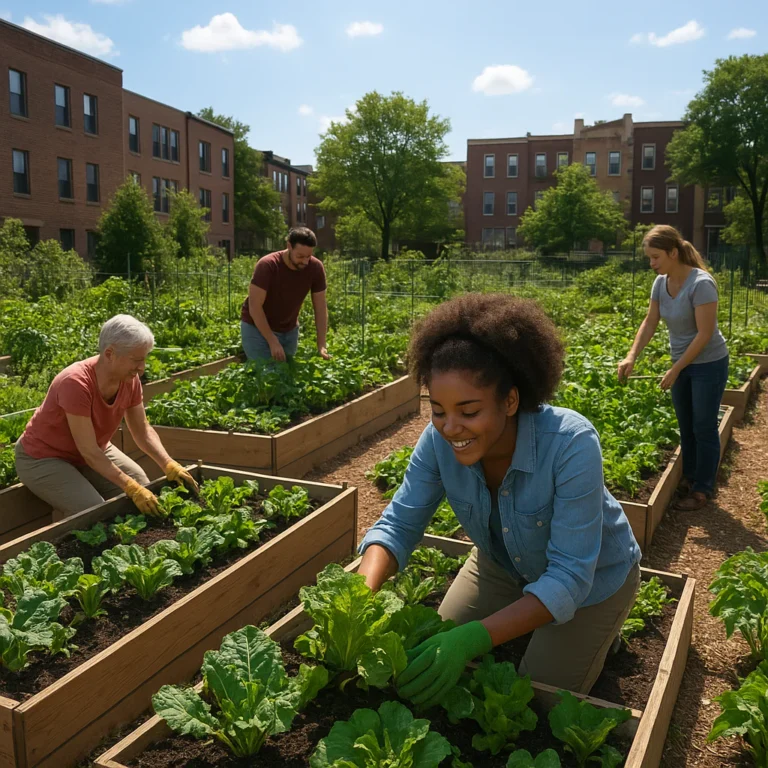
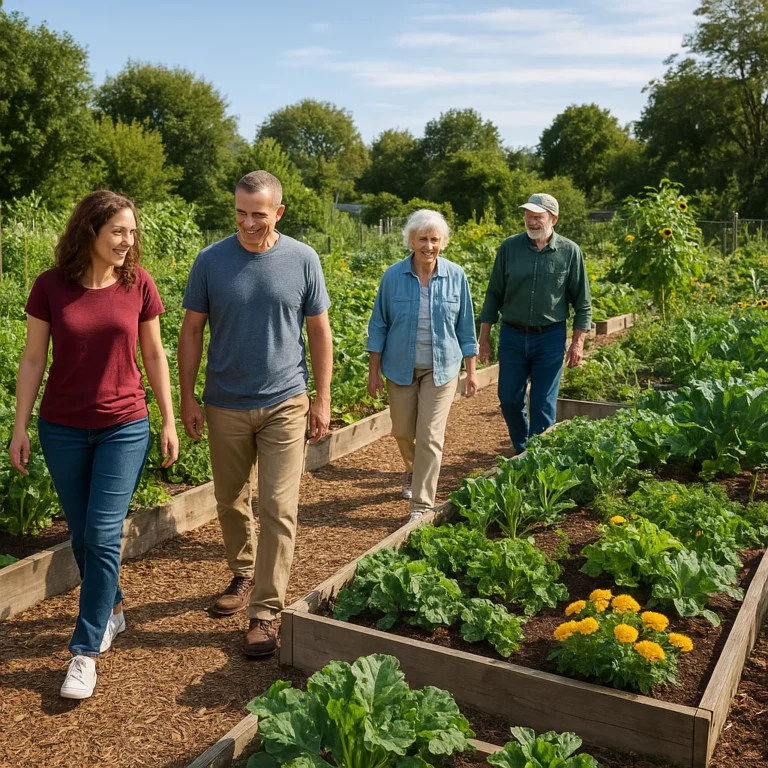
A community garden is a shared space where people grow food, flowers, or community resources together. Its design may include individual plots, communal beds, shared tools, composting, teaching areas, or gathering spaces. Those choices shape who interacts and how.
Social cohesion metrics are indicators used to understand the quality of relationships and shared life among people connected to a garden. They help answer questions such as:
- Do gardeners feel welcome and respected?
- Are people building relationships across age, culture, or background?
- Do members trust one another enough to share tools or ask for help?
- Can they make decisions together and work through disagreements?
- Does the garden connect people to their wider neighborhood?
These measures belong alongside practical garden outcomes—not in place of them. Food production, environmental learning, and social connection can reinforce one another, but they are not interchangeable. A useful overview of potential benefits of community gardens can help groups decide which outcomes they want to assess.
Social cohesion, social capital, and neighboring concepts
The terms overlap, but each points to a slightly different question.
| Concept | Plain-language meaning | Example question |
|---|---|---|
| Social cohesion | How well people feel connected, included, and able to work together | “Do people in the garden feel they belong?” |
| Social capital | Resources available through relationships, networks, and mutual support | “Can a gardener get help or useful information through garden connections?” |
| Social connection | The relationships and interactions people experience | “How often do members talk or spend time together?” |
| Collective efficacy | People’s shared confidence that they can act together | “Can gardeners organize a workday or solve a common problem?” |
| Sense of community | Feeling emotionally connected to a group and its place | “Does the garden feel like part of my community?” |
These concepts can inform one another, but a single question cannot measure them all. For example, a gardener may feel strong belonging but have little influence over decisions. Another may attend regularly to grow food, while feeling only loosely connected to other members. Measure the dimension you actually want to understand.
🏙️ How Community Gardens Build Social Cohesion
Shared work, trust, and a sense of belonging
Gardening creates natural reasons to cooperate. One person needs a hand moving compost; another knows which bed is ready to plant; a third has extra seedlings. Repeated, low-pressure interactions can help people move from “the person with the blue watering can” to “the neighbor I can ask for help.”
In our experience, shared tasks make conversation easier. You can talk while spreading mulch without needing to invent a reason to stand together. But the opportunity is not automatic: a locked gate, unclear rules, or a leadership team that makes every decision behind closed doors can keep connections from growing.
To assess this pathway, track:
- How often gardeners work or learn together
- Whether members exchange help, tools, seeds, or knowledge
- Whether new members are introduced and supported
- Whether people feel comfortable raising concerns
- Whether gardeners report a growing sense of belonging
You can also explore community garden events as opportunities for connection, while checking whether events are accessible and appealing to people beyond the usual regulars.
Food sharing, cultural exchange, and intergenerational ties
A garden can bring together food traditions, growing knowledge, languages, and life experience. A child may learn how to plant beans from a grandparent; a newcomer may introduce a crop unfamiliar to other members; a long-time resident may share local knowledge about soil or seasonal weather.
These exchanges are worth measuring, not merely celebrating in a grant report. Ask gardeners whether they have:
- Learned a growing practice, recipe, or food tradition from another member
- Shared knowledge across generations or cultural backgrounds
- Developed relationships with people they would not otherwise have met
- Felt their own culture and food preferences were welcomed
The best indicator is not how diverse a garden looks in a photograph. It is whether people experience respect, meaningful participation, and exchange.
When a garden may exclude or divide
A garden can foster solidarity for some and still feel inaccessible to others. Common barriers include plot fees, inconvenient hours, inaccessible paths, language gaps, unclear membership rules, conflicts over leadership, and expectations that demand substantial unpaid labor.
Some design choices also shape interaction. Individual plots may support autonomy and close relationships among neighboring plot holders, while communal beds may encourage shared decisions and group work. Neither format guarantees cohesion. The useful question is who benefits from the design, and who has to work harder to take part?
Review community garden policies with members, paying special attention to how rules are explained, enforced, and revised. A policy can protect shared resources; if it is opaque or applied inconsistently, it can also weaken trust.
📏 Social Cohesion Metrics: What to Measure
Social connection and interaction
Measure both the amount of interaction and how people experience it. Someone may attend several workdays but still feel alone; someone else may visit less often but have a strong friendship with another gardener.
Possible indicators:
- Number of garden-related conversations or collaborative activities
- Frequency of informal contact outside scheduled events
- Number of people a member feels comfortable asking for help
- Self-reported loneliness or social connection, using carefully chosen and appropriate questions
- Whether members have formed friendships through the garden
Avoid treating a high number of contacts as automatically good. A crowded event may produce little meaningful connection, while a quiet regular work session may create strong relationships.
Trust, reciprocity, and mutual support
Trust often appears in small acts: returning borrowed tools, sharing a harvest, communicating about a missed task, or believing that concerns will be handled fairly.
| Indicator | Example question or observation |
|---|---|
| Trust among members | “I can rely on other gardeners when I need help.” |
| Trust in leadership | “Garden decisions are explained clearly.” |
| Reciprocity | Members report giving and receiving practical support |
| Shared resource stewardship | Tools and common areas are cared for and returned |
| Conflict confidence | Members know how to raise a concern and expect a fair response |
Use more than one source of evidence. A survey may show that members trust the group, while interviews reveal that newer gardeners are reluctant to disagree with long-standing leaders.
Belonging, inclusion, and cultural safety
Belonging is not simply being allowed through the gate. It includes feeling recognized, respected, and able to contribute without hiding important parts of yourself.
Useful indicators include:
- Agreement with statements such as “I feel welcome here”
- Perceived respect across backgrounds
- Participation in decisions, not only attendance at activities
- Whether members see their language, food traditions, and knowledge represented
- Whether people with disabilities can use garden spaces and facilities
- Whether newcomers receive clear orientation and personal welcome
Interpret these results carefully. A high average can conceal the experiences of a smaller group. Whenever possible, compare responses by relevant, voluntarily provided categories while protecting privacy and avoiding small-group identification.
Collective action, participation, and shared decision-making
A garden’s capacity to act together may show up in workdays, maintenance, events, composting, advocacy, or decisions about shared beds. Participation totals are useful, but influence matters as much as presence.
Track:
- Who attends meetings and who speaks
- How decisions are made and recorded
- Whether members believe they can influence outcomes
- Whether members take initiative organize activities
- How the group responds when a shared problem arises
A garden can have many volunteers but very little shared governance if a small group makes all consequential decisions. Review meeting practices alongside climate adaptation in gardening efforts, for example: preparing for heat or heavy rain can reveal whether planning is genuinely collaborative.
Conflict, safety, and resilience
Social cohesion does not mean a garden has no disagreements. Healthy groups can disagree while keeping communication open and resolving problems fairly. A better measure than “zero conflict” is whether members feel safe speaking up and whether issues are addressed consistently.
Consider measuring:
- Perceived physical and emotional safety
- Confidence in conflict-resolution procedures
- Whether people know whom to contact about a concern
- Member reports of fair treatment
- The group’s ability to adapt after disruption, such as extreme weather or loss of access
Pair surveys with confidential conversations. A low recorded complaint count might mean a peaceful garden—or simply that people do not trust the process enough to report problems.
🧭 Choosing the Right Community Garden Indicators
Outputs, outcomes, and long-term impact
It helps to separate what a garden does from what may change as a result.
| Evaluation level | Examples | What it can tell you |
|---|---|---|
| Inputs | Volunteer time, staff support, tools, accessible beds | What resources are available |
| Activities | Workshops, workdays, communal growing, social events | What the garden provides |
| Outputs | Attendance, active plots, events held, volunteer hours | How much activity occurred |
| Short-term outcomes | New contacts, shared skills, greater comfort asking for help | Early changes in experience |
| Long-term outcomes | Stronger trust, enduring neighborhood ties, collective action | Whether relationships appear to deepen over time |
Outputs are easiest to count, but they do not prove impact. A full workshop room is an output; participants feeling more connected is a possible outcome.
Quantitative, qualitative, and mixed-method measures
| Method | Strengths | Limitations | Best use |
|---|---|---|---|
| Short survey | Comparable responses; easy to repeat | Can miss context; low response rates can distort findings | Tracking changes in belonging, trust, and connection |
| Interviews | Rich detail; reveals why experiences differ | Takes time; participants may be cautious | Understanding how and why relationships develop |
| Focus groups | Encourages discussion and shared reflection | Dominant voices can steer the conversation | Exploring common experiences and disagreements |
| Observation | Shows interaction in practice | Observer bias; privacy concerns | Noting collaboration, inclusion, and shared use |
| Garden records | Often already available; supports participation tracking | Records activity, not necessarily social outcomes | Attendance, membership, meetings, volunteer tasks |
| Network mapping | Shows patterns of support and connection | Sensitive; requires careful privacy safeguards | Understanding whether relationships extend across groups |
A mixed-method approach is often the most useful: a short survey can show whether reported belonging changed, while interviews explain what helped or hindered that change.
A practical social cohesion indicator table
| Dimension | Example indicator | Low-burden measurement |
|---|---|---|
| Connection | Members know other gardeners by name | Anonymous survey item |
| Trust | Members feel comfortable asking for help | Survey plus optional interview |
| Reciprocity | Members report giving or receiving support | Short survey question |
| Belonging | Members feel welcome and valued | Repeated survey item |
| Inclusion | Members feel heard in decisions | Survey, meeting review, and interviews |
| Collective action | Members work together on shared tasks | Event records plus observation |
| Conflict resolution | Members know how to raise concerns | Survey and confidential feedback |
| Cultural exchange | Members learn from people with different experiences | Interviews or reflection prompts |
Keep the list manageable. A small group that consistently measures five relevant indicators will learn more than a group that collects twenty indicators once and never looks at them again.
📝 How to Measure Social Cohesion in a Community Garden
Set goals and define the garden community
Start with the question your group actually needs answered. “Is the garden successful?” is too broad. Try:
- Do new members feel welcome during their first season?
- Are members building relationships across age groups?
- Do gardeners believe they can influence shared decisions?
- Are people using the communal area together?
- Does the garden help neighbors support one another?
Then define whose experience you want to understand. Is the community the active plot holders, volunteers, nearby residents, partner organizations, or all of these? Be explicit. A survey of plot holders cannot stand in for every neighbor.
Collect baseline data before activities begin
If possible, gather an initial snapshot before a new program or major change. This gives you a point of comparison.
- Choose a few indicators tied to your goals.
- Ask the same core questions at each measurement point.
- Record context such as membership changes, new leadership, major events, or interruptions.
- Offer accessible ways to respond—paper, online, verbal, or translated formats as appropriate.
- Explain the purpose and make participation voluntary.
If the garden is already established, a baseline can still be useful: describe current conditions and be clear that it is a starting snapshot, not a picture of what things were like before the garden existed.
Use surveys, interviews, observation, and garden records
Use brief tools that fit the group’s capacity. A long evaluation can feel like homework assigned by a committee that has never weed a bed.
Sample survey items—adapt them to your community and avoid collecting unnecessary personal data:
- “I feel welcome when I take part in garden activities.”
- “I know someone in the garden I can ask for help.”
- “Garden decisions are communicated clearly.”
- “People with different experiences have a meaningful chance to contribute.”
- “I have learned something from another gardener.”
- “I feel comfortable raising a concern.”
For each item, use a consistent response scale, such as strongly disagree to strongly agree, and include “prefer not to answer” where appropriate.
Interview prompts can add depth:
- “Can you describe a moment when you felt connected to the garden?”
- “What makes it easier or harder to participate?”
- “How are disagreements handled?”
- “What would help a new member feel included?”
Observation should be transparent and respectful. Record general patterns—such as whether people collaborate across beds—not identifiable personal details unless participants have clearly agreed.
Repeat measurement and interpret change
Collect feedback at comparable points in the garden year. A spring survey and a late-autumn survey may reflect different activity levels, so note the timing.
- Repeat the same core indicators to support comparison.
- Check who responded and who may be missing.
- Look at distributions, not only averages; some members may have very different experiences.
- Compare findings with interviews and observations.
- Discuss explanations with gardeners before drawing conclusions.
- Choose one or two changes the group can realistically make.
- Report back what changed and what remains unresolved.
A rise in positive survey responses is encouraging, but it is not proof that the garden alone caused the change. Consider changes in membership, leadership, neighborhood conditions, and other programs.
🔍 Evidence Review: What Research Can—and Cannot—Tell Us
Assessing research quality and evaluating claims
Research on community gardens examines varied spaces, populations, and outcomes. A garden used primarily for individual food production may work differently from one centered on communal growing or neighborhood events. That variation is a reason to be precise, not a reason to dismiss the evidence.
When reviewing a study, check:
- What was measured: belonging, social interaction, trust, or a different outcome?
- Who took part: gardeners, nearby residents, organizers, or a combination?
- When data were collected: one time point or repeated measurement?
- How the study was designed: interviews, surveys, observation, or comparison groups?
- What the authors acknowledge: sampling limitations, self-selection, and alternative explanations?
The title “Community gardening and social cohesion: different designs, different motivations” points to an important research question: garden design and participants’ motivations may shape the social experience. The accessible page does not provide the full text or verified findings, so we should not invent its methods, statistics, or conclusions.
Likewise, the ResearchGate page titled “Community Gardens: An Investment in Social Cohesion, Public Health, Economic Sustainability, and the Urban Environment” identifies broad areas of interest, but the available page does not substantiate specific measures or results. A blocked or incomplete webpage is not evidence for a numerical claim.
The related Taylor & Francis page returns a security-verification notice in the supplied summary. That notice is not an academic finding and cannot responsibly be quoted as evidence about community gardening. We would need accessible article text or a credible abstract to evaluate its claims.
Common limits, bias, and alternative explanations
Garden participants may already be more interested in community activities than nonparticipants. This self-selection can make a garden’s social outcomes look stronger than they would in a more representative sample. Other challenges include:
- People who feel most welcome may be more likely to respond.
- Members may give answers they think organizers want to hear.
- A small number of leaders may shape the group’s experience disproportionately.
- A neighborhood event or partner program may contribute to observed change.
- Different gardens may use different definitions and measures.
The solution is not to abandon evaluation. Use multiple methods, describe who was included, report limitations, and avoid claims that go beyond the evidence. Careful, modest findings are more useful than impressive numbers with weak foundations.
👥 Equity and Inclusion in Garden Evaluation
Who participates—and who is missing?
A social-cohesion evaluation should consider not just the people present but the people who face barriers to joining or staying. Compare membership and feedback with the garden’s stated community, while avoiding intrusive data collection.
Ask:
- Are newer members represented in feedback?
- Are people who left the garden invited to share why, if appropriate?
- Are nearby residents who do not hold plots included?
- Do volunteers and plot holders have different experiences?
- Are decisions shaped by a small group or shared more widely?
A missing voice is not proof of exclusion, but it is a reason to ask better questions.
Accessibility, language, cost, and time barriers
Participation depends on more than enthusiasm. Consider whether the garden offers:
- Clear, plain-language information
- Translation or interpretation where needed
- Routes and work areas accessible to people with mobility needs
- Activities at varied times
- Options for people who cannot commit to regular volunteer hours
- Transparent membership requirements and accessible procedures
- Respect for different food traditions and growing practices
For ideas related to edible plants, invite members to share what they want to grow rather than assuming one standard list of crops suits everyone.
Ethical data collection and participant privacy
Social-cohesion data can reveal sensitive experiences. Keep the process straightforward and respectful:
- Explain what information you are collecting and why.
- Make participation voluntary.
- Do not collect names or detailed demographic information unless necessary.
- Store records securely and limit who can access them.
- Avoid publishing small-group results that could identify individuals.
- Give participants a way to skip questions.
- Share findings back in an accessible format.
A garden does not need to become a research institution to learn responsibly. A clear purpose, a short survey, and an honest conversation about privacy are a strong start.
🛠️ Turning Garden Metrics Into Better Programs
Using findings to strengthen relationships and governance
Measurement has value when it leads to action. If newer members report feeling unsure whom to ask for help, pair each new gardener with a volunteer host. If members say decisions feel opaque, post meeting notes and clarify how proposals are made. If communal workdays mainly attract a familiar core, ask members what schedule or task format would make joining easier.
Try a simple improvement cycle:
- Review results with gardeners, not only with organizers.
- Identify one pattern that matters to members.
- Ask what may explain it before prescribing a fix.
- Choose a practical change with a responsible person and timeline.
- Check again to see whether the change helped.
A metric is a signal, not a verdict. Low attendance at events may mean poor timing, limited outreach, inaccessible activities, or simply that the event was not appealing. Ask before assuming.
Sharing results with gardeners, partners, and funders
Share findings in plain language. A useful report might include:
- What the garden wanted to learn
- Who contributed feedback
- What changed and what did not
- What members said in their own words, with permission and without identifying details
- What the garden plans to adjust
- Any important limitations
For funders, connect indicators to the stated program goals without turning correlation into proof of causation. For gardeners, show how their feedback influenced decisions. The fastest way to make a survey unpopular is to collect it, disappear, and return next season asking for another one.
📊 Community Garden Evaluation Examples and Templates
Sample survey questions for gardeners
Choose a small selection and keep the wording consistent over time.
| Topic | Example item |
|---|---|
| Belonging | “I feel welcome in this garden.” |
| Connection | “I have formed a connection with at least one person through the garden.” |
| Mutual support | “I know someone in the garden I can ask for practical help.” |
| Trust | “I believe garden concerns are handled fairly.” |
| Voice | “I have a meaningful opportunity to influence garden decisions.” |
| Inclusion | “People with different backgrounds and experiences are respected here.” |
| Learning | “I have learned a growing practice or food tradition from another gardener.” |
| Safety | “I feel comfortable raising a concern about the garden.” |
Add an optional open question: “What is one thing that would make it easier for you or others to feel included?”
A simple social cohesion scorecard
A scorecard can organize discussion, but it should not be presented as a scientifically validated scale unless it has been tested for that purpose.
| Dimension | Evidence to review | Group reflection |
|---|---|---|
| Connection | Survey responses, interviews, event participation | Are relationships growing beyond familiar circles? |
| Trust | Member feedback, resource-sharing practices | Do people expect fair and reliable treatment? |
| Belonging | Welcome and inclusion questions | Who feels at home, and who does not? |
| Shared action | Workday and decision records | Can members act together on common needs? |
| Voice | Meeting participation and decision processes | Whose input changes what happens? |
| Safety | Confidential feedback and issue-resolution records | Can members raise concerns without fear? |
For each dimension, record what evidence supports the reflection, what remains uncertain, and what action the garden will take. This keeps a scorecard from turning into a decorative traffic-light chart.
Evaluation plan for a new community garden
| Stage | Suggested activity | Useful evidence |
|---|---|---|
| Before opening or major program change | Define goals and gather a baseline where feasible | Short survey, partner conversations, community input |
| First season | Check whether newcomers understand how to participate | Orientation feedback, brief interviews |
| End of first growing season | Review connection, belonging, and barriers | Repeat survey, member discussion |
| Each following season | Track selected indicators consistently | Survey trends, meeting and event records |
| After a major change | Ask how the change affected different members | Targeted interviews, anonymous feedback |
Keep evaluation proportionate to capacity. A small garden may only have the volunteer time for one short survey and two group conversations each year. That can still produce useful learning if the group follows through.
⚠️ Common Measurement Mistakes to Avoid
- ❌ Using attendance as a stand-in for cohesion. Attendance shows presence; it does not reveal trust, inclusion, or belonging.
- ❌ Treating a single average as everyone’s experience. Look for variation and missing voices.
- ❌ Assuming more events always mean stronger relationships. Event quality, access, and participant experience matter.
- ❌ Claiming the garden caused every positive change. Other influences may contribute.
- ❌ Collecting data with no plan to act on it. Choose measures that can inform a decision.
- ❌ Asking intrusive questions without a clear need. Data minimization protects participants and builds trust.
- ❌ Treating conflict as proof of failure. Fairly handled disagreements can coexist with strong social ties.
- ✅ Use evidence and member experience together. Numbers show patterns; conversations help explain them.
- ✅ Report limitations honestly. Credibility grows when a group is clear about what it cannot conclude.
- ✅ Close the feedback loop. Tell members what you heard and what will happen next.