Support our educational content for free when you purchase through links on our site. Learn more


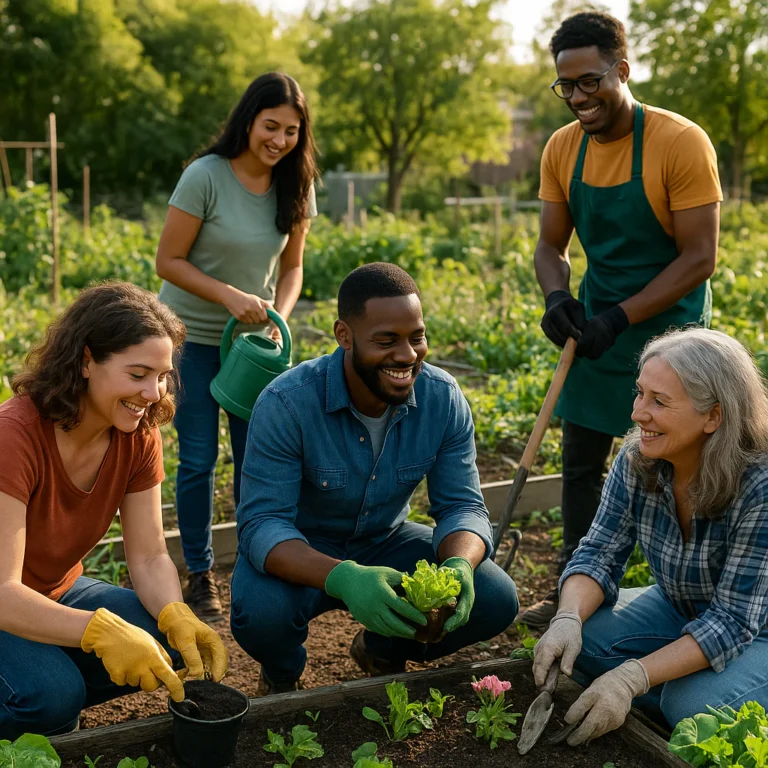
Community gardening and edible forest gardens work best together: keep annual beds for quicker harvests, then add thoughtfully chosen fruit trees, berry shrubs, herbs, and other perennial plants for food, habitat, and shade. Start with community goals and a realistic care plan before you plant. A young food forest needs people willing to water it long after planting day’s cheerful group photo.
One detail we’ve learned the practical way: a tree can be planted in an afternoon, but its future depends on who checks it during a dry summer, who gets to harvest its fruit, and whether neighbors feel welcome in the garden. That shared stewardship is what turns a collection of edible plants into a community food forest.
And “forest garden” doesn’t mean you need acres of woodland. The National Center for Appropriate Technology’s community forest-garden case studies feature projects in parks, schools, neighborhoods, and urban spaces, each shaped by its own climate, community, and land arrangements.
Key Takeaways
- Combine annual beds with perennial plantings. Vegetables can provide quicker harvests while fruit trees, shrubs, herbs, and other perennials establish.
- Plan for people as carefully as plants. Agree on access, harvest rules, maintenance roles, and long-term land stewardship before planting.
- Match plants to the local climate and site. Check sunlight, soil, water, mature plant size, and regional guidance; a forest-garden planting list is never one-size-fits-all.
- Start small and expand in phases. A manageable, well-cared-for garden beats an ambitious planting that overwhelms volunteers.
- Design for more than food. Paths, seating, accessible features, habitat, learning, and gathering spaces help the garden serve the wider community.
- Treat maintenance as part of the design. Young plants need establishment care, and mature food forests still require pruning, monitoring, harvesting, and shared attention.
Table of Contents
- ⚡️ Quick Tips and Facts
- 🌱 Community Gardening and Edible Forest Gardens: What They Are
- What Is a Community Garden?
- What Is an Edible Forest Garden?
- How Forest Gardening Differs From a Traditional Community Garden
- 📜 Roots of Community Gardening and Forest Gardening
- A Brief History of Shared Growing Spaces
- The Origins and Principles of Forest Gardening
- 🌳 Why Combine Community Gardens and Edible Forest Gardens?
- Food Security, Fresh Produce, and Local Food Resilience
- Biodiversity, Pollinators, and Wildlife Habitat
- Soil Health, Water Conservation, and Climate Resilience
- Health, Well-Being, and Community Connection
- 🧭 Planning a Community Edible Forest Garden
- Set Goals and Agree on a Shared Vision
- Choose a Suitable Site and Assess Local Conditions
- Check Land Access, Permissions, and Long-Term Stewardship
- Map Sunlight, Shade, Slope, Wind, and Microclimates
- Test Soil, Identify Contaminants, and Plan Remediation
- Design for Accessibility, Safety, and Inclusive Use
- 🗺️ Designing the Garden: From Canopy to Ground Cover
- The Seven Layers of an Edible Forest Garden
- Paths, Gathering Places, Water, and Compost Areas
- Guilds, Companion Planting, and Beneficial Plant Relationships
- Balancing Food Production, Habitat, and Open Space
- 🍎 Choosing Plants for a Community Food Forest
- Fruit and Nut Trees for Your Climate
- Berry Shrubs, Vines, and Perennial Vegetables
- Herbs, Ground Covers, and Useful Native Plants
- Pollinator Plants, Nitrogen Fixers, and Dynamic Accumulators
- Native, Noninvasive, and Regionally Adapted Plant Choices
- A Sample Planting Plan for Different Climates
- 🪴 Establishing an Edible Forest Garden
- Prepare the Site and Build Healthy Soil
- Plant Trees, Shrubs, Perennials, and Ground Covers
- Mulching, Watering, and Protecting Young Plants
- Starting Small and Expanding in Phases
- 🧤 Community Garden Management and Shared Stewardship
- Form a Planning Team and Define Roles
- Create Fair Harvesting and Food-Sharing Guidelines
- Set Garden Rules, Workdays, and Communication Channels
- Welcome New Gardeners and Support Intergenerational Learning
- Prevent Conflict and Make Decisions Together
- 💧 Maintenance Through the Seasons
- Watering, Irrigation, and Rainwater Harvesting
- Pruning Fruit Trees and Managing Plant Growth
- Wed, Pest, and Disease Management Without Unecessary Chemicals
- Composting, Soil Building, and Nutrient Cycling
- Seasonal Tasks for a Shared Food Forest
- 🧺 Harvesting, Preserving, and Sharing the Yield
- When and How to Harvest Fruits, Nuts, Herbs, and Greens
- Food Safety and Harvest Hygiene
- Preserving Surplus and Reducing Food Waste
- Sharing Produce Fairly With the Wider Community
- 🤝 Equity, Accessibility, and Community Well-Being
- Designing for Different Abilities, Ages, and Languages
- Cultural Food Traditions and Community-Led Plant Choices
- Keeping the Garden Welcoming, Safe, and Affordable
- 💰 Funding, Partnerships, and Long-Term Sustainability
- Grants, Donations, and In-Kind Support
- Working With Schools, Local Governments, and Community Groups
- Budgeting for Tools, Plants, Water, and Ongoing Care
- Planning for Leadership Changes and Garden Continuity
- 🔬 Measuring Success and Learning as You Grow
- Track Harvests, Participation, Biodiversity, and Soil Health
- Use Community Feedback to Improve the Garden
- Document Lessons and Share Knowledge
- 🌿 Common Challenges and Practical Solutions
- Limited Space, Poor Soil, and Water Restrictions
- Vandalism, Theft, and Unwanted Garden Visitors
- Slow Tree Establishment and Uneven Harvests
- Volunteer Burnout and Unequal Workloads
- ✅ Common Questions About Community Edible Forest Gardens
- How Much Space Do You Need to Start?
- How Long Until an Edible Forest Garden Produces Food?
- Can You Create a Food Forest in a Small Urban Garden?
- Who Owns and Maintains a Community Food Forest?
- What Are the Best Beginner-Friendly Edible Plants?
- 🌟 Conclusion
- 🔗 Recommended Links
- 📚 Reference Links
⚡️ Quick Tips and Facts
At Community Gardening™, we think a community garden and an edible forest garden make a particularly good team: one brings people together to grow food, while the other layers long-lived edible plants into a habitat-rich landscape.
| Quick fact | What it means for your project |
|---|---|
| A food forest is deliberately designed. | It borows woodland structure but is planted for useful harvests, habitat, and human access. It is not simply a patch of trees left to fend for itself. |
| The familiar seven layers are a design tool, not a checklist. | Canopy trees, smaller trees, shrubs, herbs, ground covers, roots, and climbers can fit where the site and climate allow. A tiny garden does not need every layer in every corner. |
| Perennial does not mean maintenance-free. | Young trees need establishment care; mature plantings still need pruning, monitoring, path management, and fair-harvest guidelines. |
| Community decisions matter as much as plant choices. | Agree on land access, harvesting, safety, maintenance, and who can use the space before the first tree goes in. |
| Start with a manageable area. | A small, well-cared-for planting can teach the group more than an ambitious design no one has time to maintain. |
| A food forest can support multiple goals. | Food, shade, pollinator habitat, rainwater absorption, outdoor learning, and places to gather can share the same ground. |
The research picture is promising, but not every claimed benefit is equally proven. A 2018 conceptual review describes edible forest gardens as promising urban green infrastructure, while also calling for more research on their health and biodiversity effects. Treat those potential benefits as a strong design rationale, not a guarantee. (Frontiers in Psychology review)
Our field-note version: choose the people and purpose first, match plants to the place, then plan who will care for the garden after the opening-day photos. One of those decisions tends to be forgotten. We’ll come back to it.
🌱 Community Gardening and Edible Forest Gardens: What They Are
What Is a Community Garden?
A community garden is a shared growing space where people work together under agreed arrangements. It might have individual plots, shared beds, an orchard, a school garden, or a mix of all four. The defining feature is not the shape of the beds; it is shared access, stewardship, and decision-making.
For practical background on starting and organizing one, see our guide to community gardening. A thriving garden also needs clear community garden policies: who can harvest, who maintains paths, what happens when a volunteer steps away, and how neighbors can raise concerns.
What Is an Edible Forest Garden?
An edible forest garden, also called a food forest, is a planned, multi-layer planting inspired by woodland edges and young forests. It combines perennial food plants with species that provide shade, nectar, habitat, soil cover, biomass, or other useful functions.
The National Center for Appropriate Technology describes community forest gardens as agroforestry systems combining trees with mostly edible understory plants in multiple layers. Depending on climate and design, a planting may include fruit or nut trees, berry shrubs, perennial vegetables, herbs, ground covers, vines, roots, and fungi. (NCAT: Community Forest Gardens case studies)
“Forest” describes the structure, not a requirement to plant a forest-sized site. A sunny border, courtyard, rooftop, or narrow public strip can use some forest-garden principles. The featured video makes this point with examples ranging from a young home garden to a compact, layered planting on an industrial estate.
How Forest Gardening Differs From a Traditional Community Garden
| Feature | Traditional annual-bed garden | Edible forest garden |
|---|---|---|
| Main crops | Often vegetables and flowers replanted each season | Often trees, shrubs, and perennial crops, sometimes mixed with annuals |
| Time horizon | Seasonal planning and harvest | Long-term establishment, with harvests changing as plants mature |
| Layout | Rows, beds, or individual plots | Layers, guilds, paths, clearings, and habitat zones |
| Early workload | Bed preparation, sowing, weding, and frequent crop turnover | Site preparation, planting, watering, pruning, and protection while plants establish |
| Mature workload | Repeated seasonal cultivation | May reduce some replanting and soil disturbance, but still needs active stewardship |
| Best fit | Fast annual harvests and clearly defined individual plots | Shared perennial harvests, shade, habitat, learning, and longer-term landscape goals |
Neither approach is automatically better. Annual beds can provide fast, familiar harvests and suit gardeners who want individual plots. A forest garden can add long-lived crops and habitat, but asks the group to plan well beyond its first season. Many community gardens benefit from a hybrid: keep open annual beds for quick-turn crops, then add perennial layers along edges or in a shared orchard zone.
📜 Roots of Community Gardening and Forest Gardening
A Brief History of Shared Growing Spaces
People have grown food collectively in many forms, from shared orchards and allotments to school gardens and neighborhood gardens. Today’s projects often respond to several needs at once: access to fresh food, practical education, social connection, ecological restoration, and a welcoming place outdoors.
That breadth matters. The 2018 review on urban edible forest gardens argues that green spaces can contribute to health through several possible pathways: mitigating environmental stressors, supporting psychological restoration, and encouraging activity and social connection. These are useful lenses for design, not promises that one garden will fix every health or neighborhood challenge. (Frontiers in Psychology)
Community projects also take many forms. Boston’s resident-led food forests, Lawrence Community Orchard, and school food forests in Miami-Dade County show how land ownership, public access, education, and harvesting rules can differ while still supporting shared stewardship. (NCAT case studies)
The Origins and Principles of Forest Gardening
Forest gardening is a modern label for a broad family of practices; it should not erase Indigenous and place-based histories of caring for useful plants, forests, and food-producing landscapes. The NCAT case studies emphasize that forest gardens have long Indigenous stewardship roots and are now adapted to cities, parks, schools, farms, and homes. Learn the ecological and cultural context of your region before treating a design as a universal recipe.
Common design principles include:
- Layer plants by height and habit where light, climate, and access permit.
- Keep soil covered with living plants or appropriate organic mulch.
- Build diversity, rather than depending one crop or variety.
- Choose species for multiple functions, such as food, pollinator forage, shade, or biomass.
- Design for people, including clear paths, safe harvesting, and places to pause.
- Adapt to local conditions, rather than copying a planting plan from a different climate.
These principles do not mean “never water,” “never prune,” or “never use fertilizer.” That’s where forest-garden marketing can outrun the gardening. Young plants, drought-prone sites, compacted urban soils, and heavily harvested areas may need deliberate support. Let site conditions and plant needs—not slogans—guide the work.
🌳 Why Combine Community Gardens and Edible Forest Gardens?
Food Security, Fresh Produce, and Local Food Resilience
Fruit, nuts, berries, herbs, and perennial vegetables can extend the range of crops available in a shared garden. They can also complement annual beds rather than replace them. A young orchard, for example, may take time to produce substantial harvests, while leafy greens and annual vegetables can supply food sooner.
Community projects can decide how produce is shared: open harvesting, scheduled harvest days, school meals, food-bank donations, or a pay-what-you-can model. Coastal Roots Farm in California reports producing about 37,000 pounds of food annually across its agroforestry operation, with more than 70% donated or sold through a pay-what-you-can farmstand. That is a specific, established project—not a yield forecast for a new neighborhood garden. (NCAT case studies)
For ideas about crops suited to shared growing, browse our edible plants resources. To make food access real, pair planting plans with distribution plans: who harvests, who receives food, and how people hear about it?
Biodiversity, Pollinators, and Wildlife Habitat
Layered planting can create a more varied range of food and shelter than a closely mown lawn or a single-crop bed. Flowering herbs, shrubs, trees, leaf litter, and undisturbed corners may support pollinators and other wildlife—provided the plant selection and management suit local ecology.
A diverse planting can also improve pest management opportunities. The featured video describes beneficial wasps visiting a mixed planting and feeding on cabbage white butterfly eggs or caterpillars. That is a helpful example of habitat supporting natural pest control, but it is not a promise that pests will disappear. Monitor crops and use integrated pest management rather than relying one beneficial insect to save the kale.
✅ Good practice: include locally appropriate native plants where possible, provide blooms across the season, and avoid invasive species.
❌ Avoid: assuming every plant labeled “pollinator-friendly” is suitable everywhere, or adding insect hotels as a substitute for diverse habitat and pesticide-conscious care.
Soil Health, Water Conservation, and Climate Resilience
Perennial roots, mulch, and reduced soil disturbance can help keep soil covered and support soil structure. Tree canopies and layered vegetation can provide shade, while well-planned planting and earthworks may help slow runoff. But the details matter: a slope, a compacted schoolyard, and a shaded courtyard require different strategies.
At Grow Enrichment’s Two Rivers Park in Nashville, contour-aligned infiltration basins filled with woody material and organic matter are used to catch runoff. The project’s approach is a site-specific example, not a universal instruction to dig trenches. Before changing drainage, slope, or water flow, check local rules and consult qualified professionals where needed. (NCAT case studies)
We recommend checking local climate trends and choosing resilient crops with advice from regional extension or horticulture services. Our climate adaptation in gardening resources can help your group think through heat, drought, heavy rainfall, and shifting growing conditions.
Health, Well-Being, and Community Connection
A garden can invite gentle activity, informal learning, and neighborly conversation. It can also offer quieter experiences: sitting beneath a tree, listening to birds, or finding a sheltered bench away from a busy path. The 2018 review describes these as possible restorative qualities, including nature, species richness, and refuge. In a community setting, social and quiet uses may compete, so design both.
A practical compromise:
- Put active work areas, teaching beds, and gathering space near the entrance.
- Add a quieter seating spot along a garden edge.
- Keep paths legible and accessible so visitors can choose their level of engagement.
- Schedule workshops and work parties, then leave some open hours calm.
- Ask neighbors which uses they value before locking in the layout.
For workshops, planting days, and shared harvest celebrations, explore Community Garden Events. A garden’s social value can be substantial even when its food yield is modest.
🧭 Planning a Community Edible Forest Garden
Set Goals and Agree on a Shared Vision
Before selecting trees, answer the questions that keep projects from becoming beautiful but confusing:
- Who is the garden for? Nearby residents, a school, a housing community, the public, or a defined group?
- What should it do first? Grow food, improve shade, create habitat, teach, host neighbors, or combine goals?
- What does “shared harvest” mean? Open picking, volunteer harvest, assigned portions, or donation?
- How much volunteer capacity exists? Count reliable people and hours, not only enthusiastic opening-day hands.
- What will success look like after one, three, and five years?
We once saw a group spend an entire meeting debating whether to plant a pear or a plum tree. The more urgent question—who would water either tree in July—was still unanswered. A one-page vision and a maintenance commitment would have saved everyone time.
Choose a Suitable Site and Assess Local Conditions
Walk the site at different times of day and, if possible, after rain. Note sunlight, shade, wind, drainage, foot traffic, existing vegetation, utilities, and nearby buildings. Ask neighbors how the space is already used; a “vacant” lot may be a well-loved route, play area, or informal gathering place.
Check:
- Land ownership and permission for planting.
- Access to water and whether a connection is allowed.
- Sun exposure across the growing season.
- Soil compaction, contamination risk, and drainage.
- Accessibility for wheelchairs, carts, and maintenance equipment.
- Visibility and safety, including lighting and sightlines.
- Local restrictions on trees, fences, signs, and water harvesting.
The case studies show a range of tenure arrangements: land trusts, public-park partnerships, leases, and annual permits. Secure access is not a paperwork flourish; trees can outlive the committee that planted them. (NCAT case studies)
Check Land Access, Permissions, and Long-Term Stewardship
Get written clarity before planting. Confirm who owns the land, who carries insurance, who pays for water, who approves structures, and what happens to the planting if the project ends or land use changes.
A simple agreement should cover:
- Length and renewal terms for site access.
- Responsibility for trees, tools, structures, and utilities.
- Public hours and closure procedures.
- Harvest and food-safety practices.
- Insurance, volunteer safety, and incident reporting.
- Tree maintenance and succession planning.
- What happens if the garden must be relocated or removed.
Boston Food Forest Coalition’s land-trust model illustrates one way to support long-term community access; other projects use public permits or leases. There is no single best legal model—the best one is the arrangement the community can understand, maintain, and protect.
Map Sunlight, Shade, Slope, Wind, and Microclimates
Make a basic site map and record conditions rather than relying on memory. Mark where sun falls in the morning and afternoon, where water pools, and which areas dry quickly. A sunny path edge may suit herbs and strawberries; a shaded north-facing strip may suit different plants entirely.
For sloped land, plan carefully. Contour planting, terraces, and ground cover can help manage erosion, but excavation or retaining structures can create serious risks if poorly designed. The urban Hobart example in Good Life Permaculture describes using contour shelves and fast-establishing cover on a steep slope; its specific methods and dimensions are not automatically safe for another site. (Edible forest gardening case study)
Do not improvise major earthworks. Check local engineering requirements and get professional advice for steep banks, retaining walls, drainage changes, or structures near buildings.
Test Soil, Identify Contaminants, and Plan Remediation
Urban sites can have unknown histories. Before growing food directly in the ground, investigate past land use and arrange appropriate soil testing through a reputable laboratory or local extension service. If contamination is possible, follow local public-health guidance on testing, raised beds, barriers, and safe soil sourcing.
The U.S. Environmental Protection Agency explains how brownfield assessment and cleanup works and why site history matters. (EPA: Brownfields) For general soil testing guidance, contact your local university extension service; the right test depends on what you are checking.
✅ Keep testing records and share results with the project team.
❌ Do not assume that healthy-looking weeds prove soil is safe.
❌ Do not bring in “free fill” without confirming its origin and suitability.
Design for Accessibility, Safety, and Inclusive Use
A public or shared garden should be usable by more than the people who can knel comfortably and lift a full watering can. Include firm, stable paths; clear turning areas; seating; readable signs; and work tasks at different heights and levels of effort. Ask community members with disabilities to review plans early, while changes are still easy.
Safety-minded design includes:
- Clear sightlines near entrances and gathering areas.
- Safe tool storage and a sign-out routine.
- Non-toxic, correctly identified plants near play or food areas.
- Paths that do not require visitors to walk beneath unstable branches.
- Clear rules for ladders, picking poles, and harvesting.
- Accessible water points and handwashing options where practical.
The aim is not a sterile landscape. It is a garden where more people can participate confidently.
🗺️ Designing the Garden: From Canopy to Ground Cover
The Seven Layers of an Edible Forest Garden
The seven-layer framework is a handy way to imagine vertical space. It is not a rule that every site must contain seven layers, nor a promise that plants will coexist without competition. Think of each layer as a design opportunity.
| Layer | Typical role | Example plant types |
|---|---|---|
| Canopy | Tall tree structure, shade, nuts, or fruit | Regionally suitable nut or fruit trees |
| Lower tree | Smaller fruit trees or understory trees | Dwarf or naturally smaller fruit trees |
| Shrub | Berries, habitat, and seasonal structure | Currants, gooseberries, elderberries where suitable |
| Herbaceous | Perennial vegetables, herbs, flowers | Chives, perennial greens, flowering herbs |
| Ground cover | Soil cover, edible leaves, flowers | Strawberries or suitable low-growing plants |
| Root layer | Edible roots and soil activity | Perennial root crops suited to local conditions |
| Climber | Vertical crops on supports or trees | Grapes or other climate-appropriate vines |
This model is especially useful when space is limited, but light is the limiting currency. A dense canopy can shade out sun-loving crops; a ground cover that spreads aggressively can crowd smaller plants. The featured video’s small-scale examples emphasize choosing layers selectively rather than cramming all seven into every bed.
Paths, Gathering Places, Water, and Compost Areas
Paths are working infrastructure. Make them wide enough for expected traffic and tools, and connect the entrance to harvest areas, seating, water, and compost. Place high-use crops where visitors can reach them without trampling sensitive plantings.
Include:
- A visible entrance with a simple welcome and harvest guidance.
- A gathering zone for meetings, lessons, and community events.
- Quiet seating with shade where possible.
- Water access placed to reduce hose hazards and unnecessary carrying.
- Compost or mulch storage away from paths and neighboring doors where odors or pests could become a concern.
- Clear signage identifying edible plants and explaining what visitors may harvest.
The balance between social activity and solitude is worth deliberate attention. A lively event space is a plus; a bench beside the loudest tool-storage area is less so.
Guilds, Companion Planting, and Beneficial Plant Relationships
A plant guild groups species that may support different functions around a focal plant—for example, a fruit tree with flowering herbs, ground cover, or biomass plants. The idea is useful, but “guild” is not a magic word: plants still compete for light, water, nutrients, and room.
Build a guild by asking:
- What does the focal plant need as it establishes?
- Which plants provide useful flowers, ground cover, edible harvest, or mulch material?
- Could any companion become invasive or too competitive?
- Can volunteers reach the tree for pruning and harvest?
- How will the group thin or replace plants if the design becomes crowded?
Start with a few compatible species and observe them. A simple guild that gardeners understand beats a complicated diagram nobody can maintain.
Balancing Food Production, Habitat, and Open Space
A forest garden can be dense and still feel welcoming, but only if visitors can see where to go and how to use it. Provide open sightlines near entrances and paths, layered habitat elsewhere, and enough room for people to gather without trampling crops.
Consider a simple zoning approach:
| Zone | Primary use | Design cue |
|---|---|---|
| Welcome edge | Orientation and easy harvest | Signs, accessible path, familiar herbs or berries |
| Active garden | Work, teaching, and harvesting | Beds, tool access, water, durable surfaces |
| Orchard or food-forest core | Perennial crops and habitat | Clear routes, tree guards, harvest labels |
| Quiet edge | Rest and nature observation | Seating, shade, lower activity |
| Wildlife corner | Habitat and seasonal interest | Leaf litter, native plants, limited disturbance |
More plants are not always more useful. Preserve open space where children learn, older neighbors sit, or people simply want to enjoy the garden.
🍎 Choosing Plants for a Community Food Forest
Fruit and Nut Trees for Your Climate
Choose trees by local hardiness, chill requirements, disease pressure, mature size, pollination needs, harvest timing, and community familiarity. A tree that produces beautifully in a catalog photo may struggle in your climate or become too large for a path.
Before buying, ask a local nursery, extension service, or experienced orchard grower:
- Does the variety suit the region’s winter and summer conditions?
- Does it require a compatible pollination partner?
- Is it prone to local pests or diseases?
- Can the group reach the fruit safely?
- Will the mature canopy shade neighboring beds or buildings?
- Is the crop culturally familiar and useful to local residents?
The NCAT projects show how varied regional planting can be: paw and pecan in some places, mango and jackfruit in warmer climates, and apples, figs, or berries elsewhere. That variety is the point. Local fit beats trendiness.
Berry Shrubs, Vines, and Perennial Vegetables
Berry shrubs and perennial vegetables can begin producing sooner than many trees, while vines make use of vertical space. Select plants with accessible harvests and clear identification, especially in public spaces where visitors may be unfamiliar with the crops.
Potential categories to explore with local growing advice:
- Berry shrubs suited to the region.
- Perennial onions and perennial leafy vegetables.
- Culinary herbs that tolerate the site’s sun and soil.
- Vines grown on sturdy, maintainable supports.
- Ground-cover crops that do not smother paths or young trees.
The featured video highlights a young garden with honeyberries, Japanese wineberry, perennial onions, kale varieties, artichokes, and other useful plants. These are examples, not a universal shopping list; climate and local invasive-species guidance should decide what belongs in your garden.
Herbs, Ground Covers, and Useful Native Plants
Herbs can offer accessible harvests and flowers for pollinators. Ground covers can protect soil, but the wrong one can run through a bed like it owns the place. Native plants can support local wildlife and connect a garden with regional ecology, while edible natives may be unfamiliar or require careful identification.
Before planting, confirm:
- Whether a plant is invasive in your region.
- Whether it is safe for the intended users and pets.
- How aggressively it spreads.
- Whether its water and light needs match the location.
- Whether harvest or preparation requires special knowledge.
Use our edible plants category as a starting point, then cross-check choices with local experts.
Pollinator Plants, Nitrogen Fixers, and Dynamic Accumulators
Functional plants can contribute nectar, pollen, biomass, soil cover, or other ecological services. However, labels such as “nitrogen fixer” or “dynamic accumulator” can be oversimplified. Their actual benefit depends on species, soil, management, and whether the biomass is retained or removed.
A practical approach:
- Plant flowers that bloom at different times through the growing season.
- Include locally appropriate legumes where they fit the design.
- Use biomass plants only where volunteers can manage their size and spread.
- Leave some habitat undisturbed when safe and appropriate.
- Observe which pollinators and beneficial insects actually visit.
Think in functions, then verify the plant. A plant’s marketing label is not a substitute for regional horticultural advice.
Native, Noninvasive, and Regionally Adapted Plant Choices
Community gardens should avoid turning a shared planting into an invasive-species distribution network. Check regional invasive plant lists and favor disease-resistant varieties with suitable climate needs. When choosing edible species, also consider whether the plant is legal to sell, share, or grow in your area.
A balanced plant palette can include:
- Native species for habitat and local ecological fit.
- Carefully selected food crops suited to the climate.
- Heritage or culturally significant varieties requested by residents.
- Diverse flowering plants across seasons.
- A mix of early, mid-season, and late harvests.
Ask residents what they want to eat. A garden plan that reflects local food traditions is more likely to be cared for—and harvested.
A Sample Planting Plan for Different Climates
There is no responsible one-size-fits-all planting list, but this comparison shows how to think about regional adaptation. Confirm individual species with local extension or a knowledgeable nursery before ordering.
| Climate context | Possible design emphasis | Planning caution |
|---|---|---|
| Cold-winter temperate | Hardy fruit trees, berry shrubs, perennial herbs, pollinator flowers | Check winter hardiness, bloom timing, and pollination compatibility |
| Warm temperate | Diverse fruit trees, berries, perennial greens, vines | Account for summer heat, humidity, and disease pressure |
| Mediterranean or dry-summer | Drought-adapted trees and shrubs, water-wise ground cover, careful irrigation zones | Establishment watering may still be essential |
| Subtropical or tropical | Heat-adapted fruit trees, edible understory, shade-tolerant crops | Manage rapid growth, storms, pests, and seasonal flooding |
| Small urban courtyard | Dwarf or compact trees, containers, vertical crops, partial layers | Protect light, access, and drainage; avoid crowding |
The Coastal Roots Farm case study demonstrates a climate-zoned approach, using desert, Mediterranean, and subtropical guilds with adjusted irrigation. Different parts of one garden can have different needs, so avoid forcing every plant into the same watering schedule. (NCAT case studies)
🪴 Establishing an Edible Forest Garden
Prepare the Site and Build Healthy Soil
Start with a site assessment and soil test, then remove hazards and invasive plants using appropriate methods. Do not strip or till more soil than necessary. If a site is heavily compacted, contaminated, or steep, get local technical advice before major intervention.
A step-by-step preparation sequence:
- Confirm access and utilities. Locate underground services before digging.
- Map existing plants and drainage. Keep useful trees and established habitat where possible.
- Test soil and review site history. Decide whether in-ground growing is suitable.
- Control invasive plants. Choose methods that do not create new hazards or spread fragments.
- Improve soil carefully. Add clean, appropriate organic matter based on soil conditions.
- Protect the soil surface. Use mulch or suitable ground cover without piling material against tree trunks.
- Install paths and water access. Make maintenance feasible before planting densely.
A soil-building strategy should suit the site; adding compost indiscriminately can create nutrient imbalances or introduce contaminants. Ask a local extension service for testing and amendment guidance.
Plant Trees, Shrubs, Perennials, and Ground Covers
Planting order matters. Place larger trees first, then shrubs and smaller plants after considering mature size and light. Label plants clearly, record planting dates, and keep a site map: otherwise a new volunteer may “weed” the prized perennial onion right out of existence.
Planting steps:
- Mark each plant location and check mature spacing.
- Confirm the root ball is healthy and the plant is correctly identified.
- Dig a hole suited to the root system and local planting guidance.
- Set the plant at the appropriate depth; avoid burying the trunk flare.
- Backfill with suitable soil and water thoroughly.
- Mulch the root zone, keeping mulch away from the trunk.
- Add tree protection if browsing, lawn equipment, or vandalism is likely.
- Label the plant and note who will monitor it.
Plant in suitable weather and season for your region. A planting day is a celebration; the watering schedule that follows is the actual start of the project.
Mulching, Watering, and Protecting Young Plants
Young perennials need establishment care. Their roots have not yet explored surrounding soil, so do not assume a “low-maintenance” design can survive a hot, dry first summer without help.
Make a simple care plan with:
- Named watering leads and backup volunteers.
- A schedule adjusted for rainfall, soil, plant type, and weather.
- Tree guards where animals or equipment could cause damage.
- Mulch checks after heavy rain or wind.
- A method to report wilting, broken branches, or pest problems.
- A plan for holidays and volunteer absences.
Use weather and soil moisture checks rather than a rigid calendar alone. Deep, appropriate watering is generally more useful than frequent light sprinkling, but requirements vary by plant and soil. For local guidance, check your extension service and our climate adaptation resources.
Starting Small and Expanding in Phases
A phased project lowers risk and helps the community learn. For example:
- Phase 1: secure land, soil results, paths, water, and a few resilient trees.
- Phase 2: add shrubs, herbs, perennial vegetables, and habitat plants.
- Phase 3: expand after the group has tested maintenance and harvest systems.
- Phase 4: add education, seating, or specialized features if the project has capacity.
Lawrence Community Orchard’s case study recommends starting small with a few disease-resistant edible trees. That advice is unglamorous in the best way: it leaves room to learn before the garden grows beyond the group’s capacity. (NCAT case studies)
🧤 Community Garden Management and Shared Stewardship
Form a Planning Team and Define Roles
Create a small coordinating team with clearly defined responsibilities. Roles might include site liaison, volunteer coordinator, water lead, harvest coordinator, safety contact, and communications lead. One person can hold multiple roles at first, but make the responsibilities visible.
Write down:
- How decisions are made.
- Who has authority to approve spending or changes.
- How new volunteers are welcomed.
- Who maintains records and access agreements.
- What happens when a role holder steps away.
Boston’s case study shows the value of administrative support for insurance, utilities, communications, and accounting, alongside resident leadership. Not every project needs a nonprofit or land trust, but every project benefits from knowing who is doing the unglamorous work.
Create Fair Harvesting and Food-Sharing Guidelines
A public harvest can be generous and still require limits. Set simple rules before fruit ripens, not while three people are reaching for the same branch.
Include:
- Which areas are open to harvest.
- Whether fruit is for visitors, volunteers, schools, or partner organizations.
- How much a visitor may take.
- Which tools are allowed and whether ladders are prohibited.
- How to identify ripe crops.
- How produce is handled and shared.
- What to do with fallen, damaged, or surplus fruit.
Lawrence Community Orchard uses “It’s ripe” signs and asks visitors to limit harvests to 15 fruits, while Seattle’s Beacon Food Forest emphasizes ethical harvesting and sharing. Those are examples, not universal rules; choose limits that fit local needs and crop supply. (NCAT case studies)
Set Garden Rules, Workdays, and Communication Channels
Keep rules short enough that people will read them. Use signs at the entrance and a fuller policy document for volunteers. Workdays can be monthly or seasonal, with flexible tasks for people who cannot attend regularly.
Useful communication tools include:
- A garden email list or messaging group.
- A public calendar for workdays and harvest events.
- A task board with “easy,” “medium,” and “needs training” labels.
- A shared plant map and maintenance log.
- A contact method for reporting hazards or concerns.
For inspiration on organizing activities, see Community Garden Events. For rules, permissions, and visitor guidance, consult Community Garden Policies.
Welcome New Gardeners and Support Intergenerational Learning
People arrive with different skills. One volunteer may prune fruit trees; another may be excellent at greeting neighbors, translating signs, organizing snacks. Offer a range of roles and explain tasks without assuming prior gardening knowledge.
Try:
- A short orientation for new volunteers.
- Pairing experienced growers with beginners.
- Demonstrations before using tools or pruning plants.
- Multilingual labels where useful.
- Family-friendly activities and low-lift tasks.
- Opportunities to work quietly or socially.
School food forests in Miami-Dade County show how perennial planting can connect food production with science and math lessons. Their curriculum and staffing are project-specific, but the broader lesson travels: learning belongs in the garden from the beginning, not as a last-minute add-on. (NCAT case studies)
Prevent Conflict and Make Decisions Together
Common disagreements include whether harvesting should be open, which plants belong, how wild the garden should look, and who gets to decide. Establish a process before those issues become personal.
A workable process:
- State the shared goal and the decision to be made.
- Invite affected users to contribute, including nearby neighbors.
- Separate preferences from safety, legal, or ecological requirements.
- Record options and trade-offs.
- Agree on a decision method—consensus, vote, or delegated authority.
- Set a review date so the group can adjust based on experience.
A garden can support both structured food production and a more naturalistic feel. It does not need to look “tidy” to be cared for, but it does need signs, paths, and agreed boundaries so visitors know what is intentional.
💧 Maintenance Through the Seasons
Watering, Irrigation, and Rainwater Harvesting
Water planning should account for establishment, mature plant needs, local rainfall, soil type, and water restrictions. Drip irrigation can reduce weting of paths and deliver water to planted areas, but it needs inspection and repair. Rainwater harvesting may help where legal and technically appropriate; check regulations and safe-storage practices first.
A community watering plan should list:
- Which plants need priority during dry spells.
- Who checks the system and when.
- How to report a leak or blocked emitter.
- Where hoses are stored.
- What to do during water restrictions.
- Which plants are expected to cope with local conditions once established.
Coastal Roots Farm’s case study uses different irrigation levels for different climate-based planting zones. That illustrates a useful principle: water by need, not by habit. (NCAT case studies)
Pruning Fruit Trees and Managing Plant Growth
Pruning supports tree structure, access, and crop quality, but incorrect pruning can damage trees or create safety issues. Train volunteers before they prune, and use qualified arborists for large, hazardous, or overhead work.
For community fruit trees:
- Keep a record of species, variety, and planting date.
- Learn the correct pruning window for each crop and region.
- Keep paths and accessible routes clear.
- Remove dead or hazardous branches using appropriate expertise.
- Thin crowded plants before they become difficult to access.
- Never encourage public ladder use without a suitable safety plan.
The 25-year-old forest garden described by Good Life Permaculture became more navigable after some closely planted fruit trees were removed. That is a useful reminder: planting more is easy; editing later is harder. (Good Life Permaculture)
Wed, Pest, and Disease Management Without Unecessary Chemicals
Start with observation and prevention. Correct plant spacing, healthy soil, sanitation, habitat diversity, and resistant varieties can reduce some problems. Identify pests before taking action; a caterpillar, aphid, or leaf spot may need a different response—or no intervention at all.
Integrated pest management basics:
- Identify the organism and assess the damage.
- Decide whether the problem threatens plant health or the harvest.
- Use physical removal or barriers where appropriate.
- Encourage beneficial organisms with suitable habitat.
- Choose a targeted treatment only if needed and permitted.
- Follow label directions and protect children, pollinators, and visitors.
Avoid routine pesticide use in a shared food garden. If any treatment is considered, follow local laws, product labels, and food-safety directions. The U.S. EPA offers information on pesticide use and label requirements. (EPA: Pesticide labels)
Composting, Soil Building, and Nutrient Cycling
Composting can return suitable plant material to the garden, but shared piles need clear rules. Decide what goes in, how piles are managed, and how to prevent odors or pest attraction. Do not add diseased material, invasive seed heads, or animal products unless your system is specifically designed and managed for them.
A practical compost system needs:
- A clearly designated location.
- A balance of suitable “greens” and “browns.”
- Enough moisture and airflow.
- A person responsible for monitoring.
- Signs explaining acceptable materials.
- A plan for finished compost and unwanted inputs.
For general guidance, see the U.S. Environmental Protection Agency’s composting at home resource. Follow local municipal rules, especially in urban settings.
Seasonal Tasks for a Shared Food Forest
| Season | Shared tasks to consider |
|---|---|
| Spring | Inspect winter damage, refresh labels, plant suitable crops, check irrigation, plan pollinator blooms |
| Summer | Water young plants, monitor pests, harvest regularly, maintain paths and shade areas |
| Autumn | Collect and share harvests, plant appropriate trees and shrubs, replenish mulch, review the season |
| Winter | Prune where appropriate, repair tools, update the site map, plan training and next season’s work |
Adjust this calendar to your climate. A tropical food forest and a cold-winter orchard do not share one tidy schedule—gardening has never been especially impressed by tidy schedules.
🧺 Harvesting, Preserving, and Sharing the Yield
When and How to Harvest Fruits, Nuts, Herbs, and Greens
Post simple, crop-specific harvest instructions where visitors can see them. Some fruits ripen on the tree; others continue to ripen after picking. Nuts, leafy greens, and herbs have their own timing and handling needs.
Good harvest guidance should explain:
- How to identify ripeness.
- Which crops are open for picking.
- Whether tools are provided.
- How much visitors may take.
- How to avoid damaging branches or plants.
- Where to place overipe or fallen produce.
Use picking poles where appropriate and prohibit unsafe climbing. A clear sign can prevent both wasted fruit and a volunteer scrambling to retrieve someone’s abandoned backpack from a tree.
Food Safety and Harvest Hygiene
Community harvests need clean tools, safe handling, and sensible rules. Provide handwashing access where feasible, clean containers, and guidance on washing produce. Do not distribute food that may have been contaminated by chemicals, animal waste, or unsafe handling.
The U.S. Food and Drug Administration provides guidance for safe handling of fresh produce, including washing under running water and preventing cross-contamination. (FDA: Selecting and serving produce safely) For larger distribution programs, schools, or food banks, follow the partner organization’s food-safety requirements.
Preserving Surplus and Reducing Food Waste
When harvests exceed immediate demand, share quickly and safely. Options include scheduled picking, community kitchens, food banks, freezing, drying, or approved preservation workshops. Preservation methods should be taught by reliable food-safety sources, especially for caning.
Create a surplus plan before peak season:
- Estimate likely harvest windows with local growers.
- Contact food-sharing partners in advance.
- Set a collection and transport process.
- Label produce by crop and harvest date.
- Track what was distributed and what wasted.
- Adjust future planting or harvest rules accordingly.
A productive garden should not become a fruit fly convention.
Sharing Produce Fairly With the Wider Community
Fair sharing can mean different things to different communities. A public orchard may allow limited self-harvest; a school garden may prioritize student meals; another site may reserve some harvest for food-access partners.
Useful approaches include:
- Public signs that explain what may be picked.
- Harvest limits during peak demand.
- Volunteer harvest sessions with open distribution.
- Donation agreements with food banks or community kitchens.
- Pay-what-you-can models.
- Reserved harvests for schools or elders, agreed with the community.
Invite people who are less likely to attend planning meetings. A policy is not equitable just because it uses the word “community.”
🤝 Equity, Accessibility, and Community Well-Being
Designing for Different Abilities, Ages, and Languages
Inclusive design begins with asking people what would help them participate. Provide reachable crops, stable paths, resting places, clear directions, and tasks that do not all require lifting or kneling. Use plain-language signs and translate key information when the community needs it.
Consider access to the garden itself:
- Is there a step-free route from the sidewalk or transit stop?
- Can visitors reach the main harvest and gathering areas?
- Are signs readable from a standing or seated position?
- Is there shade and seating?
- Are workdays scheduled at times that suit caregivers and shift workers?
The urban forest-garden review recommends accessible public settings close to homes. Its discussion of proximity is a design consideration, not a guarantee that every nearby resident will use the garden; outreach, safety, and welcoming programming still matter. (Frontiers in Psychology)
Cultural Food Traditions and Community-Led Plant Choices
Plant selection should reflect the people who use the garden. Ask residents about familiar fruits, greens, herbs, and cooking traditions before finalizing the palette. Include culturally significant plants where they are legal and appropriate to the local climate.
A useful listening process:
- Host a walk-and-talk or shared meal.
- Ask which crops people already grow or miss.
- Invite residents to suggest varieties and uses.
- Confirm that the planting plan can support those plants.
- Give credit to community knowledge and keep it in project records.
Tamōx Talōm Food Forest in San Antonio gathered resident input and prioritized useful, climate-adapted, and culturally significant plants. That kind of consultation helps ensure a project is shaped by neighbors rather than simply placed beside them. (NCAT case studies)
Keeping the Garden Welcoming, Safe, and Affordable
Open access does not mean no structure. Clear public hours, signs, safe paths, and friendly volunteer presence can make a garden more welcoming without turning it into a gated club.
Keep participation affordable by:
- Lending tools rather than requiring personal equipment.
- Offering free workshops and seed or plant swaps.
- Providing tasks that require little time or physical effort.
- Making harvest rules visible and consistent.
- Avoiding unnecessary membership fees.
- Seeking support for water, plants, and accessibility improvements.
For a broader view of the social value gardens may provide, explore Benefits of Community Gardens.
💰 Funding, Partnerships, and Long-Term Sustainability
Grants, Donations, and In-Kind Support
Funding can support trees, soil tests, irrigation, signs, accessibility features, insurance, and staff time. In-kind contributions—such as donated labor, mulch, tools, or professional advice—can help, but should not be counted as a dependable replacement for long-term care.
Build a realistic project budget that includes:
- Planning and soil testing.
- Site preparation and water access.
- Trees, shrubs, guards, and labels.
- Paths, seating, and accessibility.
- Tools, storage, and safety supplies.
- Insurance, permits, and utilities.
- Replacement plants and ongoing maintenance.
- Staff or coordinator support where needed.
Beacon Food Forest began through resident planning and grant support before growing into a larger public project. The useful lesson is not that every project needs a grant; it is that funding should match the actual maintenance plan. (NCAT case studies)
Working With Schools, Local Governments, and Community Groups
Partnerships can provide land access, education, volunteers, expertise, and food distribution. Clarify roles in writing so no partner assumes another group is handling watering, safety, or maintenance.
Potential partners:
- Schools and youth programs.
- Municipal parks or sustainability departments.
- Housing providers and neighborhood associations.
- Food banks, community kitchens, and public-health groups.
- Indigenous organizations and local ecological experts.
- Cooperative extensions, universities, and horticultural societies.
A school garden, for example, must plan around holidays and staff changes. Miami-Dade’s food-forest program added perennials partly because annual school gardens repeatedly struggled during summer breaks, but the project still relies on maintenance support and safeguards. (NCAT case studies)
Budgeting for Tools, Plants, Water, and Ongoing Care
List both one-time and recurring needs. A donated tree is not free if no one can water it, guard it, or prune it. Track volunteer capacity as carefully as money.
A simple annual review can ask:
- What costs recur every year?
- Which tools are missing or unsafe?
- How many plants failed, and why?
- Is water access dependable?
- Are volunteers spending time on tasks the design could simplify?
- What maintenance can be shared with a partner?
Planning for Leadership Changes and Garden Continuity
People move, change jobs, and need a break. Preserve project knowledge so the garden does not depend one expert’s memory.
Keep an accessible project file with:
- Land agreements and permits.
- Site maps and plant lists.
- Maintenance schedules.
- Contacts and emergency information.
- Harvest policies.
- Soil-test results.
- Meeting decisions and budgets.
- Notes about what worked and what did not.
This is the stewardship question we flagged earlier: who cares for the garden after the enthusiastic founders are no longer available every Saturday? The answer should be a system, not a single heroic volunteer.
🔬 Measuring Success and Learning as You Grow
Track Harvests, Participation, Biodiversity, and Soil Health
Choose a few measures that match the project’s goals. If food access is central, record harvest and distribution. If education matters, track lessons and participation. If habitat is a priority, use simple, repeatable observations rather than claiming biodiversity gains from one afternoon’s count.
Possible measures:
| Goal | Practical measure |
|---|---|
| Food access | Harvest weight or counts, donation records, distribution days |
| Participation | Volunteer hours, repeat volunteers, event attendance |
| Learning | Workshops, school visits, participant feedback |
| Plant health | Survival rates, growth notes, pest or disease observations |
| Habitat | Seasonal pollinator observations, bird surveys, flowering periods |
| Accessibility | User feedback, path issues resolved, participation options added |
Coastal Roots Farm’s bird surveys documented 96 species, including 21 confirmed breeding in the food forest. That is a project-specific study, not a number every garden should expect. (NCAT case studies)
Use Community Feedback to Improve the Garden
Ask who is using the garden, who is not, and why. Short conversations, anonymous feedback forms, and translated surveys can reveal barriers that attendance counts miss.
Try questions such as:
- What makes this garden easy or difficult to use?
- Which crops would you like to see?
- Are the harvest rules clear?
- Do you feel welcome here?
- What would make workdays more accessible?
- Is there enough quiet space as well as social activity?
Do not collect feedback merely to display it. Tell people what you heard and what the project changed.
Document Lessons and Share Knowledge
Keep a seasonal record with photos, notes, and decisions. Record failed plantings as well as successes; “that berry shrub needs more sun” is valuable community knowledge, not a gardening confession.
Share learning through open days, tours, work parties, and workshops. Our Community Garden Events category can help spark ideas for gathering and teaching.
🌿 Common Challenges and Practical Solutions
Limited Space, Poor Soil, and Water Restrictions
A small site can still use forest-garden ideas. Prioritize a few layers, use compact or trained plants where appropriate, grow vertically on safe supports, and protect accessible paths. Poor or contaminated soil may require raised beds or other locally approved strategies; test first.
For water limits:
- Choose plants suited to local rainfall and heat.
- Group plants by similar water needs.
- Mulch appropriately.
- Prioritize establishment watering.
- Use drip systems where legal and maintainable.
- Avoid planting more than the group can support.
The featured video’s micro food forest examples show how layered, productive planting can fit compact spaces. But a small site still needs careful attention to mature plant size and shade.
Vandalism, Theft, and Unwanted Garden Visitors
Public gardens need practical boundaries and welcoming visibility. A strong relationship with neighbors is often more useful than a fortress of signs and locks.
Try:
- Clear public-use and harvest guidance.
- Regular volunteer presence.
- Durable signs and plant labels.
- Secure storage for tools.
- Community events that invite neighbors in.
- A simple incident-reporting process.
- Planting valuable crops where they remain visible and accessible.
Do not assume every missing fruit is theft; some visitors may not know the rules, or may believe everything is open for picking. Better communication can solve more than a stern sign.
Slow Tree Establishment and Uneven Harvests
Trees take time. Plan for early harvests from annual beds, herbs, or suitable berry crops while the orchard develops. Plant diversity can spread risk, but it cannot make every crop yield reliably every year.
Manage expectations by:
- Labeling plant age and expected harvest timing.
- Choosing varieties with different harvest windows.
- Recording crop failures and causes.
- Protecting young plants from drought and damage.
- Avoiding promises of specific yields before the garden matures.
A forest garden is a long-term investment. The first harvest may be modest; the first year of shared care is already part of the yield.
Volunteer Burnout and Unequal Workloads
If the same three people do every task, the system needs redesign. Break work into small jobs, set realistic schedules, rotate responsibilities, and make it acceptable to decline tasks.
Burnout prevention:
- Plan fewer tasks and finish them reliably.
- Offer short volunteer shifts.
- Provide clear instructions and needed tools.
- Recognize invisible work such as emails, planning, and transport.
- Build backup coverage for watering and leadership roles.
- Pause expansion when maintenance is already strained.
A garden can be productive without being perpetually “one more planting day” away from success. Sometimes the wisest growing decision is to maintain what is already there.