Support our educational content for free when you purchase through links on our site. Learn more

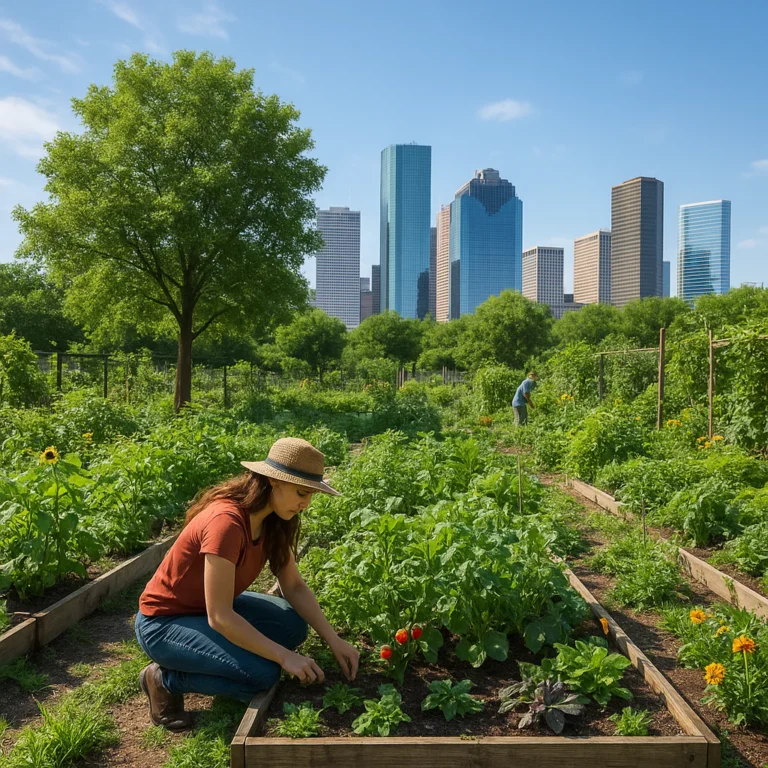
How do community gardens bring people together? They give neighbors a shared place and purpose, where working side by side makes it easier to meet, exchange skills, grow familiar foods, and build lasting connections.
At a garden work party, conversation often starts with a practical question: “Want a hand with that bed?” A few seasons later, those same neighbors might be swapping recipes, sharing seedlings, or checking in when someone misses their usual watering shift. The relationships grow alongside the plants.
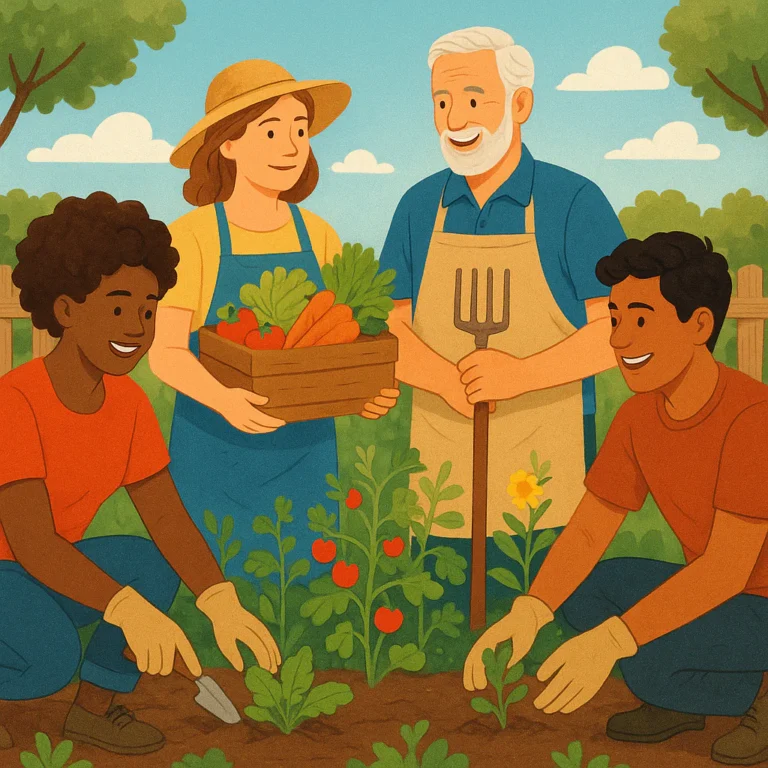
Community gardens can also connect people across ages and backgrounds, support food-sharing and hands-on learning, and give a neighborhood a welcoming place to gather. The key is to make participation genuinely accessible: a garden brings people together when the community helps shape it and everyone has a meaningful way to join in.
Key Takeaways
- Shared work sparks connection: Planting, watering, and harvesting give neighbors natural reasons to talk and cooperate.
- Welcome matters as much as the garden beds: Clear invitations, accessible paths, flexible activities, and shared decisions help more people feel they belong.
- Gardens can serve many purposes: They may support social ties, cultural food traditions, learning, food-sharing, and neighborhood stewardship.
- Start with local priorities: Ask neighbors what they want, choose a manageable first project, and grow the garden as interest and capacity grow.
- Measure more than the harvest: Notice who participates, whether people feel welcome, and what relationships or skills develop.
Table of Contents
- ⚡️ Quick Tips and Facts
- 🌱 What Is a Community Garden, and How Does It Work?
- Common types of community gardens
- How shared garden spaces are organized
- 📜 Roots of Community Gardening and Its Social Traditions
- 🤝 How Community Gardens Bring People Together
- 1. They create a welcoming place to meet
- 2. They turn neighbors into collaborators
- 3. They connect generations through shared skills
- 4. They celebrate cultural food traditions
- 5. They make room for newcomers and diverse communities
- 6. They encourage conversation across social divides
- 7. They build trust through everyday teamwork
- 8. They support mental well-being and a sense of belonging
- 9. They grow food access and mutual aid
- 10. They create hands-on learning opportunities
- 11. They give neighbors a shared purpose
- 12. They strengthen local connections beyond the garden
- 🌼 Community Garden Benefits for People and Neighborhoods
- Social connection, inclusion, and community belonging
- Fresh food, food security, and healthier habits
- Education, practical skills, and youth development
- Grener neighborhoods and environmental stewardship
- Community pride, safety, and neighborhood resilience
- 🧑 🌾 The Role of Community Garden Programs and Partnerships
- Schools, nonprofits, and local governments
- Food banks, libraries, and neighborhood groups
- Accessible gardening programs and inclusive design
- 🎉 Engaging the Community Through Garden Events
- Volunteer days and garden work parties
- Harvest festivals, potlucks, and seed swaps
- Workshops, school visits, and family activities
- Online groups and community garden communication
- 🌟 Growing Local Leadership and Shared Ownership
- How to welcome new gardeners and volunteers
- Sharing decisions, responsibilities, and resources
- Resolving conflicts with fairness and care
- 🛠️ How to Start a Community Garden That Connects Neighbors
- Find local interest and choose a garden model
- Secure land, permission, and community support
- Plan accessible paths, shared areas, and garden rules
- Build a volunteer team and sustainable funding plan
- Keep participation welcoming over time
- ⚠️ Common Challenges and How Garden Groups Can Address Them
- Unequal access and barriers to participation
- Volunteer burnout and leadership turnover
- Disagrements, cultural differences, and communication
- Land security, costs, and long-term maintenance
- 📊 How to Measure a Community Garden’s Social Impact
- Participation, relationships, and community belonging
- Food, learning, and neighborhood outcomes
- Gathering feedback and improving the garden
- 🔭 Creating Lasting Community Impact
- Conclusion
- Recommended Links
- FAQ
- How do community gardens help people make friends?
- Who can join a community garden?
- Do community gardens bring together people from different backgrounds?
- How can a community garden include children and older adults?
- What can I do if there is no community garden near me?
- How can a garden stay welcoming and active?
- Reference Links
⚡️ Quick Tips and Facts
The first time someone hands you a bunch of basil they grew themselves, a garden stops being “that patch of green” and starts feeling like a shared neighborhood story. Community gardens bring people together through regular, low-pressure opportunities to work, learn, eat, and make decisions side by side. For a useful overview of community gardening, start with the simple idea at its heart: shared space, shared effort, and room for people to participate in different ways.
| Quick fact | What it means for connection |
|---|---|
| You don’t need gardening expertise to take part | Newcomers can water, help at events, or learn from other gardeners |
| Repeated visits matter | Familiar faces turn brief chats into relationships |
| A garden can be more than growing beds | Seating, paths, food-sharing, and gatherings invite broader participation |
| Shared work creates a common purpose | Planting, composting, and harvesting give neighbors something practical to do together |
| There isn’t one right garden model | Individual plots, shared harvests, and open gathering gardens serve different needs |
| Participation should be accessible | Clear invitations, inclusive decisions, and welcoming design help more people belong |
Our quick-start advice: begin with a conversation, not a shovel. Ask neighbors what they want the space to do: grow food, support pollinators, host children’s activities, offer somewhere to sit, or some combination. Then build only what people are ready to care for.
- ✅ Make the garden easy to join: explain when people can visit, who to contact, and whether experience is needed.
- ✅ Create shared rituals: a weekly work hour or seasonal potluck gives neighbors a reason to return.
- ✅ Offer more than one way to contribute: not everyone can dig, bend, lift, or commit to a regular schedule.
- ❌ Don’t assume a garden automatically includes everyone: location, language, accessibility, plot fees, and group culture all affect who feels welcome.
- ❌ Don’t measure success only by harvest weight: relationships, learning, and community use matter, too.
For more on outcomes, explore our benefits of community gardens and ideas for community garden events.
🌱 What Is a Community Garden, and How Does It Work?
A community garden is a shared growing space where people garden individually, collectively, or both. It might be a cluster of rented plots, a school garden, a food-growing project, or an open neighborhood space with flowers, herbs, fruit, and places to gather.
The garden’s layout influences how people meet. A row of separate plots can give participants independence and ownership; shared beds and communal areas can encourage more interaction. Many gardens combine both. The best arrangement depends on local goals, land access, available time, and the people who will use the space.
Common types of community gardens
| Garden model | How it works | Social strengths | Things to plan for |
|---|---|---|---|
| Individual-plot garden | Members tend their own beds or plots | Personal choice and clear responsibility | Shared rules, plot access, and common-area upkeep |
| Collective garden | Members grow and maintain crops together | More shared tasks and opportunities to learn | Clear coordination and fair distribution of work and produce |
| Donation or food pantry garden | Produce is grown for community distribution | Connects growing with food-sharing and mutual aid | Harvest schedules, food safety, and reliable delivery |
| School or youth garden | Students grow plants as part of learning or activities | Encourages intergenerational learning and family involvement | School calendars, supervision, and continuity over summer |
| Therapeutic or accessible garden | Design and activities support varied mobility and sensory needs | Makes participation possible for more people | Raised beds, wide paths, seating, and accessible tools |
| Open gathering garden | The space is designed for drop-in use and community activities | Welcomes people who may not want a plot or fixed commitment | Shared expectations, safety, and ongoing stewardship |
These models are not mutually exclusive. A garden might have individual vegetable beds, a communal herb area, a pollinator border, and a bench where non-gardeners can still feel at home.
How shared garden spaces are organized
Most gardens need some basic agreements, even if the tone is relaxed. A group may decide:
- Who can use the site and how newcomers join
- Which areas are individual plots and which are shared
- How tools, water, compost, and harvests are managed
- What happens when a plot is left untended
- How decisions are made and concerns are handled
- When the garden is open and who holds keys
A written agreement is not a wall around a garden. Done well, it’s more like a sturdy gate: clear enough to protect the space, welcoming enough to let people in. Our community garden policies category offers more guidance on practical rules and shared expectations.
📜 Roots of Community Gardening and Its Social Traditions
Community gardens have taken many forms across history, from food-growing spaces organized during hardship to neighborhood projects created for education, recreation, and environmental care. Their social purpose has often been just as important as the crops: people share land, knowledge, labor, and hope when communities need them.
The details differ by place and period, but the recurring pattern is familiar. A group identifies a shared need, finds or protects a growing space, and learns how to manage it together. Today’s gardens may respond to limited access to fresh food, loss of green space, social isolation, climate pressures, or simply the desire to know more neighbors.
That history offers a helpful reminder: community gardening is not one fixed model or tradition. It works best when the people who use the garden help shape it. A vacant lot might become a shared food garden; elsewhere, a schoolyard garden or pollinator corridor may better fit local priorities. The space should grow from the community’s needs—not from a picture-perfect plan imposed on it.
🤝 How Community Gardens Bring People Together
A garden gives neighbors something to do together before they necessarily know what to say. “Could you hold this hose?” is a perfectly good opening line. So is, “What is that little green thing, and can I eat it?”
The social magic is less magic than repetition: people return, recognize one another, share small tasks, and slowly build trust. The University of California Cooperative Extension and community-garden research have documented how gardens can support social interaction and community ties, although outcomes vary with the garden’s design, management, and local context. A garden creates opportunities for connection; its people and practices determine whether those opportunities become lasting relationships.
1. They create a welcoming place to meet
A garden can act as a shared neighborhood destination: a place to stop while walking, bring a child, or chat after watering. That works best when there are inviting paths, visible entrances, clear signs, and somewhere to pause.
In The Power of Community Gardens, Hopeful Neighborhood describes gardens as “slow spaces” that invite people to pause and reset. We like that phrase because gardening rarely rewards rushing. A seedling cannot be hurried by a committee meeting, and a good conversation often starts while someone is waiting for a watering can.
Practical welcome cues:
- Put up a sign with the garden’s name, open hours, and a contact method.
- Include seating and paths, not only planting beds.
- Offer drop-in times as well as scheduled work sessions.
- Let visitors know whether they can walk through, join a task, or simply sit.
2. They turn neighbors into collaborators
Shared tasks make cooperation tangible. One person lays cardboard, another brings leaf mold, and someone else knows where the hose connection is. Suddenly a patch of ground has a plan—and the people working on it have a reason to talk.
The first YouTube video featured in this article shows a community creating an edible landscape and church garden using a no-dig, no-till approach. The group lays cardboard with leaf mold on top, prepares beds, and plants together. Its central message is simple: community projects can transform places because people contribute to them together.
That perspective matches what we see in garden work parties. A shared task can help newer members participate without needing to know everyone already. Make tasks clear, manageable, and genuinely shared: teamwork builds connection; assigning all the hard jobs to the same few people builds resentment.
3. They connect generations through shared skills
Gardens invite people to teach and learn in both directions. An experienced grower may show a child how to sow beans, while a young volunteer might help an older gardener use a group messaging app. Neither person has to be cast as the permanent expert.
Good intergenerational activities include:
- Planting seeds and labeling beds
- Sharing family recipes for seasonal produce
- Recording local growing knowledge and garden stories
- Building simple trellises or insect hotels
- Hosting family-friendly harvest days
Keep activities adaptable. A child can plant a seed, a seated gardener can sort labels, and someone who does not want to garden can help welcome visitors. The aim is shared participation, not one narrow idea of what “helping” looks like.
4. They celebrate cultural food traditions
Food carries memory. A crop that looks unfamiliar to one gardener may be essential to another person’s cooking, family history, or cultural identity. Gardens can create a welcoming place to exchange seed knowledge, preparation tips, and recipes—if group members make space for those conversations.
One way to begin is to ask participants what they want to grow rather than arriving with a predetermined list. Then include a recipe exchange or harvest meal where people can explain how they use the crops. You can also explore our edible plants category for ideas that go beyond the usual tomato-and-zuchini lineup.
Avoid treating cultural exchange as a performance. Invite people to share if they want to, respect privacy, and make decisions together about what the garden grows and how events are organized.
5. They make room for newcomers and diverse communities
An open sign does not guarantee an open culture. People may face language barriers, mobility barriers, time constraints, unfamiliar rules, or concern that the garden is “for members only.” Gardens can lower those hurdles with:
- Plain-language, translated, or pictorial signs
- A friendly first-day contact who explains the basics
- Drop-in sessions with no long-term commitment
- Accessible paths, seating, and raised beds
- Clear information about fees, tools, and membership
- Multiple ways to give feedback
A garden should also ask who is missing from its planning conversations. Outreach through local schools, libraries, faith groups, tenant associations, and community organizations can bring in people who will not necessarily find a garden through social media.
6. They encourage conversation across social divides
A shared garden can bring together neighbors who differ in age, culture, income, language, experience, or daily routine. That does not mean everyone will instantly agree about compost bins or squash spacing. It does mean people have regular chances to work on something practical together.
The healthiest approach is curiosity without pressure. Ask how someone likes to grow a particular crop; do not assume they represent a whole community. Make group decisions transparent, and give people more than one way to speak up. A garden becomes more inclusive through its everyday habits, not through a welcome banner alone.
7. They build trust through everyday teamwork
Trust grows when people see one another show up, follow through, share tools, and repair small problems. A volunteer who remembers to water during a hot week is doing more than keeping lettuce alive; they are showing the group that its work matters.
Make responsibilities visible and achievable. A shared watering rota, tool sign-out sheet, or simple task board can prevent the “I thought you were doing it” mystery from taking root.
- ✅ Recognize quiet contributions, including cleaning, translation, and welcoming.
- ✅ Rotate jobs so knowledge and responsibility spread.
- ❌ Do not confuse attendance with commitment; people contribute in different ways.
- ❌ Do not let one person become the garden’s only source of keys, knowledge, and decisions.
8. They support mental well-being and a sense of belonging
Gardening can get people outdoors, provide a meaningful routine, and create chances for social contact. Those experiences may support well-being, but a community garden is not a substitute for mental-health care. Avoid promising that gardening will cure loneliness, anxiety, or depression.
The social benefit often comes from modest, repeated experiences: being greeted by name, learning a skill, contributing to a shared space, or sitting among familiar people. For some participants, watering quietly is enough. Others may prefer a lively harvest gathering. A welcoming garden makes room for both.
9. They grow food access and mutual aid
When gardeners share harvests, donate produce, or grow crops for local food programs, the garden can support food access while building mutual-aid relationships. But the harvest is not a magic fix for food insecurity: land, soil quality, water, time, and neighborhood needs all shape what a garden can provide.
The Eastmont Community Garden example described by UnidosUS connects family gardening sessions with nutrition education. The story highlights how growing food, learning about healthy meals, and sharing practical knowledge can reinforce one another.
Plan food sharing openly:
- Decide together whether produce is shared, donated, or divided among gardeners.
- Ask a local food pantry or community group what produce is useful.
- Provide simple harvest and handling guidance.
- Respect that some members garden primarily for personal use.
10. They create hands-on learning opportunities
People learn by doing: how to start seeds, identify beneficial insects, improve soil, or cook an unfamiliar vegetable. That makes a garden a practical learning space for children and adults alike.
Short, welcoming demonstrations often work better than long lectures. Try a 15-minute seed-starting session before a volunteer hour, or invite a local educator to explain composting. For soil, water, and food-safety questions, rely on your local extension service or public-health department rather than garden folklore that begins, “My cousin swears…”
11. They give neighbors a shared purpose
A neglected space can become a visible project with shared goals. That sense of purpose gives people a reason to coordinate, make decisions, and celebrate progress. In the Hopeful Neighborhood story, a Minneapolis garden began small on a vacant lot and expanded as neighbors contributed ideas and resources.
Start with what people already care about. If pollinators are the neighborhood’s priority, a habitat garden may be the right first step. If people want a place to grow familiar foods, prioritize edible crops. If the strongest interest is simply gathering, include seating and social space early.
12. They strengthen local connections beyond the garden
A garden can become a bridge to schools, food banks, libraries, parks departments, local growers, and neighborhood associations. Those connections may bring materials, expertise, volunteers, or access to a wider network.
The trick is to collaborate without letting outside partners replace local leadership. Ask residents what support they want, agree on roles, and keep decisions understandable to the people who use the garden.
🌼 Community Garden Benefits for People and Neighborhoods
The strongest case for a community garden is not a single promised outcome. It is the combination of benefits that people can shape locally: social ties, learning, food, green space, and a shared place to care for. The Centers for Disease Control and Prevention recognizes gardening as one way to incorporate physical activity into daily life; the amount and intensity depend on the person and the task.
| Potential benefit | How it may happen | What affects the result |
|---|---|---|
| Social connection | Shared work, conversations, and events | Whether activities are welcoming and regular |
| Food access | Growing and sharing edible crops | Scale, harvest plan, growing season, and distribution |
| Learning | Hands-on practice and peer knowledge | Quality of instruction and opportunities to participate |
| Physical activity | Diging, walking, carrying, and tending | Accessible task options and individual ability |
| Environmental stewardship | Composting, habitat planting, and water care | Site conditions and sustainable management |
| Neighborhood pride | Visible shared improvements | Community ownership and long-term site security |
Social connection, inclusion, and community belonging
A garden can give neighbors a shared identity without asking them to agree on everything. People may come for different reasons—food, company, exercise, cultural crops, or a quiet place outdoors—and still contribute to a common space.
Belonging is strengthened when participants can influence decisions. A garden where people are invited only to perform assigned labor may feel less like a community space than one where they can propose activities and help set priorities.
Fresh food, food security, and healthier habits
Fresh produce can be one practical benefit, especially when gardeners grow crops they enjoy eating and have a plan for sharing extra harvests. UnidosUS describes gardening alongside nutrition education at Eastmont Community Center, illustrating how growing and food knowledge can complement each other.
Keep claims realistic. A garden may contribute to local food access, but it cannot alone solve systemic food insecurity. It works best alongside food assistance, community-led food programs, nutrition education, and attention to affordability and culturally preferred foods.
Education, practical skills, and youth development
Children can observe plant life cycles, practice teamwork, and connect food with the soil it grows in. Adults can learn cultivation, seed saving, composting, cooking, organizing. Everyone can learn that slugs have remarkable confidence for such tiny creatures.
For children’s projects, set clear supervision and safety expectations. Choose age-appropriate tools, identify any site hazards, and use soil and compost practices recommended by local authorities.
Grener neighborhoods and environmental stewardship
A planted space can support neighborhood grening and habitat, depending on its design and local ecology. Gardens can include native flowers, pollinator resources, compost systems, and practices that conserve water. For guidance suited to changing weather and local growing conditions, see our climate adaptation in gardening resources.
Environmental benefits are not automatic. A garden should match its site, protect soil and water, and choose plants suited to local conditions. For urban plots, test soil where appropriate and follow local health-agency recommendations before growing food.
Community pride, safety, and neighborhood resilience
A well-used garden can give residents a visible place to gather and care for. It may also strengthen local networks that help neighbors communicate during difficult periods. But avoid claiming that a garden alone makes an area safer or solves neighborhood problems. Its value depends on broader conditions, sustained stewardship, and whether residents shape the space.
🧑 🌾 The Role of Community Garden Programs and Partnerships
Programs and partners can help a garden access land, training, tools, funding, and volunteers. The most useful partnerships support community priorities instead of dictating them.
Schools, nonprofits, and local governments
Schools can connect gardens with learning; nonprofits may offer organizing support or grants; local governments may help with land access, water, or site guidance. Before committing, clarify:
- Who owns or controls the site
- What permissions or agreements are required
- Who pays for water, waste removal, and insurance, if applicable
- Whether the partnership continues across staff or leadership changes
- How residents participate in decisions
A reliable partner makes responsibilities clearer, not murkier.
Food banks, libraries, and neighborhood groups
Local organizations can extend a garden’s reach. A food bank may advise on useful crops and distribution; a library may host seed exchanges or workshops; a neighborhood association may help connect residents.
Start with a specific request. “Could you help us?” is harder to answer than “Would your staff share this volunteer day?” or “Can we ask what produce your clients prefer?”
Accessible gardening programs and inclusive design
Accessibility includes more than a ramp. Consider path width and surface, seating, reachable beds, shade, tool weight, water access, signage, and sensory needs. Ask participants what would help rather than guessing.
Provide varied tasks so people can contribute without bending or lifting. An accessible garden offers meaningful participation, not just a place to observe.
🎉 Engaging the Community Through Garden Events
Events create memorable reasons to visit, especially for people who may not want a plot or weekly commitment. They do not need to be elaborate. A seed swap, tea-and-tidy morning, or harvest table can be enough to get a conversation growing.
For more ideas, visit our community garden events category.
Volunteer days and garden work parties
A productive work party is social, organized, and short enough that people leave with energy to return. Before the event:
- Choose a clear task: such as mulching one bed or planting a pollinator strip.
- Set a realistic time: include a start and finish.
- List what participants should bring: and what the garden provides.
- Offer different jobs: digging, labeling, greeting, watering, or documenting.
- Welcome people personally: tell newcomers where to begin.
- End with a quick check-in: celebrate progress and explain what comes next.
Harvest festivals, potlucks, and seed swaps
Shared food and seasonal rituals help a garden feel like a neighborhood place rather than a work site. A potluck can include a garden-grown ingredient, a seed swap can introduce new crops, and a harvest festival can offer activities for children and adults.
Make food events welcoming to people who cannot bring a dish. Consider allergies, dietary needs, accessible seating, and clear food-handling practices. The goal is connection—not a competitive casserole Olympics.
Workshops, school visits, and family activities
Useful workshops are hands-on and tied to what participants want to learn. Ideas include:
- Starting seeds and transplanting
- Compost basics and soil care
- Cooking with seasonal produce
- Pollinator-friendly planting
- Water-wise gardening
- Garden art, observation, or nature journaling
Ask participants to choose topics. That simple step helps a program reflect local interests rather than the organizer’s favorite lecture.
Online groups and community garden communication
A messaging group or email list can coordinate work days, share updates, and help with urgent needs. It should complement—not replace—face-to-face communication, printed notices, and direct contact for people who are not online.
Set communication norms early: keep messages relevant, share decisions in an accessible place, and do not make a private chat the only venue where important choices happen.
🌟 Growing Local Leadership and Shared Ownership
A community garden is more resilient when leadership is shared. If one person carries every password, key, contact, and compost recipe in their head, the garden may be one vacation away from chaos.
How to welcome new gardeners and volunteers
A good first visit should answer three questions: Where am I? What can I do? Who can help me?
Try a simple welcome routine:
- Introduce a named contact person.
- Give a short tour and explain shared areas.
- Offer one small task rather than a long list of rules.
- Explain how decisions are made.
- Invite the newcomer to return without pressuring them.
Sharing decisions, responsibilities, and resources
Use a process people understand. Regular meetings, rotating task leads, and written notes help reduce confusion. A garden does not need a corporate org chart, but it does need to know who is watering on Thursday.
Useful practices include:
- Rotating meeting facilitation
- Keeping a shared task list
- Recording decisions and action items
- Providing a way to contribute ideas between meetings
- Sharing access to essential contacts and resources
Resolving conflicts with fairness and care
Conflicts may involve plot boundaries, harvest expectations, noise, schedules, or different ideas about how tidy a garden should be. Address concerns early and focus on specific behaviors and shared agreements, not assumptions about someone’s intentions.
A basic approach:
- Let each person explain the concern without interruption.
- Identify the practical issue and any relevant garden rule.
- Agree on a specific next step and timeframe.
- Record the agreement if the issue affects the group.
- Follow up and revise the rule if it is causing repeated problems.
🛠️ How to Start a Community Garden That Connects Neighbors
Starting a garden can feel like a grand civic adventure. It can also begin with three neighbors, one borrowed spade, and a very modest patch. Start with people and purpose, then build the garden in manageable stages.
Find local interest and choose a garden model
- Talk with neighbors. Ask what they want from a shared space and what might stop them from joining.
- Identify likely participants. Include nearby residents, youth, older adults, local groups, and people who may not use online channels.
- Compare garden models. Individual plots, shared beds, food donations, or an open gathering space have different staffing needs.
- Choose a small first goal. A few beds or a seasonal planting area can test interest before the group expands.
- Agree on how success will be recognized. That might mean regular visitors, a well-used gathering area, or produce shared locally.
The Hopeful Neighborhood example recommends starting small and letting the project grow with community interest. That is good advice: an unfinished small garden is easier to care for than a grand plan nobody has time to maintain.
Secure land, permission, and community support
Before digging, confirm who controls the land and what permissions apply. Ask about site access, water, storage, maintenance, soil quality, liability, and how long the garden can remain. Local rules vary, so consult the landowner, municipality, or relevant agency.
Talk to nearby residents early. A garden that surprises its neighbors with new fences, events, or compost piles may struggle to build trust. Clear communication turns “What is happening there?” into “How can we help?”
Plan accessible paths, shared areas, and garden rules
Design for the people who will use the site, not only for maximum planting area. Include paths, seating, water access, shade where possible, shared tools, and visible gathering space.
Write down a short set of agreements covering:
- Hours and access
- Shared and individual areas
- Tool use and storage
- Watering and maintenance
- Harvesting and produce sharing
- Safety and conflict resolution
Keep the rules plain and review them with participants. If a rule cannot be explained clearly, it may need work.
Build a volunteer team and sustainable funding plan
List the recurring needs—water, soil improvement, seeds, tools, waste removal, and communication—and identify who can help. Seek donations or partnerships where appropriate, but do not build the garden around resources that may disappear without warning.
A sustainable plan shares the workload, keeps expenses transparent, and leaves room to scale up or down. In a low-budget start, simple beds, donated materials, and a clear task schedule may be more dependable than ambitious construction.
Keep participation welcoming over time
A garden may attract a burst of excitement in spring and a quieter mood during the summer weeds. Plan for continuity:
- Offer flexible tasks and short shifts.
- Check in with members about barriers to participation.
- Celebrate small milestones.
- Train new task leaders.
- Adjust the plan when participation changes.
- Keep events and communication open to non-plot holders.
⚠️ Common Challenges and How Garden Groups Can Address Them
Gardens are made of people, weather, and occasionally a squash plant that has mistaken the entire fence for personal territory. Challenges are normal; clear, fair practices help keep them manageable.
Unequal access and barriers to participation
Fees, language, mobility, limited time, transportation, and unclear membership rules can exclude neighbors. Review participation barriers with the people affected, not just the organizing team.
Possible responses include free or shared growing areas, translation, flexible volunteer hours, child-friendly events, accessible design, and outreach through trusted local groups.
Volunteer burnout and leadership turnover
Burnout often happens when responsibilities are invisible or concentrated in a few hands. Break jobs into smaller pieces, rotate leadership, document essential information, and make it acceptable to say, “I can do one task, not twelve.”
Disagrements, cultural differences, and communication
Different expectations about cleanliness, food sharing, garden aesthetics, or decision-making can cause friction. Set shared norms through conversation, explain why rules exist, and create a respectful path for raising concerns.
Land security, costs, and long-term maintenance
A garden can face changing land use, rising maintenance demands, or loss of key volunteers. Ask about site security early and keep copies of agreements. Plan for maintenance beyond the first season, and avoid expanding faster than the group can care for.
📊 How to Measure a Community Garden’s Social Impact
Not every meaningful result fits into a spreadsheet. Still, a few simple measures can help a group learn what is working and what needs attention.
| What to observe | Simple way to track it | What it can tell you |
|---|---|---|
| Participation | Count visitors or volunteers at activities | Whether events are reaching people |
| Inclusion | Ask who feels welcome and what barriers remain | Which changes could improve access |
| Connection | Invite participants to share whether they have met neighbors | Whether the space encourages interaction |
| Learning | Record workshop topics and participant feedback | Which skills people want to build |
| Shared food | Track harvests or donations if relevant | Whether food-sharing goals are being met |
| Stewardship | Note maintenance tasks completed and outstanding | Whether responsibilities are sustainable |
Participation, relationships, and community belonging
Use simple check-ins rather than turning the garden into a research project. Ask:
- Do you feel welcome here?
- Have you met someone new through the garden?
- What makes it easier or harder to participate?
- What would you like the garden to offer next?
Make feedback voluntary and protect privacy. A person’s story can be meaningful without becoming a public testimonial.
Food, learning, and neighborhood outcomes
If the garden has food or education goals, track practical details: what was grown, what was shared, which skills were taught, and which groups took part. Numbers help describe activity; feedback helps explain why it mattered.
Gathering feedback and improving the garden
Review feedback at least once a season. Choose one or two changes to try, tell participants what the group decided, and check whether the changes helped. Listening only counts when people can see what happened next.
🔭 Creating Lasting Community Impact

A garden’s lasting impact is built through more than a successful harvest. It comes from trust, shared ownership, practical learning, and the ability to adapt as community needs change.
Keep the space responsive. If neighbors want a place to gather, make room for seating and events. If the group wants to support pollinators, plant for local habitat. If people want familiar foods, let their preferences guide the growing plan. The story from Hopeful Neighborhood describes a space that grew as neighbors contributed ideas and interests, rather than being forced into a fixed blueprint.
Our team’s strongest recommendation is straightforward: begin small, invite people into real decisions, and make participation possible in more than one way. That is how a garden can become not merely a place where neighbors grow plants, but a place where neighbors grow relationships, too.