Support our educational content for free when you purchase through links on our site. Learn more

Ever step off the subway and feel like you’ve walked straight into a preheated oven? You aren’t imagining it. While the suburbs might be a balmy 85°F, your city block could be a sweltering 105°F, trapped in a Urban Heat Island (UHI) created by asphalt, concrete, and a lack of greenery. But here is the secret weapon hiding in plain sight: gardens. In this comprehensive guide, we reveal 12 powerful, science-backed strategies to turn your concrete jungle into a cooling oasis, from the magic of evapotranspiration to the transformative power of green roofs. We’ll show you exactly how a single mature tree can replace ten air conditioners and why your local community garden is actually a critical piece of climate infrastructure. Ready to stop sweating and start growing? Let’s dive into the green revolution that will cool our cities before the thermometer hits critical mass.
Key Takeaways
- Nature’s AC: Plants cool the air through evapotranspiration, actively removing heat energy rather than just reflecting sunlight like white roofs.
- 12 Proven Tactics: From vertical forests and green roofs to permeable paving and strategic tree placement, there is a solution for every urban space.
- Biodiversity Boost: Mitigating heat isn’t just about temperature; it’s about saving pollinators and creating resilient microclimates for wildlife.
- Community Power: Individual actions add up; community gardens act as social and thermal hubs that lower neighborhood temperatures by up to 5°F.
- Native is Best: Prioritize native plants adapted to your local climate for maximum heat resistance and minimal water usage.
Table of Contents
- ⚡️ Quick Tips and Facts
- 🏙️ The Concrete Jungle: A History of the Urban Heat Island Effect
- 🌡️ Why Your City Feels Like an Oven: Understanding the Science
- 🌿 12 Powerful Ways Gardens Cool Down Our Cities
- 1. The Magic of Evapotranspiration
- 2. Shading the Streets with Urban Canopies
- 3. Increasing Albedo with Light-Colored Foliage
- 4. Breaking Up Thermal Mass with Softscapes
- 5. Vertical Forests: Green Walls as Insulation
- 6. Sky-High Solutions: The Power of Green Roofs
- 7. Permeable Paving and Rain Gardens
- 8. Pocket Parks: Small Spaces, Big Impact
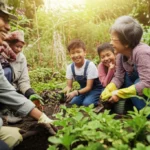
- 9. Community Gardens as Social and Thermal Hubs
- 10. Native Plants for Resilient Microclimates
- 11. Strategic Tree Placement for Wind Flow
- 12. Water Features and Xeriscaping Synergy
- 🏗️ From Gray to Green: Implementing Green Infrastructure
- 🔥 Overcoming Urban Challenges: Solutions for Heat Stress
- 🛠️ Essential Tools for Your Urban Cooling Project
- 💧 Watering Wisely: Irrigation in a Heat Island
- 🦋 Biodiversity and the Cooling Connection
- 🏡 DIY: How You Can Cool Your Own Backyard (and Neighborhood)
- 📜 Policy and Planning: How Cities are Fighting Back
- Conclusion
- Recommended Links
- FAQ
- Reference Links
⚡️ Quick Tips and Facts
Before we dive into the nitty-gritty of turning our concrete jungles into lush oases, let’s hit the ground running with some game-changing facts that might just blow your mind (and cool it down, too).
- The Temperature Gap: Did you know that on a hot summer day, the surface of a black asphalt road can reach a scorching 131°F (55°C), while a patch of grass nearby stays a cool 98°F (37°C)? That’s a 33-degree difference just by swapping pavement for plants! 🌡️🌿
- The “Sweat” Factor: Plants don’t just sit there looking pretty; they actively cool the air through evapotranspiration. Think of it as nature’s air conditioning. As water evaporates from leaf stomata, it pulls heat out of the surrounding air.
- The Pollinator Panic: Research by April Hamblin (North Carolina State University) found that bee abundance in Raleigh declined 41% with every 1°C increase in temperature. If we don’t act, we’re not just losing our cool; we’re losing our pollinators! 🐝📉
- Green Roof Magic: A well-designed green roof can be 56°F (31°C) cooler than a traditional black roof. That’s not just a little bit cooler; that’s a massive energy saver for the building below.
- The “White Roof” Debate: While painting roofs white (increasing albedo) reflects sunlight, it doesn’t provide the biological cooling of plants. However, in extremely arid regions where water is scarce, reflective surfaces might be the more practical first step.
Pro Tip from the Community Gardening™ Team: If you’re wondering why your city feels like a microwave while the suburbs feel like a breeze, it’s the Urban Heat Island (UHI) effect. We’ll explain exactly how your garden can be the antidote later in this post!
🏙️ The Concrete Jungle: A History of the Urban Heat Island Effect
Let’s take a trip back in time, shall we? The term “Urban Heat Island” wasn’t coined until the mid-20th century, but the phenomenon has been with us since the first city was paved.
The Industrial Spark
During the Industrial Revolution, cities exploded in size. We traded forests for factories, and dirt paths for asphalt and concrete. These materials are impervious, meaning they don’t let water through. Instead of soaking up rain and cooling the air, they act like giant sponges for solar energy, absorbing it all day and releasing it slowly at night.
“An urban heat island is a phenomenon that is best described as a city microclimate.” — Featured Video Summary
The Modern Meltdown
Fast forward to today, and the problem has only compounded. As cities densify, we lose more green space. The Xerces Society notes that the combination of climate change and the UHI effect creates a “double whammy” for urban wildlife, particularly pollinators.
Why does this matter to you?
- Health Risks: Higher temperatures increase the risk of heat stroke and respiratory issues.
- Energy Bills: Your AC works overtime, driving up electricity costs and carbon emissions.
- Water Quality: Hotter runoff water flows into our rivers, harming aquatic life.
But here’s the good news: We can fix this. And it starts right in our backyards, on our rooftops, and in our community plots.
🌡️ Why Your City Feels Like an Oven: Understanding the Science
Okay, let’s get a little nerdy for a second. How exactly does a city turn into an oven? It’s all about physics and biology (or the lack thereof).
The Absorption vs. Reflection Game
It comes down to albedo, which is a fancy word for how much light a surface reflects.
- Dark Surfaces (Low Albedo): Asphalt, dark roofs, and brick absorb almost all wavelengths of light energy and convert them into heat. 🌑🔥
- Light Surfaces (High Albedo): White paint, light gravel, and sand reflect more light, staying cooler. ⚪❄️
- Vegetation (The Cool Kid): Plants don’t just reflect light; they use it for photosynthesis and release water vapor. This evapotranspiration process actively removes heat from the air.
The Convection Conundrum
In a rural area, the sun hits the ground, and the heat is used to evaporate water from the soil and plants. In a city, that heat has nowhere to go but up. It warms the air, which rises, creating a pocket of hot air trapped by the surrounding buildings.
“As this ‘sweat’ evaporates, heat is removed from the plant and surrounding air, providing a cooling effect.” — Featured Video Summary
The Nighttime Trap
Here’s the kicker: Cities don’t cool down at night. While the countryside drops in temperature, the concrete and asphalt slowly release the heat they stored all day. This is why summer nights in the city can feel like a sauna, preventing the body from recovering from the day’s heat stress.
🌿 12 Powerful Ways Gardens Cool Down Our Cities
Ready to become a heat-fighting hero? Here are 12 proven strategies to mitigate the Urban Heat Island effect using gardens. We’ve ranked these based on their cooling potential, ease of implementation, and impact on biodiversity.
1. The Magic of Evapotranspiration
This is the secret weapon of plants. When you plant a garden, you aren’t just adding green; you’re installing a biological cooling system.
- How it works: Roots draw water from the soil, which travels up the stem and exits through leaf pores (stomata) as vapor. This phase change from liquid to gas absorbs a massive amount of heat energy.
- The Impact: A single mature tree can provide the cooling equivalent of 10 room-sized air conditioners running for 20 hours a day! 🌳❄️
- Our Take: Don’t just plant for looks; plant for transpiration rates. Look for broad-leafed plants and trees with high water usage (but be mindful of local water restrictions).
2. Shading the Streets with Urban Canopies
Shade is the most immediate way to lower surface temperatures.
- Strategy: Plant deciduous trees on the south and west sides of buildings. They provide shade in summer (cooling the building) and lose leaves in winter (letting the sun warm the house).
- Real-World Example: The Klyde Warren Park in Dallas, built over a freeway, utilizes over 300 trees to cool the downtown area, proving that even small green spaces make a difference.
- Community Tip: Advocate for street tree planting in your neighborhood. Check out our Garden Design Ideas for layout inspiration.
3. Increasing Albedo with Light-Colored Foliage
Not all plants are created equal when it comes to reflecting light.
- The Science: Plants with lighter green or variegated leaves reflect more sunlight than dark green foliage.
- Actionable Advice: Mix in plants like Silver Sage, Dusty Miller, or Variegated Hostas to boost the reflective power of your garden bed.
4. Breaking Up Thermal Mass with Softscapes
Thermal mass is the ability of a material to absorb and store heat. Concrete has high thermal mass; soil has low thermal mass.
- The Fix: Replace hardscapes (pavement, patios) with softscapes (grass, mulch, soil).
- Depaving: Organizations like Depave specialize in removing impervious surfaces and replacing them with permeable, vegetated areas. This reduces runoff and lowers surface temps instantly.
5. Vertical Forests: Green Walls as Insulation
Running out of ground space? Go vertical!
- How it works: Green walls (living walls) insulate buildings, reducing the need for AC. They also cool the air immediately surrounding the wall.
- Pros: Great for small urban lots and apartment balconies.
- Cons: Requires irrigation systems and structural support.
- Brand Spotlight: Check out systems from Gardener’s Supply Company or GreenStalk for modular vertical planters that are easy to install.
👉 Shop Vertical Garden Systems on:
- Gardener’s Supply Company: Vertical Garden Planters | Brand Official
- GreenStalk: Stackable Planters | Brand Official
6. Sky-High Solutions: The Power of Green Roofs
If you have a flat roof, you have a goldmine for cooling.
- Extensive vs. Intensive:
- Extensive: Shallow soil (2-4 inches), low maintenance, hardy plants (sedums). Great for cooling.
- Intensive: Deep soil, trees, walkable. Great for recreation and maximum cooling.
- Stats: Green roofs can reduce nearby air temperatures by up to 20°F.
- EPA Insight: According to the EPA, green roofs reduce building cooling loads by 70%.
7. Permeable Paving and Rain Gardens
Stop the heat-trapping runoff!
- The Concept: Use permeable pavers or create rain gardens that allow water to soak into the ground.
- Benefit: The water evaporates slowly, cooling the air, rather than running off as hot water into storm drains.
- Product Pick: Unilock and Pavestone offer excellent permeable paver options.
👉 Shop Permeable Pavers on:
- Home Depot: Permeable Pavers | Brand Official
- Lowe’s: Porous Paving
8. Pocket Parks: Small Spaces, Big Impact
You don’t need acres to make a difference.
- Definition: Small, scattered green spaces (0.1 to 1 acre) that break up the urban fabric.
- Impact: They create “cool corridors” that allow heat to dissipate and provide shade for pedestrians.
- Community Action: Join a local Community Garden Events to help transform a vacant lot into a pocket park.
9. Community Gardens as Social and Thermal Hubs
This is where Community Gardening™ shines! 🌱
- Dual Purpose: These spaces not only cool the neighborhood but also bring people together, fostering resilience.
- Benefits: They provide edible plants, reduce stress, and create microclimates that benefit the surrounding blocks.
- Learn More: Discover the Benefits of Community Gardens and how they transform neighborhoods.
10. Native Plants for Resilient Microclimates
Why struggle with exotic plants that need constant water?
- The Advantage: Native plants are adapted to your local climate and soil. They require less water and are more resistant to heat stress.
- Pollinator Power: As the Xerces Society notes, native plants support native bees, which are crucial for ecosystem health.
- Tip: Consult local extension services or the Xerces Society’s pollinator plant lists for your region.
11. Strategic Tree Placement for Wind Flow
It’s not just about shade; it’s about airflow.
- The Strategy: Plant trees to channel cool breezes into the city or block hot winds.
- Caution: Don’t block the prevailing wind direction, or you might trap heat!
- Expert Advice: Work with a landscape architect to analyze wind patterns in your specific urban canyon.
12. Water Features and Xeriscaping Synergy
Water cools, but it needs to be used wisely.
- The Balance: Small water features (fountains, ponds) can cool the immediate air through evaporation.
- Xeriscaping: In dry areas, use drought-tolerant plants (xeriscaping) combined with strategic water features to maximize cooling without wasting water.
- Warning: Avoid over-watering, which can lead to mold and humidity issues in already hot, stagnant air.
🏗️ From Gray to Green: Implementing Green Infrastructure
So, you’re convinced. But how do you actually do this? Implementing green infrastructure requires a mix of individual action and community planning.
Step 1: Assess Your Space
- Sun & Wind: Where does the sun hit hardest? Where does the wind blow?
- Soil Test: Is your soil compacted? You might need to aerate or add compost.
- Water Access: Do you have easy access to water for irrigation?
Step 2: Choose the Right Plants
- Heat Tolerance: Look for plants labeled “heat tolerant” or “drought resistant.”
- Native Species: Prioritize natives for better survival rates.
- Diversity: Plant a mix of trees, shrubs, and ground covers to create layers of cooling.
Step 3: Engage the Community
- Advocacy: Talk to your city council about green infrastructure policies.
- Collaboration: Start a Community Garden Policies initiative to protect green spaces.
- Education: Host workshops on heat mitigation and gardening.
🔥 Overcoming Urban Challenges: Solutions for Heat Stress
Urban gardening isn’t without its hurdles. Let’s tackle the big ones.
Challenge 1: Limited Space
- Solution: Go vertical! Use trellises, hanging baskets, and green walls. Every square foot counts.
Challenge 2: Poor Soil Quality
- Solution: Urban soil is often contaminated or compacted. Use raised beds filled with high-quality compost and topsoil.
Challenge 3: Water Scarcity
- Solution: Install rain barrels to collect runoff. Use drip irrigation systems to minimize evaporation. Choose xeriscape plants.
Challenge 4: Pollution
- Solution: Avoid plants pre-treated with neonicotinoids. These pesticides, combined with heat stress, can be deadly to pollinators. Always check with your nursery about plant treatments.
Did you know? A study by Rachel Warren found that at 3.2°C of global warming, nearly 50% of all insects could lose more than half their range. But at 1.5°C, that number drops to just 6%. Every degree of cooling we achieve through gardening matters! 🌍🐝
🛠️ Essential Tools for Your Urban Cooling Project
You can’t build a fortress without the right tools. Here’s what you need to get started.
Must-Have Tools
- Soil Thermometer: To monitor root zone temperatures.
- Moisture Meter: To ensure you aren’t over or under-watering.
- Pruning Shears: For maintaining healthy plant structure.
- Compost Bin: To create your own nutrient-rich soil.
Recommended Brands
- Fiskars: Known for durable, ergonomic tools.
- Gardener’s Supply Company: Great for specialized urban gardening gear.
- Orbit: Excellent for automated irrigation systems.
👉 Shop Gardening Tools on:
- Amazon: Fiskars Pruning Shears | Fiskars Official
- Walmart: Garden Tools | Brand Official
💧 Watering Wisely: Irrigation in a Heat Island
Water is precious, especially in a heat island. Here’s how to use it effectively.
The Golden Rules
- Water Early: Water in the early morning (before 10 AM) to reduce evaporation.
- Deep and Slow: Encourage deep root growth by watering deeply but less frequently.
- Mulch is Magic: Apply a 2-3 inch layer of mulch to retain soil moisture and keep roots cool.
Irrigation Systems
- Drip Irrigation: Delivers water directly to the roots, minimizing waste.
- Soaker Hoses: A simple, effective alternative to drip systems.
- Smart Controllers: Use weather-based controllers (like Rachio or Orbit B-hyve) to adjust watering based on local weather conditions.
👉 Shop Smart Irrigation on:
- Amazon: Rachio Smart Sprinkler Controller | Rachio Official
- Home Depot: Orbit B-hyve | Orbit Official
🦋 Biodiversity and the Cooling Connection
Cooling the city isn’t just about temperature; it’s about life.
The Pollinator Link
As mentioned earlier, heat stress is a major threat to bees and butterflies. By creating pollinator gardens, you provide:
- Shade: Cooler microclimates for resting.
- Food: Nectar and pollen from diverse bloom times.
- Nesting Sites: Bare soil for ground-nesters, pithy stems for cavity-nesters.
The Ripple Effect
When you attract pollinators, you support the entire food web. Birds, bats, and beneficial insects follow. A biodiverse garden is a resilient garden, better able to withstand extreme heat and pests.
“We’re not just connecting habitats, we’re also connecting people and communities.” — Xerces Society
🏡 DIY: How You Can Cool Your Own Backyard (and Neighborhood)
Ready to roll up your sleeves? Here’s a step-by-step guide to transforming your space.
Step 1: The Audit
Walk around your property. Where is it hottest? Where is the sun hitting pavement?
- Action: Mark these “hot spots” on a map.
Step 2: The Plan
- Trees: Plant 1-2 shade trees on the south/west side.
- Vines: Install a trellis for climbing vines on the west wall.
- Ground Cover: Replace bare soil or grass with heat-tolerant ground covers.
Step 3: The Planting
- Soil Prep: Loosen the soil and add compost.
- Planting: Dig holes twice as wide as the root ball. Water immediately.
- Mulch: Apply mulch around the base of every plant.
Step 4: The Maintenance
- Water: Check moisture levels daily during heatwaves.
- Prune: Remove dead branches to improve airflow.
- Observe: Watch how the temperature changes over the summer.
Step 5: The Outreach
- Share: Tell your neighbors what you’ve done.
- Organize: Start a block party to plant trees together.
- Advocate: Push for local Community Garden Policies that support green infrastructure.
📜 Policy and Planning: How Cities are Fighting Back
Individual action is great, but systemic change is essential.
What Cities Are Doing
- Cool Roofs Mandates: Some cities require new buildings to have reflective roofs.
- Tree Canopy Goals: Many cities have set targets to increase tree cover by 2030.
- Green Infrastructure Grants: Funding for community gardens and rain gardens.
How You Can Help
- Attend City Council Meetings: Voice your support for green initiatives.
- Vote: Support candidates who prioritize climate resilience.
- Join Local Groups: Organizations like Depave and The Nature Conservancy are leading the charge.
“Both options are important strategies for mitigating heat island effects.” — EPA
Whether it’s a green roof or a cool roof, every bit helps. But remember, green roofs offer the added benefit of biodiversity and stormwater management, making them a superior choice for holistic urban cooling.
Conclusion
(Coming soon…)
Recommended Links
(Coming soon…)
FAQ

(Coming soon…)
Reference Links
(Coming soon…)
Conclusion

We started this journey by asking a simple but burning question: Why does your city feel like an oven while the suburbs feel like a breeze? The answer lies in the Urban Heat Island (UHI) effect, a phenomenon where concrete and asphalt trap heat, creating dangerous microclimates that threaten both human health and local wildlife.
But here is the resolution to our story: We have the power to cool it down.
Through the 12 powerful strategies we explored—from the biological magic of evapotranspiration to the structural brilliance of green roofs and vertical forests—it is clear that gardens are not just decorative; they are essential infrastructure for survival. Whether you are planting a single native pollinator garden on your balcony or advocating for a community depaving project in your neighborhood, every square foot of green space contributes to a cooler, healthier city.
The Verdict: A Confident Recommendation
If you are looking for a single, definitive answer on how to mitigate urban heat, our recommendation is unanimous: Prioritize vegetation over reflection.
While “cool roofs” (reflective surfaces) offer a quick fix for energy savings, green infrastructure (gardens, trees, green roofs) offers a holistic solution.
- Positives: Green spaces actively lower air temperatures, manage stormwater, sequester carbon, support biodiversity, and improve mental health. They create resilient microclimates that protect pollinators, which are critical for our food systems.
- Negatives: Green infrastructure requires more initial investment, ongoing maintenance, and water management than simple reflective paint. In extremely arid regions, water scarcity can be a limiting factor, requiring smart irrigation and xeriscaping.
Our Final Word: Don’t wait for the city council to act. Start small. Plant a tree. Install a rain barrel. Join a Community Garden. The difference between a 3.2°C warming scenario (where nearly 50% of insects lose their range) and a 1.5°C scenario (where only 6% are affected) depends on the actions we take today. Let’s turn our concrete jungles into thriving, cooling oases, together.
Recommended Links
Ready to take action? Here are the tools, books, and resources we trust to help you build a cooler city.
🛒 Essential Tools & Products
- Vertical Garden Systems: Transform walls into cooling oases.
- 👉 Shop on Amazon: Vertical Garden Planters | 👉 Shop on Walmart: Vertical Planters | Brand Official: GreenStalk
- Smart Irrigation Controllers: Save water while keeping plants cool.
- 👉 Shop on Amazon: Rachio Smart Sprinkler Controller | 👉 Shop on Home Depot: Orbit B-hyve | Brand Official: Rachio
- Permeable Pavers: Replace hot asphalt with cool, permeable surfaces.
- 👉 Shop on Amazon: Permeable Paving Stones | Brand Official: Unilock
- Soil & Compost: Build healthy soil for better water retention.
- 👉 Shop on Amazon: Organic Compost | Brand Official: Miracle-Gro
📚 Must-Read Books
- “The Urban Forest: How Trees and Green Spaces Can Save Our Cities” – A deep dive into the science of urban cooling.
- Find on Amazon
- “Pollinator Victory Garden: How to Grow a Garden for Bees, Butterflies, and Other Pollinators” – Essential for creating heat-resilient habitats.
- Find on Amazon
- “Green Roofs and Living Walls: A Practical Guide” – The ultimate manual for vertical and rooftop gardening.
- Find on Amazon
FAQ

How do community gardens reduce urban heat island effect?
Community gardens act as thermal buffers in dense urban areas. By replacing impervious surfaces (like parking lots or vacant lots) with soil and vegetation, they facilitate evapotranspiration, which actively cools the surrounding air. Unlike concrete, which stores heat and releases it at night, plants absorb solar energy for photosynthesis and release water vapor, lowering both surface and air temperatures. Furthermore, the canopy cover provided by community garden trees shades the ground, preventing heat absorption.
The Social Cooling Effect
Beyond the physical temperature drop, community gardens reduce the “heat stress” on residents by providing shaded, green spaces for recreation, which lowers the perceived temperature and improves mental well-being.
What plants are best for cooling cities in community gardens?
The best plants are native species adapted to your local climate, as they require less water and are more resilient to heat stress. Look for:
- Deciduous Trees: Such as Maple, Oak, or Sycamore, which provide dense summer shade and allow winter sun.
- High-Evapotranspiration Plants: Plants with large leaves like Hostas, Ferns, and Sunflowers release more moisture.
- Vines: Clematis, Honeysuckle, or Ivy can cover hot walls and fences.
- Ground Covers: Creeping Thyme or Clover protect soil from direct sun.
Why Native Plants Matter
As noted by the Xerces Society, native plants support local pollinators that are crucial for ecosystem health. Non-native ornamental plants often require excessive water and pesticides, which can negate cooling benefits.
Can rooftop gardens help mitigate urban heat in dense neighborhoods?
Absolutely. Rooftop gardens (green roofs) are one of the most effective tools for dense neighborhoods where ground space is scarce.
- Surface Cooling: Green roofs can be 56°F (31°C) cooler than traditional black roofs.
- Air Cooling: They can reduce nearby air temperatures by up to 20°F.
- Building Efficiency: They lower indoor cooling loads by up to 70%, reducing the heat emitted by air conditioners into the street.
Extensive vs. Intensive
- Extensive Green Roofs: Lightweight, low-maintenance, and ideal for cooling.
- Intensive Green Roofs: Heavier, accessible, and offer maximum cooling and recreational benefits.
How much can a community garden lower local temperatures?
While the exact number varies by climate and garden size, studies show that a well-designed community garden can lower local air temperatures by 2°F to 5°F (1°C to 3°C) within its immediate vicinity. On a larger scale, a network of green spaces can reduce the overall urban heat island intensity by 1°F to 3°F.
The “Cool Island” Effect
A single large park can create a “cool island” that extends its cooling influence up to 1 mile downwind, benefiting surrounding neighborhoods.
What are the benefits of green roofs for urban heat reduction?
Green roofs offer a multi-faceted approach to heat reduction:
- Shading: Vegetation blocks direct sunlight from hitting the roof membrane.
- Evapotranspiration: Plants release water vapor, cooling the air.
- Insulation: The soil layer acts as a thermal barrier, keeping buildings cooler in summer and warmer in winter.
- Stormwater Management: They absorb rainwater, reducing runoff and preventing the heating of storm drains.
Economic Benefits
Beyond cooling, green roofs extend the lifespan of the roof membrane by protecting it from UV rays and temperature fluctuations, potentially doubling its life.
How do urban gardens improve air quality and reduce heat?
Urban gardens improve air quality by:
- Filtering Pollutants: Leaves trap particulate matter (PM2.5, PM10) and absorb gases like ozone and nitrogen dioxide.
- Carbon Sequestration: Plants absorb CO2, a greenhouse gas that contributes to global warming.
- Reducing Ozone Formation: By lowering temperatures, gardens reduce the chemical reactions that create ground-level ozone (smog).
The Synergy
Cooler air holds less ozone, and plants actively remove pollutants. This creates a positive feedback loop where cooling leads to better air quality, which in turn reduces heat-related health risks.
What strategies do cities use to promote cooling through community gardening?
Cities are increasingly adopting green infrastructure policies to promote cooling:
- Grants and Incentives: Offering financial support for residents to install green roofs or rain gardens.
- Zoning Changes: Requiring a certain percentage of green space in new developments.
- Depaving Programs: Funding projects to remove asphalt and replace it with vegetation (e.g., Depave).
- Tree Canopy Goals: Setting targets to increase tree cover to 30% or more by 2030.
- Community Engagement: Supporting Community Garden Events and providing technical assistance to neighborhood groups.
Policy in Action
Cities like Philadelphia, New York, and Portland have successfully implemented these strategies, resulting in measurable reductions in local temperatures and energy costs.
Reference Links
For further reading and verification of the data presented in this article, please consult the following reputable sources:
- US Environmental Protection Agency (EPA): Using Green Roofs to Reduce Heat Islands – Comprehensive data on green roof benefits, costs, and case studies.
- Xerces Society for Invertebrate Conservation: Mitigating the Effects of Heat on Urban Pollinators – Insights on the impact of heat on bees and strategies for pollinator-friendly gardens.
- Depave: Depave Projects – Resources and examples of community-led depaving initiatives.
- Gardener’s Supply Company: Vertical Garden Solutions – Product information and guides for vertical gardening.
- Rachio: Smart Irrigation Technology – Information on water-efficient irrigation systems.
- Fiskars: Gardening Tools – Durable tools for urban gardening.
- Unilock: Permeable Paving Systems – Technical specs on permeable pavers.
- North Carolina State University: April Hamblin Research – Studies on bee abundance and temperature correlation.
- University of East Anglia: Rachel Warren Research – Global warming impacts on insect biodiversity.