Support our educational content for free when you purchase through links on our site. Learn more

Community gardening impact studies suggest that gardens can support health, food access, social connection, learning, and urban nature—but outcomes depend on who can participate and how a garden is supported. The strongest evaluations look beyond harvest totals to measure what changes for gardeners and their neighborhoods.
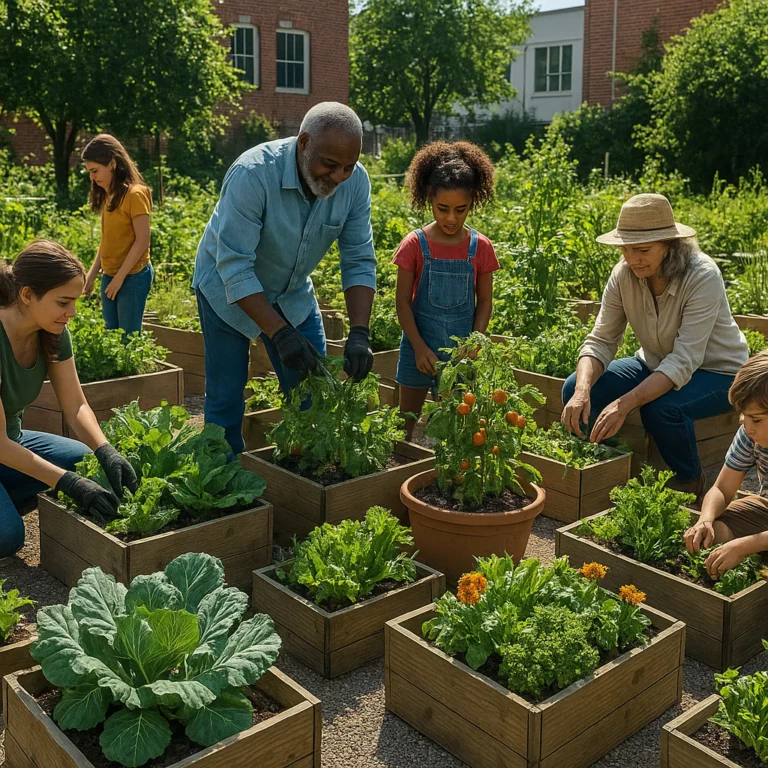
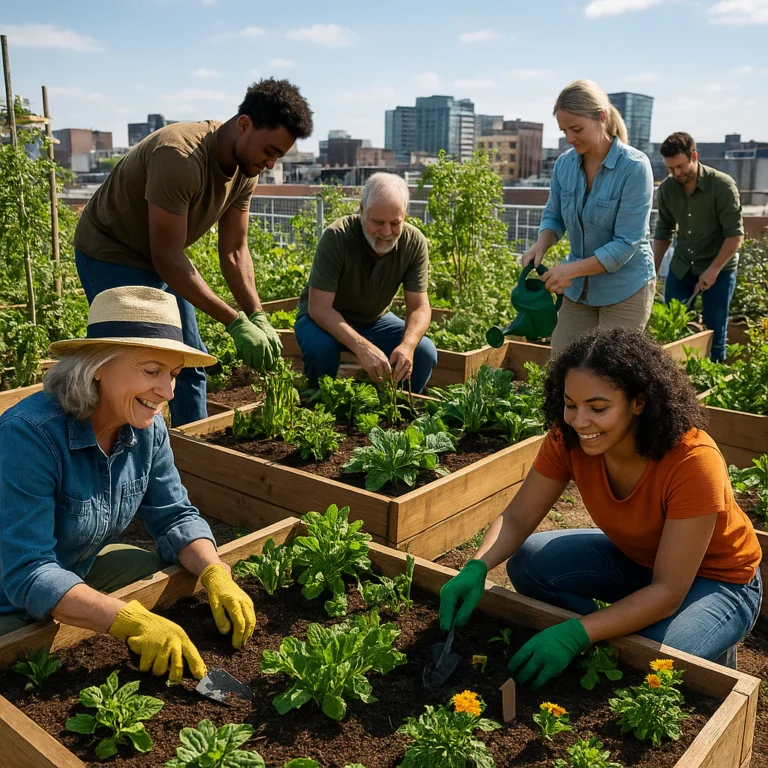
In our Community Gardening™ gardens, we’ve watched a shared plot become a place for much more than growing vegetables: neighbors swap advice, children discover how beans climb, and someone inevitably arrives with enough zucchini for the entire block. Those moments are valuable, but research helps us ask a sharper question: which benefits are supported by evidence, and what makes them last?
A review of 84 gardening studies examined outcomes ranging from physical activity and diet to mental well-being and social relationships. Its findings are promising, but studies vary widely—so a garden can be a powerful community resource without being a cure-all.
Key Takeaways
- Community gardens may support several kinds of well-being, including physical activity, fresh-produce access, social connection, and learning.
- Research findings are promising, not universal. Garden design, participation, local context, and study quality all affect results.
- Food harvests are only one measure of impact. Track who participates, who benefits, and what changes over time.
- Equity and long-term stability matter: accessible design, secure land, fair decision-making, and manageable workloads help gardens endure.
- Simple community-led evaluation works. Choose a few goals, record a baseline, and check progress each season.
Table of Contents
- ⚡ Quick Tips and Facts
- 🌱 What Community Gardening Impact Studies Tell Us
- What Counts as a Community Garden?
- What Does “Impact” Mean in Garden Research?
- 📚 How Community Gardening Research Has Evolved
- From Urban Allotments to Food Justice and Public Health
- Why Researchers Study Community Gardens
- 🔬 How Researchers Measure Community Garden Impact
- Study Designs: Surveys, Interviews, Experiments, and Longitudinal Research
- Common Measures and Data Sources
- How to Judge Study Quality and Causation
- 🌻 15 Impacts of Community Gardening Examined in Research
- 1. Access to Fresh Produce and Food Security
- 2. Fruit and Vegetable Intake and Nutrition
- 3. Physical Activity and Everyday Movement
- 4. Mental Health, Stress Relief, and Mood
- 5. Social Connection and Reduced Isolation
- 6. Community Cohesion and Collective Efficacy
- 7. Learning, Gardening Skills, and Youth Development
- 8. Cultural Identity and Intergenerational Knowledge
- 9. Food Justice and Local Self-Determination
- 10. Neighborhood Grening and Urban Biodiversity
- 11. Heat, Stormwater, and Other Climate Benefits
- 12. Neighborhood Safety and Public Space
- 13. Economic Value and Household Savings
- 14. Employment, Voluntering, and Local Leadership
- 15. Resilience During Disruption and Emergencies
- 📊 What the Evidence Says: Findings, Benefits, and Mixed Results
- Where Studies Show the Strongest Benefits
- Why Findings Differ Between Gardens and Communities
- What Research Can—and Cannot—Prove
- ⚖️ Equity, Access, and Potential Downsides
- Who Gets to Participate and Who May Be Left Out?
- Land Security, Gentrification, and Displacement
- Soil Contamination, Water Access, and Physical Safety
- Volunteer Burnout, Conflict, and Unequal Labor
- 🧭 How to Evaluate a Community Garden’s Impact
- Set Goals and Build a Theory of Change
- Choose Practical Indicators and Collect Baseline Data
- Use Community-Led and Culturally Responsive Evaluation
- Share Results Without Overclaiming
- 🏡 Turning Research Findings into a More Effective Garden
- Design for Accessibility, Inclusion, and Belonging
- Build Partnerships with Schools, Clinics, and Local Organizations
- Plan for Funding, Maintenance, and Long-Term Land Access
- ❓ Frequently Asked Questions About Community Gardening Impact Studies
- Do Community Gardens Improve Health?
- Do Community Gardens Reduce Food Insecurity?
- How Long Does It Take to See Measurable Results?
- Are Community Gardens Cost-Effective?
- Where Can I Find Reliable Community Gardening Research?
- ✅ Conclusion
- 🔗 Recommended Links
- 📖 Reference Links
Table of Contents
- ⚡ Quick Tips and Facts
- 🌱 What Community Gardening Impact Studies Tell Us
- What Counts as a Community Garden?
- What Does “Impact” Mean in Garden Research?
- 📚 How Community Gardening Research Has Evolved
- From Urban Allotments to Food Justice and Public Health
- Why Researchers Study Community Gardens
- 🔬 How Researchers Measure Community Garden Impact
- Study Designs: Surveys, Interviews, Experiments, and Longitudinal Research
- Common Measures and Data Sources
- How to Judge Study Quality and Causation
- 🌻 15 Impacts of Community Gardening Examined in Research
- 1. Access to Fresh Produce and Food Security
- 2. Fruit and Vegetable Intake and Nutrition
- 3. Physical Activity and Everyday Movement
- 4. Mental Health, Stress Relief, and Mood
- 5. Social Connection and Reduced Isolation
- 6. Community Cohesion and Collective Efficacy
- 7. Learning, Gardening Skills, and Youth Development
- 8. Cultural Identity and Intergenerational Knowledge
- 9. Food Justice and Local Self-Determination
- 10. Neighborhood Grening and Urban Biodiversity
- 11. Heat, Stormwater, and Other Climate Benefits
- 12. Neighborhood Safety and Public Space
- 13. Economic Value and Household Savings
- 14. Employment, Voluntering, and Local Leadership
- 15. Resilience During Disruption and Emergencies
- 📊 What the Evidence Says: Findings, Benefits, and Mixed Results
- Where Studies Show the Strongest Benefits
- Why Findings Differ Between Gardens and Communities
- What Research Can—and Cannot—Prove
- ⚖️ Equity, Access, and Potential Downsides
- Who Gets to Participate and Who May Be Left Out?
- Land Security, Gentrification, and Displacement
- Soil Contamination, Water Access, and Physical Safety
- Volunteer Burnout, Conflict, and Unequal Labor
- 🧭 How to Evaluate a Community Garden’s Impact
- Set Goals and Build a Theory of Change
- Choose Practical Indicators and Collect Baseline Data
- Use Community-Led and Culturally Responsive Evaluation
- Share Results Without Overclaiming
- 🏡 Turning Research Findings into a More Effective Garden
- Design for Accessibility, Inclusion, and Belonging
- Build Partnerships with Schools, Clinics, and Local Organizations
- Plan for Funding, Maintenance, and Long-Term Land Access
- ❓ Frequently Asked Questions About Community Gardening Impact Studies
- What Challenges Influence the Long-Term Success of Community Gardening Projects?
- How Do Community Gardens Support Urban Biodiversity and Pollinators?
- What Economic Benefits Can Community Gardens Bring to Local Neighborhoods?
- Do Community Gardens Increase Access to Fresh, Affordable Food?
- How Does Community Gardening Affect Social Connections and Community Cohesion?
- What Do Studies Show About the Environmental Impact of Community Gardens?
- How Do Community Gardens Improve Neighborhood Health and Well-Being?
- How Long Does It Take to See Measurable Results?
- How Can a Garden Measure Its Impact Without a Research Team?
- ✅ Conclusion
- 🔗 Recommended Links
- 📖 Reference Links
⚡ Quick Tips and Facts
- Community gardens can support health, food access, social connection, learning, and greener neighborhoods—but results depend on how a garden is designed and supported.
- A systematic review of 84 gardening studies found research spanning physical activity, diet, mental well-being, social relationships, and broader health. The studies varied widely, so a benefit seen in one garden is not a guaranteed result everywhere.
- In one survey of 111 Singapore residents, community gardeners reported higher subjective well-being than home gardeners and non-gardening outdoor-activity participants. The study was cross-sectional, meaning it found an association, not proof that gardening caused the difference (study details).
- A small experiment with 30 allotment gardeners found that outdoor gardening after a stressful task reduced cortisol more than indoor reading. Useful evidence for short-term stress recovery, but not a clinical treatment study.
- A garden’s impact is easier to understand when you track who participates, what they do, and what changes over time—not just how many tomatoes make it to the harvest table.
- A practical starting point: set two or three community-selected goals, establish a baseline, and revisit the same measures each season.
- Need a primer on the wider practice? Start with our guide to community gardening.
| Research question | What studies can tell us | A sensible takeaway |
|---|---|---|
| Does gardening support health? | Some studies report benefits in physical activity, diet, and well-being. | It can be a useful health-promoting setting, not a substitute for healthcare. |
| Does it build community? | Qualitative research describes social ties, cooperation, and neighborhood organizing. | Social benefits depend on meaningful participation and fair leadership. |
| Does it improve food access? | Gardens can make fresh produce and food-growing skills more available. | A garden alone rarely solves food insecurity or affordability. |
| Does it help the environment? | Vegetated spaces can contribute to urban habitat and stormwater management. | Ecological value depends on site design, soil, plant choices, and maintenance. |
| Are the findings definitive? | No. Study designs, populations, gardens, and measurements differ. | Trust converging evidence, while keeping claims specific and modest. |
🌱 What Community Gardening Impact Studies Tell Us
Community gardening research asks a deceptively simple question: what changes when neighbors grow food or care for a shared outdoor space together? Our gardeners at Community Gardening™ have seen a vacant corner turn into a place where people trade seedlings, recipes, and the occasional enthusiastic zucchini. Research tries to measure those changes more systematically.
The best answer isn’t “gardens fix everything.” Studies suggest that gardens can create conditions that support well-being: movement, fresh food, contact with nature, practical learning, and regular social interaction. Those ingredients don’t work identically for every person or neighborhood. For more on the broader case for shared growing spaces, see Benefits of Community Gardens.
What Counts as a Community Garden?
Researchers use “community garden” to describe several kinds of growing spaces. A garden might offer individual plots, shared beds, school-based activities, communal harvests, therapeutic programming, or job training. That variety is part of their appeal—and a headache when studies try to compare results.
A useful broad definition is a shared space where people participate in growing, maintaining, or using a garden. The National Parks Board of Singapore describes community gardens as “common spaces where people of different demographics come together to create, develop and sustain a gardening space in their locality.”
The K-State Extension video on different types of community gardens covers neighborhood, allotment, communal, children’s, and vocational-training gardens. It’s a helpful visual guide because a garden’s format influences what outcomes are realistic to expect.
| Garden type | Common structure | Potential outcomes researchers may examine |
|---|---|---|
| Neighborhood plot garden | Individuals or households tend assigned plots | Produce access, gardening skills, social contact |
| Communal garden | Members share planting, upkeep, and harvest | Cooperation, food sharing, collective decision-making |
| School garden | Garden activities linked to learning | Food literacy, science learning, youth engagement |
| Therapeutic or care-setting garden | Structured activity in a health or support setting | Activity, mood, engagement, quality of life |
| Training or employment garden | Gardening tied to skills development or work experience | Vocational skills, confidence, participation |
| Indigenous or culturally rooted garden | Plants and practices reflect community knowledge | Cultural continuity, food sovereignty, intergenerational learning |
A garden can fit more than one category. The central research question is usually not whether a space has raised beds, but who it serves, what people do there, and what change the program intends to support.
What Does “Impact” Mean in Garden Research?
“Impact” can mean an immediate outcome, a longer-term change, or an unintended side effect. Researchers might measure how much produce people harvest, whether participants feel more socially connected, or whether a neighborhood gains a lasting green space.
It helps to separate four layers:
- Inputs: land, soil, tools, water, staff time, volunteers, and funding.
- Activities: planting, workshops, maintenance, cooking events, and shared decisions.
- Outputs: garden beds built, sessions held, participants reached, or pounds of produce harvested.
- Outcomes and impact: changes in access, skills, activity, well-being, relationships, or neighborhood conditions.
A harvest count is useful, but it doesn’t tell us whether the food reached households that needed it, whether gardeners felt welcome, or whether the site is still secure next season. Good impact studies measure more than the photogenic bits.
📚 How Community Gardening Research Has Evolved
Community gardening has long served practical purposes: growing food, making use of open land, and bringing people together. Research has increasingly connected gardens with public health, environmental planning, food justice, education, and community development.
A review of U.S. community-garden literature described gardens as tools for community organizing and change, while also pointing out that rigorous quantitative research was historically limited. A later systematic review identified 84 eligible studies published from 2010 to 2020, reflecting a wider and more varied research field.
From Urban Allotments to Food Justice and Public Health
Early and ongoing studies often focus on local concerns: vacant land, food access, neighborhood conditions, and recreation. More recent research asks how gardens intersect with social determinants of health, environmental sustainability, cultural identity, and climate resilience.
That evolution matters. A garden can be studied as a place to grow vegetables, a community program, a green-space intervention, or a form of collective stewardship. Those perspectives overlap, but they aren’t interchangeable. A study focused on nutrition may miss changes in neighborhood leadership; a study focused on social connection may not record food harvested.
Why Researchers Study Community Gardens
Researchers are interested in gardens because they combine several activities in one setting:
- Growing food and learning where it comes from.
- Moving the body through digging, watering, carrying, and walking.
- Spending time outdoors and interacting with living things.
- Meeting and working with others, sometimes across ages and backgrounds.
- Caring for a shared place, which can prompt decisions about rules, access, and responsibility.
This blend makes gardens promising, but also makes it tricky to identify which ingredient matters most. Is it gardening itself, being outdoors, social contact, or having a dependable place to belong? We’ll return to that question when we look at what studies can—and can’t—prove.
🔬 How Researchers Measure Community Garden Impact
There’s no single “garden impact score.” Researchers choose methods based on their question, resources, participants, and the scale of the project. The most useful studies explain their methods clearly and let readers see both the strengths and the blind spots.
Study Designs: Surveys, Interviews, Experiments, and Longitudinal Research
| Study design | What it can show | Main limitation |
|---|---|---|
| Cross-sectional survey | Differences or associations at one point in time | Cannot establish what came first or prove causation |
| Interviews and focus groups | Participants’ experiences, meanings, and perceived changes | Small samples may not represent everyone |
| Controlled experiment | Effects under defined conditions | May be short, artificial, or hard to generalize |
| Before-and-after evaluation | Change across a program period | Other events may explain some change |
| Longitudinal study | How outcomes evolve over months or years | Takes time, funding, and participant follow-up |
| Mixed-methods study | Combines measurable outcomes with lived experience | Requires careful integration of different data |
For example, a Singapore survey comparing community gardeners, home gardeners, and outdoor-activity participants found differences in well-being and resilience measures. But because it was cross-sectional, it cannot tell us whether gardening boosted well-being or whether people with greater well-being were more likely to join a garden.
An experiment offers a different kind of evidence. In a small study, allotment gardeners completed a stressful task and were assigned to garden outdoors or read indoors for 30 minutes. Both activities reduced cortisol, with a larger reduction after gardening. That supports a short-term stress-recovery effect under those conditions; it doesn’t prove long-term mental-health treatment benefits.
Common Measures and Data Sources
Common measures include:
- Food and nutrition: food-frequency questionnaires, household food-security surveys, harvest records, or dietary recall.
- Physical activity: self-report surveys, activity diaries, pedometers, or accelerometers.
- Mental well-being: validated questionnaires on stress, mood, resilience, or quality of life.
- Social outcomes: interviews, social-network maps, participation records, and questions about trust or belonging.
- Environmental outcomes: plant and pollinator surveys, canopy or land-cover mapping, soil testing, and stormwater observations.
- Economic outcomes: household produce-use surveys, program budgets, volunteer-hour estimates, or neighborhood property analysis.
Self-reported information is valuable because people know their own experience. It can also be affected by memory, expectations, or a desire to give positive feedback. The strongest evaluations often pair participant accounts with another data source, such as attendance, harvest logs, or environmental observations.
How to Judge Study Quality and Causation
When reading a community-garden study, ask:
- Who participated? Was the sample large and diverse enough for the claim?
- Was there a comparison group? If so, was it similar to the gardening group?
- When were outcomes measured? One snapshot or repeated follow-up?
- What was measured? A validated scale, a researcher-made survey, an interview, or an objective measure?
- Were differences statistically and practically meaningful?
- Did the authors discuss limitations? A careful paper doesn’t pretend its garden represents every garden.
A statistically significant result isn’t automatically a large or life-changing effect. And a non-significant result doesn’t necessarily mean there was no meaningful change: small studies may lack the sample size to detect one.
Trust patterns across different studies more than a single dramatic headline. A systematic review can help identify those patterns, but its conclusions are only as strong as the studies it includes.
🌻 15 Impacts of Community Gardening Examined in Research
Research looks at a wide range of community-garden outcomes. Some are relatively straightforward to count; others—like belonging or cultural continuity—require listening carefully to participants.
1. Access to Fresh Produce and Food Security
Gardens can provide a direct source of vegetables, herbs, and fruit, while also connecting people with food-growing knowledge and local distribution networks. Researchers may track harvest totals, who receives produce, and whether gardeners report improved access.
But a garden is one part of a food-access system, not a complete solution to hunger. Land, water, time, accessible paths, tools, and culturally appropriate crops all influence who benefits. A garden with a large harvest but restrictive membership may have limited neighborhood-wide reach.
Explore practical crop ideas in our Edible Plants category.
2. Fruit and Vegetable Intake and Nutrition
Several observational studies report higher fruit and vegetable consumption among community gardeners than among non-gardeners. One study summarized by NC State Extension reported that community gardeners ate fruits and vegetables more frequently than home gardeners and non-gardeners. Such comparisons are encouraging, but they don’t prove the garden alone caused the difference: people already interested in healthy food may be more likely to garden.
School-garden studies add a useful wrinkle. Gardening paired with nutrition education can improve children’s knowledge and preferences for some vegetables, but liking a vegetable and choosing to eat it consistently are different outcomes. A successful tasting is a beginning, not a dietary transformation montage.
3. Physical Activity and Everyday Movement
Watering, digging, weding, carrying compost, and walking between beds all add movement to the day. The systematic review of 84 studies found increased physical activity among the outcomes most often reported in the included research.
Gardening activity varies greatly. A visit spent pruning and chatting is different from a morning turning soil, and weather and season affect how much time people spend outdoors. Researchers should record frequency, duration, task type, and season, rather than treating “gardener” as a single activity level.
Gardens should also make movement safe and accessible. Raised beds, sturdy paths, seating, shade, and tools adapted for different abilities widen participation.
4. Mental Health, Stress Relief, and Mood
Some studies associate gardening with improved mood, life satisfaction, or well-being. In the Singapore study, community gardeners reported higher subjective well-being than comparison groups, but there was no significant adjusted difference in perceived stress. The researchers suggested that gardening may combine nature exposure, physical activity, gardening experience, and social interaction; the study couldn’t separate their effects (full study).
A gardener quoted in that research described the feeling simply: “… sometimes when you are stressed out… when you go to the garden, you feel different.” That is a meaningful account of lived experience, even though one person’s experience is not a clinical result.
Gardens may complement mental-health promotion; they are not a replacement for professional care. A welcoming space, a manageable task, and a chance to sit with neighbors can help—but nobody should be expected to garden their way out of a health crisis.
5. Social Connection and Reduced Isolation
Gardens give people recurring reasons to meet: a work party, a seed swap, a watering shift, or a very serious debate about whether the beans need another trellis. Repeated, low-pressure contact can make conversation and trust easier over time.
Qualitative research in Toronto and Denver has described social interaction, mutual support, and community building among garden participants. Yet participation isn’t automatically inclusive. Meeting times, language, mobility access, childcare, and decision-making rules can all determine who gets to connect.
Our Community Garden Events category has ideas for creating more ways to meet, learn, and share a harvest.
6. Community Cohesion and Collective Efficacy
Collective efficacy refers broadly to a community’s shared trust and willingness to work together toward common goals. Garden tasks—agreeing on rules, maintaining paths, organizing harvests—offer repeated opportunities to practice that cooperation.
A garden can also become a platform for addressing issues beyond planting. In a survey of gardens in upstate New York, programs in low-income neighborhoods were more likely than those in non-low-income neighborhoods to engage with other neighborhood concerns. That finding suggests organizing potential, not a guarantee that every garden will become a civic powerhouse.
The practical lesson: shared decisions matter. If only a small group controls the keys, harvest, and rules, the garden may grow vegetables without building much collective ownership.
7. Learning, Gardening Skills, and Youth Development
Gardens can make lessons tangible: children seeds sprout, learn how soil holds water, and discover that carrots come with leaves attached. Youth garden research has described opportunities for constructive activities, interpersonal skills, community contribution, and cognitive development.
Learning outcomes can include:
- Plant identification and growing skills.
- Food literacy and cooking confidence.
- Science, ecology, and observation.
- Planning, teamwork, and responsibility.
- Leadership and communication.
A garden program works best when it has clear learning goals and enough support for educators or youth leaders. Otherwise, the adults spend the whole session rescuing wilting seedlings while the children become experts in the hose.
8. Cultural Identity and Intergenerational Knowledge
For some communities, growing familiar crops and exchanging traditional growing methods can help maintain cultural practices and relationships between generations. These outcomes may be important even if they don’t show up in a standard produce survey.
Researchers should ask participants what the garden means to them rather than assuming that a particular crop, language, or growing method carries the same meaning for everyone. Cultural relevance is something communities define, not something an outside evaluator assigns.
9. Food Justice and Local Self-Determination
Food justice research considers more than whether vegetables are available. It asks who controls land and resources, whose knowledge is valued, who chooses what is grown, and who has a meaningful say in local food systems.
Community gardens can support local agency when residents help set priorities, make decisions, and share resources. They can fall short when programs rely on unpaid labor, exclude local knowledge, or make produce access conditional on participation that some residents cannot manage.
A garden’s justice impact is measured partly by who has power—not just by what it produces.
10. Neighborhood Grening and Urban Biodiversity
Planting a formerly bare site can add vegetation and create habitat, especially when gardeners include native plants, flowering species, and varied growing structures. Gardens may support pollinators and other urban wildlife, but biodiversity gains depend on plant selection, pesticide use, water, surrounding habitat, and ongoing care.
To support wildlife:
- Include a mix of flowering plants that bloom across the growing season.
- Choose regionally appropriate native species where suitable.
- Avoid unnecessary pesticide use.
- Provide shelter and water thoughtfully, while preventing stagnant water.
- Keep some areas less intensively managed where safe and practical.
A vegetable plot isn’t automatically a biodiversity haven. It can be one piece in a larger network of parks, street trees, yards, and natural areas.
11. Heat, Stormwater, and Other Climate Benefits
Vegetated spaces may help cool their surroundings and allow some rainfall to soak into soil rather than run directly into drains. The scale of the benefit depends on site size, vegetation, soil condition, surrounding pavement, and design. A compact garden won’t cool an entire city block by magic—but shade, healthy soil, and water-wise planting can still make the space more comfortable and resilient.
Climate-ready gardening practices include:
- Mulching to reduce soil moisture loss.
- Capturing rainwater where local rules and safe design allow.
- Using drought-tolerant and climate-adapted plants.
- Planning shade and heat breaks for gardeners.
- Improving soil structure to support water infiltration.
See our Climate Adaptation in Gardening resources for more site-level ideas.
12. Neighborhood Safety and Public Space
A cared-for garden can bring regular activity to an underused site and give neighbors a reason to spend time there. Research and community accounts describe gardens as ways to improve public spaces and encourage neighborhood engagement.
Still, garden presence alone doesn’t establish that an area is safer. Safety is shaped by lighting, site visibility, accessible paths, maintenance, community relationships, and broader social conditions. Ask participants what makes them feel safe, then address practical concerns with the people who use the space.
13. Economic Value and Household Savings
Growing produce may reduce some household food expenses, but savings vary with crop choice, yield, garden access, inputs, and what produce people would otherwise buy. To estimate household value, record harvests and ask gardeners how much they use, share, preserve, or sell.
A frequently cited study by Been and Voicu examined residential properties near New York City community gardens and reported positive associations between garden openings and nearby property values. That finding raises a difficult possibility: neighborhood improvements may benefit some property owners while contributing to affordability pressure for renters. Economic value should be assessed alongside who can remain in the neighborhood.
14. Employment, Voluntering, and Local Leadership
Gardens can create opportunities for volunteer coordination, youth leadership, food education, horticultural training, and—in some programs—employment. But volunteer work is not a free resource without limits. It takes planning, supervision, tools, and recognition.
Track who is doing the work, how many hours are involved, and whether leadership and learning opportunities are distributed fairly. A garden that depends on two exhausted people and one heroic wheelbarow is not yet a sustainable program.
15. Resilience During Disruption and Emergencies
Gardens may support community resilience by strengthening relationships, local knowledge, and access to shared resources. These networks can help people communicate and organize during disruptions, but gardens should not be described as stand-alone emergency food systems.
Resilience depends on practical foundations: secure land, reliable water, maintained tools, clear communication, inclusive leadership, and partnerships with local services. In other words, a garden is more resilient when the community around it is, too.
📊 What the Evidence Says: Findings, Benefits, and Mixed Results
A systematic review of 84 studies found that community and other forms of gardening have been examined across a wide range of health outcomes. The authors reported that increased physical activity, fruit and vegetable consumption, and BMI-related outcomes were among the outcomes most often achieved in the reviewed studies (review).
That does not mean every garden causes weight loss or improves everyone’s diet. The studies differed in setting, duration, population, garden type, and measurement. The review also included school, household, therapeutic, prison, and community gardens, so not every result applies specifically to neighborhood gardens.
Where Studies Show the Strongest Benefits
Across the research summarized in the review and NC State Extension’s research overview, recurring areas of interest include:
| Outcome area | What evidence commonly reports | How confident to be |
|---|---|---|
| Physical activity | Gardening can add movement; several studies report increased activity | Promising, but activity varies by garden and season |
| Food and nutrition | Some gardener groups report higher produce intake; education may improve food knowledge | Encouraging, with self-selection and program design as caveats |
| Mental well-being | Studies report positive experiences and some measurable well-being differences | Mixed; not all measures show significant change |
| Social connection | Interviews and case studies describe relationships, mutual aid, and cohesion | Strong qualitative insight; harder to standardize |
| Environmental benefits | Gardens add green space and can support habitat and stormwater goals | Site-specific; measure ecological outcomes directly |
A good rule of thumb: the more specific the claim, the more closely its study should match the garden and population being discussed.
Why Findings Differ Between Gardens and Communities
Garden projects differ in who participates, how often they meet, what they grow, who manages the site, and whether the land is secure. A school garden with regular lessons is not equivalent to a volunteer-run allotment, even if both contain tomatoes.
Research results also shift with:
- Study length: A one-season project may miss long-term change.
- Time of year: Outdoor activity and harvest vary by season.
- Participant selection: Gardeners may differ from non-gardeners before a study begins.
- Local context: Land access, neighborhood infrastructure, culture, and climate matter.
- Measurement: A survey about mood and a clinical measure are not the same thing.
- Program intensity: One weekly session differs from daily access and ongoing instruction.
That variation explains why one study may find a clear benefit while another finds little change. The studies may not be testing the same garden—or even the same kind of outcome.
What Research Can—and Cannot—Prove
Research can identify associations, document experiences, test short-term effects, and show how outcomes change over time. Stronger comparison designs can help isolate likely contributions, but real-world gardens are complex and difficult to randomize.
Research cannot responsibly promise that:
- Gardening will prevent or treat a specific illness.
- Every gardener will feel less stress.
- One garden model will work in every neighborhood.
- A harvest automatically improves food security.
- Higher nearby property values benefit every resident.
The most useful evidence supports carefully framed conclusions: community gardening may contribute to health, learning, social connection, and environmental goals, especially when programs are accessible, well-supported, and shaped by their communities.
⚖️ Equity, Access, and Potential Downsides
Community gardens can create real benefits and still reproduce unequal access. The difference often lies in decisions that seem small until you ask who they serve: membership rules, work hours, fees, language, location, accessibility, and who decides what gets planted.
Our gardeners recommend treating inclusion and safety as part of garden design—not as an afterthought once the beds are already built.
Who Gets to Participate and Who May Be Left Out?
Bariers can include:
- Inaccessible paths or raised beds.
- Meetings at times that conflict with work, school, or caregiving.
- Lack of translation or culturally familiar communication.
- Rules requiring long volunteer hours.
- Limited access to water, tools, transport, or childcare.
- Membership systems that favor people already connected to organizers.
A useful first step is to ask residents what would make participation possible. Don’t assume the quietest person is uninterested; they may be juggling a schedule the garden’s current meeting time simply cannot see.
Land Security, Gentrification, and Displacement
Temporary land access can make long-term investment risky. A garden may improve a site, only to lose the land when ownership or development plans change. Nearby property appreciation can also create tension if long-time residents face rent increases or displacement.
Before investing in permanent infrastructure:
- Clarify land ownership and permitted uses.
- Seek a written agreement and understand its duration.
- Explore land trusts, municipal agreements, or community ownership options.
- Include tenant and renter voices in planning.
- Pair grening work with anti-displacement and housing-stability conversations where possible.
For policy and governance questions, see Community Garden Policies.
Soil Contamination, Water Access, and Physical Safety
Urban land can have a complicated history. Before growing food, assess soil and site conditions, especially if the land may have been used for industrial activity, vehicle repair, or other potentially contaminating purposes. The U.S. Environmental Protection Agency’s urban gardening guidance explains issues that urban agriculture projects should consider.
Practical precautions include:
- Obtain appropriate soil testing before food production.
- Use clean raised-bed soil or barriers when advised by local experts.
- Keep soil covered to reduce dust.
- Wash hands and produce.
- Check irrigation-water quality and local guidance.
- Plan tool storage, safe paths, shade, and first-aid access.
Don’t guess at contamination based on appearance. Soil can look perfectly respectable and still need testing.
Volunteer Burnout, Conflict, and Unequal Labor
A volunteer garden can thrive on shared effort—or quietly rely on a few people doing everything. Unequal workloads, unclear expectations, disagreements over harvests, and poor communication can erode trust.
Helpful safeguards include:
- Rotate tasks and make responsibilities visible.
- Create clear, community-approved guidelines for harvest and tool use.
- Offer several ways to contribute, including short or non-physical tasks.
- Schedule regular check-ins and a fair process for resolving disputes.
- Celebrate work without making unpaid labor an invisible requirement.
A sustainable garden makes room for people to contribute without needing to become permanent heroes.
🧭 How to Evaluate a Community Garden’s Impact
You don’t need a university lab to learn whether your garden is meeting its goals. A small, consistent evaluation is often more useful than an elaborate survey nobody has time to finish.
Set Goals and Build a Theory of Change
Start by asking: what change does this community want the garden to support?
A simple theory of change connects what you invest to what you hope will happen:
If residents have safe, welcoming access to a shared garden, and the garden offers growing activities and community-led decisions, then participants may gain food-growing skills, increase produce access, and build relationships.
That statement is a testable idea, not a promise. Choose a few priorities rather than trying to measure everything.
| Goal | Example activity | Possible outcome |
|---|---|---|
| Improve food access | Shared beds and harvest distribution | More households report access to fresh produce |
| Build gardening skills | Seasonal workshops | Participants can identify and grow selected crops |
| Increase social connection | Regular workdays and community events | Participants report more contact or belonging |
| Support pollinators | Flowering and native planting | More pollinator observations across the season |
| Improve accessibility | Accessible paths and adapted beds | More people with mobility needs can participate |
Choose Practical Indicators and Collect Baseline Data
A baseline is your “before” picture. It doesn’t have to be fancy: record current participation, harvest practices, or how residents feel about access before launching a new program.
Step by step:
- Pick two or three indicators tied to your goals.
- Decide how to collect them—a short survey, attendance log, harvest record, interview, or observation.
- Collect baseline information before the change you want to assess.
- Repeat the same measure at a sensible interval, such as mid-season and season’s end.
- Record context, including weather, staff changes, closures, or major events.
- Review results with participants and decide what to adjust.
Keep the burden low. If a five-page survey makes gardeners flee faster than cabbage moths, it’s not a practical tool.
Use Community-Led and Culturally Responsive Evaluation
Participants should help decide what counts as success. For one group, it may be a larger harvest; for another, it may be a safe place for elders and children to exchange knowledge.
Make evaluation more inclusive by:
- Offering plain-language questions and multiple languages where needed.
- Providing paper, digital, and conversational response options.
- Asking people who do not participate what barriers they experience.
- Compensating participants for substantial evaluation work when feasible.
- Sharing results back in a useful format.
- Protecting personal information and collecting only what you need.
Evaluation should serve the community, not turn community members into data-producing garden furniture.
Share Results Without Overclaiming
Report what you measured, who took part, and what limitations matter. For example:
✅ “Participants who completed both seasonal surveys reported greater confidence growing herbs.”
❌ “Our garden cured food insecurity in the neighborhood.”
Include both wins and problems. A candid report that says attendance rose but renters still lacked secure access is more useful than a glossy summary that hides the hard part.
🏡 Turning Research Findings into a More Effective Garden
Research is most useful when it changes practice. A welcoming garden doesn’t happen by accident; it takes good design, clear agreements, realistic maintenance, and local leadership.
Design for Accessibility, Inclusion, and Belonging
Plan for different bodies, schedules, languages, and levels of gardening experience. Consider:
- Step-free paths and turning space.
- Beds at different heights.
- Seating, shade, and nearby water.
- Clear signs and multilingual information.
- Flexible work sessions and varied task types.
- Crops selected with participants, including culturally familiar plants.
- Shared rules that explain how to join, harvest, and raise concerns.
The easiest way to find design gaps is to invite the people most affected to walk the site with you before construction—not after.
Build Partnerships with Schools, Clinics, and Local Organizations
Partnerships can expand learning, food distribution, support, and expertise. Potential collaborators include schools, public libraries, food-access organizations, neighborhood groups, health centers, university extension programs, and local environmental organizations.
Set expectations early:
- Agree on the shared goal.
- Clarify roles, supervision, and decision-making.
- Plan for accessibility, safety, and data privacy.
- Decide how produce, tools, and expenses will be handled.
- Revisit the partnership each season.
Partnerships should strengthen resident leadership, not replace it.
Plan for Funding, Maintenance, and Long-Term Land Access
A garden’s early excitement is easy to find; year-three hose repairs are less glamorous. Plan for recurring needs such as water, soil improvement, tool replacement, insurance or permits where applicable, coordination, and seasonal cleanup.
A long-term plan should answer:
- Who owns or controls the land?
- Who pays for recurring materials and repairs?
- Who maintains the site when key volunteers are away?
- How are leadership roles passed on?
- What happens if funding or access ends?
- How will the garden keep decisions transparent?
Secure land and dependable stewardship are not bureaucratic extras. They are part of the garden’s health.
❓ Frequently Asked Questions About Community Gardening Impact Studies
What Challenges Influence the Long-Term Success of Community Gardening Projects?
Common challenges include insecure land tenure, limited funding, unreliable water access, volunteer burnout, inaccessible design, and unclear governance. Studies also vary in how they define a “community garden,” which makes it harder to compare long-term outcomes across projects.
What helps a garden last?
- Written land-use agreements.
- Shared maintenance plans and rotating responsibilities.
- Inclusive decision-making and clear harvest rules.
- Accessible facilities and flexible ways to participate.
- Ongoing partnerships and realistic operating budgets.
- Regular evaluation that identifies barriers early.
A garden can survive a rough season. It is much harder to survive when nobody knows who has the keys—or who was supposed to repair the faucet.
How Do Community Gardens Support Urban Biodiversity and Pollinators?
Gardens can add flowering plants, habitat, and green connections within built environments. Pollinator benefits depend on the species planted, bloom timing, pesticide practices, habitat quality, and proximity to other green spaces. A few blooms help; a diverse, pesticide-conscious garden maintained across the season can help more.
What should gardeners measure?
Record flowering periods, pollinator observations, native plant coverage, and pesticide use. Use consistent observation times and avoid claiming that a single count represents the entire neighborhood ecosystem.
What Economic Benefits Can Community Gardens Bring to Local Neighborhoods?
Potential benefits include household use of homegrown produce, shared resources, volunteer or training opportunities, and improvements to an underused site. Research has also linked community-garden openings with nearby property-value changes in some settings. That may benefit property owners while increasing concerns about affordability for renters.
How can projects account for both benefits and risks?
Track produce distribution, participation, local spending, paid work, and land stability. Include renters’ perspectives and consider anti-displacement measures alongside neighborhood improvement.
Do Community Gardens Increase Access to Fresh, Affordable Food?
They can increase access for participating households through harvests, shared beds, and food-growing skills. Some studies report higher fruit and vegetable intake among gardeners, but these findings may reflect differences that existed before participation. Gardens also require land, water, time, and materials, so they do not automatically make food affordable or accessible to everyone.
What makes food access more equitable?
- Share harvests through clear, inclusive systems.
- Offer free or low-barier participation where feasible.
- Grow foods community members actually want to eat.
- Coordinate with food organizations and local distribution networks.
- Track who receives produce, not just total yield.
How Does Community Gardening Affect Social Connections and Community Cohesion?
Qualitative studies describe gardeners meeting regularly, sharing knowledge, building trust, and organizing around local concerns. These are credible community experiences, but they don’t mean every garden reduces isolation for every participant. A garden’s social impact depends on whether people feel welcome and have genuine influence.
How can a garden support stronger connections?
Create recurring, low-pressure opportunities to work and talk together. Share leadership, make rules transparent, and offer different ways to join—including short tasks and non-gardening roles.
What Do Studies Show About the Environmental Impact of Community Gardens?
Gardens may contribute green space, habitat, soil care, and stormwater infiltration. Their environmental performance is site-specific: water use, imported materials, pesticides, soil quality, plant choices, and maintenance all matter. Research on health outcomes is more developed than standardized comparisons of garden-wide environmental effects.
What should an environmental evaluation include?
Consider soil and water conditions, plant diversity, pollinator observations, shade, water use, and waste practices. Compare results over time and describe the site clearly.
How Do Community Gardens Improve Neighborhood Health and Well-Being?
Research suggests gardens may support health through physical activity, access to produce, nature contact, social connection, and opportunities for learning. A systematic review found promising results across physical, psychological, and social dimensions, but studies were heterogeneous and often relied on self-reported measures (review).
Are gardens a treatment for mental or physical illness?
No. Gardens can be a supportive community setting and may complement health programs, but they are not a replacement for professional assessment, treatment, or medical advice. The best research describes specific outcomes in specific groups rather than promising universal health gains.
How Long Does It Take to See Measurable Results?
Some changes—such as attendance, harvest, or participant enjoyment—can be tracked within a season. Skills, social networks, and neighborhood-level outcomes may take longer. The timing depends on the goal, how often people participate, and how consistently the garden measures change.
What is a practical schedule?
Collect a baseline before a new program, check progress during the season, and repeat key measures at the end. For longer-term goals, follow up across multiple seasons and record changes in leadership, land access, or participation.
How Can a Garden Measure Its Impact Without a Research Team?
Choose a few simple indicators tied to your goals. Use a sign-in sheet, harvest log, short anonymous survey, observation checklist, or a few structured conversations. Keep questions consistent so you can compare results across seasons.
A small evaluation plan
- Choose one food-access goal and one community or environmental goal.
- Record a simple baseline.
- Collect the same information during and after the growing season.
- Ask participants what the numbers miss.
- Share findings and decide what to change.
A modest, honest evaluation is more valuable than a complicated one that nobody has time to complete.