Support our educational content for free when you purchase through links on our site. Learn more

Community garden seed libraries updates are bringing free seeds, digital catalogs, climate-ready varieties, and better local growing support to more neighborhoods in 2026. Our recommendation is simple: check your local library or community garden’s latest rules and inventory before visiting, then choose clearly labeled seeds suited to your climate.
These programs are no longer just little wooden boxes filled with mystery envelopes. Many now offer workshops, online requests, native plant collections, seed-saving guidance, and partnerships with public libraries, Master Gardeners, schools, and food-security groups.
We’ve seen how quickly a small seed shelf can become a neighborhood hub. One Salt Lake City library program mailed more than 700 seed envelopes during pandemic closures, proving that seed access can keep growing even when gardeners cannot gather in person.
The best updates are practical: clearer labels, improved storage, branch-specific availability, and more attention to open-pollinated, heirloom, pollinator-friendly, and locally adapted seeds. But which changes actually help gardeners, and which are merely fancy catalog decorations? Let’s sort the useful from the fluff. 🌼
Key Takeaways
- Check official local updates first: Seed availability, packet limits, registration rules, and pickup options may differ by branch or garden.
- Look for well-labeled seeds: Reliable packets identify the crop, variety, source, harvest or purchase year, and planting guidance.
- Choose suitable seed types: Open-pollinated and heirloom seeds are often best for future seed saving, while saved hybrid seed may not reproduce true to type.
- Expect more digital access in 2026: Online catalogs, QR codes, email updates, and mailed seed packets are expanding community reach.
- Climate-resilient and native seeds are growing priorities: Programs increasingly include drought-tolerant crops, pollinator plants, and regionally appropriate native species.
- Seed libraries need stewardship: Cool, dry storage, germination testing, accurate labeling, and trained volunteers keep the collection useful.
- Returns are helpful but not always required: Many programs encourage seed sharing while welcoming gardeners who are still learning.
- Community partnerships multiply impact: Libraries, gardens, Extension offices, schools, food banks, and nurseries can provide seeds, training, storage, and outreach.
Table of Contents
- ⚡️ Quick Tips and Facts About Community Garden Seed Libraries
- What’s New in Community Garden Seed Library Updates
- Seed-Saving Basics in 60 Seconds
- ✅ Best Seeds to Borrow and ❌ Seeds to Avoid Sharing
- 🌱 Community Garden Seed Libraries: Background, History, and Growing Momentum
- How Seed Libraries Began
- Why Community Seed Exchanges Matter for Food Security
- Seed Libraries Versus Seed Swaps, Seed Banks, and Public Libraries
- 🏛️ How a Community Garden Seed Library Works
- Membership, Borrowing, Donating, and Returning Seeds
- Open-Pollinated, Heirloom, Hybrid, and GMO Seed Differences
- Seed Inventory Systems, Labels, and Digital Catalogs
- 📚 Public Library and Urban Agriculture Models Worth Studying
- City of San Diego Seed Library and Public Library Programs
- Little Free Seed Libraries and Neighborhood Cabinets
- School, Extension, Food Bank, and Community Garden Partnerships
- 🔎 Community Garden Seed Library Updates: What Changed and Why
- 2026 Trends in Seed Lending and Seed Sharing
- Climate-Resilient Seeds and Regional Adaptation
- Native Plants, Pollinator Seeds, and Biodiversity Collections
- Digital Checkouts, QR Codes, and Online Seed Catalogs
- 🧭 How to Start a Community Garden Seed Library
- 1. Define the Mission, Service Area, and Membership Rules
- 2. Choose a Safe, Accessible Seed Library Location
- 3. Build a Starter Seed Collection
- 4. Create Borrowing, Donation, and Seed-Return Policies
- 5. Set Up Storage, Containers, and Inventory Tracking
- 6. Train Volunteers and Launch Community Workshops
- 7. Measure Participation, Germination, and Seed Diversity
- 🧰 Key Elements of a Reliable Seed Library
- Seed Packets, Envelopes, Jars, and Labeling Supplies
- Cool, Dry, Dark Seed Storage
- Germination Testing and Seed Viability Records
- Plant Isolation and Cross-Pollination Planning
- Accessible Instructions for New Gardeners
- 🌾 Seed-Saving Guide for Community Gardeners
- 1. Select Healthy, True-to-Type Parent Plants
- 2. Know Which Crops Are Easy or Difficult to Save
- 3. Harvest, Clean, Dry, and Process Seeds Correctly
- 4. Prevent Cross-Pollination in Shared Garden Plots
- 5. Package and Label Saved Seeds for Future Growers
- 6. Track Germination Results and Improve the Collection
- ⚖️ Seed Library Rules, Liability, and Legal Considerations
- State Seed Laws, Labeling Requirements, and Agricultural Regulations
- Patented, Treated, Coated, and Restricted Seeds
- How to Write a Clear Seed Donation Disclaimer
- Food Safety, Invasive Species, and Plant Disease Prevention
- 🤝 Building an Inclusive and Equitable Seed-Sharing Program
- Removing Cost, Language, Mobility, and Knowledge Bariers
- Honoring Indigenous, Cultural, and Heritage Seed Traditions
- Seed Sovereignty and Community Food Resilience
- Volunteer Roles, Governance, and Conflict Resolution
- 💡 Innovation Synopsis: Modern Tools for Better Seed Libraries
- QR-Code Seed Packets and Mobile-Friendly Catalogs
- Climate Data, Garden Mapping, and Crop Recommendations
- Community Seed Steward Training and Citizen Science
- 🚧 Challenge and Opportunity: Keeping Seeds Available, Viable, and Diverse
- Common Problems With Seed Libraries
- Solutions for Empty Shelves and Incomplete Returns
- Managing Mold, Pests, Heat, Humidity, and Poor Germination
- Balancing Rules With a Welcoming Borrower Experience
- 📈 Achieved Outcomes: Measuring Community Garden Seed Library Success
- Participation, Seed Circulation, and Return Rates
- Germination, Crop Diversity, and Local Adaptation
- Food Access, Garden Yield, and Environmental Benefits
- How to Publish Transparent Annual Seed Library Updates
- 🗓️ Seasonal Community Seed Library Calendar
- Winter Inventory, Ordering, and Volunteer Planning
- Spring Seed Lending and Planting Workshops
- Summer Crop Monitoring and Seed Stewardship
- Fall Seed Harvest, Cleaning, and Community Seed Swaps
- 🛒 Recommended Seed Library Supplies and Trusted Brands
- Seed Storage Containers and Desiccants
- Label Makers, Waterproof Markers, and Garden Tags
- Germination Testing Materials and Garden Records
- Reliable Open-Pollinated and Heirloom Seed Sources
- 📍 Finding a Community Garden Seed Library Near You
- Library Catalogs, Parks Departments, and Cooperative Extension Offices
- How to Verify Current Hours, Rules, and Seed Availability
- Questions to Ask Before Donating or Borrowing Seeds
- 📞 Contact and Partnership Guide for Seed Library Organizers
- Who to Contact for Local Support
- How to Request Seeds, Grants, Tools, or Workshop Instructors
- Community Garden Seed Library Outreach Templates
- ❓ FAQ About Community Garden Seed Libraries and Updates
- Do Seed Libraries Really Expect You to Return Seeds?
- Can You Donate Commercial Seed Packets?
- How Long Do Vegetable Seeds Stay Viable?
- Are Seed Libraries Free to Use?
- What Seeds Should Beginners Borrow First?
- How Can a Community Garden Improve Its Seed Library?
- ✅ Conclusion: Growing a Stronger Community Through Shared Seeds
- 🔗 Recommended Links for Seed Saving and Community Gardening
- 📚 Reference Links and Reliable Seed Library Resources
⚡️ Quick Tips and Facts About Community Garden Seed Libraries
Welcome to Community Gardening™, where Grow Together through Community Gardening means sharing more than tomatoes. We share knowledge, local adaptations, surplus harvests, and occasionally the zucchini nobody remembers planting. 🥒
What’s New in Community Garden Seed Library Updates
Community seed libraries are becoming more flexible and better connected. Recent updates include:
- Digital catalogs and online ordering: Salt Lake City Public Library’s The Plot Seed Library created an online ordering system during COVID-era closures and mailed more than 700 seed envelopes to patrons, according to Urban Libraries Council.
- Branch-specific participation rules: San Diego Public Library shows how one city can operate multiple seed libraries with different limits, registration requirements, pickup methods, and seasonal inventories.
- More locally adapted varieties: Programs increasingly prioritize heirloom, open-pollinated, native, pollinator-friendly, and climate-resilient seeds.
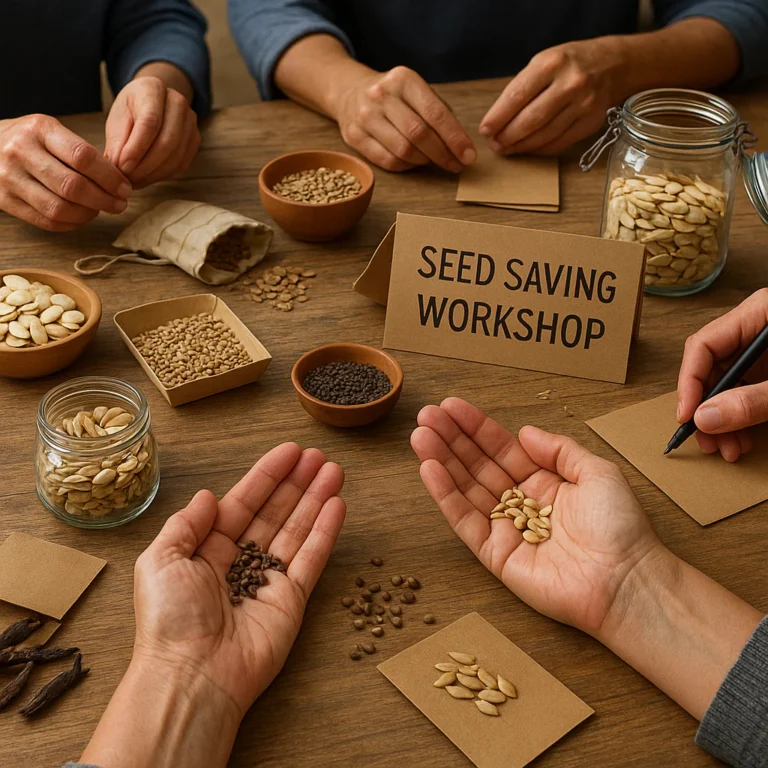
- Workshops paired with seed access: Seed libraries are adding composting, seed-saving, ecology, plant swaps, and garden-planning events rather than simply placing packets in a cabinet.
- Improved inventory tracking: QR codes, spreadsheets, newsletters, social media groups, and email updates help gardeners find out what is actually available before making a special trip.
- Stronger partnerships: Libraries, Master Gardener programs, community gardens, seed companies, schools, food banks, and nonprofits are sharing supplies and expertise.
Our quick recommendation: Look for a program that clearly labels crop, variety, harvest year, growing region, and seed-saving suitability. A beautiful cabinet full of mystery envelopes is charming for about thirty seconds. Then it becomes botanical detective work.
Seed-Saving Basics in 60 Seconds
A seed library generally works on a borrow, grow, harvest, and share model:
- Select seeds suited to your growing season.
- Record the variety and planting date.
- Grow the healthiest plants you can.
- Allow suitable fruits, pods, or flower heads to mature fully.
- Harvest, clean, and dry the seeds.
- Label them with crop, variety, year, source, and notes.
- Return suitable seeds to the library.
The phrase “borrow seeds” is often symbolic rather than a strict financial or legal loan. Some libraries ask everyone to return seeds; others simply welcome donations. San Diego’s program summarizes the spirit neatly: “Borrow, grow and harvest seeds!” Check each branch’s current rules because participation varies.
For reliable seed-saving guidance, compare your method with resources from Seed Savers Exchange, USDA National Agricultural Library, and your local Coperative Extension.
✅ Best Seeds to Borrow and ❌ Seeds to Avoid Sharing
| Seed type | Share? | Why |
|---|---|---|
| Open-pollinated beans | ✅ | Usually easy to save and commonly self-pollinating |
| Open-pollinated lettuce | ✅ | Relatively straightforward for seed stewards |
| Peas | ✅ | Beginner-friendly and often reliable |
| Heirloom tomatoes | ✅ | Popular, useful, and generally easy to process |
| Open-pollinated peppers | ✅ | Good candidates when varieties are separated |
| Native wildflowers | ✅ Carefully | Valuable for habitat, but identification and regional suitability matter |
| Hybrid F1 seeds | ⚠️ Usually donate the original packet only | Saved offspring may not resemble the parent plant |
| Unknown mystery seeds | ❌ | No reliable identity, growing instructions, or safety information |
| Moldy or damp seeds | ❌ | Can reduce germination and contaminate storage |
| Treated, coated, or chemically dyed seeds | ❌ | Treatment may be unsuitable for home seed sharing |
| Seeds from diseased plants | ❌ | Disease may spread through contaminated seed or debris |
| Invasive plant seeds | ❌ | Check state and local restrictions before sharing |
The National Gardening Association and University of Minnesota Extension both emphasize that seed quality depends on species, maturity, drying, storage, and cross-pollination.
🌱 Community Garden Seed Libraries: Background, History, and Growing Momentum

How Seed Libraries Began
Modern seed libraries grew from several older traditions:
- Informal seed swapping between neighbors
- Farm and family seed saving
- Public library lending models
- Community food-security programs
- Heritage crop preservation
- Native plant and pollinator conservation
The basic idea is delightfully simple: a community protects access to planting material by sharing what it can grow locally.
Early programs often operated through small cabinets or boxes. Today, a seed library might be:
- A drawer in a public library
- A shelf inside a community garden tool shed
- A year-round online catalog
- A neighborhood “little seed library”
- A coordinated citywide network
- A seasonal table at a plant swap
The UCCE San Bernardino County Master Gardeners’ Seed Library in Every Community Project, launched in 2017, presents seed libraries as tools for education, resilience, and community building. Its practical advice is refreshingly grounded: a program needs a secure storage place, a willingness to learn, and a few hours each month for upkeep.
Why Community Seed Exchanges Matter for Food Security
Seed access is not the same as food access, but it is a crucial first step. A packet of seeds can produce repeated harvests, teach gardening skills, and help households grow culturally familiar foods.
Seed libraries can support:
- Household food production
- Urban agriculture
- Nutrition education
- Local biodiversity
- Gardening confidence
- Emergency preparedness
- Cultural food traditions
- Pollinator habitat
- Intergenerational learning
At Salt Lake City Public Library’s The Plot, two library gardeners continued the program during pandemic closures. They mailed over 700 envelopes of seeds, while produce from the library’s garden beds was donated to the Women’s Resource Center, which served approximately 200 homeless women per night at the time described by the Urban Libraries Council case study.
That example reveals two different forms of resilience:
- Seeds help people grow food in their own spaces.
- Community gardens can grow food directly for neighbors who need it.
For more on the wider benefits, explore our Benefits of Community Gardens category.
Seed Libraries Versus Seed Swaps, Seed Banks, and Public Libraries
These terms overlap, but they are not identical.
| Program | Primary purpose | Typical materials | Main users |
|---|---|---|---|
| Community seed library | Free or low-barier local seed access | Vegetable, herb, flower, native, and saved seeds | Home gardeners and community growers |
| Seed swap | Short-term exchange and social connection | Seeds brought by participants | Gardeners attending an event |
| Seed bank | Long-term preservation of genetic diversity | Carefully documented accessions | Researchers, farmers, conservationists |
| Public library seed program | Public education and free community access | Packets, gardening guides, workshops | Library patrons and residents |
| Community garden seed store | Support for plots and shared production | Seasonal crops and garden-specific varieties | Plot holders and volunteers |
| Native plant seed exchange | Habitat restoration and regional ecology | Regionally appropriate native seed | Restoration groups and gardeners |
A seed library may borrow procedures from a seed bank, operate through a public library, and host seed swaps. The label matters less than the quality of documentation and stewardship.
🏛️ How a Community Garden Seed Library Works
Membership, Borrowing, Donating, and Returning Seeds
Most seed libraries use one of three participation models:
Model 1: Open access
Gardeners choose packets without registration.
Advantages:
- Very welcoming
- Minimal administration
- Useful for neighborhood cabinets
- Easy for casual gardeners
Drawbacks:
- Inventory is harder to track
- Limits may be ignored
- Seed-return rates are difficult to measure
Model 2: Membership sign-up
Gardeners register with the library or garden team.
Advantages:
- Staff can offer tailored guidance
- Better tracking of participation
- Easier to announce workshops and updates
- Useful for limited or specialized collections
Drawbacks:
- Registration can discourage people
- In-person sign-up may exclude people with mobility or scheduling challenges
- Privacy policies are needed
Model 3: Catalog-and-request
Gardeners browse a paper or digital catalog and request packets for pickup or mailing.
Advantages:
- Efficient for large collections
- Supports contactless service
- Makes seasonal planning easier
- Can reach people beyond the garden site
Drawbacks:
- Requires administrative time
- Mailing and packaging add work
- Inventory must be updated frequently
San Diego’s branch network demonstrates all three approaches. Some branches require in-person membership; others offer contactless pickup, phone inquiries, or mailed seeds depending on location and availability. The city warns that varieties and supplies vary by branch and are limited to current inventory.
Open-Pollinated, Heirloom, Hybrid, and GMO Seed Differences
| Term | Meaning | Seed-saving value | Notes |
|---|---|---|---|
| Open-pollinated | Reproduces through natural pollination and may remain consistent when isolated properly | High | Good foundation for community collections |
| Heirloom | A culturally or historically valued variety, usually open-pollinated | High | “Heirloom” has no single universal age requirement |
| Hybrid F1 | Cross between selected parent lines | Low to variable | Saved seeds may produce unpredictable plants |
| GMO | Altered using specific biotechnology methods | Not a seed-saving category by itself | “Non-GMO” does not automatically mean open-pollinated |
| Organic seed | Produced under certified organic standards | Variable | Organic describes production, not genetic stability |
| Native seed | From plant species indigenous or regionally appropriate to an area | Variable | Provenance and ecological suitability matter |
A common mistake is treating organic, non-GMO, heirloom, and open-pollinated as synonyms. They are not.
For example:
- A seed can be organic but hybrid.
- A seed can be non-GMO but not heirloom.
- A seed can be heirloom but poorly adapted to your climate.
- A native wildflower can be locally appropriate but still require specialist handling.
The USDA National Organic Program regulates organic claims, while USDA APHIS provides information about agricultural biotechnology.
Seed Inventory Systems, Labels, and Digital Catalogs
A useful seed packet label should answer:
- What plant is this?
- Which variety is it?
- When was it harvested or purchased?
- Where did it come from?
- Was it open-pollinated, hybrid, heirloom, native, or unknown?
- How was it stored?
- When should it be planted?
- Has germination been tested?
We recommend this basic label format:
Crop: Bean
Variety: Blue Lake
Type: Open-pollinated
Source: Community garden Plot 12
Harvest year: 2025
Growing notes: Trellis required
Isolation notes: Low concern
Germination tested: Yes, 88%
``

A spreadsheet can track:

| Field | Example |
|---|---|
| Accession ID | CG-2026-0048 |
| Crop | Tomato |
| Variety | Amish Paste |
| Seed source | Member donation |
| Year harvested | 2025 |
| Packet count | 14 |
| Germination rate | 82% |
| Storage location | Cabinet B, drawer 2 |
| Expiration review | February 2027 |
| Notes | Do not distribute if mold appears |

For a small program, **Google Sheets** may be enough. For a larger collection, tools such as [SeedLinked](https://www.seedlinked.com/) or a library’s existing catalog platform can help, but only if volunteers will actually maintain them. A neglected digital catalog is just a very tidy rumor.

---

## 📚 Public Library and Urban Agriculture Models Worth Studying

### City of San Diego Seed Library and Public Library Programs

The [City of San Diego Seed Libraries](https://www.sandiego.gov/sdplseedlibraries) provide one of the clearest examples of a distributed public seed-library network.

Notable features include:

- Free seeds at multiple branches
- Vegetable, herb, flower, fruit, and native selections
- Different registration rules by location
- Local and non-GMO options
- Workshops and garden events
- Seed-return encouragement
- Partnerships with nonprofits, nurseries, seed companies, and Friends groups

Examples from the current program information include:

| Branch or program | Notable feature |
|---|---|
| **Clairemont** | Established in 2024; free flower, herb, and vegetable seeds |
| **College-Rolando** | Locally adapted varieties, workshops, and plant swaps |
| **Mission Hills-Hillcrest/Knox** | Focus on nutritious food and lower environmental impact |
| **North Clairemont** | Year-round packets, native flowers, Garden Kits, and garden parties |
| **North University** | Locally adapted non-GMO seeds and monthly Garden Share |
| **Oak Park** | Seasonal program launched with City Farmers Nursery in 2026 |
| **Ocean Beach** | Operating since spring 2019 with community updates through Facebook |
| **Pacific Beach** | Up to six free winter packets and six summer packets for members |
| **Rancho Peñasquitos** | Donated locally adapted non-GMO heirloom seeds and contactless pickup |
| **Tierrasanta** | Free fruit, vegetable, herb, and flower seeds |

**Trust the branch page over an old social post.** Seed inventory and participation rules change quickly, especially when donations arrive in waves.

### Little Free Seed Libraries and Neighborhood Cabinets

Small neighborhood seed boxes can be wonderfully effective. They work best when they have:

- A roof or weatherproof enclosure
- Airtight inner storage
- Simple instructions
- A clear “take what you need, share what you can” message
- A volunteer responsible for weekly checks
- Separate compartments for commercial packets and saved seed
- A visible “do not donate” list

Avoid placing seed cabinets in direct sun. A glass-fronted box can become a miniature greenhouse, and seeds do not appreciate the sauna.

### School, Extension, Food Bank, and Community Garden Partnerships

Partnerships widen the program’s reach:

- **Schools:** Students learn plant life cycles and collect data.
- **Coperative Extension:** Master Gardeners can advise on storage, crop isolation, and regional timing.
- **Food banks:** Seed packets can accompany fresh produce or nutrition education.
- **Community gardens:** Plot holders provide locally tested seeds.
- **Nurseries:** Businesses may donate packets, trays, compost, or workshop space.
- **Libraries:** Staff provide public access, programming, and communication channels.

The UCCE project specifically describes Master Gardener assistance with **site visits, storage setup, community interaction design, training, and starter seeds**. Gardeners seeking help can contact the UCCE San Bernardino County Master Gardener helpline at **(909) 387-2182** or **[email protected]**.

---

## 🔎 Community Garden Seed Library Updates: What Changed and Why

### 2026 Trends in Seed Lending and Seed Sharing

Several trends are shaping seed libraries in 2026:

1. **Hybrid physical-digital service**
 - Physical cabinets remain friendly and visible.
 - Digital catalogs reduce wasted trips.
 - Online forms help staff manage requests.

2. **Branch-level flexibility**
 - Each neighborhood has different climates, crops, and volunteer capacity.
 - A single citywide rulebook may be less useful than shared standards with local choices.

3. **Climate-aware collections**
 - More attention is going to heat tolerance, drought resilience, short-season crops, and water-wise flowers.
 - Gardeners are also exchanging planting-date observations.

4. **Seed stewardship education**
 - Programs are teaching pollination, isolation, fermentation, drying, labeling, and germination testing.

5. **Community storytelling**
 - Instagram, Facebook groups, newsletters, and garden tours show what grows successfully.
 - Stories encourage returns better than stern reminders.

6. **Food-security partnerships**
 - Gardens are linking seed access with produce donations, cooking education, and emergency support.

7. **Native and pollinator seed expansion**
 - Programs increasingly include native flowers and habitat plants, while emphasizing local provenance.

Read more about water-smart gardening in our [Climate Adaptation in Gardening](https://www.community-gardening.org/category/climate-adaptation-in-gardening/) category.

### Climate-Resilient Seeds and Regional Adaptation

A seed is not “climate-resilient” in isolation. Its performance depends on:

- Temperature range
- Day length
- Rainfall pattern
- Soil type
- Pest pressure
- Disease pressure
- Planting season
- Garden management
- Genetic variation

A drought-tolerant crop grown in waterlogged soil will not receive the memo.

We recommend tracking performance with a simple seasonal scorecard:

| Trait | Score 1–5 | Observation |
|---|---:|---|
| Germination speed | 4 | Emerged in six days |
| Heat tolerance | 5 | Continued flowering during heat |
| Water requirement | 4 | Needed irrigation twice weekly |
| Disease resistance | 3 | Mild leaf spotting |
| Yield | 4 | Produced steadily for six weeks |
| Flavor or household use | 5 | Excellent for fresh eating |

Local observations should not replace university trials or professional agricultural recommendations, but they can help a neighborhood discover which varieties behave well in its own microclimate.

### Native Plants, Pollinator Seeds, and Biodiversity Collections

Native seed sharing needs extra care. Important questions include:

- Is the species truly native to the region?
- Was the seed collected legally?
- Is the source location documented?
- Could the plant be invasive elsewhere?
- Does the species require cold stratification, scarification, smoke treatment, or light exposure?
- Is the collection from a healthy population?
- Are the seeds contaminated with weeds?

Resources from [Xerces Society](https://www.xerces.org/), [Lady Bird Johnson Wildflower Center](https://www.wildflower.org/), and [Native Seeds/SEARCH](https://www.nativeseds.org/) can help gardeners make responsible choices.

For edible crop suggestions, browse our [Edible Plants](https://www.community-gardening.org/category/edible-plants/) category.

### Digital Checkouts, QR Codes, and Online Seed Catalogs

A QR code on a packet or cabinet can link to:

- Planting instructions
- Germination notes
- A short video
- Harvest photographs
- Seed-return directions
- A seasonal availability list
- A donation form
- A disease-reporting form

Keep a paper option available. Not every gardener has reliable data service, a smartphone, or the desire to scan a QR code before breakfast.

---

## 🧭 How to Start a Community Garden Seed Library

### 1. Define the Mission, Service Area, and Membership Rules

Start with one sentence:

> “Our seed library helps local residents grow food, flowers, and habitat plants by sharing well-labeled seeds and practical gardening knowledge.”

Then decide:

- Who can use it?
- Is a library card required?
- How many packets can each person take?
- Are seeds mailed?
- Must members return seeds?
- Can members donate commercial packets?
- Are native seeds included?
- Who may access member information?
- How will you handle damaged or mislabeled donations?

Write these rules in plain language. Put them on the cabinet, website, request form, and donation envelope.

### 2. Choose a Safe, Accessible Seed Library Location

A strong location is:

- Dry
- Cool
- Shaded
- Accessible during useful hours
- Near gardening information
- Visible enough to invite curiosity
- Secure enough to prevent repeated contamination or theft

Avoid:

- Greenhouses without climate control
- Outdoor boxes exposed to rain
- Areas near leaking plumbing
- Unmonitored cabinets containing large amounts of seed
- Locations accessible only by stairs

The [Community Garden Policies](https://www.community-gardening.org/category/community-garden-policies/) category can help organizers think through access, stewardship, and shared responsibility.

### 3. Build a Starter Seed Collection

Begin with reliable, familiar crops:

- Beans
- Peas
- Lettuce
- Radishes
- Basil
- Cilantro
- Marigolds
- Sunflowers
- Tomatoes
- Peppers
- Cucumbers
- Squash, with cross-pollination warnings

A balanced collection should include:

| Collection group | Suggested role |
|---|---|
| Beginner crops | Quick success and confidence |
| Staple vegetables | Food production |
| Herbs | Small-space growing |
| Pollinator flowers | Habitat and visual appeal |
| Native plants | Regional ecology |
| Cultural crops | Food traditions and inclusion |
| Climate-adapted varieties | Local resilience |
| Experimental varieties | Learning and community trials |

Use donations from trusted seed companies, local gardeners, community gardens, and organizations. Keep donated mystery seeds separate or reject them politely.

### 4. Create Borrowing, Donation, and Seed-Return Policies

A useful policy distinguishes:

#### Acceptable donations

- Clean, dry seeds
- Clearly identified crops and varieties
- Harvest year or purchase year
- Original commercial packets
- Seeds stored away from pests and moisture
- Open-pollinated or heirloom seeds suitable for saving

#### Donations needing review

- Seeds saved from cross-pollinated crops
- Native seeds without collection information
- Older packets with unclear storage history
- Seeds from plants that may have disease
- Partially used commercial packets

#### Unacceptable donations

- Moldy, damp, or insect-damaged seeds
- Unknown seeds
- Treated seeds without clear labeling
- Seeds from diseased plants
- Legally restricted or invasive species
- Packets missing crop identity

The [Northeast Regional Library District seed library guidance](https://www.ndld.org/seedlibrary) recommends recording **plant, variety, seed origin, and seed year**, and advises an additional growing season when cross-pollination may have affected true-to-type traits.

### 5. Set Up Storage, Containers, and Inventory Tracking

Seeds generally last longest when protected from **heat, moisture, light, oxygen, and pests**.

Recommended supplies include:

- Airtight plastic containers
- Paper envelopes inside airtight bins
- Silica gel desiccant packets
- Waterproof labels
- Fine-point permanent markers
- Drawer organizers
- Digital scales for larger collections
- Refrigerator dedicated to seed storage, when appropriate
- Hygrometer for monitoring humidity

Do not place loose desiccant directly against unsealed seeds. Use labeled packets and a stable storage system.

For small collections, these options are practical:

- [IRIS USA storage containers on Amazon](https://www.amazon.com/s?k=IRIS+USA+airtight+storage+containers&tag=bestbrands0a9-20&tag=bestbrands0a9-20)
- [Avery waterproof labels on Amazon](https://www.amazon.com/s?k=Avery+waterproof+labels&tag=bestbrands0a9-20)
- [Brother P-touch label makers on Amazon](https://www.amazon.com/s?k=Brother+P-touch+label+maker&tag=bestbrands0a9-20&tag=bestbrands0a9-20)
- [Darnel or similar seed envelopes on Amazon](https://www.amazon.com/s?k=seed+envelopes+small+paper&tag=bestbrands0a9-20)

### 6. Train Volunteers and Launch Community Workshops

Volunteers should know how to:

- Inspect seed packets
- Read dates and labels
- Identify moisture damage
- Record inventory
- Explain hybrid versus open-pollinated seed
- Demonstrate basic sowing
- Handle questions without guessing
- Refer disease or regulatory questions to experts
- Protect member privacy

Useful workshop topics include:

- Starting seeds indoors
- Seed-saving basics
- Tomato fermentation
- Pollinator gardening
- Native plant propagation
- Composting
- Water-wise irrigation
- Harvesting herbs
- Germination testing

Pair seed distribution with [Community Garden Events](https://www.community-gardening.org/category/community-garden-events/) so the library becomes a living program, not a dusty drawer.

### 7. Measure Participation, Germination, and Seed Diversity

Track more than packet counts. Useful metrics include:

- Number of active members
- First-time gardeners served
- Packets distributed
- Packets donated
- Seeds returned
- Germination test results
- Workshop attendance
- Crop and variety diversity
- Native and pollinator selections
- Households reached by mail
- Produce donated by participating gardens

Do not treat return rate as the only measure of success. A new gardener may use every seed, gain confidence, and return next year with a stronger contribution.

---

## 🧰 Key Elements of a Reliable Seed Library

### Seed Packets, Envelopes, Jars, and Labeling Supplies

Paper packets are useful because they breathe, but they need dry outer storage. Glass jars protect against pests but can trap condensation if damp seeds are added.

**Best practice:**

1. Dry seeds fully.
2. Place them in labeled paper envelopes.
3. Group envelopes in airtight containers.
4. Add desiccant outside the individual packets.
5. Store containers in a cool, dark place.
6. Inspect periodically.

Avoid reusing food containers that still smell strongly of oils, spices, or cleaning chemicals. Seeds have a long memory and an oddly dramatic sense of smell.

### Cool, Dry, Dark Seed Storage

A storage area should be:

- Stable rather than frequently fluctuating in temperature
- Protected from direct sunlight
- Low in humidity
- Free from rodents and insects
- Easy for volunteers to inspect

For longer-term storage, a refrigerator can work if seeds are sealed against condensation. Never open a cold container immediately in a warm, humid room and assume everything will be fine. Let sealed containers warm to room temperature first.

### Germination Testing and Seed Viability Records

A simple paper-towel test:

1. Count 10 or 20 seeds.
2. Place them in a damp, not dripping, paper towel.
3. Roll or fold the towel.
4. Put it in a labeled bag or container.
5. Keep it at the crop’s recommended germination temperature.
6. Check daily or every other day.
7. Count normal seedlings.
8. Calculate the germination percentage.

**Formula:**

```text
Germination rate = (number of normal seedlings ÷ number of seeds tested) × 100
``

If 18 of 20 seeds germinate, the rate is **90%**.

Record:

- Test date
- Temperature
- Number tested
- Number germinated
- Mold or abnormal growth
- Recommended use-by date

### Plant Isolation and Cross-Pollination Planning

Cross-pollination is one of the most misunderstood seed-saving issues.

Examples:

- Beans are often relatively easy to save.
- Tomatoes mostly self-pollinate, though occasional crossing can occur.
- Cucumbers, squash, pumpkins, and many brassicas can cross readily.
- Corn requires serious isolation planning because wind moves pollen efficiently.
- Peppers may cross, especially with insect activity.

If a seed library wants true-to-type seed, gardeners may need:

- Physical distance
- Blossom bags
- Hand pollination
- Timing differences
- Isolation cages
- Multiple gardens growing only one variety of a crop
- A shared seed-growing plan

The [University of Minnesota Extension seed-saving guidance](https://extension.umn.edu/garden-and-home/yard-and-garden/gardening-in-minnesota/saving-vegetable-seeds) provides crop-specific information.

### Accessible Instructions for New Gardeners

Every packet or catalog entry should ideally include:

- When to sow
- How deep to plant
- Whether to transplant
- Approximate days to harvest
- Sun requirements
- Water needs
- Container suitability
- Harvest instructions
- Seed-saving difficulty
- Cross-pollination warning

Use large type, clear language, translations where needed, and visual planting guides. A first-time gardener should not need a botany degree to understand a packet.

---

## 🌾 Seed-Saving Guide for Community Gardeners

### 1. Select Healthy, True-to-Type Parent Plants

Choose plants that are:

- Healthy
- Productive
- Free from serious disease
- Typical of the variety
- Well adapted to your garden
- Not unusually stressed
- Mature enough to express useful traits

Do not save seed from the first plant that bolts, unless early bolting is exactly the trait you want to study.

### 2. Know Which Crops Are Easy or Difficult to Save

| Difficulty | Crops | Main issue |
|---|---|---|
| Easy | Beans, peas, lettuce, tomatoes | Manageable pollination and processing |
| Moderate | Peppers, cucumbers, carrots | Isolation or bienial growth may matter |
| Difficult | Corn, squash, brassicas | High cross-pollination risk |
| Specialist | Many native flowers | Species-specific dormancy and legal concerns |

Start with beans, peas, lettuce, and tomatoes. Our team once gave a new volunteer a packet of squash seeds and a lecture about isolation. He nodded bravely, planted three varieties side by side, and returned with what looked like a pumpkin wearing a cucumber costume. Excellent compost conversation; not excellent varietal preservation.

### 3. Harvest, Clean, Dry, and Process Seeds Correctly

#### Dry-seded crops

For beans, peas, lettuce, and many flowers:

1. Let pods or flower heads dry on the plant when possible.
2. Harvest before shattering.
3. Finish drying in a cool, airy room.
4. Remove chaff.
5. Inspect for insects and mold.
6. Store only when fully dry.

#### Wet-seded crops

For tomatoes and some cucumbers:

1. Scoop seeds from ripe fruit.
2. Place seeds and pulp in a labeled container.
3. Allow controlled fermentation for a few days.
4. Rinse thoroughly.
5. Remove floating debris and poor seeds.
6. Dry seeds in a single layer.
7. Package after they become crisp and dry.

Do not seal damp seeds. That is how a promising donation becomes a tiny laboratory for mold.

### 4. Prevent Cross-Pollination in Shared Garden Plots

Community gardens intensify cross-pollination because many gardeners grow related crops close together.

Create a shared plan:

- List varieties by plot.
- Identify crops likely to cross.
- Coordinate planting dates.
- Designate seed-saving plants.
- Use isolation cages where practical.
- Mark seed crops clearly.
- Ask gardeners not to harvest designated seed plants early.

A community garden can preserve more genetic integrity by coordinating three plots than by asking thirty gardeners to remember complicated isolation distances independently.

### 5. Package and Label Saved Seeds for Future Growers

Include:

- Common crop name
- Botanical name when useful
- Variety
- Harvest year
- Garden or region of origin
- Whether the plant was isolated
- Any disease observations
- Germination test results
- Sowing notes
- Seed-saving warnings

For native seed, add collection date, collection location, and any permission or provenance information.

### 6. Track Germination Results and Improve the Collection

After distribution, invite gardeners to report:

- Germination percentage
- Days to emergence
- Days to harvest
- Yield
- Flavor
- Pest or disease resistance
- Heat or drought performance
- Whether the plant matched the label

Use this feedback to classify seeds:

- **Reliable:** distribute widely
- **Promising:** continue testing
- **Low viability:** retest or retire
- **Poorly documented:** hold for review
- **Potentialy cross-pollinated:** label clearly or exclude

---

## ⚖️ Seed Library Rules, Liability, and Legal Considerations

### State Seed Laws, Labeling Requirements, and Agricultural Regulations

Seed laws vary by jurisdiction. Requirements may address:

- Labeling
- Germination standards
- Weed seeds
- Noxious weeds
- Seed treatment disclosure
- Commercial sale versus free distribution
- Agricultural inspection
- Plant quarantine

A casual neighbor-to-neighbor exchange may be treated differently from an organized distribution program. Before launching a large or mailed program, contact:

- Your state department of agriculture
- County Cooperative Extension
- Public library administration
- Municipal risk management
- A qualified attorney for complex programs

The [Association of Official Seed Analysts](https://www.analyzeseds.com/) provides technical information, while [USDA APHIS plant health resources](https://www.aphis.usda.gov/plant-health) explain plant quarantine and pest concerns.

### Patented, Treated, Coated, and Restricted Seeds

Do not casually redistribute:

- Proprietary seeds with contractual restrictions
- Chemically treated seed without clear warnings
- Peleted seed without the original label
- Seeds prohibited by local regulation
- Invasive species
- Seeds collected from protected lands without permission

Commercial seed packets should remain in their original packaging whenever possible. If a packet is opened, record the original variety and any treatment statement.

### How to Write a Clear Seed Donation Disclaimer

A practical disclaimer may explain that:

- Seeds are shared for gardening and educational purposes.
- Germination is not guaranteed.
- Donors should provide accurate information.
- Gardeners should follow local regulations.
- The library does not guarantee varietal purity.
- Participants should not knowingly donate diseased or contaminated seed.
- Seed-saving results can vary by climate and growing conditions.

Avoid language that sounds like a legal shield made from cardboard. Ask an appropriate local authority to review the final policy.

### Food Safety, Invasive Species, and Plant Disease Prevention

Seed libraries reduce risk by:

- Rejecting diseased seed
- Keeping unknown seed separate
- Inspecting packets
- Cleaning work surfaces
- Recording sources
- Avoiding invasive species
- Teaching gardeners not to compost diseased plants casually
- Referring suspected regulated pests to authorities

The [National Plant Board](https://nationalplantboard.org/) and state agriculture departments are useful starting points for plant-health contacts.

---

## 🤝 Building an Inclusive and Equitable Seed-Sharing Program

### Removing Cost, Language, Mobility, and Knowledge Bariers

A truly accessible program may offer:

- Free packets
- No library card requirement
- Mail or contactless pickup
- Large-print instructions
- Translated materials
- Accessible cabinet height
- Evening and weekend workshops
- Seed kits for beginners
- Container-gardening options
- Culturally relevant crops
- Clear, nonjudgmental explanations

San Diego’s branch network shows why local flexibility matters. Some branches require in-person registration, while others provide different access arrangements. Neither approach is automatically best; the question is **who gets excluded by the rule?**

### Honoring Indigenous, Cultural, and Heritage Seed Traditions

Seeds can carry cultural identity, family history, and community memory. Programs should:

- Credit seed sources
- Ask permission before commercializing stories or varieties
- Avoid treating culturally significant crops as novelty items
- Invite growers to teach
- Record names accurately
- Protect sensitive information
- Return stewardship to the communities connected to the seed

Seed sovereignty is not simply having free packets. It includes the power to decide **what is grown, who controls the seed, and how knowledge is shared**.

### Seed Sovereignty and Community Food Resilience

A resilient seed program does not depend one volunteer, one donor, or one grant. Build redundancy:

- Multiple trained stewards
- Several seed sources
- Written procedures
- Backup inventory records
- A modest emergency reserve
- Seasonal planning
- Relationships with local growers
- Transparent decision-making

The pandemic-era experience of The Plot showed that a physical program could shift to digital cataloging and mail delivery quickly. The deeper lesson was organizational: **mission clarity made adaptation possible**.

### Volunteer Roles, Governance, and Conflict Resolution

Define roles such as:

- Seed librarian
- Inventory coordinator
- Germination tester
- Donation reviewer
- Workshop leader
- Digital catalog manager
- Community outreach volunteer
- Accessibility coordinator
- Native seed steward

Create an escalation path for disagreements. Common disputes include:

- Whether a donation is acceptable
- How many packets one person may take
- Whether hybrid seeds belong in the collection
- Who can access member data
- Whether volunteers may remove old inventory

Written standards keep these issues from becoming personal.

---

## 💡 Innovation Synopsis: Modern Tools for Better Seed Libraries

### QR-Code Seed Packets and Mobile-Friendly Catalogs

A QR code can connect a physical packet to a living information page. Include:

- Variety description
- Planting calendar
- Germination results
- Harvest photographs
- Seed-saving notes
- Return instructions
- Workshop dates

Use short URLs or a simple website that volunteers can update. Do not bury essential instructions behind a login.

### Climate Data, Garden Mapping, and Crop Recommendations

Programs can use:

- USDA Plant Hardiness Zone maps
- Local weather records
- Garden microclimate notes
- Soil observations
- Water restrictions
- Community feedback

The [USDA Plant Hardiness Zone Map](https://planthardiness.ars.usda.gov/) helps with perennial plant survival, but it does not tell you the best planting date for every annual crop. Local growing calendars and Extension recommendations remain essential.

### Community Seed Steward Training and Citizen Science

A seed library can become a neighborhood research network. Volunteers can compare:

- Germination
- Yield
- Flowering time
- Disease pressure
- Heat tolerance
- Pollinator visits
- Water use
- Flavor ratings

Keep experiments simple and label them as observations rather than universal scientific conclusions. “This tomato thrived beside the south wall” is useful. “This tomato will thrive everywhere” is how gardening myths reproduce.

---

## 🚧 Challenge and Opportunity: Keeping Seeds Available, Viable, and Diverse

### Common Problems With Seed Libraries

| Problem | Likely cause | Practical response |
|---|---|---|
| Empty shelves | High demand or poor restocking | Track popular crops and schedule seasonal donations |
| Low germination | Old, damp, or immature seed | Test, relabel, and retire weak lots |
| Mystery packets | Incomplete donations | Create a review bin and reject unknowns |
| Mold | Moisture or condensation | Improve drying and airtight storage |
| Few returns | New gardeners or unclear expectations | Teach seed saving and make returns optional but visible |
| Volunteer burnout | One-person dependency | Rotate roles and document procedures |
| Duplicate varieties | Donation patterns | Publish a wanted-sed list |
| Poor diversity | Focus on popular vegetables only | Add native, cultural, and climate-adapted crops |
| Confusing rules | Branch-by-branch variation | Use shared core standards and local addenda |

### Solutions for Empty Shelves and Incomplete Returns

Do not shame gardeners for failing to return seeds. Many beginners do not harvest seed successfully, and some crops are bienial or difficult to save.

Instead:

- Offer commercial-packet donations as an alternative.
- Hold seed-cleaning workshops.
- Ask for volunteer hours instead of seed returns.
- Invite harvest stories and growing data.
- Place collection envelopes in the garden.
- Publish a seasonal “most needed” list.
- Partner with seed companies and nurseries.

A seed library grows through **participation**, not guilt.

### Managing Mold, Pests, Heat, Humidity, and Poor Germination

Inspect monthly for:

- Clumping
- Musty odor
- Webing
- Holes
- Condensation
- Discoloration
- Broken packets
- Unusual insects

Quarantine suspicious materials. Do not move questionable packets into the main collection “temporarily.” Temporary quarantine has a strange habit of becoming permanent contamination.

### Balancing Rules With a Welcoming Borrower Experience

Rules should protect the collection without making people afraid to ask questions.

Use:

- Friendly signs
- Plain language
- Examples
- A “not sure?” review box
- Volunteer office hours
- Clear limits with explanations
- A way to report mistakes without embarrassment

The best seed librarians say, “Let’s figure that out,” more often than, “You filled out the form incorrectly.”

---

## 📈 Achieved Outcomes: Measuring Community Garden Seed Library Success

### Participation, Seed Circulation, and Return Rates

Track monthly and seasonal patterns:

| Metric | What it shows |
|---|---|
| Unique users | Reach |
| First-time users | Accessibility and outreach |
| Packets taken | Demand |
| Packets donated | Community contribution |
| Return rate | Seed-stewardship participation |
| Workshop attendance | Education |
| Mail requests | Geographic reach |
| Repeat visits | Ongoing value |

Interpret numbers in context. A low return rate may indicate poor instructions, but it may also mean the program is serving many first-time gardeners.

### Germination, Crop Diversity, and Local Adaptation

A healthy collection should not be judged only by volume. Consider:

- Number of crops
- Number of varieties
- Percentage of open-pollinated seeds
- Native plant representation
- Cultural crop representation
- Germination averages
- Locally tested varieties
- Climate-resilient selections
- Pollinator value

### Food Access, Garden Yield, and Environmental Benefits

The strongest programs connect seed access with outcomes such as:

- Pounds of produce grown
- Produce donated
- Households growing food
- Pollinator habitat created
- Water-saving methods adopted
- Food-growing workshops completed
- Garden plots activated
- Seeds saved locally

The Plot example demonstrates how a seed library and garden can serve different audiences at once: mailed seeds supported home growers, while garden produce supported an emergency shelter.

### How to Publish Transparent Annual Seed Library Updates

An annual update should include:

- Number of users
- Packets distributed
- Donations received
- Most requested crops
- Germination concerns
- Workshops held
- Partnerships formed
- Produce donated
- Accessibility improvements
- Next season’s needs

Include a short story, but protect personal privacy. A single gardener’s successful first harvest can explain impact better than a spreadsheet alone.

---

## 🗓️ Seasonal Community Seed Library Calendar

### Winter Inventory, Ordering, and Volunteer Planning

- Audit packets.
- Remove damp or mislabeled seed.
- Order priority crops.
- Review germination data.
- Plan workshops.
- Update the catalog.
- Prepare beginner seed kits.
- Confirm volunteer coverage.

### Spring Seed Lending and Planting Workshops

- Promote cool-season crops.
- Demonstrate direct sowing.
- Offer container-garden guidance.
- Label native flower packets.
- Track demand.
- Schedule plant swaps.
- Encourage gardeners to mark future seed crops.

### Summer Crop Monitoring and Seed Stewardship

- Check heat performance.
- Photograph successful varieties.
- Monitor disease.
- Mark plants intended for seed.
- Coordinate isolation.
- Collect gardener feedback.
- Keep storage areas cool and dry.

### Fall Seed Harvest, Cleaning, and Community Seed Swaps

- Host seed-cleaning demonstrations.
- Collect dry pods and mature fruit.
- Test germination.
- Record harvest year.
- Hold a community seed swap.
- Retire contaminated material.
- Publish winter seed availability.

---

## 🛒 Recommended Seed Library Supplies and Trusted Brands

### Seed Storage Containers and Desiccants

Good storage systems should be airtight, stackable, labeled, and easy for volunteers to inspect.

Consider:

- [IRIS USA storage containers](https://www.amazon.com/s?k=IRIS+USA+airtight+storage+containers&tag=bestbrands0a9-20&tag=bestbrands0a9-20)
- [Rubermaid airtight food-storage containers](https://www.amazon.com/s?k=Rubermaid+airtight+storage+containers&tag=bestbrands0a9-20)
- [Uline resealable bags](https://www.uline.com/BL_1504/Resealable-Bags)
- [Dry & Dry silica gel packets](https://www.amazon.com/s?k=Dry+%26+Dry+silica+gel+packets&tag=bestbrands0a9-20)

**Best use:** Keep seeds in labeled paper packets inside airtight containers, with desiccant placed around the packets rather than mixed into them.

### Label Makers, Waterproof Markers, and Garden Tags

Useful options include:

- [Brother P-touch label makers](https://www.brother-usa.com/ptouch)
- [Avery waterproof labels](https://www.avery.com/category/material/waterproof-labels/)
- [Sharpie industrial markers](https://www.sharpie.com/markers/permanent-markers/)
- [Kinglake plant labels](https://www.amazon.com/s?k=Kinglake+plant+labels&tag=bestbrands0a9-20)

Test labels under condensation and handling before using them across the entire collection.

### Germination Testing Materials and Garden Records

A basic testing station needs:

- Paper towels
- Resealable bags or small containers
- Permanent markers
- Measuring cups
- Thermometer
- Recording sheets
- Optional humidity monitor

For larger collections, use a spreadsheet with accession numbers and test dates. A clipboard on the seed-library shelf often gets more use than an elaborate database no volunteer understands.

### Reliable Open-Pollinated and Heirloom Seed Sources

Organizations and companies worth reviewing include:

- [Seed Savers Exchange](https://www.sedsavers.org/)
- [Fedco Seeds](https://www.fedcoseds.com/)
- [Johnny’s Selected Seeds](https://www.johnyseds.com/)
- [High Mowing Organic Seeds](https://www.highmowingseds.com/)
- [Baker Creek Heirloom Seeds](https://www.rareseds.com/)
- [Southern Exposure Seed Exchange](https://www.southernexposure.com/)
- [Native Seeds/SEARCH](https://www.nativeseds.org/)
- [Botanical Interests](https://www.botanicalinterests.com/)
- [Territorial Seed Company](https://territorialseed.com/)

Check each source’s current availability, regional suitability, and licensing terms before purchasing for redistribution.

---

## 📍 Finding a Community Garden Seed Library Near You

### Library Catalogs, Parks Departments, and Cooperative Extension Offices

Search:

- Public library websites
- Municipal sustainability pages
- Parks and recreation departments
- Cooperative Extension offices
- Master Gardener groups
- Community garden directories
- Native plant societies
- School garden networks
- Food-security nonprofits

Useful search phrases include:

- “seed library near me”
- “community garden seed exchange”
- “free vegetable seeds public library”
- “Master Gardener seed library”
- “native seed library [your city]”
- “community seed swap [your county]”

### How to Verify Current Hours, Rules, and Seed Availability

Before visiting, check:

- Current branch webpage
- Phone number
- Email address
- Social media updates
- Registration requirements
- Packet limits
- Seasonal hours
- Pickup method
- Whether a library card is needed
- Whether donations are accepted

San Diego’s official page is particularly useful because it lists branch-specific contacts and restrictions rather than pretending every location operates identically.

### Questions to Ask Before Donating or Borrowing Seeds

Ask:

1. Are home-saved seeds accepted?
2. Must seeds be open-pollinated?
3. Are hybrid seeds allowed as commercial packets?
4. What labels are required?
5. Are native seeds accepted?
6. Is a return expected or optional?
7. How many packets may I take?
8. Does the program test germination?
9. Are treated seeds excluded?
10. Does the library accept seeds by mail?

---

## 📞 Contact and Partnership Guide for Seed Library Organizers

### Who to Contact for Local Support

Start with:

- Public library branch managers
- Cooperative Extension educators
- Master Gardener associations
- City sustainability staff
- Community garden coordinators
- Local nurseries
- Seed companies
- School garden coordinators
- Food banks
- Native plant organizations

The UCCE San Bernardino County Master Gardener team specifically invites questions about seed libraries through **(909) 387-2182** and **[email protected]**.

### How to Request Seeds, Grants, Tools, or Workshop Instructors

A strong request includes:

- Program mission
- Community served
- Estimated users
- Storage plan
- Volunteer capacity
- Requested materials
- Educational goals
- Measurement plan
- Recognition or partnership benefits

Ask for specific items:

- Open-pollinated seed packets
- Native flower seed
- Envelopes
- Labels
- Storage containers
- Germination supplies
- Workshop speakers
- Printing
- Compost
- Seed-starting kits

Specific requests are easier to approve than “anything gardening-related.”

### Community Garden Seed Library Outreach Templates

#### Short donor request

> Our community garden is building a labeled seed library for local residents. We welcome clean, dry, clearly identified vegetable, herb, flower, and regionally appropriate native seeds. Please include the crop, variety, source, and year. We are especially seeking open-pollinated and locally successful varieties.

#### Workshop invitation

> Learn how to select, dry, label, and store seeds for our community collection. Bring questions, clean garden seed, and your most confusing squash story.

#### Seasonal update

> Spring seed-library packets are now available. Current highlights include lettuce, beans, basil, tomatoes, pollinator flowers, and locally tested varieties. Please check availability before visiting, and return harvested seed when you can.

---

## ❓ FAQ About Community Garden Seed Libraries and Updates

### How do community garden seed libraries work?

Community seed libraries distribute free or low-cost seeds through a library, garden, school, neighborhood cabinet, or online request system.

#### Is the process really “borowing”?

Sometimes. Many programs ask gardeners to:

1. Select seeds.
2. Grow them.
3. Harvest seeds when practical.
4. Return some to the collection.

Other programs treat seeds as a donation-supported free resource and make returns optional. Always follow the local program’s rules.

#### What makes a seed library trustworthy?

Look for:

- Clear labels
- Crop and variety information
- Harvest or purchase year
- Storage procedures
- Germination testing
- Donation guidelines
- Updated inventory
- Contact information

### What seeds are best for sharing in a community seed library?

The best choices are usually **clean, dry, correctly labeled, open-pollinated seeds** from healthy plants.

#### Which crops should beginners start with?

Beans, peas, lettuce, marigolds, basil, and tomatoes are often approachable. Squash, corn, and brassicas require more attention to cross-pollination.

#### Are hybrid seeds acceptable?

Original commercial hybrid packets can be useful for growing, but seeds saved from hybrids may not reproduce the same traits. Label them honestly and avoid presenting saved hybrid seed as true-to-type.

### How can I donate seeds to a community garden seed library?

Contact the program before delivering seeds and ask about its current requirements.

#### What information should I include?

Provide:

- Plant name
- Variety
- Seed source
- Harvest or purchase year
- Whether it was isolated
- Storage history
- Germination results, if available
- Any disease concerns

The [Northeast Regional Library District guidance](https://www.ndld.org/seedlibrary) recommends identifying the plant, variety, origin, and seed year.

#### What should never be donated?

Do not donate moldy, damp, diseased, unidentified, invasive, or chemically treated seeds without proper labeling and approval.

### What updates are happening in local community garden seed libraries?

Common updates include:

- Digital seed catalogs
- Online request systems
- Mailed seed packets
- New branch locations
- Native and pollinator collections
- Climate-adapted varieties
- Seed-saving workshops
- Plant swaps
- Germination testing
- Community garden partnerships

San Diego’s official program page illustrates why gardeners should check the individual branch: limits, registration, pickup, and inventory differ by location.

### How do seed libraries support sustainable community gardening?

They reduce barriers to starting a garden, encourage seed saving, preserve varieties, support pollinators, and connect people with local growing knowledge.

#### Do they reduce environmental impact?

They can, especially when gardeners grow food locally, reuse seed, choose climate-suitable crops, and participate in water-wise practices. Benefits depend on how the program is managed; shipping seeds long distances, replacing poor-quality packets, or distributing unsuitable varieties can reduce efficiency.

### Where can gardeners find free seeds through a community seed library?

Try:

- Public libraries
- Community gardens
- Cooperative Extension offices
- Master Gardener programs
- Parks departments
- Seed swaps
- School gardens
- Food-security nonprofits
- Native plant groups

Search online for “free seed library” plus your city or county, then confirm details through an official webpage or phone number.

### How can communities organize and maintain a successful seed library?

Start small and build dependable routines.

#### What is the minimum viable setup?

You need:

- A secure, dry location
- A starter collection
- Clear labels
- Donation guidelines
- One inventory record
- At least two trained volunteers
- A monthly inspection schedule
- A way to answer questions

The UCCE project suggests that ongoing maintenance may take only **a few hours per month**, although a large mailed or citywide program will require substantially more administration.

#### How can a program avoid volunteer burnout?

Rotate duties, document procedures, limit the number of crops at first, and recruit partners. A seed library should grow at the pace of its stewardship, not at the pace of everyone’s enthusiasm during the launch party.

---

## ✅ Conclusion: Growing a Stronger Community Through Shared Seeds

Community garden seed libraries have moved well beyond small boxes of surplus packets. The strongest programs combine **free access, reliable labeling, local knowledge, seed-saving education, climate awareness, and genuine community care**.

Our confident recommendation is to build or join a program that:

- ✅ Prioritizes clean, well-labeled seed
- ✅ Welcomes beginners without watering down safety
- ✅ Includes open-pollinated and locally adapted varieties
- ✅ Tracks germination and harvest-year information
- ✅ Offers both physical and digital access where possible
- ✅ Partners with libraries, Extension educators, gardens, schools, and food organizations
- ✅ Treats seed returns as an invitation rather than a punishment
- ✅ Publishes clear, current updates

The lingering question from the beginning was whether a seed library is merely a free packet station. The examples answer it decisively. Salt Lake City’s The Plot turned a physical collection into a mail-order service and distributed more than 700 seed envelopes during closures. San Diego’s branch network shows how local rules and partnerships can expand access. UCCE Master Gardeners show that a modest monthly commitment can support a meaningful neighborhood resource.

A seed library is a **shared promise that one season’s harvest can become another gardener’s beginning**. 🌱

---

## 🔗 Recommended Links for Seed Saving and Community Gardening

### Seed library programs and community resources

- **San Diego Public Library Seed Libraries:** [Official program page](https://www.sandiego.gov/sdplseedlibraries)
- **Urban Libraries Council, The Plot Community Garden and Seed Library:** [Case study](https://www.urbanlibraries.org/innovations/the-plot-community-garden-and-seed-library)
- **Northeast Regional Library District Seed Library:** [Donation and seed-saving guidance](https://www.ndld.org/seedlibrary)
- **UCCE San Bernardino County Master Gardeners:** [Official program and contact information](https://mgsb.ucanr.edu/)
- **Community Gardening™:** [Community Gardening resources](https://www.community-gardening.org/community-gardening/)

### Seed-saving books

- [Seed to Seed by Suzanne Ashworth on Amazon](https://www.amazon.com/s?k=Seed+to+Seed+Suzanne+Ashworth&tag=bestbrands0a9-20)
- [The Complete Guide to Saving Seeds by Robert E. Gough and Cheryl Moore-Gough on Amazon](https://www.amazon.com/s?k=The+Complete+Guide+to+Saving+Seeds+Robert+Gough&tag=bestbrands0a9-20)
- [Saving Seeds by Marc Rogers on Amazon](https://www.amazon.com/s?k=Saving+Seeds+Marc+Rogers&tag=bestbrands0a9-20)
- [The Seed Garden by Lee Buttala and Shanyn Siegel on Amazon](https://www.amazon.com/s?k=The+Seed+Garden+Lee+Butala&tag=bestbrands0a9-20)

### Seed companies and conservation organizations

- **Seed Savers Exchange:** [Official website](https://www.sedsavers.org/)
- **Native Seeds/SEARCH:** [Official website](https://www.nativeseds.org/)
- **Johnny’s Selected Seeds:** [Official website](https://www.johnyseds.com/)
- **High Mowing Organic Seeds:** [Official website](https://www.highmowingseds.com/)
- **Baker Creek Heirloom Seeds:** [Official website](https://www.rareseds.com/)
- **Southern Exposure Seed Exchange:** [Official website](https://www.southernexposure.com/)
- **Xerces Society:** [Native plants and pollinator conservation](https://www.xerces.org/)
- **Lady Bird Johnson Wildflower Center:** [Native plant database](https://www.wildflower.org/)

### Shopping links for seed library supplies

- **Seed envelopes:** [Amazon](https://www.amazon.com/s?k=small+paper+seed+envelopes&tag=bestbrands0a9-20) | [Etsy](https://www.etsy.com/search?q=seed%20envelopes)
- **Airtight storage containers:** [Amazon](https://www.amazon.com/s?k=airtight+storage+containers&tag=bestbrands0a9-20) | [IRIS USA Official Website](https://www.irisusainc.com/)
- **Waterproof labels:** [Amazon](https://www.amazon.com/s?k=waterproof+labels&tag=bestbrands0a9-20) | [Avery Official Website](https://www.avery.com/)
- **P-touch label maker:** [Amazon](https://www.amazon.com/s?k=Brother+P-touch+label+maker&tag=bestbrands0a9-20&tag=bestbrands0a9-20) | [Brother Official Website](https://www.brother-usa.com/ptouch)
- **Silica gel packets:** [Amazon](https://www.amazon.com/s?k=silica+gel+packets&tag=bestbrands0a9-20) | [Dry & Dry Official Website](https://dryndry.com/)
- **Seed-saving supplies:** [Amazon](https://www.amazon.com/s?k=seed+saving+suplies&tag=bestbrands0a9-20) | [Seed Savers Exchange Official Website](https://www.sedsavers.org/)

---

## ❓ FAQ

### How do community garden seed libraries work?

Community garden seed libraries share vegetable, herb, flower, and sometimes native plant seeds through public libraries, community gardens, schools, or neighborhood cabinets. Gardeners select seeds, grow them, and may return harvested seed when possible.

#### Do I need to return seeds?

Not always. Some programs expect or encourage returns, while others provide seeds as a free community resource. Check the local program’s policy.

### What seeds are best for sharing in a community seed library?

Clean, dry, clearly labeled, open-pollinated seeds are usually the most useful for long-term sharing.

#### Are heirloom seeds always the best option?

Not automatically. Heirloom varieties may offer valuable history and flavor, but the best seed for a community collection is also suited to the local climate, growing season, and gardeners’ needs.

### How can I donate seeds to a community garden seed library?

Contact the program first, then submit clean, dry seed with the crop, variety, origin, and year clearly recorded.

#### Can I donate seeds from my own garden?

Often, yes, if the seeds are healthy, mature, properly dried, and accurately labeled. Cross-pollinated crops may require extra testing before distribution.

### What updates are happening in local community garden seed libraries?

Programs are adding online catalogs, mailed packets, QR codes, native seeds, climate-resilient varieties, workshops, plant swaps, and germination tracking. Branch rules and inventories can change seasonally.

#### How can I find the newest information?

Use the program’s official webpage, contact email, phone number, or verified social media account. Avoid relying solely on an old event announcement.

### How do seed libraries support sustainable community gardening?

They make seeds more accessible, encourage local growing, preserve plant diversity, teach seed saving, support pollinators, and strengthen food resilience.

#### Can seed libraries help with food insecurity?

They can support household food production and connect with food banks, gardens, and nutrition programs. Seed access is one part of a broader food-security strategy.

### Where can gardeners find free seeds through a community seed library?

Check public libraries, community gardens, Master Gardener programs, Cooperative Extension offices, parks departments, school gardens, and local seed swaps.

#### Are public library seed libraries free?

Many are free, but participation rules vary. Some require registration, limit packet quantities, or offer pickup only.

### How can communities organize and maintain a successful seed library?

Begin with secure storage, clear rules, reliable labels, a basic inventory, trained volunteers, and a monthly inspection schedule.

#### How much volunteer time is required?

A small program may need only a few hours per month, while a large catalog, workshop schedule, or mailing service requires more. The UCCE San Bernardino County project emphasizes that regular upkeep and seasonal planning are essential.

---

## 📚 Reference Links

- [Seed Libraries | City of San Diego Official Website](https://www.sandiego.gov/sdplseedlibraries)
- [City of San Diego Urban Farming](https://www.sandiego.gov/urban-farming)
- [The Plot Community Garden and Seed Library | Urban Libraries Council](https://www.urbanlibraries.org/innovations/the-plot-community-garden-and-seed-library)
- [Northeast Regional Library District Community Seed Library](https://www.ndld.org/seedlibrary)
- [UCCE San Bernardino County Master Gardeners](https://mgsb.ucanr.edu/)
- [University of California Agriculture and Natural Resources](https://ucanr.edu/)
- [University of Minnesota Extension: Seed Saving](https://extension.umn.edu/garden-and-home/yard-and-garden/gardening-in-minnesota/saving-vegetable-seeds)
- [USDA National Agricultural Library](https://www.nal.usda.gov/)
- [USDA Plant Hardiness Zone Map](https://planthardiness.ars.usda.gov/)
- [USDA National Organic Program](https://www.ams.usda.gov/rules-regulations/organic/labeling)
- [USDA APHIS Plant Health](https://www.aphis.usda.gov/plant-health)
- [Association of Official Seed Analysts](https://www.analyzeseds.com/)
- [National Plant Board](https://nationalplantboard.org/)
- [Seed Savers Exchange](https://www.sedsavers.org/)
- [Native Seeds/SEARCH](https://www.nativeseds.org/)
- [Xerces Society](https://www.xerces.org/)
- [Lady Bird Johnson Wildflower Center](https://www.wildflower.org/)
- [Johnny’s Selected Seeds](https://www.johnyseds.com/)
- [High Mowing Organic Seeds](https://www.highmowingseds.com/)
- [Baker Creek Heirloom Seeds](https://www.rareseds.com/)
- [Southern Exposure Seed Exchange](https://www.southernexposure.com/)
- [Botanical Interests](https://www.botanicalinterests.com/)
- [Territorial Seed Company](https://territorialseed.com/)