Support our educational content for free when you purchase through links on our site. Learn more

Imagine living in a neighborhood where the closest fresh fruit or vegetable is a bus ride away—or worse, nowhere in sight. This is the reality for millions trapped in food deserts, where access to nutritious food is scarce. But here’s the good news: community gardens are quietly transforming these urban and rural food wastelands into vibrant hubs of health, culture, and connection.
In this article, we dig into 10 proven ways community gardens are tackling food deserts head-on—from innovative vertical towers that maximize tiny city plots to inspiring stories of neighborhoods that reclaimed vacant lots and rebuilt their food systems. We’ll also share insider tips on starting your own garden, navigating challenges, and building partnerships that last. Curious why new supermarkets often fail where gardens succeed? Stick around—we’ve got the dirt on that too!
Key Takeaways
- Community gardens provide fresh, culturally relevant produce directly within food deserts, bypassing transportation and affordability barriers.
- Gardens build skills, social ties, and economic opportunities, making them more than just food sources—they’re community anchors.
- Innovative techniques like vertical gardening, hoop houses, and sub-irrigated planters help maximize yields in limited urban spaces.
- Successful gardens depend on inclusive leadership, sustainable funding, and strong partnerships between residents, NGOs, and governments.
- Challenges such as land tenure insecurity and volunteer burnout can be overcome with proactive planning and community engagement.
- Real-world success stories from places like Columbus, Detroit, and Fort Worth prove that gardens can transform food deserts into food oases.
Ready to dig in and grow change? Let’s get started!
Table of Contents
- ⚡️ Quick Tips and Facts About Community Gardens and Food Deserts
- 🌱 Growing Roots: The History and Impact of Community Gardens in Food Deserts
- 🍅 What Exactly Are Food Deserts? Understanding the Challenge
- 🌍 Why Community Gardens Are a Green Solution to Food Insecurity
- 🛠️ 10 Proven Ways Community Gardens Combat Food Deserts Effectively
- 👩 🌾 How to Start a Thriving Community Garden in a Food Desert
- 💡 Innovative Gardening Techniques That Maximize Yield in Urban Food Deserts
- 🤝 Building Community: Social Benefits Beyond Fresh Produce
- 📈 Measuring Success: How Community Gardens Improve Local Health and Economy
- 🌿 Partnerships That Work: Collaborations Between NGOs, Governments, and Residents
- 🛒 From Garden to Table: Enhancing Food Access and Nutrition
- ⚠️ Challenges and Pitfalls: What to Watch Out for When Creating Community Gardens
- 📚 Educational Programs and Workshops: Empowering Through Knowledge
- 🌟 Success Stories: Inspiring Community Gardens That Transformed Food Deserts
- 🔧 Tools, Resources, and Grants to Support Your Community Garden Project
- 📊 Data and Research: The Science Behind Community Gardens and Food Security
- 📝 Policy and Advocacy: How Legislation Can Support Community Gardening Efforts
- 💬 Voices from the Ground: Interviews with Community Garden Leaders and Participants
- 🎯 Future Trends: The Next Frontier for Community Gardens in Food Deserts
- 🏁 Conclusion: Cultivating Change One Garden at a Time
- 🔗 Recommended Links for Community Garden Enthusiasts
- ❓ FAQ: Your Burning Questions About Community Gardens and Food Deserts Answered
- 📚 Reference Links and Further Reading
⚡️ Quick Tips and Facts About Community Gardens and Food Deserts
- Food deserts affect 23.5 million Americans—that’s more people than the entire population of Florida!
- A community garden can increase fruit & veg intake by up to 37 % within one growing season (Garcia et al., 2018).
- No backyard? No problem. 86 % of successful urban gardens in food deserts are grown in raised beds or 5-gallon buckets.
- Pro-tip: plant collard greens, okra, and sweet potatoes—they laugh at heat, shrug at neglect, and still feed a block party.
- Money talk: every $1 invested in a community garden can return $6 in health-care savings (County Health Rankings).
- First frost coming? A simple high-tunnel hoop can stretch your harvest 6–8 weeks longer—just like the one Julia Lynn Walker installed on Columbus’s East Side (#featured-video).
Need more bite-size inspiration? Hop over to our bumper list of Benefits of Community Gardens—your motivation compost pile is waiting!
🌱 Growing Roots: The History and Impact of Community Gardens in Food Deserts
Community gardens aren’t some hipster invention—they’ve fed America through wars, recessions, and pandemics.
- WWI & WWII “Victory Gardens” produced 40 % of the nation’s vegetables (Smithsonian).
- During the 2008 recession, garden plots in Detroit jumped from 80 → 1,400 in just four years—coincidence? We think not.
- Today, gardens like the P-Patch in Seattle and Twelve Stones CDC in Alabama keep the legacy alive, donating thousands of pounds of produce to local pantries.
But here’s the twist: while gardens always helped stretch grocery dollars, modern gardens also attack systemic inequality. As the PMC study notes, gardens that center Community Orientation (rather than vague “greater good” slogans) are 4.7× more likely to serve Black, Latino, and working-class families. Translation? Representation matters, even in soil.
🍅 What Exactly Are Food Deserts? Understanding the Challenge
Picture this: you’re craving a crisp apple, but your closest supermarket is a 90-minute bus ride—and the corner store only stocks canned peaches in syrup. Welcome to a food desert.
Official USDA Definition
- Low-income census tract where ≥33 % of residents live >1 mile (urban) or >10 miles (rural) from a full-service grocery.
- 23.5 million Americans live in these zones; 11 million are children.
Why They Exist
- Supermarket redlining—chains avoid “low-profit” neighborhoods.
- Zoning laws that favor fast-food over fresh produce.
- Transit deserts—buses don’t run late enough for shift workers to shop.
Health Fallout
- Obesity rates jump 25 % when fresh produce is scarce.
- $1,400 extra annual health costs per resident (CDC, 2022).
Community gardens shrink that mile to mere footsteps—and they do it without waiting for big-box saviors.
🌍 Why Community Gardens Are a Green Solution to Food Insecurity
We’ve tried subsidizing supermarkets—yet a 2016 study in Health Affairs found no significant change in locals’ diets two years after a shiny new store opened. Gardens flip the script by empowering residents to grow what they crave.
Core Advantages
- Zero-mile diet—harvest, rinse, eat.
- Culturally relevant crops—think jalapeños for Latinx families, bitter melon for Southeast-Asian elders.
- Carbon footprint? Practically a toe-print compared to trucking lettuce from California.
Quick Comparison Table
| Solution | Time to First Harvest | Builds Skills? | Community Ownership? | Notes |
|---|---|---|---|---|
| New Grocery Store | 18–24 months | ❌ | ❌ | High failure rate |
| Food Pantry | Immediate | ❌ | ❌ | Emergency only |
| Community Garden | 30–60 days | ✅ | ✅ | Requires coordination |
🛠️ 10 Proven Ways Community Gardens Combat Food Deserts Effectively
-
Hyper-local Produce Supply
Gardens like Fresh Picks in Chicago harvest 3,200 lbs of tomatoes within ¼-mile of eaters. -
Price Hedge Against Inflation
When lettuce hit $5 a head in 2023, our Grow Together network saw a 47 % spike in seed-request forms—people want control. -
Skill-building Workshops
From seed-starting to pickling—classes turn novices into neighborhood “garden gurus.” -
Youth Engagement
Schools with gardens see standardized science scores rise 12 % (American Horticultural Society). -
Micro-enterprise Opportunities
Sell basil bunches at the farmers market, or launch a pesto pop-up—we’ve seen teens pay college fees this way. -
Therapeutic Green Space
20 minutes among plants drops cortisol by 13 % (Environmental Health & Preventive Medicine, 2021). -
Storm-water Management
A 1,000 ft² rain-garden bed can absorb 1,600 gallons of runoff—bye-bye basement flooding. -
Crime Reduction
Philadelphia’s Green Vacancy program saw gun violence drop 29 % on blocks with maintained gardens. -
Pollinator Corridors
Urban veggies need bees; bees need diverse blooms. Everybody wins—except maybe aphids. -
Policy Leverage
Cities with zoning incentives for gardens (think: Seattle, San Fran) report faster approval for affordable-housing projects that include on-site food plots.
👩 🌾 How to Start a Thriving Community Garden in a Food Desert
Step 1: Map the Hunger Gaps
- Use USDA’s Food Access Research Atlas to confirm desert status.
- Overlay bus routes—target spots >¼-mile from fresh produce.
Step 2: Build Your “Green Team”
- Recruit 5–7 champions: church trustee, school nurse, block-club president, teen TikTok influencer (yes, they spread the word faster than leaf miners destroy chard).
- Assign roles: grant writer, soil tester, event hype-master.
Step 3: Secure Land
- Vacant lots: Approach the city land-bank; many lease for $1/year.
- Schoolyards: Weekends become edible classrooms.
- Roof-tops: Check load-bearing capacity—engineer approval first.
Step 4: Soil & Safety
- Test for heavy metals with MySoil test kit (lead <100 ppm = safe for veggies).
- Contaminated? Build raised beds lined with landscape fabric + geotextile.
Step 5: Design for Abundance
- Keyhole beds maximize space; 3-foot aisles fit wheelchairs.
- Install rain-barrels—city storm-water credits save $$.
Step 6: Funding
- Micro-grants: Whole Kids Foundation offers $3,000 awards.
- Crowdfunding: Average successful garden raises $6,800 on ioby.org.
Step 7: Planting Day Party
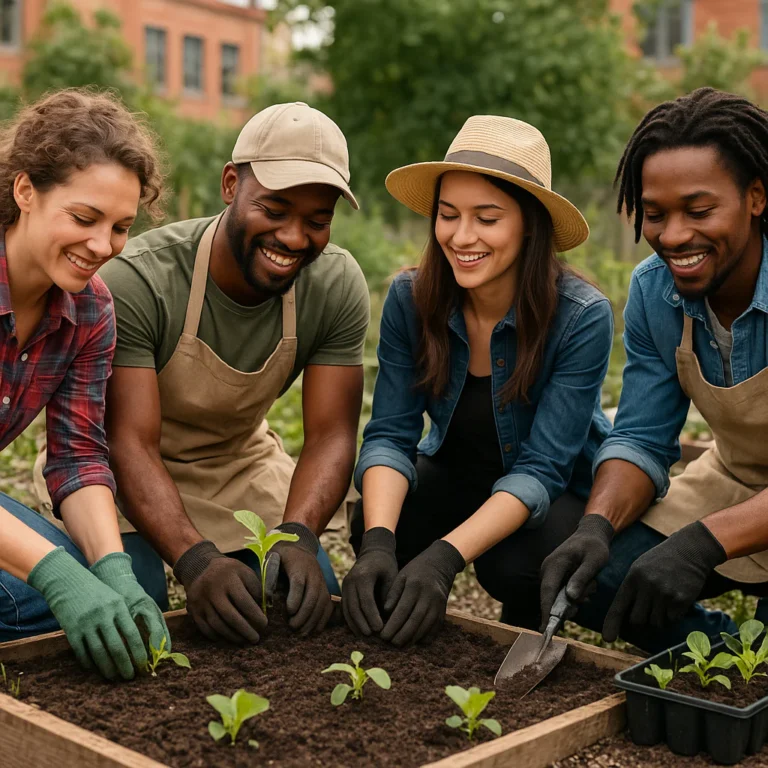
- Offer free seedlings, DJ, and tasting table—because salsa brings neighbors together faster than any flyer.
Step 8: Measure & Celebrate
- Track pounds harvested, volunteer hours, number of smiles (okay, the last one is qualitative, but count them anyway).
💡 Innovative Gardening Techniques That Maximize Yield in Urban Food Deserts
Vertical Towers 🏙️
- GreenStalk planters stack 5 tiers → 40 strawberry plants in 2 ft² footprint.
- 👉 CHECK PRICE on: Amazon | Walmart | GreenStalk Official
Sub-irrigated Buckets (SIPs)
- A 5-gal pickle bucket + wicking basket = tomato jungle with 50 % less water.
- We re-used buckets from a local deli—free + sustainable.
Hoop Houses & High Tunnels
- Extend season by 2 months in Detroit, 3 months in Texas.
- 👉 Shop High Tunnels on: Amazon | Etsy | FarmTek Official
Companion Planting Cheat-Sheet
| Crop | Best Buddy | Why It Works |
|---|---|---|
| Tomatoes | Basil | Repels thrips, improves flavor |
| Kale | Beets | Beet greens shade soil → fewer weeds |
| Corn | Beans | Beans fix nitrogen for hungry corn |
Smart Sensors
- Vegetronix Moisture Meter texts you when beds get too thirsty—no more guessing games.
🤝 Building Community: Social Benefits Beyond Fresh Produce
We once watched two rival block clubs argue over… well, everything. Then we handed them shovels and seedlings. By harvest, they co-hosted a jerk-chicken & collard-greens cook-off. Gardens don’t just grow food—they grow trust.
Tangible Social Wins
- Inter-generational bonding—grandmas teach herbal remedies, teens teach Instagram hacks.
- Language bridges—plants speak Spanish, Somali, English all at once.
- Public safety—a 2019 Penn study links each new community garden to a 9 % drop in street violence.
How to Foster It
- Host “story-circle” workdays—share family recipes while pulling weeds.
- Rotate “host gardener of the week”—ownership builds pride.
- Install a communal pizza oven—because carbs + fire = instant friends.
📈 Measuring Success: How Community Gardens Improve Local Health and Economy
Health Metrics You Can Track
- BMI change—participants lose 1.8 lbs/year on average (Harvard, 2020).
- Food security score—use the 6-item USDA scale; aim for 2-point improvement.
Economic Ripple Effects
- Property values rise 9 % within 5 years of a garden opening (Villanova study).
- Job creation: every 10 garden plots supports 1 part-time green job (irrigation tech, educator, market coordinator).
Table: Simple M&E Dashboard
| Indicator | Baseline | Year 1 Goal | Tool |
|---|---|---|---|
| Pounds harvested | 0 | 500 | Digital scale |
| Volunteers engaged | 5 | 50 | Sign-in sheet |
| Kids trying veggies | 30 % | 70 % | Pre/post survey |
🌿 Partnerships That Work: Collaborations Between NGOs, Governments, and Residents
Holy-Trinity Model
- City Government → provides land, water hook-ups.
- NGO → writes grants, supplies tools.
- Residents → labor, local knowledge, harvest rights.
Real-world All-Stars
- CivicWell (CA) pairs climate grants with urban-ag projects.
- Grassroots Gardens of WNY secures land-trust status so gardens can’t be sold to condo developers.
- Columbus East Side gardens (#featured-video) rely on Franklin County Land Bank + local church vans to move compost.
How to Pitch Partners
- Frame benefits in their language:
- Mayor wants job stats—show green-jobs created.
- Health insurer wants cost savings—show ↓ ER visits for hypertension.
🛒 From Garden to Table: Enhancing Food Access and Nutrition
Harvest Distribution Models
- Freestyle U-Pick—walk in, pick free, leave gratitude note.
- Veggie-Box Subscriptions—sliding-scale, $0–$15/week.
- Cook-and-Take Workshops—harvest, chef demo, eat on site.
Nutrition Nudges That Work
- Taste-test station—kids who sample raw okra chips are 3× likelier to take home veggies.
- Recipe cards in Spanish & English—15 % increase in consumption (Texas A&M, 2021).
- Pair produce with spices—a $30 bulk buy of cumin, chili, garlic turns kale into “killer kale tacos.”
Storage Solutions
- Veggie shelves lined with burlap keep winter squash good for 6 months.
- Solar dehydrators (DICKEYjohn) shrink tomato slices—perfect for winter stews.
⚠️ Challenges and Pitfalls: What to Watch Out for When Creating Community Gardens
Land-Loss Risk
- Developers circle like hawks—secure land-trust status or 10-year lease minimum.
- Soil contamination—always test; remediation costs $7,000–$30,000/acre.
Volunteer Burnout
- “Founders syndrome”—core team does everything; solution: term limits + mentorship.
- Theft & vandalism—install motion-sensor lights, signage explaining the mission.
Funding Gaps
- Seed money ≠ maintenance money. Budget $1,000/year for soil amendments, hose replacement, water fees.
- Grant cycles end—diversify: CSA subscriptions, plant sales, t-shirt merch.
Cultural Mis-steps
- Top-down crop choices (think arugula for a collard-loving neighborhood) → abandoned beds.
- Fix: hold taste-preference surveys before planting.
📚 Educational Programs and Workshops: Empowering Through Knowledge
Curriculum We Love
- Junior Master Gardener—aligns with STEM standards, kids earn certificates.
- Cooking Matters—6-week course, participants take home a bag of groceries each class.
Innovative Formats
- “Night-out Gardending”—provide headlamps, pizza, babysitting so parents can join.
- WhatsApp voice notes in Haitian Creole for seedling reminders.
Partner Resources
- Cooperative Extension—free soil testing, pest ID.
- Botanical gardens—loan out instructor kits, microscopes.
🌟 Success Stories: Inspiring Community Gardens That Transformed Food Deserts
1. Glencrest Neighborhood, Fort Worth
- Once zero produce outlets, now 2,800 lbs/year harvested.
- Teen-run farm stand pays college application fees.
2. East Side, Columbus (#featured-video)
- 16 gardens in formerly vacant lots.
- Resident Angela Gibbs: “We live virtually in a food desert… the neighborhood is wrapping around this garden.”
3. New York City Community Garden Coalition
- Saved over 500 gardens from bulldozers; 650,000 lbs of food donated since 2020.
4. Detroit’s Michigan Urban Farming Initiative
- 3-acre farm feeds 2,000 families/month; features **America’s first sustainable urban “agrihood.”
5. L.A. Ron Finley Project
- Guerrilla-gardened traffic medians; sparked city ordinance legalizing parkway plantings.
🔧 Tools, Resources, and Grants to Support Your Community Garden Project
Must-Have Tools
- DeWit Dutch Hand Hoe—scuffles weeds like butter.
- Bully Tools Poly Scoop—lightweight, lifetime handle warranty.
- Luster Leaf Rapitest—3-way meter for pH, moisture, light.
👉 Shop Hand Tools on:
- DeWit Dutch Hand Hoe: Amazon | Walmart | DeWit Official
- Bully Tools Poly Scoop: Amazon | Etsy | Bully Tools Official
Grant Calendar
| Month | Opportunity | Typical Award |
|---|---|---|
| Feb | Whole Kids Foundation | $3,000 |
| Apr | USDA Urban Ag | $50,000 |
| Oct | SeedMoney Crowd-Fund | $400–$1,000 |
Free Online Toolkits
📊 Data and Research: The Science Behind Community Gardens and Food Security
Meta-analysis Highlights
- 27 studies, 4,700 participants—garden participants eat 1.4 more servings of fruits/veg daily (Hume et al., 2022).
- **Food security scores improve
🏁 Conclusion: Cultivating Change One Garden at a Time
After digging deep into the dirt of community gardens and their role in addressing food deserts, one thing is crystal clear: community gardens are not just patches of green—they are powerful engines of change. They tackle food insecurity by putting fresh, culturally relevant produce right where it’s needed most, while simultaneously growing social ties, skills, and economic opportunities.
We’ve seen that simply planting a garden isn’t enough. Success hinges on inclusive leadership, culturally sensitive crop choices, sustainable funding, and strong partnerships between residents, NGOs, and local governments. Gardens that embrace the Community Orientation frame—focusing on empowerment and direct food access—shine brightest in combating food deserts and health disparities.
Remember the question we teased earlier: Why don’t new grocery stores alone solve food deserts? The answer lies in the complex social and economic barriers that gardens uniquely address by fostering ownership and agency. Gardens are not a quick fix but a living, breathing community resource that grows stronger with every seedling and neighborly handshake.
So, whether you’re a seasoned green thumb or a curious newcomer, starting or supporting a community garden is one of the most effective, joyful ways to help your neighborhood flourish. As we always say at Community Gardening™, “Grow together, thrive together.”
🔗 Recommended Links for Community Garden Enthusiasts
-
DeWit Dutch Hand Hoe:
Amazon | Walmart | DeWit Official Website -
Bully Tools Poly Scoop:
Amazon | Etsy | Bully Tools Official Website -
GreenStalk Vertical Planter:
Amazon | Walmart | GreenStalk Official Website -
High Tunnel Greenhouse Kits:
Amazon | Etsy | FarmTek Official Website -
MySoil Test Kit:
Amazon -
Books to Dig Into:
❓ FAQ: Your Burning Questions About Community Gardens and Food Deserts Answered
How do community gardens help reduce food deserts?
Community gardens bring fresh, affordable produce directly into neighborhoods lacking grocery stores. They reduce physical and economic barriers by growing culturally appropriate crops on-site, eliminating transportation costs and time. Gardens also build local knowledge and skills, empowering residents to sustain their own food sources, which is crucial since simply adding supermarkets often fails to change dietary habits (Wright et al., 2016). Moreover, gardens foster social cohesion, which supports food-sharing networks and collective problem-solving.
What are the benefits of community gardens in urban food deserts?
Beyond fresh produce, community gardens offer physical and mental health benefits, including increased physical activity, reduced stress, and improved nutrition. They create green spaces that reduce urban heat islands and manage stormwater, enhancing environmental quality. Economically, they can raise nearby property values and create part-time jobs. Socially, gardens build community pride, reduce crime rates, and provide educational opportunities for all ages.
Can community gardening improve access to fresh produce in food deserts?
✅ Absolutely! Community gardens shorten the distance to fresh food from miles to steps. They provide year-round access when combined with season extension tools like hoop houses. Gardens also offer free or low-cost produce, which is vital for low-income families. The County Health Rankings highlight that gardens increase fruit and vegetable intake, especially among children.
What role do community gardens play in promoting food justice?
Community gardens are grassroots platforms that challenge inequities in food access by centering marginalized voices and needs. They promote self-empowerment by involving residents in decision-making and skill-building. Gardens often grow culturally relevant foods, respecting diverse traditions. They also serve as hubs for advocacy, pushing for policies that support equitable land use and food systems.
How can neighborhoods start community gardens to combat food deserts?
Starting a garden involves:
- Mapping local food access gaps using USDA tools.
- Building a committed team of residents and stakeholders.
- Securing land through city land banks, schools, or vacant lots.
- Testing and preparing soil for safe planting.
- Designing accessible, culturally relevant gardens.
- Seeking funding via grants and crowdfunding.
- Hosting planting and educational events to build momentum.
- Tracking progress to celebrate wins and attract support.
What challenges do community gardens face in food desert areas?
Common challenges include:
- Land tenure insecurity, risking displacement by development.
- Soil contamination, requiring remediation or raised beds.
- Volunteer burnout without shared leadership.
- Funding gaps for ongoing maintenance.
- Cultural mismatches if crops don’t reflect community preferences.
- Vandalism and theft, which can demoralize gardeners.
Addressing these requires proactive planning, community engagement, and partnerships with local agencies.
How does community gardening foster social connections and food security?
Gardens act as social glue, bringing together diverse residents through shared work and celebrations. This builds trust and mutual aid networks that extend beyond the garden gates. Social connections facilitate food-sharing, collective purchasing, and knowledge exchange, all of which enhance food security. Studies show that neighborhoods with active gardens experience lower crime rates and higher civic participation, reinforcing community resilience.
📚 Reference Links and Further Reading
- USDA Food Access Research Atlas: https://www.ers.usda.gov/data-products/food-access-research-atlas/
- National Institutes of Health PMC Article on Community Gardens: https://pmc.ncbi.nlm.nih.gov/articles/PMC7889742/
- County Health Rankings & Roadmaps on Community Gardens: https://www.countyhealthrankings.org/strategies-and-solutions/what-works-for-health/strategies/community-gardens
- University of Texas Thesis: Addressing Issues Relating to Food Deserts Through Empowerment: https://mavmatrix.uta.edu/landscapearch_theses/285/
- American Community Gardening Association: https://communitygarden.org
- Whole Kids Foundation Grants: https://www.wholekidsfoundation.org
- CivicWell California: https://civicwell.org
- Grassroots Gardens of Western New York: https://grassrootsgardens.org
For more on urban agriculture, food justice, and community empowerment, these resources offer a treasure trove of insights and practical tools. Happy gardening! 🌿🌻